Essential Medical Turkish: Vocabulary for Explaining Symptoms to Doctors
Standing in a sterile corridor of a Turkish state hospital while your head throbbed and your stomach churned, only to realize you’ve forgotten the word for "nauseous," is a uniquely isolating experience. I’ve been there, gesturing wildly to a confused triage nurse in Kadıköy because my brain replaced every useful Turkish verb with static. This guide solves that communication gap by providing the exact medical vocabulary and cultural context needed to navigate a doctor’s appointment in Turkey with confidence.
Navigating the Language Barrier in Turkish Healthcare
The first time I walked into a Turkish hospital, I assumed my intermediate-level Turkish would carry me through. I was wrong. Medical terminology is its own beast, often rooted in Latin or old Ottoman-Turkish words that don't appear in your standard language apps. Even if you are in one of the Finding English-Speaking Doctors in Istanbul: Top International Clinics, the administrative staff or the nurses might only speak Turkish. This makes having a "cheat sheet" of symptoms not just helpful, but vital for your safety.
Most expats find that while senior consultants at private hospitals often speak excellent English, the initial intake process is conducted entirely in Turkish. When you first arrive, you’ll likely be asked "Şikayetiniz nedir?" (What is your complaint?). This isn't just a polite opening; it’s the moment you need to be precise. If you have comprehensive coverage through Cigna Global, you might have access to translation services, but being able to advocate for yourself in the local tongue speeds up the process significantly and ensures nothing is "lost in translation" during a high-stress moment.
The Role of Translators and Patient Relations
In larger private facilities, especially those catering to the international community, there is often a "Patient Relations" (Hasta İlişkileri) department. Their job is to bridge the gap between you and the medical staff. However, these departments are often understaffed during peak hours or late-night emergencies. Relying solely on them can lead to long wait times in the waiting room while your symptoms worsen. It is wise to learn the basics so you can at least communicate the urgency of your situation to the first person you see.
If you find yourself in a public hospital (Devlet Hastanesi), translators are virtually non-existent. Here, you are expected to provide your own translator or navigate the system yourself. This is where Essential Turkish Phrases for the Doctor: Communicating Symptoms Effectively becomes your most valuable tool. Even if your grammar is broken, using the correct nouns for your body parts and the right adjectives for your pain will guide the doctor toward the correct diagnostic tests.
Using Technology to Bridge the Gap
While we all love a good translation app, they often struggle with the suffixes that make the Turkish language so complex. For instance, "My stomach hurts" is "Karnım ağrıyor," but "I have a sharp pain in my stomach" requires more nuance. I suggest using the e-Nabız website: Translating Your Blood Test Results to keep track of your history, but during the actual exam, keep a physical or digital list of your specific symptoms ready.
Before you even leave your house, look up the Turkish equivalents for any chronic conditions you have. If you’re managing something like hypertension or diabetes, the doctor needs to know this immediately. I’ve found that carrying a small card in my wallet with my blood type, allergies, and current medications written in Turkish has saved me from several headaches during routine checkups.
Anatomy and Body Parts: Telling the Doctor Where it Hurts
You cannot explain what is wrong if you cannot point to where it is happening. In Turkish, the possessive suffix is key. You don't just say "Head hurts"; you say "My head hurts" (Başım ağrıyor). Understanding how to attach these suffixes to body parts is the foundation of medical Turkish. If you are ever unsure, pointing while saying the word is perfectly acceptable and expected in the fast-paced environment of a Turkish clinic.
In my early days in Izmir, I struggled with the difference between "Mide" (Stomach) and "Karın" (Abdomen/Belly). Turkish doctors will often press on different parts of your midsection and ask if it hurts "here" (burası) or "there" (şurası). Knowing these distinctions helps the doctor rule out everything from simple indigestion to appendicitis. If you are preparing for a visit, reviewing Essential Turkish Phrases for the Dentist: Explaining Pain and Sensitivities can also help if your "headache" is actually referred pain from a dental issue.
Core Vocabulary for the Head, Torso, and Limbs
Let's start with the basics. The head is "Baş," but "Kafa" is also frequently used in casual settings. Your throat is "Boğaz," a word you’ll use often during the dusty summer months or the damp Istanbul winters. If you have a cough, you’ll need to specify if it’s "Kuru" (Dry) or "Balgamlı" (Productive/with phlegm). Moving down, "Göğüs" refers to the chest, while "Sırt" is your back.
When describing limb issues, be specific. "Kol" is arm and "Bacak" is leg. However, if the pain is in a joint, you’ll need "Eklem." For instance, "Diz" is knee and "Bilek" is wrist or ankle (specify "El bileği" for wrist or "Ayak bileği" for ankle). Many expats living in coastal areas like Antalya find themselves visiting doctors for sprains after hiking; knowing these terms is essential when Antalya Medical Network: Where to Go for Care on the Mediterranean Coast becomes your primary point of contact.
Describing Internal Organs and Systems
If your issue is more than skin deep, you’ll need to know your internal organs. "Kalp" is heart, "Akciğer" is lung, and "Böbrek" is kidney. If you have a history of kidney stones—a common issue in Turkey due to the mineral content in some regional water—the word for stone is "Taş." Saying "Böbrek taşı şüphem var" (I suspect I have a kidney stone) will trigger a very specific set of protocols, usually involving an ultrasound.
For those managing long-term health, Managing Chronic Illnesses: Diabetes, Hypertension, and Medication Supply requires a deep dive into endocrine and cardiovascular terms. Your liver is "Karaciğer," and your gallbladder is "Safra kesesi." If you are experiencing digestive distress, the doctor might ask about your "Bağırsak" (Intestines). Being able to identify these areas during a physical exam helps the doctor narrow down the "şikayet" (complaint) quickly.
| English Term | Turkish Term | Phonetic Pronunciation |
|---|---|---|
| Head | Baş / Kafa | Bash / Ka-fa |
| Throat | Boğaz | Bo-ahz |
| Chest | Göğüs | Gu-us |
| Stomach | Mide | Mee-deh |
| Back | Sırt | Seert |
| Knee | Diz | Deez |
| Heart | Kalp | Kalp |
| Lung | Akciğer | Ak-jee-air |
| Kidney | Böbrek | Bub-rek |
| Blood | Kan | Kahn |
Describing Pain and Sensations with Precision
One of the most common questions a Turkish doctor will ask is "Nasıl bir ağrı?" (What kind of pain?). Is it constant? Does it come and go? In Turkish culture, people tend to be quite descriptive about their physical sensations. Simply saying "It hurts" (Ağrıyor) might not be enough for a specialist to make a diagnosis. They want to know the character of the pain.
I remember trying to explain a "throbbing" headache to a doctor in Ankara. I kept saying "it's big," which made no sense. Once I learned the word "Zonkluyor" (It’s throbbing), the doctor immediately understood I was describing a migraine. Whether you have Private Health Insurance (Özel Sağlık Sigortası): Top Providers for Foreigners or are using public care, these descriptors are the bridge to the right treatment.
Adjectives for Pain: Sharp, Dull, and Throbbing
If the pain feels like a knife, use "Keskin" (Sharp) or "Batıyor" (It feels like it’s stinging/stabbing). If it’s a dull, heavy ache, you can use "Künt" (Dull) or "Sızlanıyor" (It’s aching/whining). For nerve-related issues, "Uyuşma" (Numbness) and "Karıncalanma" (Tingling/pins and needles) are crucial. These sensations are often symptoms of underlying issues that require a referral to a neurologist.
When describing the intensity, Turkish uses a scale from "Hafif" (Mild) to "Şiddetli" (Severe). If the pain is unbearable, you might say "Dayanılmaz" (Unbearable). If you’ve recently moved and are still setting up your Health Insurance in Turkey: SGK Public System vs Private Coverage Explained, knowing how to communicate the severity of your pain can help you decide whether to wait for a scheduled appointment or head straight to the "Acil" (Emergency room).
Temporal Indicators: When and How Often?
The doctor will need to know the timeline of your symptoms. "Ne zamandır?" (Since when?) is the standard question. You should be ready to answer with "İki gündür" (For two days) or "Dünden beri" (Since yesterday). If the pain started suddenly, use "Aniden." If it’s something that happens periodically, use "Ara ara" or "Zaman zaman."
Many expats find that their symptoms flare up after eating or during the night. "Yemekten sonra" (After eating) or "Geceleyin" (At night) are important context clues. If your symptoms are related to environmental factors, such as the infamous "draft" (yel) that Turks believe causes many ailments, you might mention "Rüzgarda kaldım" (I stayed in the wind). While it might sound like folklore, many local doctors will take this into account when diagnosing muscle stiffness.
Common Ailments and Specialist-Specific Vocabulary
Depending on which department you are visiting, the vocabulary will change. If you are at a "Göz Hastalıkları" (Ophthalmology) clinic, you’ll need words for blurred vision ("Bulanık görme"). If you are seeing a dermatologist, you’ll talk about "Kaşıntı" (Itching) or "Döküntü" (Rash). If you have kids and are Finding an English-Speaking Pediatrician in Kadıköy or Beşiktaş, you’ll be talking a lot about "Ateş" (Fever) and "İştahsızlık" (Lack of appetite).
Being prepared for these specific scenarios prevents the "deer in the headlights" feeling when a specialist starts asking rapid-fire questions. I always keep a bottle of water and a notebook with me to jot down terms the doctor uses, which I can later look up on iHerb to see if there are supplementary vitamins or over-the-counter supports that align with the doctor's suggestions.
Digestive Issues and Stomach Complaints
Stomach bugs are a common rite of passage for newcomers. If you are experiencing "Mide bulantısı" (Nausea), the doctor will likely ask if you have "Kusma" (Vomiting). Diarrhea is "İshal," and constipation is "Kabızlık." If your stomach feels bloated, use the word "Şişkinlik."
In Turkey, a lot of emphasis is placed on what you’ve eaten recently. You might be asked if you’ve had "Dışarıdan yemek" (Food from outside/takeout). If you suspect Food Poisoning in Turkey: When to Go to the ER vs Relying on a Pharmacy, be clear about when the symptoms started. Using the phrase "Zehirlendiğimi düşünüyorum" (I think I’ve been poisoned/have food poisoning) will get you fast-tracked for hydration therapy (a "serum" in Turkish).
Respiratory and Cold/Flu Symptoms
During the winter, "Grip" (Flu) and "Nezle" (Cold) run rampant through Turkish cities. A sore throat is "Boğaz ağrısı," and a runny nose is "Burun akıntısı." If your nose is blocked, use "Burun tıkanıklığı." For those with asthma or allergies, "Nefes darlığı" (Shortness of breath) is a critical term to memorize.
If you are struggling with seasonal allergies, you’ll want to visit Pharmacies (Eczane) in Turkey: Prescriptions, Duty Hours, and Medications to pick up antihistamines. You can ask for "Alerji ilacı." If you have a fever, the pharmacist or doctor will ask if you have "Halsizlik" (Fatigue/weakness) or "Titreme" (Chills/shivering). These details help differentiate between a simple viral cold and something requiring "Antibiyotik" (Antibiotics), which are strictly regulated in Turkey.
Navigating the Pharmacy and Follow-up Care
Once the doctor hands you a "Reçete" (Prescription), the journey isn't quite over. You’ll need to take this to an "Eczane." Most pharmacies in Turkey are incredibly helpful, and the "Eczacı" (Pharmacist) often speaks enough English to explain the dosage. However, they will often write the instructions on the box in shorthand: "1×1" means once a day, "2×1" means twice a day.
If you are looking for specific brands you trust from home, you might find that they have different names in Turkey. This is where a quick search on Turkish Pharmacy Equivalents for Advil, Tylenol, and Common Painkillers can be a lifesaver. If you prefer natural supplements, remember that while Turkish pharmacies carry some, the selection on iHerb is often much broader for specific expat needs like melatonin or specific magnesium chelates.
Understanding Prescription Instructions
The most important words to listen for at the pharmacy are "Aç karnına" (On an empty stomach) and "Tok karnına" (On a full stomach/after eating). If you take a medication "Aç karnına" that was meant for "Tok karnına," you’re going to have a very bad afternoon. Also, pay attention to "Günde kaç defa?" (How many times a day?).
If the medication is a liquid, they might say "Ölçek" (Scoop/measure) or "Damla" (Drop). If it’s a topical cream, they will say "Sürmek" (To rub/apply). It is wise to ask the pharmacist to write it down clearly if the doctor’s handwriting is the typical illegible medical scrawl. Most Private Health Insurance (Özel Sağlık Sigortası): Top Providers for Foreigners will cover a significant portion of prescription costs, so make sure to show your insurance card or provide your "Yabancı Kimlik Numarası" (99 number).
Scheduling Follow-ups and Test Results
Before you leave the hospital, ask "Kontrol ne zaman?" (When is the follow-up?). In the Turkish system, if you return to the same doctor for a follow-up within 10 days, you usually don't have to pay the consultation fee again. This is called a "Kontrol muayenesi."
To see your test results, you will likely use the e-Nabız website: Translating Your Blood Test Results. If the doctor says "Sonuçlar ne zaman çıkar?" (When will the results be out?), they might tell you "Yarın" (Tomorrow) or "Bir hafta sonra" (A week later). If you are having trouble booking your follow-up, refer to the A Step-by-Step Guide to Booking MHRS Appointments Without Perfect Turkish for help navigating the digital booking system.
Emergency Situations: Phrases That Can Save Lives
In a true emergency, your brain might freeze. This is why practicing a few "power phrases" is vital. If you need to Calling 112 for an Ambulance: Dispatch Workflows and Language Support, the first thing you need to say is your address and the nature of the emergency. "Acil durum!" (Emergency!) and "Ambulans lazım!" (I need an ambulance!) are the most important.
If you have a pre-existing condition, like a heart problem, say "Kalp hastasıyım." If you are allergic to penicillin, say "Penisilin alerjim var." These short, punchy sentences provide the paramedics with immediate, life-saving information. Even with a premium plan from Cigna Global, the local emergency responders will be the first on the scene, so Turkish is your primary language for those first few minutes.
Describing Chronic Conditions in an Emergency
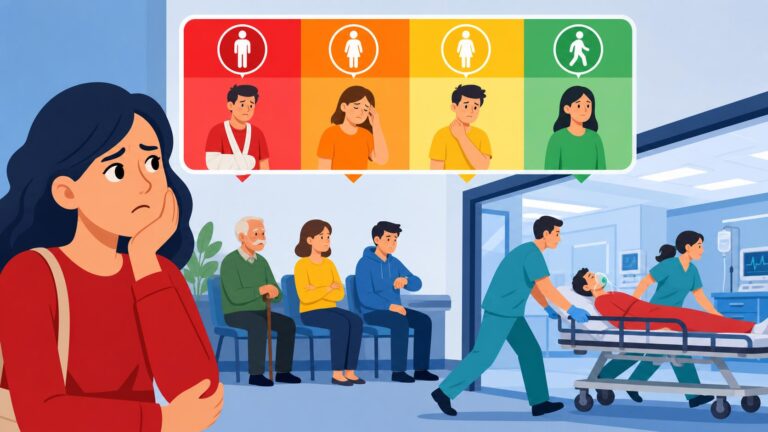
If you are helping someone else, you might need to say "Bilincini kaybetti" (He/She lost consciousness) or "Nefes almıyor" (He/She is not breathing). If there has been an accident, "Kanama var" (There is bleeding) is crucial. In Turkish ERs, they use a triage system. If you are in pain but stable, you may be put in the "Yeşil alan" (Green zone) and have to wait. If it’s life-threatening, you are "Kırmızı alan" (Red zone).
Knowing these terms helps you understand the flow of the Emergency Rooms (Acil) in Turkey: Public vs Private Hospital Expectations. Don't be afraid to be firm if symptoms are worsening. Using the word "Acil" repeatedly is a clear signal. Once you are stabilized, you can then deal with the paperwork and insurance logistics.
Disclaimer
The information provided in this guide is for educational and linguistic purposes only and does not constitute professional medical advice, diagnosis, or treatment. Always seek the advice of a qualified healthcare provider in Turkey regarding any medical condition. While we strive to provide accurate Turkish translations, language usage can vary by region and individual medical practice. Reliance on any information provided in this article is solely at your own risk.