Managing Summer Heatstroke and Hydration on the Turkish Riviera
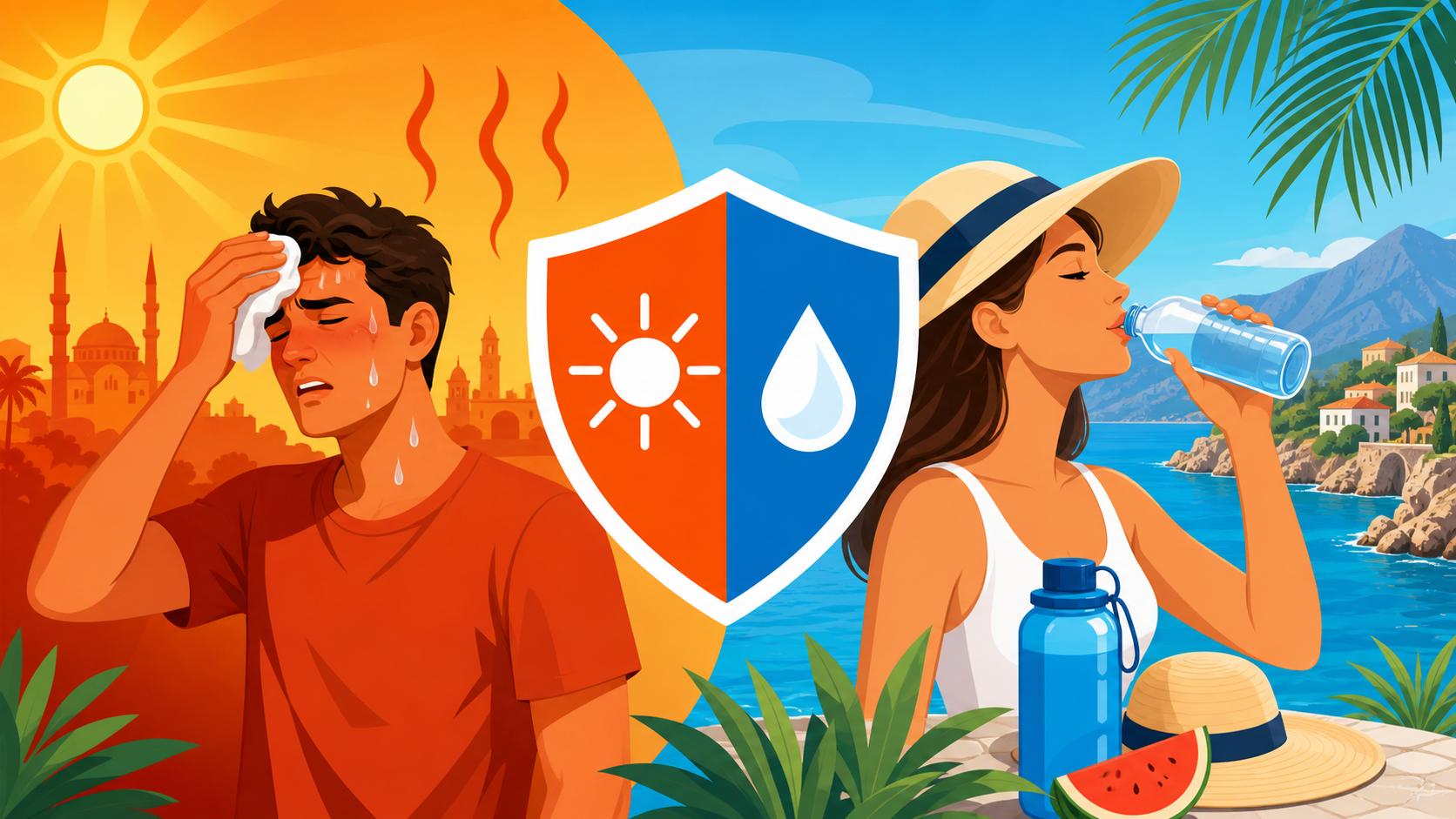
Stepping out of your air-conditioned apartment in Antalya during August can feel like walking directly into a high-powered hair dryer. I will never forget my first summer in Kaş when I thought a quick hike to a viewpoint at noon was a brilliant idea, only to end up shivering and nauseous despite the 40-degree heat. This guide provides the essential strategies and local wisdom needed to survive the intense Turkish Riviera summers without a trip to the emergency room.
Understanding the Nem and the Riviera Heat Index
The Turkish Riviera, spanning from the high-glamour docks of Bodrum down to the humid citrus groves of Alanya, experiences a brand of heat that many Northern Europeans and North Americans are simply not prepared for. While the thermometer might read 38°C (100°F), the "Nem" or humidity often pushes the "feels-like" temperature well into the upper 40s. This isn't just uncomfortable; it is a physiological challenge that can lead to rapid dehydration and heat exhaustion if you are not proactive.
Far too many expats on the coast try to maintain their "home" schedules—jogging at 10:00 AM or walking to the grocery store in the middle of the afternoon. In Turkey, the sun is at its most punishing between 11:00 AM and 4:00 PM. Local residents are rarely seen on the streets during these hours for a reason. The heat here is cumulative. It doesn't just hit you once; it builds up in your body over several days of exposure, eventually leading to a "crash" where you feel utterly depleted.
Understanding the difference between a "dry heat" and the Mediterranean humidity is vital. In places like Antalya, the humidity traps sweat against your skin, preventing the natural cooling process of evaporation. This makes you prone to overheating much faster than you would in a drier climate like Ankara or Central Anatolia. Being aware of the local weather reports, which often issue "high temperature" alerts, is your first line of defense.
Identifying the Signs of Heat Exhaustion vs Heatstroke
It is easy to dismiss a headache or a bit of dizziness as just "being tired from the sun," but in the Turkish heat, these are the early warning signs of heat exhaustion. I remember a friend who insisted on finishing a boat trip in Fethiye despite feeling lightheaded. By the time we docked, he couldn't stand up. Knowing when to stop and seek shade is a skill every expat must master.
Heat exhaustion typically presents as heavy sweating, rapid pulse, dizziness, fatigue, and cool, moist skin with goosebumps even when in the heat. If you experience these, you need to find air conditioning immediately, sip water, and apply cool towels to your neck and armpits. If these symptoms are ignored, they can escalate into heatstroke, which is a life-threatening medical emergency.
Heatstroke is characterized by a body temperature rising above 40°C (104°F), confusion, agitation, slurred speech, and—critically—a lack of sweating despite the heat. If you or someone you are with stops sweating and becomes disoriented, you must act fast. This is the moment to utilize Emergency Medical Care in Turkey: Dialing 112, Ambulances, and Triage. Do not attempt to "sleep it off." The medical infrastructure in coastal cities is well-versed in treating heat-related illnesses, but time is of the essence.
Hydration Beyond Just Drinking Water
One of the biggest mistakes foreigners make is thinking that drinking several liters of plain water is enough. While staying hydrated is essential, the heavy sweating caused by the Riviera sun strips your body of vital salts and minerals. I learned early on that if I only drank water, I would eventually feel "waterlogged" but still dizzy and weak. This is because your electrolyte balance is off.
In Turkey, the local solution is "Ayran"—a cold, salty yogurt drink. It might sound strange to a newcomer, but it is a functional "super-food" for the heat. The salt helps your body retain the water you’re drinking, and the yogurt provides probiotics and protein. It is far more effective than sugary sports drinks. If you prefer supplements, I often order electrolyte powders or magnesium tablets from iHerb to ensure I’m replacing what I lose during a morning walk to the Weekly Pazar Markets: How to Buy Fresh Produce and Negotiate Like a Local.
Another hydration habit to watch is your intake of Turkish tea and coffee. While they are central to social life, they are diuretics. For every small glass of "Çay" you drink, you should be counteracting it with two glasses of water. Many expats also wonder about the safety of what they are drinking. It is a common question: Can You Drink the Tap Water in Istanbul, Ankara, and Antalya? Generally, on the Riviera, you should stick to bottled "Damacana" water for drinking to avoid Health Hazards and Prevention: Tap Water Safety and Common Stomach Bugs which can be exacerbated by the heat.
The Role of the Eczane in Your Heat Management
In Turkey, the "Eczane" (pharmacy) is much more than a place to pick up prescriptions; it is a frontline medical resource. If you are feeling under the weather due to the heat, the pharmacist is often the first person you should consult. They can provide high-grade rehydration salts (similar to Dioralyte) and advise on whether your symptoms require a doctor.
I have often found myself ducking into a cool, air-conditioned pharmacy in Marmaris just to catch my breath and ask for "elektrolit" packets. The staff are usually very knowledgeable about heat-related skin issues too, such as prickly heat or severe sunburn. If you find yourself needing help outside of regular business hours, you will need to know Understanding Night Pharmacies (Nöbetçi Eczane): How the Roster Works. There is always one pharmacy open in every neighborhood, even at 3:00 AM on a Sunday.
For those with chronic conditions that might be aggravated by the heat, such as high blood pressure or heart issues, keeping a stock of your medications is vital. You can find out more about how the system works in Pharmacies (Eczane) in Turkey: Prescriptions, Duty Hours, and Medications. I personally keep a "summer kit" from iHerb that includes high-SPF sunscreens and aloe vera gels, as the local versions can sometimes be surprisingly expensive or limited in variety.
Adapting Your Lifestyle to the Mediterranean Rhythm
Living on the Riviera requires a fundamental shift in how you structure your day. The most successful expats are those who adopt the "siesta" lifestyle. This means waking up early—around 7:00 AM—to get your errands, exercise, and outdoor chores done. By 11:00 AM, you should be retreating indoors or to a very shaded, breezy area.
This is the time for "indoor life." Whether it is catching up on work, reading, or napping, staying out of the direct sun is the best way to prevent heatstroke. I usually don't venture back out until the sun has begun its descent around 5:00 PM or 6:00 PM. This is when the coastal towns truly come alive. The evening breeze, known as the "Meltem" in some areas, provides a much-needed reprieve.
When you do have to go out, your clothing choice is your armor. Forget synthetic fabrics; they will trap the heat and make you miserable. Stick to loose-fitting linen and cotton in light colors. A wide-brimmed hat isn't a fashion statement; it's a necessity. If you are struggling with the transition to this lifestyle, don't be afraid to seek a professional opinion on how the climate is affecting you. Knowing Essential Turkish Phrases for the Doctor: Communicating Symptoms Effectively can help you describe that specific "heat-induced" lethargy that is so common here.
Navigating Medical Care for Serious Heat Issues
If preventive measures fail and you find yourself needing more than just a salty drink and a nap, you need to know where to go. The Turkish healthcare system is robust, but it can be confusing for a newcomer. Depending on your situation, you might choose between a state hospital or a private clinic. For serious heatstroke, the "Acil" (Emergency) department of any hospital is the destination.
Many expats prefer the English-speaking staff and shorter wait times at private facilities. If you have comprehensive coverage like Cigna Global, you can often access top-tier JCI-accredited hospitals in cities like Antalya or Bodrum. These facilities are world-class and very experienced in treating tourists and residents for dehydration and sun-related trauma. You can compare your options in Finding Medical Care in Turkey: Public Hospitals vs JCI-Accredited Clinics.
Before an emergency happens, it is wise to understand what your insurance covers. Some people rely on the local government system, while others prefer private international policies. If you are navigating this for the first time, check out Health Insurance in Turkey: SGK Public System vs Private Coverage Explained. Also, keep in mind that for visitors, the rules are different, and many often ask Is the European Health Insurance Card (EHIC) Valid in Turkey? (The short answer is no, so private travel or expat insurance is a must).
Comparing Cooling and Hydration Strategies
When the heat reaches its peak, not all strategies are created equal. Below is a comparison of common methods used by expats and locals on the Riviera to stay functional.
| Method | Effectiveness | Best Used For | Pro-Tip |
|---|---|---|---|
| Ayran (Salty Yogurt Drink) | High | Electrolyte replacement | Drink it ice-cold with a sprig of fresh mint. |
| Watermelon & White Cheese | Medium | Hydration and salt balance | A classic Turkish "Karpuz-Peynir" lunch is light and hydrating. |
| Cold Showers | Medium | Immediate body temp reduction | Don't use ice-cold water; lukewarm is better for long-term cooling. |
| Air Conditioning | Very High | Preventing heat exhaustion | Keep filters clean; the "Nem" causes dust to clog them quickly. |
| Linen Clothing | High | Body temperature regulation | Avoid dark colors which absorb the intense UV rays. |
| Iodized Salt/Supplements | High | Chronic dehydration prevention | Look for high-quality electrolyte tabs on iHerb. |
The Cultural Context of Heat and Traditional Remedies
Turks have lived with this heat for centuries, and there is a wealth of traditional knowledge that can help you. For instance, the use of "Kolonya" (lemon cologne). You will see it offered in shops and homes. The high alcohol content evaporates quickly on the skin, providing an instant—if temporary—cooling sensation. Dabbing it on your wrists and the back of your neck during a hot bus ride can be a lifesaver.
There is also a significant focus on "thermal balance" in Turkish culture. While it might seem counterintuitive to drink hot tea in 40-degree heat, the logic is that it induces slight sweating, which cools the body. While I personally find a cold Ayran more effective, many veteran expats swear by the "hot tea" method. If you are interested in how traditional practices intersect with modern health, you might enjoy reading about Traditional Medicine in Turkey: The Role of Thermal Baths and Hacamat.
However, always balance tradition with modern medical science. If you are feeling truly unwell, don't rely solely on cologne and tea. The Riviera heat is a serious force of nature. For those of us living here year-round, the summer is a season of endurance. We trade the long, sun-drenched days for a slower pace of life, and we learn to respect the sun rather than fight it. With the right insurance, such as a policy from Cigna Global, and a well-stocked cabinet of essentials from iHerb, you can enjoy the beauty of the Mediterranean without the danger.
Important Medical Disclaimer
The information provided in this article is for educational and informational purposes only and is not intended as medical advice. Always seek the advice of a qualified healthcare provider with any questions you may have regarding a medical condition or treatment. Never disregard professional medical advice or delay in seeking it because of something you have read in this guide. If you think you may have a medical emergency, call 112 or go to the nearest emergency room immediately. Portions of the health-related data regarding symptoms and treatment protocols were verified using real-time medical resources and regional health advisories for Turkey.