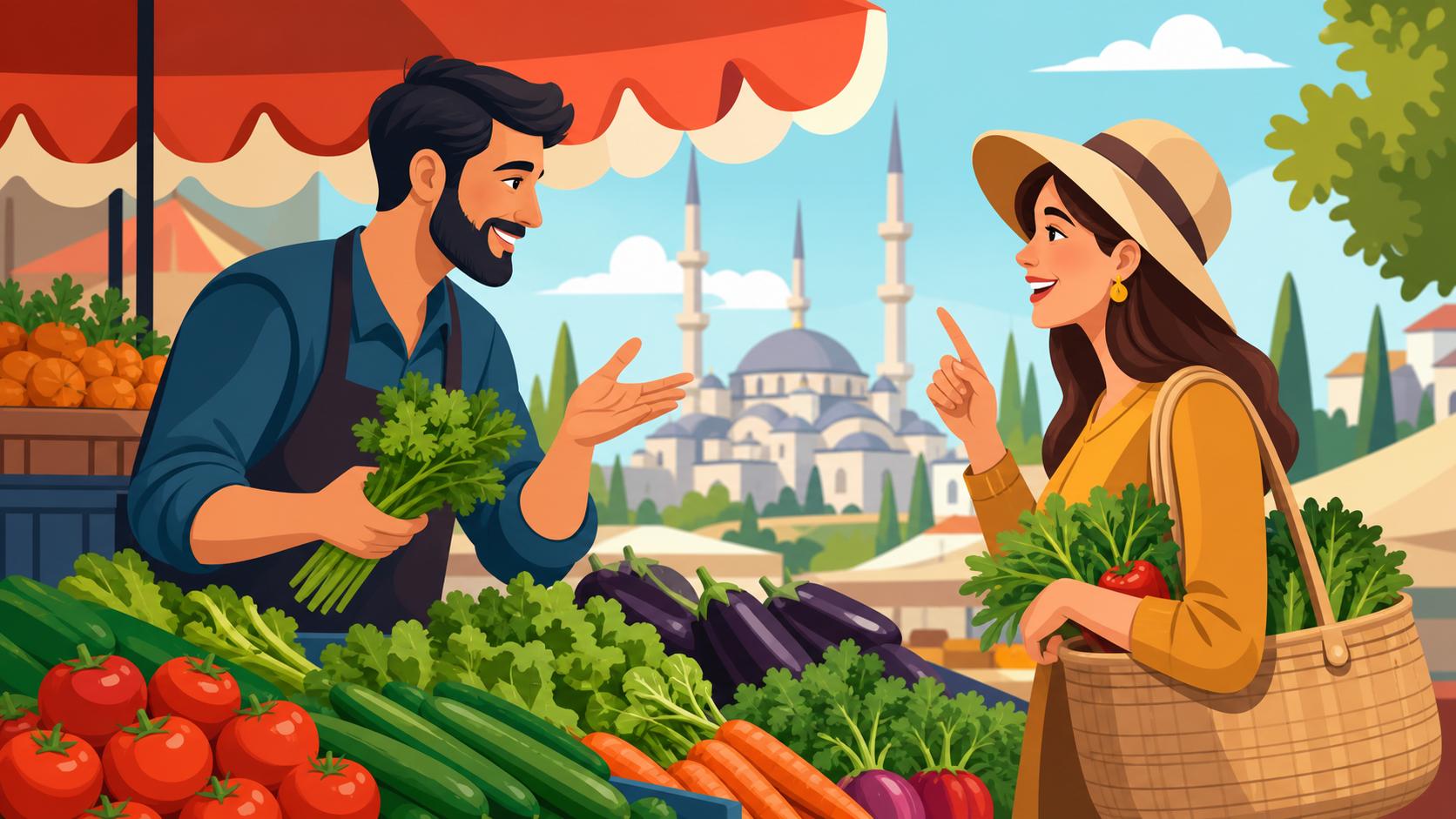
Weekly Pazar Markets: How to Buy Fresh Produce and Negotiate Like a Local
Walking into a Turkish pazar for the first time can feel like stepping onto a frantic, high-stakes stage where everyone knows their lines except you. I remember my first visit to the Salı Pazarı in Kadıköy; I stood frozen, overwhelmed by the shouting vendors and the sheer volume of produce, eventually panic-buying five kilos of lemons I didn't need. This guide solves that intimidation factor, teaching you the unwritten rules of the weekly market so you can shop with confidence.
Understanding the Rhythm of the Turkish Pazar
The pazar is the heartbeat of Turkish neighborhood life, a traveling circus of fresh produce, textiles, and household goods that anchors itself in a specific district one day a week. Unlike the sanitized experience of Turkish Supermarkets Explained: The Difference Between Migros, Carrefour, Şok, and Bim, the pazar is visceral. It is where the seasonality of Turkish cuisine is most evident, shifting from the deep purples of winter eggplants to the bright, sun-kissed cherries of June.
For the uninitiated, the scale can be daunting. These are not small farmers' markets with three or four stalls; major markets like those in Bakırköy or Fatih can feature hundreds of vendors. Understanding the layout is your first step toward mastery. Generally, markets are divided into zones: the "green" section for fruits and vegetables, the "cold" section for cheeses, olives, and eggs, and the "dry" section for textiles, plastics, and hardware. If you have just moved into a new apartment after Using e-Devlet to Register Your Address at the Local Nüfus Directorate, the pazar will become your primary source for everything from soup spoons to seasonal spinach.
Finding Your Neighborhood Pazar
Finding your local market is rarely as simple as checking Google Maps. While some permanent market structures exist, many are "street markets" where entire blocks are cordoned off for the day. The best way to find yours is to ask your kapıcı (doorman) or neighbors: "Pazar ne gün?" (What day is the pazar?). Every district in Istanbul, Ankara, and Izmir has a rotation. In Beşiktaş, it is Saturday; in Kadıköy, it is Tuesday and Friday; in Feriköy, it is famously an organic market on Saturdays and an antique market on Sundays.
If you are staying in a premium managed apartment through a service like Blueground, you might find yourself in a central neighborhood where the pazar is just a few blocks away. These markets are essential for getting that authentic "home-cooked" taste that defines Turkish Dining Culture: Lavish Breakfast Spreads (Kahvaltı) and Late Dinners. Once you locate the day and place, plan to spend at least an hour wandering before you even make your first purchase. This allows you to scout prices and quality across different stalls.
The Seasonal Shift of the Turkish Market
One of the most rewarding aspects of living in Turkey is the lack of "forced" produce. You will rarely find strawberries in December or pumpkins in July. The pazar forces you to eat with the rhythm of the earth. In the spring, you will see "erik" (sour green plums) and "çağla" (green almonds) appearing everywhere. By late summer, the stalls groan under the weight of "tarla domates" (field tomatoes) which are ugly, misshapen, and the most delicious things you will ever eat.
Understanding this seasonality is key to managing your Grocery Prices 2026: Cost Comparison Between Migros, Şok, and Bim. Buying produce out of season in Turkey is not only expensive but often results in flavorless imports. The pazar vendors take immense pride in their "yerli" (local) goods. You will often hear them shouting the origin of their produce—"Çanakkale domates!" or "Aydın inciri!"—signaling to savvy shoppers that the goods have traveled from Turkey’s most fertile regions.
Preparing for the Market: Essential Gear and Timing
You cannot simply show up to a pazar with a small designer handbag and expect to have a successful trip. The sheer weight of Turkish produce—where buying three kilos of tomatoes is considered a "small" amount—requires preparation. Veteran expats know that the most important investment you can make is a "pazar arabası" (a wheeled market trolley). Carrying five heavy plastic bags that cut into your fingers while navigating a crowded street is a rite of passage you should aim to skip.
The Right Tools for the Job
If you don't already own a trolley, you can find them at the pazar itself, or order a more durable, ergonomic version from Amazon Turkey to ensure it can handle the uneven cobblestones of Istanbul. Beyond the trolley, bring small denominations of cash. While some high-end vendors in neighborhoods like Nişantaşı might accept credit cards, the vast majority of pazar transactions are strictly cash-based. Having a pocket full of 10, 20, and 50 TL notes will make your life significantly easier when the vendor is trying to serve five people at once.
Additionally, consider bringing your own reusable mesh bags. While Turkey has introduced a fee for plastic bags in supermarkets, pazar vendors still hand them out liberally. If you are environmentally conscious, you will need to be assertive about using your own. Using a local SIM card from a provider like Airalo can also be helpful if you need to quickly translate a vegetable name or check a currency conversion on the fly, especially during those first few months of residency.
Mastering the Clock
Timing is everything in the pazar ecosystem. Most markets open around 8:00 or 9:00 AM and run until sunset. If you go early, you get the "ilk hasat" (first harvest)—the absolute best looking, freshest produce. This is when the professional chefs and the "teyzes" (local aunts) do their shopping. The prices are highest in the morning, but the quality is unmatched.
Conversely, the "akşam pazarı" (evening market) starts about an hour before sunset. This is when vendors want to clear their stalls so they don't have to haul heavy crates back to their trucks. Prices can drop by 50% or more. It is loud, chaotic, and crowded, but it is the best time for those looking to maximize their Cost of Living in Turkey 2026: Detailed Budgets for Singles and Families. Be warned, however: the produce left at 6:30 PM is often bruised or overripe, perfect for making tomato paste or jam, but perhaps not for a fresh salad.
| Shopping Time | Atmosphere | Price Level | Quality Level |
|---|---|---|---|
| 09:00 – 11:00 | Calm, professional | Highest | Premium / Best Selection |
| 12:00 – 15:00 | Busy, loud | Standard | Good |
| 16:00 – 18:00 | Intense, crowded | Dropping | Picked over |
| Sunset – Close | Chaotic, frantic | Lowest | Bruised / Bulk only |
The Art of the Purchase: Shopping and Selection
The most common mistake foreigners make is trying to pick their own produce. In many pazar stalls, there is a sign that says "seçmece yok" (no selecting). This means the vendor will bag the produce for you. If you start digging through a pile of peaches to find the firmest ones, you might get a stern "Ayıp!" (shameful/rude) or a sharp whistle from the vendor.
Selecting the Best Produce
However, many stalls do allow you to pick your own, often marked as "seç al" (select and take). These stalls usually have a slightly higher price per kilo. If you are picky about your vegetables, look for these signs. If you are at a "no selecting" stall, the trick is to watch the vendor’s hands. A common "pazar trick" is to put the beautiful produce at the front of the display but bag the older stuff from the back. If you see this happening, politely say, "Lütfen, iyilerinden olsun" (Please, let them be from the good ones).
When buying greens like parsley or dill, look for "demet" (bunches). These are usually sold at a fixed price per bunch. For larger items like watermelons, you can ask the vendor to "kestirmek" (cut a small triangle out) to prove it is red and sweet inside. This is a standard practice and ensures you aren't carrying a 10-kilo dud back to your apartment. If you are still working on your Opening a Bank Account in Turkey: Rules for Expats, Tourists, and Investors, remember to keep your cash organized so you aren't fumbling with large bills while holding heavy produce.
Understanding Weights and Pricing
Pricing in the pazar is almost always by the kilogram. You will see cardboard signs with numbers like "40" or "65." This refers to the price per kilo in Turkish Lira. If an item is particularly expensive, they might list the price for half a kilo ("yarım kilo"). Always clarify if the price seems too good to be true.
Common terms you will hear:
- Kilo: Kilogram.
- Yarım Kilo: Half a kilo.
- Tane: Per piece (common for avocados or large cauliflowers).
- Demet: A bunch (common for herbs and spring onions).
- Kese Kağıdı: Paper bag (often used for mushrooms or chestnuts).
If you are living in a temporary or furnished setup, perhaps through Blueground, and find yourself without a kitchen scale, a good rule of thumb is that 4-5 large tomatoes usually equal a kilogram. Don't be afraid to ask for "yarım kilo" if you are living alone; vendors are generally happy to accommodate smaller amounts, though they might huff a bit if the market is extremely busy.
Negotiating Like a Local Without Being Rude
A major misconception about Turkey is that you must haggle for everything. In the pazar, this is only partially true. For fresh fruits and vegetables, the prices are usually fixed. The price on the cardboard tag is what everyone pays. Haggling over 5 TL for a kilo of onions will just mark you as a difficult tourist and annoy the people waiting behind you.
Is Haggling Actually Allowed?
The real negotiation happens in the "dry" section of the pazar. If you are buying towels, bed linens, or kitchenware—things you might need if you are navigating Furnished vs Unfurnished Rentals (Eşyalı): What is Actually Included in Turkey—haggling is expected. If you are buying multiple items from the same vendor, you can ask for a "total" price. "İkisini ne yaparsın?" (What will you do for the two of them?) is a classic opening line.
Another form of "soft negotiation" in the produce section is asking for a little extra. If your total comes to 95 TL, and you give the vendor 100 TL, they might throw in an extra lemon or a handful of peppers instead of giving you 5 TL in change. This is called "eşantiyon" (a small gift/sample) or simply "pazar ikramı." Accepting this with a "Bereket versin" (May God give you abundance) is the fastest way to transition from "tourist" to "local."
The Sunset Strategy
As mentioned earlier, the evening is the only time when produce prices are truly negotiable. As the sun goes down, vendors will start shouting "Gel gel gel, batan geminin malları bunlar!" (Come, come, these are the goods of a sinking ship!). This is an invitation to offer lower prices for bulk purchases. If a vendor has three bowls of strawberries left, you can offer a flat price for all of them. This is a great way to save money if you are planning on making preserves or hosting a large dinner party, helping you stay within your Grocery Prices 2026: Cost Comparison Between Migros, Şok, and Bim targets.
Beyond Fruits and Vegetables: What Else to Buy
While the produce is the main draw, the pazar offers specialized sections that are often superior to supermarket options. The "Şarküteri" or cheese section is a must-visit. Here, you can find dozens of types of "beyaz peynir" (white cheese), "kaşar," and the crumbly, salty "tulum."
Cheeses, Olives, and Eggs
The best part of the cheese section is that you can—and should—sample everything. Point to a cheese and say, "Tadabilir miyim?" (Can I taste?). The vendor will slice off a small piece with a wire. Do this for olives as well. There are hundreds of varieties, from the wrinkled black "sele" olives to the massive green "kırma" olives. Never buy a kilo of olives without tasting them first; the salt levels vary wildly.
For eggs, look for the "köy yumurtası" (village eggs). They are often sold out of crates with straw, appearing dirtier than supermarket eggs, but the flavor is incomparable. Prices for these specialty items can fluctuate, so having a mobile data plan from Airalo to check recent price trends on expat forums can save you from overpaying. These high-quality ingredients are the foundation of the healthy lifestyle many seek when they move to Turkey.
Textiles and Household Goods
Don't ignore the "non-food" aisles. You can find high-quality Turkish cotton towels, "peştemals" (hammam towels), and basic kitchen tools for a fraction of the price at a mall. If you have just moved into a new place and are still waiting for your larger orders from Amazon Turkey to arrive, the pazar can provide the "gap-fillers" like dish racks, cleaning supplies, and slippers. Just remember to check for quality; sometimes the clothing items are "ihraç fazlası" (export surplus) with minor defects, which is why they are so cheap.
Practical Tips for Foreigners
Navigating the pazar requires a bit of "Turkish grit." People will bump into you, vendors will shout directly into your ear, and the ground will likely be wet from the fish stalls or crushed fruit. Wear closed-toe shoes with good grip.
Language Basics
You don't need to be fluent to shop at the pazar, but knowing a few key phrases will change how vendors treat you. If you only speak English, they might assume you are a tourist and give you the "tourist price" if the tag isn't clearly marked. Use Essential Turkish Phrases for the Doctor: Communicating Symptoms Effectively as a starting point for learning how to describe what you need, but specifically for the pazar, memorize these:
- Kolay Gelsin: "May it come easy"—say this when you approach a stall.
- Kaç Para? / Ne Kadar?: "How much?"
- Taze mi?: "Is it fresh?"
- Hayırlı İşler: "May your business be blessed"—say this when you leave.
Even if your pronunciation is off, the effort is highly respected. Turkish culture values the relationship between buyer and seller (the "esnaf" culture). If you go to the same tomato guy every Tuesday, within a month he will be picking out the best ones for you before you even ask.
Staying Safe and Connected
While Turkish pazars are generally very safe, the crowded nature makes them a target for pickpockets. Keep your wallet in a front pocket or a cross-body bag zipped tight. Don't leave your pazar trolley unattended while you are reaching for produce.
If you are exploring a new neighborhood pazar and get turned around—which is easy to do in the labyrinth of stalls—having a reliable connection via Airalo or a local provider like those mentioned in Mobile Networks in Turkey: Comparing Turkcell, Vodafone, and Türk Telekom is essential for using GPS to find your way back to the main road or a taxi stand.
Summary Checklist for Your Pazar Trip
- Bring a Trolley: Your back and fingers will thank you.
- Cash is King: Bring small bills (10s, 20s, 50s).
- Dress Down: Wear comfortable shoes and practical clothing.
- Time it Right: Early for quality, late for bargains.
- Taste Everything: Especially in the cheese and olive sections.
- Learn the Lingo: A few words of Turkish go a long way in building rapport.
- Scout First: Don't buy from the first stall you see. Prices often drop as you move deeper into the market.
Disclaimer
This guide is intended for informational purposes for expats and tourists in Turkey. While pazar markets are a staple of Turkish life, locations and schedules are subject to change by local municipalities. Always exercise caution in crowded areas and verify current local health and safety regulations. Prices mentioned are based on 2026 estimates and may vary due to inflation and seasonality.