Intercity Travel in Turkey: High-Speed Trains (YHT) and Luxury Long-Distance Buses
Moving between cities in Turkey often feels like a daunting choice between expensive domestic flights or a chaotic bus station that looks like a small, self-contained city. I still remember my first solo trip from Istanbul to Izmir where I sat in a terminal for two hours, terrified I would miss my platform because I couldn't understand the rapid-fire announcements. This guide solves that anxiety by breaking down how to master the High-Speed Train (YHT) and luxury bus networks like a seasoned resident.
The High-Speed Rail Revolution in Turkey
For years, the Turkish rail system was the slow, romantic, but ultimately impractical cousin of the bus network. That changed with the introduction of the Yüksek Hızlı Tren (YHT), which has transformed the way we think about the Istanbul-Ankara-Konya triangle. If you are living in a temporary hub provided by a service like Blueground while you scout for permanent housing, the YHT is your best friend for weekend scouting trips to other major cities. It is clean, efficient, and avoids the soul-crushing traffic of the Istanbul exits.
The YHT isn't just a train; it’s a localized version of the Eurostar. The most popular route is undoubtedly the Istanbul to Ankara line. However, a common mistake for newcomers is assuming the train leaves from central Eminönü. In reality, you’ll likely be heading to Söğütlüçeşme on the Asian side or Halkalı on the far Western edge. If you are still figuring out your home base, checking an Istanbul Neighborhood Guide: European vs Asian Side Lifestyles for Expats can help you decide which station is more accessible for your lifestyle.
The comfort level on these trains is surprisingly high. You have two main choices: Economy and Business. In Business class, you get wider seats, power outlets that actually work, and occasionally a small snack box. If you're a digital nomad, this is the gold standard. I’ve spent many four-hour journeys from Istanbul to Ankara catching up on work, utilizing a steady connection from my Airalo eSIM to stay on top of emails without relying on the often-spotty onboard Wi-Fi. It makes the journey feel more like a mobile office than a commute.
Mastering the TCDD Booking System
Booking a seat on the YHT is not as simple as showing up at the station with a smile. The system, run by TCDD (Turkish State Railways), opens tickets exactly 15 to 30 days in advance, and they sell out remarkably fast, especially for Friday evening and Sunday afternoon slots. You will need to download the "E-Bilet" app. This is where your residency status becomes important. The app will ask for a T.C. Kimlik number. If you are still waiting on yours, you can use your passport number, but having The 99-Number: What Your T.C. Kimlik Number Gives You Access To in Daily Life makes the digital process much smoother.
One "I've-been-there" tip: always double-check your station name. Istanbul has multiple stops. If you accidentally book from Gebze but you’re staying in Kadıköy, you’re going to have a very stressful morning. The system is also quite strict about gender-based seating if you are booking a single seat in a row of two. In Turkey, the system generally prevents a solo male from booking a seat directly next to a solo female stranger. If you see a seat that looks "blocked" even though the train isn't full, this cultural algorithm is likely the reason.
When preparing for a long YHT trip, it is wise to check Amazon Turkey for a high-quality noise-canceling headset or a portable power bank. While the trains have outlets, they can be loose or occasionally out of service. Having your own gear ensures you aren't left staring at a dead phone screen while traversing the Anatolian steppe. Since Amazon Turkey offers fast delivery to most urban centers, it's easy to gear up a few days before your departure.
High-Speed Destinations and Transit Times
The network is expanding, but for now, the primary hubs are Istanbul, Ankara, Eskişehir, and Konya. Eskişehir is a hidden gem for expats; it's a vibrant university city with a canal that feels almost European. Taking the YHT there for a day trip is incredibly easy. The journey from Istanbul takes about three hours, making it a perfect getaway.
| Route | Approx. Duration | Comfort Level | Best For |
|---|---|---|---|
| Istanbul – Ankara | 4.5 Hours | High | Business Travel / Direct Access |
| Istanbul – Eskişehir | 3 Hours | High | Weekend Getaways |
| Ankara – Konya | 1 hour 45 mins | Medium | Cultural Exploration |
| Ankara – Sivas | 2.5 Hours | High | Eastern Anatolia Access |
If you are planning to relocate to one of these cities, keep in mind that the Cost of Living in Turkey 2026: Detailed Budgets for Singles and Families can vary significantly between the hyper-metropolis of Istanbul and the more conservative, affordable Konya. Using the YHT to visit these cities for a few days while staying in a flexible Blueground apartment allows you to "test-drive" the environment before signing a long-term lease.
The Luxury Bus Network: Turkey's Real Lifeblood
While the trains are flashy, the long-distance bus (Otobüs) network is the true king of Turkish travel. There isn't a village in this country that isn't served by some form of bus. For many expats, the word "bus" conjures images of cramped, sweaty city commutes. In Turkey, discard that notion. We are talking about "Luxury Class" coaches with 2+1 seating layouts, meaning one side of the bus has single seats for solo travelers—a godsend for privacy.
Companies like Kamil Koç, Pamukkale, and Metro Turizm run fleets that put most European and American bus lines to shame. When you board, you are greeted by a "muavin" (a bus steward). Their job is to ensure you are buckled in, to offer you lemon cologne to refresh your hands, and to roll out a cart filled with tea, coffee, and snacks at regular intervals. It’s a nostalgic level of service that makes a ten-hour trek to the coast feel manageable.
If you are heading down south, perhaps checking out the local vibe because you're torn between Living in Fethiye and Bodrum: Year-Round Life vs Peak Tourist Season Chaos, the bus is often your most reliable option. Flights to these regions can be seasonal and expensive, but the bus runs year-round, day and night. I personally prefer the night buses; you fall asleep in the cold hills of Afyon and wake up as the bus winds down the Taurus Mountains toward the turquoise Mediterranean.
The Otogar Experience and Social Etiquette
The "Otogar" (bus terminal) is an experience in itself. Istanbul’s main terminal, Büyük İstanbul Otogarı (Esenler), is a massive, multi-level concrete labyrinth. It can be overwhelming. My advice? Don't try to navigate it blindly. Most major bus companies offer a "servis"—a free shuttle bus from central neighborhoods like Beşiktaş or Kadıköy directly to the terminal. Use it. It saves you from negotiating with taxis or hauling luggage through the metro.
Once at the Otogar, you will find a dizzying array of ticket offices. While you can buy tickets on the spot, I highly recommend using apps like Obilet or Yolcu360. To make these apps work while you're on the move, ensure your Airalo data is active so you can show your digital ticket to the conductor. The bus culture is very punctual; "on time" usually means the bus is already pulling out of the bay.
Inside the bus, there is a specific etiquette. Keep your phone on silent. Loud conversations are generally frowned upon. Also, be aware of the "mola" (breaks). Every three hours or so, the bus will pull into a massive roadside rest area. These aren't just gas stations; they are full-scale restaurants serving hot soup, kebabs, and fresh bread. You’ll have about 30 minutes. Pro tip: Always remember your bus plate number. In a sea of fifty identical white buses, finding yours after a bathroom break can be a nightmare.
Connectivity and Entertainment on the Road
Most luxury buses advertise individual screens with movies and music. However, in my experience, these are often hit-or-miss—either the headphone jack is broken or the movie selection is entirely in Turkish. This is another area where a little preparation goes a long way. I usually download a few seasons of a show on my tablet and ensure I have my Airalo eSIM ready for those long stretches of highway where I want to browse the web.
If you find yourself traveling frequently, you might want to invest in better travel tech. Checking out the latest tablets or e-readers on Amazon Turkey is a smart move. Having a Kindle loaded with books makes a 12-hour journey to Eastern Turkey feel like twenty minutes. Also, don't forget a physical neck pillow. While the seats recline significantly, they aren't beds, and your neck will thank you the next morning.
For those who are just arriving and staying in a Blueground furnished unit, you might not have all your travel accessories yet. Amazon Turkey is great for ordering those "essential extras" like universal travel adapters or compact umbrellas, which you’ll definitely need if your bus arrives in a rainy Black Sea town like Rize or Trabzon.
Navigating the Costs and Booking Tactics
Travel costs in Turkey have been subject to inflation, just like everything else. However, compared to Europe or North America, intercity travel remains a bargain. A YHT ticket from Istanbul to Ankara might cost you the equivalent of $15-$25, while a luxury bus to the coast could range from $20 to $40 depending on the distance and the company.
Booking in advance is the golden rule. For the YHT, if you don't book within the first few days of tickets being released, you're likely out of luck. For buses, you have more flexibility, but the "2+1" seats sell out first. If you're a solo traveler, those single seats are the "Goldilocks" zone of comfort—no neighbor to elbow you and no one asking you to move so they can use the restroom.
If you are managing a tight budget, it is worth looking into Transportation in Turkey: Navigating Metros, Buses, and Domestic Flights to see how these intercity options connect with local transit. Sometimes, taking a bus to a nearby hub and then a local "dolmuş" (minibus) can save you a significant amount of money, though it requires a bit more "survival Turkish" and patience.
Identification and Legal Requirements
Regardless of whether you choose the rails or the road, you must carry valid identification. Since 2024, security checks have tightened. Gendarma (military police) often board buses at provincial borders to check IDs. If you are a resident, your Ikamet card is sufficient. If you are a tourist, you must have your passport.
Don't be that person. Keep your original documents in a secure, accessible place. If you are worried about losing your phone or documents, having a backup or a secure travel wallet from Amazon Turkey can provide peace of mind.
For those planning to live here long-term, getting your mobile situation sorted is a priority. You should understand Mobile Networks in Turkey: Comparing Turkcell, Vodafone, and Türk Telekom to ensure you have the best coverage for the specific routes you’ll be traveling. While Airalo is perfect for transitions and travel, a local SIM is eventually a necessity for residency.
Comparison: YHT vs. Luxury Bus
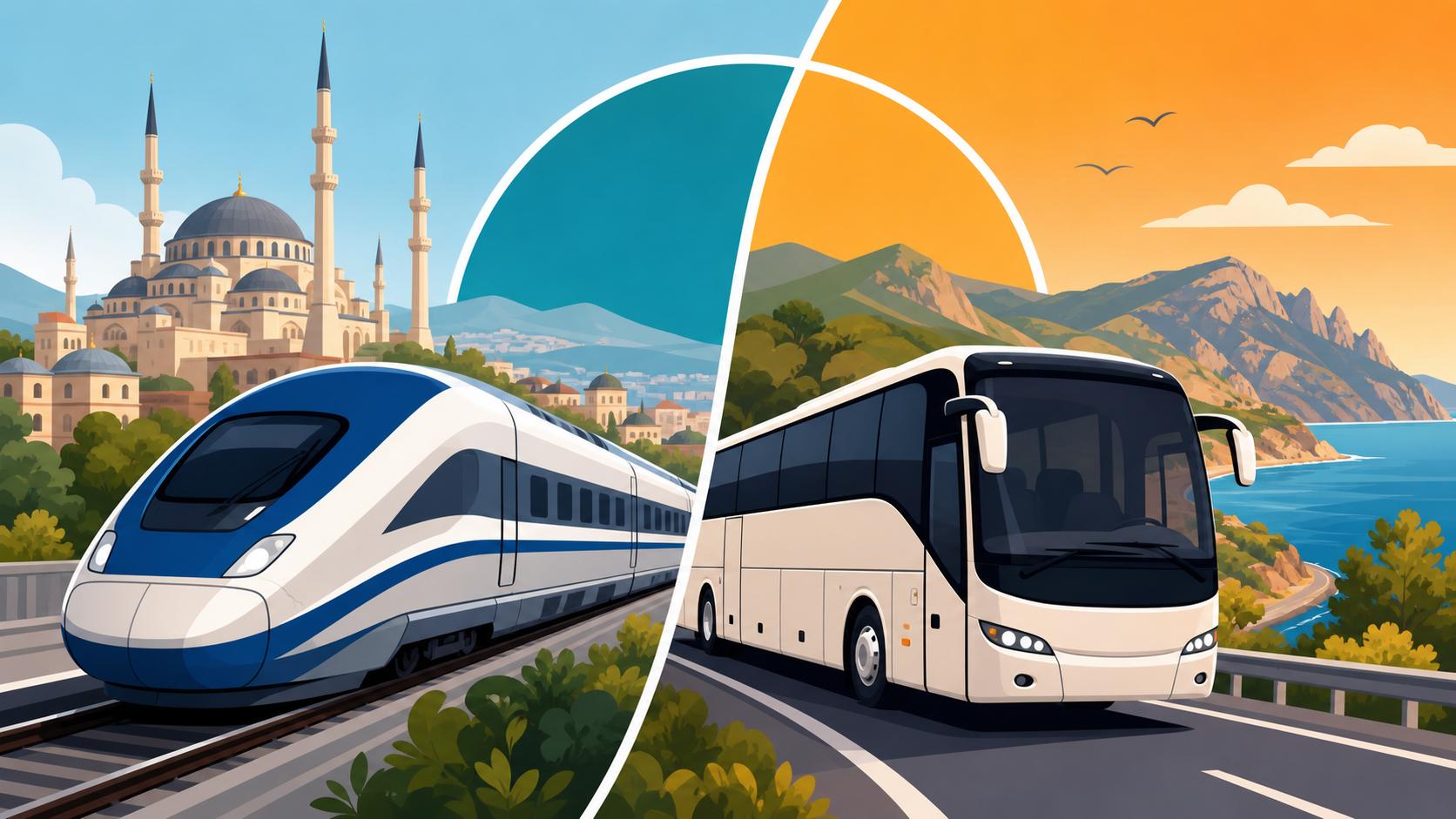
Choosing between the two often comes down to your destination. The YHT is superior in speed and comfort, but its reach is limited. The bus network is your "go-anywhere" solution. If you're staying in a Blueground apartment in Istanbul and want to see the ruins of Ephesus, the bus to Selçuk is your most direct route. If you want to visit the capital for a business meeting, the YHT is the only logical choice.
| Feature | High-Speed Train (YHT) | Luxury Long-Distance Bus |
|---|---|---|
| Speed | Very Fast (250 km/h) | Subject to Traffic |
| Reach | Limited to Major Cities | Every Town and Village |
| Booking | Difficult (Sells out fast) | Easy (Many options) |
| Comfort | High (More legroom) | Good (2+1 seating options) |
| Service | Minimal Snacks | Full Steward Service |
| Cost | Fixed / Affordable | Variable / Competitive |
If you are a heavy traveler, you will likely find yourself using a mix of both. I often use the YHT to get to Ankara, and from there, I catch a bus to deeper Anatolian spots like Cappadocia. This hybrid approach saves hours of travel time. To keep your devices charged during these long transit days, Amazon Turkey has a great selection of high-capacity power banks that are essential for any "Anatolian Explorer."
Practical Tips for the Road and Rail
One thing many expats overlook is the baggage policy. The YHT has specific racks for suitcases, but if you bring half your apartment, you will struggle. Buses are much more forgiving; they have massive under-carriage holds. If you are moving between Blueground locations and have a few large suitcases, the bus is actually much easier than trying to navigate train station stairs and narrow aisles.
Food is another consideration. While the bus provides snacks and the YHT has a cafeteria car (usually serving toasted sandwiches and tea), it’s always a good idea to bring your own supplies. I usually grab some nuts, fruit, and water before I head out. If you've just moved in and haven't found the local markets yet, you can even order bulk snacks from Amazon Turkey to have them ready for your trip.
Lastly, consider your connectivity. While traveling through mountainous regions, even the best local SIM can drop out. I’ve found that having an Airalo eSIM as a backup can sometimes catch a different tower's signal when my primary line fails. It’s a small price to pay for being able to track your bus’s progress on Google Maps so you know exactly when to wake up.
Dealing with Delays and Changes
In Turkey, things can change quickly. A bus might be delayed by weather in the mountain passes, or a train might have a technical fault. The key is to stay calm. The staff are generally very helpful, even if their English is limited. Using a translation app on your phone—powered by your Airalo data—can resolve 90% of communication hurdles.
If you are unlucky enough to have a significant delay, most major terminals have decent lounges or cafes where you can wait. If you are a frequent traveler, you might even consider getting a local bank account or credit card to take advantage of lounge access or ticket discounts. You can learn more about managing your finances in our guide on Cost of Living in Turkey 2026: Detailed Budgets for Singles and Families.
Finally, don't forget the logistical side of arriving in a new city. How will you get to your final destination? Most Otogars are on the outskirts of town. Check if your bus company offers that free "servis" shuttle I mentioned earlier. If not, apps like BiTaksi or Uber are your best bet. If you are moving for work, you might even need to look into Navigating the PTT Postal System and Private Courier Deliveries (Kargo) to have your larger belongings shipped ahead of you.
Summary of the Expat Travel Strategy
To truly enjoy Turkey, you have to embrace its movement. Whether it’s the quiet hum of the YHT as it glides toward Ankara or the rhythmic swaying of a luxury coach heading toward the Mediterranean, these journeys are where you see the real country. Stay in a comfortable, flexible spot like Blueground while you explore, keep your tech updated via Amazon Turkey, and never travel without a reliable data connection from Airalo.
If you are still in the early stages of your move, you might be overwhelmed by the administrative side of things. Don't worry; we've all been there. Whether it's figuring out The 99-Number: What Your T.C. Kimlik Number Gives You Access To in Daily Life or simply learning how to order a tea on a bus, every small victory makes you more of a local. Turkey is a country that rewards the curious and the prepared.
Disclaimer
This guide is for informational purposes only. Transportation schedules, prices, and regulations in Turkey can change frequently due to economic conditions and government policy updates. While we strive to provide the most accurate information for 2026, always verify ticket prices and terminal locations directly with the official TCDD or bus company websites before your journey. The mention of specific brands does not constitute a legal endorsement; they are included based on their common utility for the expat community.