Istanbul Neighborhood Guide: European vs Asian Side Lifestyles for Expats
Choosing where to live in Istanbul is a monumental decision that often feels like picking between two entirely different countries. I remember my first month in the city, dragging a suitcase across the Galata Bridge and feeling completely overwhelmed by the sheer scale of the sprawl. This guide solves that paralysis by breaking down the distinct lifestyles, costs, and cultural nuances of the European and Asian sides.
The Soul of the City: European vs. Asian Lifestyles
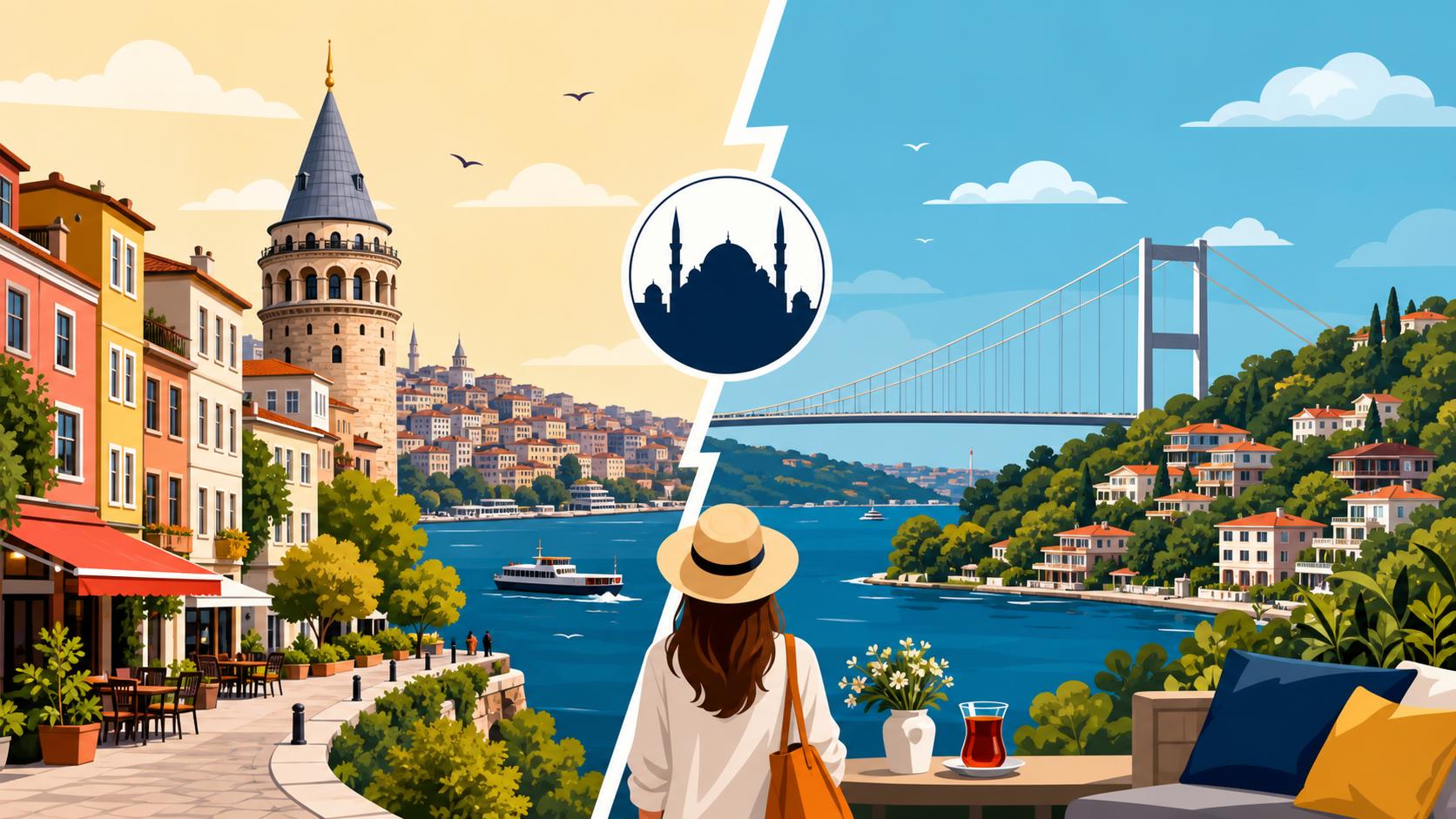
When you first arrive, everyone will tell you the same cliché: Europe is for business and nightlife, while Asia is for living and quiet. While there is a grain of truth there, the reality is far more layered. Living on the European side means being in the thick of the action. It is where the historic landmarks, the massive corporate headquarters, and the most famous nightlife districts reside. However, this comes with a level of density and noise that can be draining. If you choose this side, you are essentially signing up for a high-energy, fast-paced existence where the city never truly sleeps.
The Asian side, or Anatolia, offers a different rhythm. It feels more "Turkish" in many ways, with wider sidewalks, more green spaces, and a palpable sense of community. When I lived in Kadıköy, I actually knew my grocer’s name—something that rarely happened when I was based in the more transient neighborhoods of the European side. The pace is slower, the air often feels a bit cleaner, and there is a distinct lack of the "tourist trap" energy that permeates Sultanahmet or Taksim. For many, it is the sanctuary they need after a long day of navigating the chaotic center.
Understanding these differences is the first step in Living in Turkey as a Foreigner: The Ultimate Starter Guide (2027). You have to decide if you want to be the person who steps out of their door and into a whirlwind of activity, or the person who prefers a quiet tea by the seaside before starting their day.
The European Side: Energy, Tourism, and Business
The European side is the gateway for most expats. It is where you will find the most English-speaking services and the majority of international companies. If your job is located in Levent or Maslak, living on this side is almost a necessity to avoid the soul-crushing bridge traffic. Neighborhoods here vary wildly—from the ultra-modern skyscrapers of Şişli to the crumbling, bohemian charm of Beyoğlu.
One major advantage of the European side is the accessibility to high-end amenities. Whether it’s luxury shopping malls or international hospitals, everything is within reach. However, the cost of living—specifically rent—tends to be higher here for less space. You might find a beautiful apartment through Blueground that offers all the modern comforts you need, which is a lifesaver when you’re trying to avoid the stress of Renting in Turkey: Lease Contracts, Deposits, and Tenant Rights Explained. Their turnkey solutions are especially popular on this side of the city where older buildings often come with "character" (read: plumbing issues) that you might not want to deal with as a newcomer.
The Asian Side: Residential Calm, Local Charm, and Community
Cross the Bosphorus, and the atmosphere shifts. The Asian side is where you go to breathe. It’s a favorite for families and long-term expats who have outgrown the neon lights of Taksim. The lifestyle here revolves around the "sahil" (the coastline). On weekends, the parks along the water in Caddebostan or Moda are packed with people picnicking, skating, and walking their dogs. It feels more like a collection of villages than a gargantuan metropolis.
The community aspect on the Asian side is its strongest selling point. There is a sense of belonging that is harder to find in the more commercialized European districts. However, the downside is the commute. If you work in Europe, you will become very familiar with the ferry schedules. While the ferry is the most beautiful commute in the world, it loses its luster when you’re running late for a meeting in the rain. To stay productive during these transits, I always make sure my connectivity is sorted. Using Airalo for a local data plan ensures I’m never hunting for spotty ferry Wi-Fi, allowing me to answer emails while crossing between continents. Airalo is particularly helpful during those first few weeks when you’re moving between viewings on both sides of the city.
Top Neighborhoods on the European Side for Expats
If you’ve decided that the energy of Europe is for you, the next step is narrowing down the district. Istanbul is not a "walkable" city in its entirety; it’s a series of hubs. Your lifestyle will be dictated almost entirely by the three-block radius around your home.
Beşiktaş and the Bosphorus Corridor
Beşiktaş is the beating heart of the European side for many young professionals and students. It is vibrant, central, and has an incredible food scene. The neighborhood of Akaretler offers upscale dining, while the "Çarşı" (market) area is where you’ll find the famous fish market and endless rows of breakfast cafes. Living here puts you at the main transport hub for ferries, buses, and the metrobus.
Further up the coast are Bebek and Arnavutköy. These are the "prestige" neighborhoods. If budget is no object, these areas offer stunning Bosphorus views and a very high standard of living. However, be warned: the traffic on the single coastal road is legendary. If you move here, you’ll likely be ordering many of your household essentials online to avoid the gridlock. I’ve found that Amazon Turkey is indispensable for this. Whether it’s a new coffee machine or basic kitchenware, Amazon Turkey delivers reliably, which is a huge relief when you’re living in a hilly neighborhood with limited parking for shopping trips.
Şişli and Nişantaşı: The Luxury Hub
For those who want a more "Manhattan" feel, Şişli is the answer. Specifically, Nişantaşı is the fashion capital of Istanbul. It’s where you go for designer boutiques, high-end galleries, and European-style sidewalk cafes. It is incredibly central and well-connected by the M2 metro line.
The housing here is a mix of grand, high-ceilinged apartments from the early 20th century and sleek new developments. Many expats find that Blueground has a strong presence here, offering renovated flats that maintain the historic charm without the headache of old infrastructure. Living in Şişli also makes it easier to navigate the administrative hurdles of Turkish Residence Permits (Ikamet): The Complete Application Guide (2027), as many of the required translation and notary offices are clustered in this district.
Beyoğlu and Galata: Artistic and Central
Beyoğlu is the Istanbul you see in the movies. It’s the home of Istiklal Avenue, the Galata Tower, and the winding cobblestone streets of Cihangir. This is the bohemian center of the city, popular with artists, journalists, and writers. Cihangir, in particular, is an "expat bubble" where you’re just as likely to hear English or French as you are Turkish.
The lifestyle here is centered on cafe culture and nightlife. However, living here requires stamina. The hills are steep, the streets are noisy, and the buildings are often old. If you’re moving into a fifth-floor walk-up in Galata, you’ll quickly learn the value of home delivery. I remember ordering a heavy desk from Amazon Turkey and feeling immense gratitude that the courier hauled it up those stairs so I didn't have to. It’s these small conveniences that make living in the historic heart of the city sustainable.
Top Neighborhoods on the Asian Side for Expats
The Asian side is often overlooked by tourists, but for residents, it offers some of the highest quality of life in Turkey. It’s worth checking Best Cities in Turkey for Expats: Comparing Istanbul, Izmir, Ankara, and Antalya to see how Istanbul’s Asian side compares to other coastal hubs, as it often shares that relaxed "Izmir" vibe.
Kadıköy and Moda: The Heart of Cool
Kadıköy has arguably become the coolest neighborhood in Istanbul over the last decade. Moda, the residential tip of Kadıköy, is a sanctuary of narrow streets, vintage shops, and third-wave coffee houses. The lifestyle here is laid-back and progressive. You’ll see people reading on the rocks by the sea or playing music in the parks until late at night.
For a newcomer, Kadıköy is very welcoming. However, finding a rental can be competitive. Many expats opt for Blueground apartments in Moda to bypass the need for a local guarantor or the complexity of Navigating Closed Neighborhoods (Kapalı Mahalleler) Before Signing a Lease. Since some areas in Istanbul are now restricted for new residency permits, having a professional service help you navigate the legalities is crucial. Once you’re settled, you’ll find that staying connected is easy; I usually recommend an eSIM from Airalo for visitors or those in transition to ensure they can use maps to navigate Kadıköy's labyrinthine "Bar Street" area.
Bağdat Avenue: Upscale Residential Living
If Nişantaşı is the luxury of the European side, Bağdat Caddesi (The Avenue) is its Asian counterpart. This 14-kilometer stretch is lined with high-end shops, international restaurants, and some of the most expensive real estate in the city. The neighborhoods surrounding it, like Suadiye and Caddebostan, are incredibly popular with expat families.
The draw here is the space. The apartments are generally much larger than those in Europe, and the proximity to the long seaside park is a game-changer for runners and cyclists. It feels very safe and polished. Because this area is a bit further from the central ferry terminals, having a reliable internet connection is vital for checking the Marmaray train schedules. It is wise to keep an Airalo backup on your phone, as the Marmaray tunnels can sometimes interfere with local signal consistency.
Üsküdar and Kuzguncuk: Historic and Traditional
Üsküdar offers a more traditional Turkish experience. It is famous for its mosques, its historic waterfront, and the Maiden’s Tower. While it is more conservative than Kadıköy, it has pockets of incredible beauty and tranquility.
Kuzguncuk, a small neighborhood within Üsküdar, is like a time capsule. It’s a village of colorful wooden houses where Jews, Christians, and Muslims have lived side-by-side for centuries. It is quiet, artistic, and very community-oriented. If you choose to live here, you are choosing a life of quiet morning walks and local bakery runs. For setting up such a home, Amazon Turkey is perfect for finding the niche decor or organizational tools that the small local shops might not carry.
Practical Considerations: Commuting, Utilities, and Logistics
No matter which side you choose, the logistics of Istanbul will test your patience. The city is a beast that requires strategy to tame. From managing your Istanbulkart for the ferries to understanding how Setting Up Your Turkish Home: Utilities, Internet Providers, and Aidat works, there is a steep learning curve.
Navigating the Intercontinental Commute
The bridge is your enemy. Between 8:00 AM and 10:00 AM, and 5:00 PM and 8:00 PM, the bridges connecting Europe and Asia are essentially parking lots. If you live on one side and work on the other, your life will revolve around the Marmaray (the under-sea train) or the ferries.
The ferry is the "hack" to a happy life in Istanbul. It turns a stressful commute into a moment of zen with a glass of tea. To make this work, you need to live within walking distance of a pier (Beşiktaş, Karaköy, Eminönü on the European side; Kadıköy, Üsküdar, Bostancı on the Asian side). If you aren't near a pier, you'll be braving The Metrobus Etiquette: Surviving Istanbul's Intense Rush Hour Crowds, which is an experience I wouldn't wish on my worst enemy during July heat.
Setting Up Your Home
Once you have your keys, the real work begins. Getting furniture delivered in Istanbul can be a chaotic experience involving "ustas" (handymen) who may or may not show up on time. This is why many expats lean on Amazon Turkey for everything from bedding to electronics; the tracking and return policies are much more familiar to Westerners than the local independent shops.
Furthermore, if you are working remotely, your internet connection is your lifeline. While fiber is becoming common, the setup can take weeks. In the interim, an Airalo data package can bridge the gap, allowing you to tether your laptop and stay productive while you wait for the technician. If you want to skip this headache entirely, Blueground apartments come with high-speed internet already installed and utilities managed, which is why I often suggest them for the first six months of an expat’s journey.
Comparison of European vs. Asian Side Lifestyles
| Feature | European Side (Central) | Asian Side (Kadıköy/Avenue) |
|---|---|---|
| Vibe | High-energy, Touristy, Global | Local, Community-focused, Relaxed |
| Housing | Smaller, Historic, Expensive | Larger, Modern, Slightly Better Value |
| Commute | Metro-heavy, High Traffic | Ferry-dependent, Walkable Hubs |
| Nightlife | Rooftops, Clubs, Intense | Pubs, Live Music, Chill Cafes |
| Green Space | Limited (Belgrad Forest is far) | Abundant (Long seaside parks) |
| Shopping | Luxury Malls & Bazaars | Boutique Streets & Local Markets |
Making the Choice: Which Side Fits Your Needs?
Ultimately, the choice comes down to your personal "chaos threshold." When I first moved here, I needed the European side. I wanted to see the Galata Tower every morning and be in the center of the madness. I spent my weekends exploring Turkish Supermarkets Explained: The Difference Between Migros, Carrefour, Şok, and Bim and getting lost in the spice bazaars.
But as the years went by, the noise began to grate. I found myself craving the Sunday mornings in Moda, where the only sound was the clinking of tea spoons and the distant horn of a ferry. I started appreciating the Weekly Pazar Markets: How to Buy Fresh Produce and Negotiate Like a Local in Göztepe more than the fancy malls of Levent.
If you are young, single, or here for a short-term high-intensity contract, the European side (Beşiktaş or Şişli) is probably your best bet. If you have a family, work remotely, or simply value peace and quiet after 10:00 PM, the Asian side (Moda or Suadiye) will feel more like home. Don't be afraid to use a service like Blueground to test out a neighborhood for a few months before committing to a long-term lease. Istanbul is a city that reveals itself slowly, and your first "home" might just be a stepping stone to the neighborhood where you truly belong.
Disclaimer
This guide is intended for informational purposes only and reflects the personal experiences of the author. Real estate laws, residency requirements, and prices in Turkey are subject to frequent change. Always consult with official government sources or legal professionals before signing contracts or making significant financial commitments.