Why Drinking Tap Water is Rare and How to Order Damacana Water Delivery
One of the most confusing moments for any new arrival in Istanbul or Antalya is watching a neighbor lug a massive blue plastic jug down the hallway while the kitchen tap sits perfectly functional just a few feet away. I remember my first week in Kadıköy, blissfully making tea with tap water until a local friend looked at my kettle with genuine horror and explained that I was essentially drinking liquid limestone. This guide solves the mystery of Turkish water safety and provides a step-by-step tutorial on mastering the ubiquitous "Damacana" delivery system.
Understanding the Tap Water Situation in Turkey
The question of whether you can drink the tap water in Turkey is a point of constant debate among locals and expats alike. Officially, the municipal water authorities in major cities like Istanbul (ISKI) and Ankara (ASKI) state that the water leaving their treatment plants is potable and meets World Health Organization standards. However, if you look at the habits of the 85 million people living here, you will notice that almost nobody drinks it. This discrepancy is a core part of Living in Turkey as a Foreigner: The Ultimate Starter Guide (2027) because it dictates your daily habits and monthly household budget.
The Infrastructure Challenge: Why Local Pipes Matter
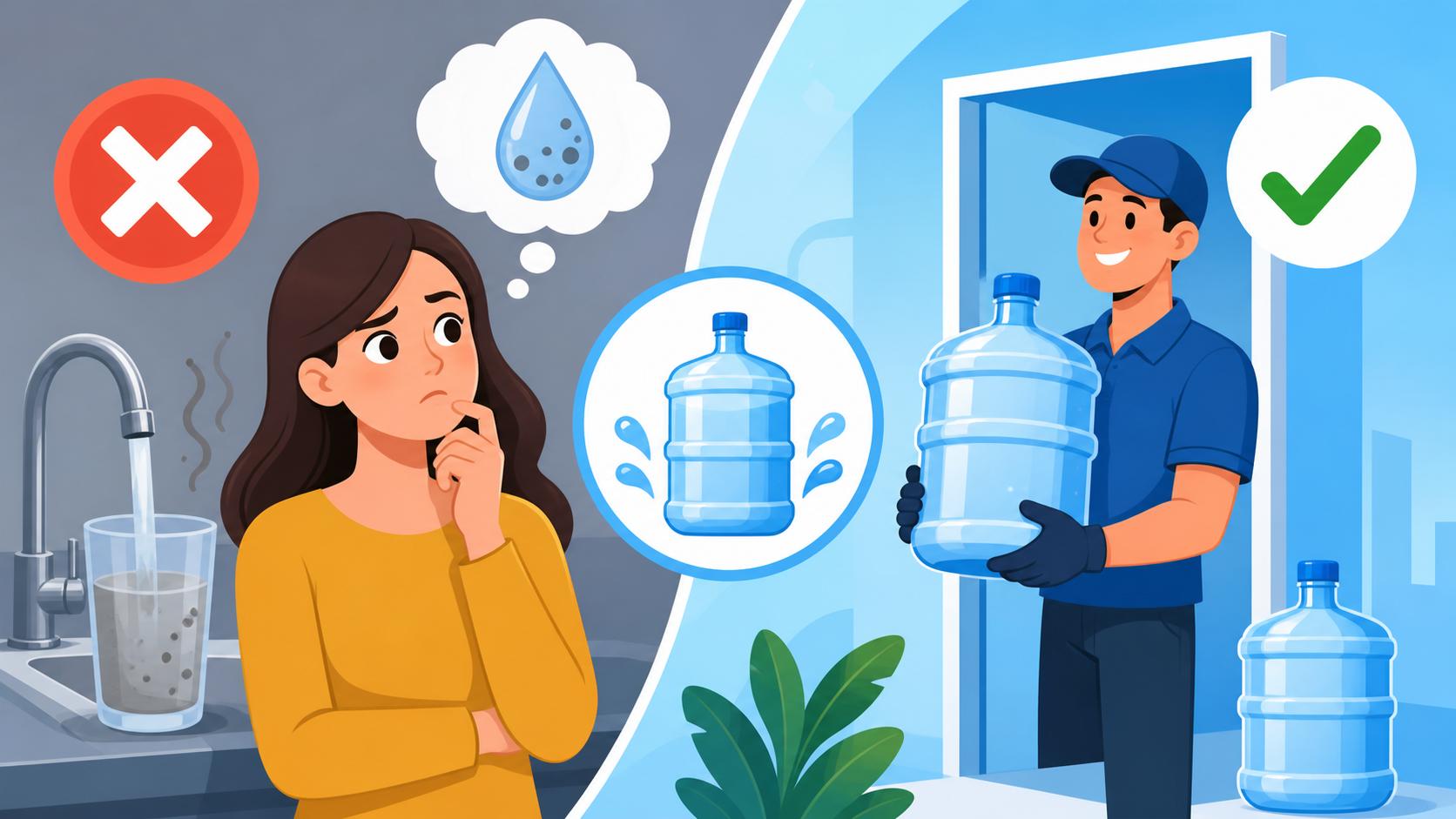
The primary reason locals avoid the tap isn't necessarily the water treatment plant itself, but the journey the water takes to reach your glass. Turkey has seen massive urban transformation, but many older apartment buildings still rely on decades-old lead or galvanized steel pipes. These pipes are prone to corrosion and sediment buildup, which can leach heavy metals or unpleasant particles into your water. Even if you are staying in a high-end apartment through a provider like Blueground, where the interiors are pristine, the underlying city infrastructure might still be aged.
Furthermore, many Turkish apartments use rooftop or basement water tanks (depo) to ensure supply during maintenance. If these tanks are not cleaned professionally every six months, they become breeding grounds for bacteria and silt. While the water might be fine for showering or washing dishes, the risk of Health Hazards and Prevention: Tap Water Safety and Common Stomach Bugs remains high if consumed directly. Many travelers get the "Istanbul belly" from using tap water for ice cubes, and it is a mistake you only make once.
The Taste and Mineral Content Factor
Even in brand-new buildings with modern PVC piping, the taste of Turkish tap water is often a deterrent. To combat the potential for bacterial growth in a vast, sprawling network, municipal authorities use a significant amount of chlorine. The result is a distinct "swimming pool" aroma that ruins the delicate flavor of Turkish tea or coffee. Additionally, the water in regions like the Aegean and Mediterranean is incredibly "hard," meaning it has a high calcium and magnesium content.
This hardness doesn't just affect the taste; it wreaks havoc on your appliances. If you use tap water in your kettle or espresso machine, you will see a thick layer of white limescale (kireç) form within days. This is why residents often check the Cost of Living in Turkey 2026: Detailed Budgets for Singles and Families to account for the frequent replacement of small appliances or the purchase of descaling agents. For the best experience, most expats avoid the tap for anything intended for consumption, including cooking pasta or rice.
Health Concerns and the Role of Chlorine
While the chlorine keeps the water "safe" from a microbiological standpoint, the long-term effects of consuming heavily chlorinated water, combined with potential contaminants from old city pipes, make bottled water a non-negotiable for most. Foreigners often find that their skin and hair react differently to the water here as well. It is common to see Finding Medical Care in Turkey: Public Hospitals vs JCI-Accredited Clinics being discussed in expat circles simply because people are dealing with localized skin irritations or hair loss due to the high mineral and chlorine content in the shower.
To stay updated on local health advisories or to find the nearest pharmacy for skin treatments, having a reliable internet connection is vital. Using a service like Airalo allows you to maintain data access as soon as you land, so you can research the water quality in your specific neighborhood or find a local "Eczane" to buy filtered shower heads. Most veteran expats eventually invest in these filters to mitigate the effects of the hard water on their bodies.
Navigating the Damacana Water Delivery System
Once you accept that tap water is for cleaning and bottled water is for living, you enter the world of the "Damacana." A Damacana is a 19-liter (roughly 5-gallon) reusable polycarbonate or glass bottle that serves as the primary water source for almost every Turkish household. Mastering this system is a rite of passage for every foreigner, and it is a key part of Setting Up Your Turkish Home: Utilities, Internet Providers, and Aidat because, in Turkey, water is as essential a utility as electricity.
What Exactly is a Damacana?
The 19-liter jug is the industry standard. When you first move into an apartment, you won't just be paying for the water; you will be paying for the "deposit" (depozito) on the physical bottle. As of 2026, these deposits have increased in price, but they are a one-time fee. Once you have a bottle from a specific brand, you simply trade your empty bottle for a full one and pay only for the water itself.
There are dozens of brands to choose from, ranging from local springs like Erikli and Buzdağı to international names like Danone (Hayat). Erikli is often considered the "gold standard" for its balanced mineral profile and taste, though it is usually the most expensive. You can find many of these brands listed when browsing Turkish Supermarkets Explained: The Difference Between Migros, Carrefour, Şok, and Bim, though the delivery service often operates independently of the grocery stores.
How to Order: Apps, Websites, and the Classic Phone Call
In the past, you had to call a local "sucusu" (water man) and hope your basic Turkish was enough to convey your address. Today, the process is incredibly digital. The most popular way to order is through apps like Getir, Yemeksepeti, or a dedicated water app called BiSu. BiSu is particularly helpful because it allows you to compare the pH levels and mineral content of different brands available in your neighborhood.
If you are living in an Istanbul Neighborhood Guide: European vs Asian Side Lifestyles for Expats, you will find that delivery times are remarkably fast—often under 30 minutes. You open the app, select your brand, choose whether you have an empty bottle to exchange, and hit order. This is another reason why having a local SIM or a roaming solution like Airalo is essential; you don't want to be stuck without water because you couldn't access the app while your home internet was being installed.
The Deposit System and Returnable Bottles
The deposit system can be a bit tricky for newcomers. If you have an empty Erikli bottle, you can easily swap it for a new Erikli. However, if you want to switch brands—say, from Hayat to Erikli—the delivery person might refuse to take the old bottle, or they may charge you a "brand transition" fee. It is usually best to pick a brand and stick with it.
If you are moving into a managed apartment, such as those provided by Blueground, ask the concierge or the move-in coordinator which water brand they recommend or if there is already a bottle in the unit. This saves you the initial hassle of paying a new deposit. When you eventually leave Turkey, you can sometimes "sell" your empty bottles back to the local water shop, though most people simply pass them on to the next tenant.
| Water Option | Volume | Estimated Cost (2026) | Best Use Case |
|---|---|---|---|
| Single-Use Bottle | 0.5L – 1.5L | 10 – 25 TL | On-the-go / Tourists |
| Grocery Store Jug | 5L | 40 – 60 TL | Emergency backup / Small households |
| Standard Damacana | 19L | 110 – 160 TL | Standard household drinking/cooking |
| Glass Damacana | 15L – 19L | 200+ TL | Health-conscious / Premium taste |
| RO Filtered Water | Unlimited | 5,000+ TL (Setup) | Long-term residents / Eco-friendly |
Equipment You Need for Damacana Living
You cannot simply pour water out of a 19-liter jug; it is far too heavy and cumbersome. To make the system work, you need specific hardware. Most of these items can be found easily on Amazon Turkey, which has become a lifesaver for expats looking for household goods without navigating the chaos of local hardware bazaars.
Manual and Electric Pumps
The simplest solution is a manual hand pump (su pompası) that attaches to the neck of the bottle. You push down on the top to dispense water. While cheap and reliable, they can be noisy and often drip. A more modern and popular choice is the USB-rechargeable electric pump. These are small devices that sit on top of the bottle; you press a button, and the water flows steadily. I highly recommend ordering one of these from Amazon Turkey during your first week. They are affordable, portable, and much easier to use than the manual version.
Water Dispensers (Sebil)
If you have the floor space, a "sebil" (water dispenser) is the ultimate luxury. These units hold the bottle (either top-loading or bottom-loading) and provide instant chilled and hot water. While the unit itself costs more and consumes electricity, it eliminates the need to keep water bottles in the fridge or wait for the kettle to boil for tea. For families, this is often the preferred method. You can find a wide variety of these dispensers on Amazon Turkey, with brands like Arçelik and Beko offering great local warranty support.
Storage and Aesthetics
Let's be honest: a giant blue plastic jug doesn't always match a carefully curated living room. Many expats buy decorative wooden stands or wicker covers to hide the Damacana. If you are living in a smaller apartment, you’ll need to designate a "drop zone" near the door for the delivery person to leave the full bottle and pick up the empty one. Navigating these small logistical hurdles is a standard part of Daily Life & Culture: Religion, Social Etiquette, and Making Friends because even your neighbors will have opinions on which water brand is the "lightest" (yumuşak içimli).
Alternatives to 19-Liter Jugs
While the Damacana system is the most common, it isn't the only way to get clean water in Turkey. Depending on your living situation and environmental concerns, you might consider other paths.
Under-Sink Filtration Systems (RO Units)
If you plan on staying in Turkey for several years, an Reverse Osmosis (RO) filtration system is a fantastic investment. These systems are installed under your kitchen sink and come with a separate small faucet for drinking water. They remove the chlorine, heavy metals, and minerals that make the tap water unpalatable. This eliminates the need for plastic bottle deliveries entirely, reducing your environmental footprint and the hassle of waiting for the "sucusu."
However, you must ensure the filters are changed regularly. Finding a reliable technician can be a challenge, so many expats use Navigating the PTT Postal System and Private Courier Deliveries (Kargo) to order high-quality replacement filters from abroad if they prefer specific international brands. Keep in mind that installing these might require drilling a hole in the countertop, which may not be allowed if you are renting. Always check your lease terms as discussed in Renting in Turkey: Lease Contracts, Deposits, and Tenant Rights Explained.
Supermarket Deliveries and 5-Liter Jugs
For those who live alone or don't drink much water, ordering 5-liter jugs from online grocery services like Migros Sanal Market or Getir can be a middle ground. These are not part of the deposit system; they are single-use plastics that you recycle after use. While more expensive per liter than the 19-liter Damacana, they are easier to store and don't require any special pumps or dispensers. If you are frequently ordering other household items, you can even look into Customs Taxes on International Amazon Packages Delivered to Turkey if you prefer to import specific high-end filtration pitchers like Brita, though the filters themselves are now widely available locally.
Eco-Friendly Considerations
One of the biggest downsides to the water culture in Turkey is the reliance on plastic. Even though the 19-liter bottles are reused dozens of times, they eventually wear out and are recycled. If you are concerned about microplastics, you can opt for glass Damacanas (cam damacana). These are significantly heavier and more expensive, and not every brand offers them, but they provide the cleanest taste and the lowest environmental impact. Brands like Pınar and Fuska often have glass options available on the BiSu app.
Essential Tips for Your First Water Order
When the delivery person arrives at your door, there is a certain etiquette to follow. It might feel a bit overwhelming the first time, but you will be a pro by the third delivery.
- Keep Cash (Small Notes) Handy: While most apps allow you to pay by credit card, the local neighborhood water shops often prefer cash if you are calling them directly. Even if you pay by app, a small tip (5-10 TL) for the delivery person is appreciated, especially if they had to carry two 19-kg bottles up five flights of stairs because your elevator was broken.
- The "Empty" Protocol: Always have your empty bottle ready by the door. The delivery guys are usually in a massive rush, and they appreciate not having to wait for you to fish the bottle out from under the sink.
- Check the Seal: Every full Damacana comes with a plastic shrink-wrap seal and a cap. Ensure the seal is intact when it arrives to guarantee that the water hasn't been tampered with or refilled from a tap.
- Learn the Lingo: You don't need fluent Turkish, but knowing a few words goes a long way. "Su" is water, "Boş" is empty, and "Depozito" is deposit.
If you are ever unsure about the safety of a specific water source, especially while traveling to more rural areas, it is always better to err on the side of caution. Many expats find that Emergency Medical Care in Turkey: Dialing 112, Ambulances, and Triage is excellent, but no one wants to spend their weekend in a clinic because of a glass of bad water. Stick to the brands you recognize, keep your electric pump charged, and enjoy the convenience of a system that brings fresh spring water directly to your kitchen for just a few dollars a month.
Disclaimer
The information provided in this guide is for educational and informational purposes only and is based on personal expat experiences and current local practices in Turkey as of 2026. Water quality and municipal standards can vary significantly by municipality and individual building infrastructure. Always consult with your local health department or a professional plumber regarding the safety of your specific tap water source. The author and publisher are not responsible for any health issues or property damage resulting from the use of tap water or the installation of third-party water filtration and delivery systems.