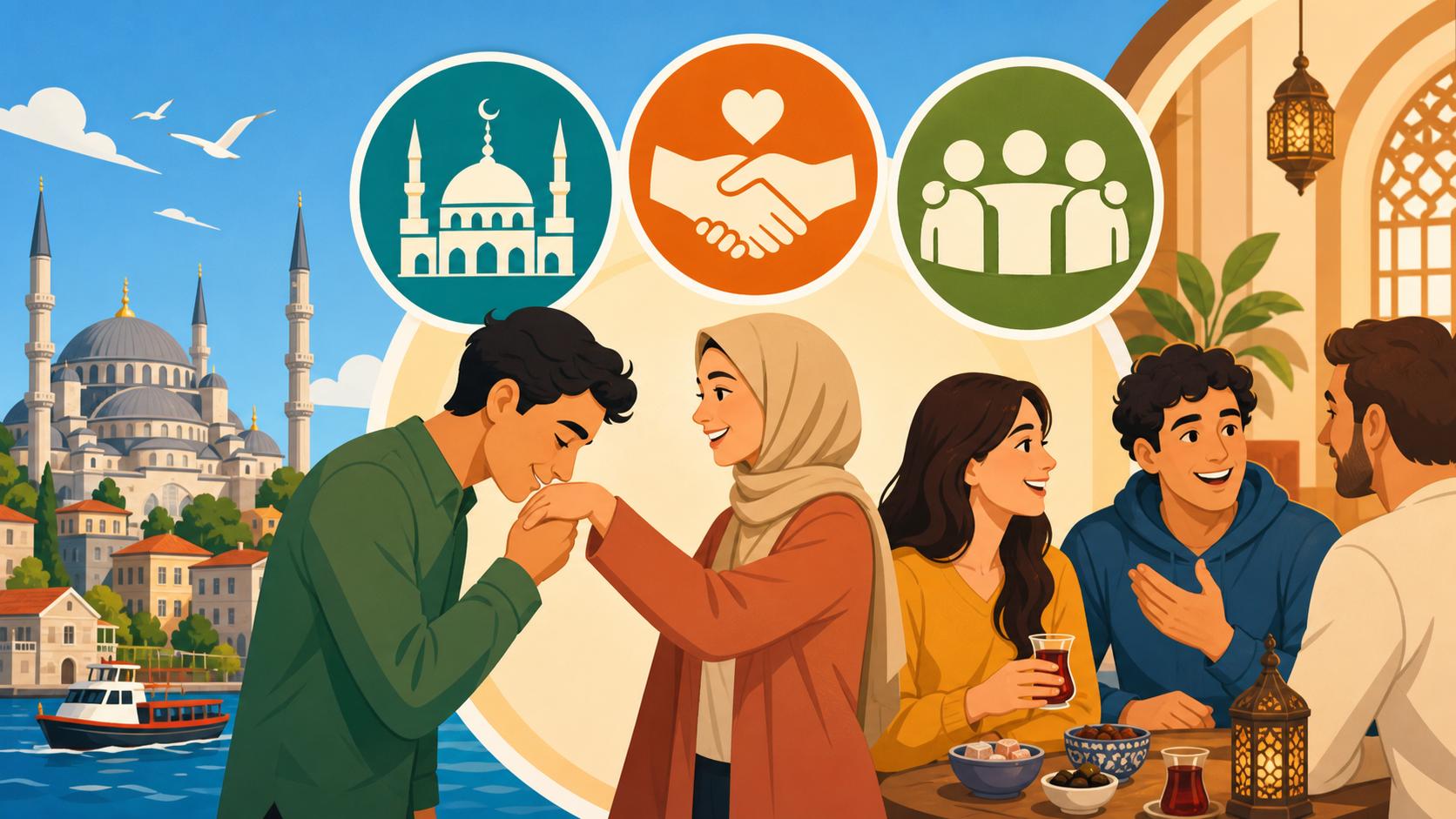
Daily Life & Culture: Religion, Social Etiquette, and Making Friends
Navigating the intricate social fabric of Turkey can feel like trying to solve a puzzle where the pieces change shape just as you think they fit. I remember sitting in my first Istanbul apartment, paralyzed by whether I should offer my neighbor a piece of cake or if that was "too much" for a Tuesday. This guide deconstructs those cultural nuances, from religious observations to the subtle art of making lifelong friends, ensuring you feel like a local rather than a perpetual observer.
Understanding the Spiritual Pulse: Religion in Modern Turkey
While Turkey is a secular state by law, the cultural heartbeat of the country is deeply intertwined with Islamic traditions. For an expat, this isn't just about theology; it dictates the rhythm of your day, the availability of certain services, and the general mood of your neighborhood. When you first arrive, the most immediate religious experience is the Ezan, or the call to prayer. It happens five times a day, and depending on your proximity to a minaret, it will either be a melodic background hum or a 4:30 AM wake-up call that vibrates your windows. Over time, you stop hearing it as an interruption and start using it as a temporal marker—a signal that it is time for lunch or that the workday is winding down.
The diversity of religious practice in Turkey is vast. In neighborhoods like Kadıköy or Beşiktaş, you might see a more liberal, secular lifestyle where religious influence is subtle. Conversely, in districts like Fatih or Üsküdar, the atmosphere is more conservative. Understanding this spectrum is vital for your comfort. It is not about conversion; it is about "Uyum" (harmony). Respecting these boundaries means being mindful of your attire near mosques and understanding why your local butcher might be closed on Friday afternoons. For those still in the planning phase, using a service like Blueground can help you find apartments in neighborhoods that match your preferred lifestyle and cultural comfort zone before you commit to a long-term lease.
Navigating Ramadan (Ramazan) as an Expat
Ramadan is perhaps the most significant cultural shift you will witness. For thirty days, the pace of life slows down during the day and explodes into a festive atmosphere at night. Even if you aren't fasting, it is essential to understand the etiquette of Navigating Ramadan (Ramazan) as a Non-Muslim Expat in Turkey. Eating or drinking conspicuously on the street during daylight hours is generally considered impolite in more conservative areas, though it is perfectly acceptable in international hubs. I once made the mistake of eating a sandwich while walking through a residential part of Ankara in July; the looks I received weren't aggressive, but they were certainly heavy with a sense of "really, now?"
The highlight of the month is the Iftar, the meal that breaks the fast at sunset. Many municipalities set up massive "Iftar Tents" where thousands of people eat together for free. As an expat, being invited to an Iftar at a Turkish home is a profound honor. You will likely be served dates, olives, "Ramazan Pidesi" (a special flatbread), and more food than you can physically consume. It is a time of extreme hospitality. If you are hosting your own dinner or need to stock up on essentials for the month, Amazon Turkey is a lifesaver for ordering bulk dry goods and specialty items that might sell out quickly in local shops during the pre-Iftar rush.
Another unique aspect of Ramadan is the "Ramazan Davulcusu"—the traditional drummers who roam the streets around 3:00 AM to wake people up for "Sahur" (the pre-dawn meal). It can be jarring for a newcomer, but it is a cherished tradition. Instead of complaining to the police, locals usually give the drummer a small tip at the end of the month. Embracing these quirks rather than fighting them is the secret to a happy life here. You will find that the shared experience of the month creates a unique bond between you and your neighbors, regardless of your personal beliefs.
Religious Holidays: Bayram Traditions and Expectations
There are two major religious holidays (Bayrams) that you need to mark on your calendar: Ramazan Bayramı (the feast at the end of Ramadan) and Kurban Bayramı (the Feast of Sacrifice). During these times, the country effectively shuts down. Banks, government offices, and many shops close for three to four days. It is a time for family reunions, which means the highways are packed and domestic flights are sold out months in advance. If you plan to travel during these periods, make sure your connectivity is sorted. It is wise to have Airalo active so you can navigate the inevitable traffic jams or contact your hosts if you are stuck in a rural area without local Wi-Fi.
Kurban Bayramı is particularly intense for foreigners. It involves the ritual sacrifice of livestock (sheep or cows), with the meat being distributed to the poor. While this is now heavily regulated and usually takes place in designated areas outside the city centers, you may still see some of the traditional aspects in smaller towns. It is a period of intense charity and community support. You will see people "paying it forward" in many ways, and as a resident, you might be asked to contribute to a local charity or "vakıf." This is a great way to show your commitment to the community.
During Ramazan Bayramı, also known as Şeker Bayramı (Sugar Feast), the focus is on sweets and visiting elders. Children will often knock on doors in the apartment building looking for candy, much like Halloween. It is wise to have a stash of chocolates or traditional Turkish delight ready. These small gestures go a long way in building rapport. If you’ve just moved in and are still setting up your kitchen, you can find a wide variety of high-quality sweets and serving trays on Amazon Turkey to ensure you’re prepared for the inevitable visits from neighborhood kids.
Social Etiquette: The Unwritten Rules of Turkish Hospitality
Turkish hospitality, or "Misafirperverlik," is legendary, but it comes with a set of unwritten rules that can be exhausting if you aren't prepared. In the West, "come over whenever" is often a polite brush-off. In Turkey, it is often a sincere instruction. The social fabric here is built on physical presence and the sharing of time. You cannot simply "drop by" for five minutes; a visit is a commitment to at least two glasses of tea and a detailed conversation about your family’s health. Learning the nuances of Social Etiquette in Turkey: Greetings, Removing Shoes, and Hospitality Norms is your first step toward true integration.
One thing that caught me off guard was the concept of "borç" (debt)—not financial debt, but social debt. If someone does you a favor, there is an unspoken expectation that you will return it, or at least acknowledge it with a small gift. This is why you will often see neighbors exchanging plates of food. If a neighbor brings you a plate of "Sarma" (stuffed vine leaves), never return the plate empty. Fill it with some cookies or fruit before handing it back. This "plate economy" is the backbone of neighborhood relations in Turkey.
Meeting and Greeting: From Handshakes to the Double Kiss
Greetings in Turkey are more formal than in many Western cultures. When entering a room, you should ideally greet the oldest person first. Men generally shake hands, though among close friends, the "double kiss" on the cheeks is standard. Women also use the double kiss with other women and male friends. However, if you are in a more conservative environment, a simple nod and a hand over the heart is a respectful way to greet someone of the opposite sex if they don't extend their hand first.
Using the correct honorifics is vital. Calling a man "Bey" and a woman "Hanım" after their first name (e.g., Ahmet Bey, Ayşe Hanım) is the standard for professional and semi-formal interactions. If you are speaking to someone significantly older, using "Abi" (older brother) or "Abla" (older sister) is a way to show respect and warmth. This can be tricky to master, but locals are incredibly forgiving of foreigners who make an effort. For a deeper dive into how this applies to the office, check out Turkish Business Culture: Communication Styles, Meetings, and Etiquette.
Another essential phrase is "Kolay Gelsin" (may it come easy to you). You say this to anyone working—the cashier, the street sweeper, the security guard at your Blueground apartment complex. It is a simple acknowledgment of their labor, and it immediately marks you as a "cultured" foreigner. Similarly, "Afiyet Olsun" (may it be a good appetite) is said before, during, and after meals. These linguistic "grease" phrases make daily interactions much smoother.
House Etiquette: Shoes, Tea, and Never Say No
If you are invited to a Turkish home, the first rule is: take off your shoes. You will see a pile of shoes outside the door or just inside the entryway. Your host will almost certainly offer you "misafir terliği" (guest slippers). Even if you think your socks are embarrassing, wear the slippers. It is a matter of hygiene and respect for the household.
Once you are seated, the tea will start flowing. Turkish tea is not just a drink; it is a social contract. You will be served in a small, tulip-shaped glass. Do not put milk in it. If you are finished and do not want more, place your teaspoon across the top of the glass. If you leave the spoon in the saucer, your host will take it as a sign that you are ready for a refill. To learn more about this ritual, see Turkish Tea Culture: How to Accept and Refuse Hospitality Politely at Shops.
Food is another area where "no" is rarely accepted. Your host will likely offer you three or four helpings of everything. The trick is to take very small portions initially. If you clear your plate, it will be refilled. If you say you are full, they will likely say "just one more bite." It is a performative dance of generosity. To avoid offending, use the phrase "Elinize sağlık" (health to your hands) to the cook. It is the ultimate compliment in a Turkish kitchen and can get you out of eating a fifth piece of "Börek" if you say it with enough sincerity.
Communication Styles: High Context vs Directness
Turkish communication is "high context," meaning a lot of information is conveyed through body language, tone, and shared understanding rather than just words. A sharp "tsk" sound made by flicking the tongue against the roof of the mouth while tilting the head back means "no." It can feel rude to a Westerner, but it is actually a very standard, neutral negative. Similarly, a wide range of hand gestures is used to emphasize points.
Directness is often avoided to save "face." If you ask a shopkeeper for something they don't have, they might not say "no." They might say "it's coming tomorrow" or "let me check in the back" and never return. This isn't lying; it's a way to avoid the negativity of a direct refusal. This can be frustrating when you are trying to get things done, but learning to read between the lines is an essential expat skill.
This indirectness also applies to criticism. If a neighbor has an issue with your noise levels, they might not knock on your door and complain. Instead, they might mention to the "Kapıcı" (caretaker) that "the building has become very lively lately." You are expected to pick up on these subtle cues. If you are finding the cultural distance difficult to navigate, reaching out to others in Expat Support Groups: Managing Isolation and Culture Shock in Turkey can provide a much-needed reality check.
Making Friends: Building a Support Network in a Foreign Land
Making friends in Turkey is surprisingly easy but keeping them requires work. Turks are incredibly warm and will often treat a new acquaintance like a long-lost cousin within the first hour. However, this initial warmth can sometimes fade if you don't follow up. The concept of "dostluk" (deep friendship) is taken very seriously. A friend is someone you can call at 3:00 AM if your car breaks down, and they will expect the same from you.
As an expat, your first circle of "friends" will likely be your neighbors. The "Neighbor Culture" in Turkey is much stronger than in many Western cities. It is common to know the names of everyone on your floor and for them to know everything about you. While this can feel like a lack of privacy, it is actually a safety net. In the event of an emergency, your neighbors will be the first to help.
The Neighbor Culture: Why Your Kapıcı is Your Best Friend
In most Turkish apartment blocks (apartman), there is a "Kapıcı." This person is the building’s caretaker, and they are the gatekeeper of all local knowledge. They collect the trash, sweep the stairs, and often deliver bread and newspapers in the morning. They know which plumber is honest, which grocery store has the freshest tomatoes, and who is moving in or out.
Building a good relationship with your Kapıcı is essential. A small tip at the end of the month or a gift during Bayram will ensure that your packages are safe and your water leak is fixed immediately. They are also your primary point of contact for understanding the building's "Aidat" (monthly maintenance fee). If you are looking for a place where these services are professionally managed, Blueground apartments often include streamlined communication for maintenance, which can be a relief if your Turkish isn't yet up to the task of negotiating with a traditional Kapıcı.
Beyond the Kapıcı, don't be afraid to strike up conversations with the owners of your local "Bakkal" (small grocery store). These shops are the social hubs of the neighborhood. By shopping there regularly and offering a "Hayırlı işler" (may your business be blessed), you will quickly become part of the neighborhood's daily life. This is where the real "friend-making" happens—in the three-minute chats over a loaf of bread.
Finding Expat Communities and Local Hobby Groups
While integrating with locals is the goal, sometimes you just need someone who understands why the "e-Devlet" website is driving you crazy. Istanbul, Ankara, and Izmir have thriving expat communities. Platforms like Internations, Facebook groups (such as "Foreigners in Istanbul"), and Meetup are great starting points. You will find everything from book clubs to hiking groups.
If you are moving with children, school gates are the primary social hub. Whether you choose an international school or a local one, the "parents' WhatsApp group" will be your lifeline for everything from birthday parties to finding a reliable pediatrician. For those without kids, hobby groups are the way to go. Photography walks, yoga in the park, and "Tavla" (backgammon) tournaments are all common.
Joining a language school like TÖMER is also a dual-purpose strategy. You gain essential skills through Learning Turkish for Life and Work: TÖMER, Language Schools, and Self-Study and meet a cohort of people in the exact same boat as you. Many of my longest-lasting friendships in Turkey started in a windowless classroom while we all struggled to figure out the vowel harmony of the suffix "-dir."
Language as a Bridge: The Power of 'Bir Çay Daha'
You do not need to be fluent in Turkish to live here, but you do need to try. The "expats who never learn a word" are often the ones who feel most isolated. Even a few dozen words can transform your experience from being a "turist" to being a "komşu" (neighbor). Turks are incredibly patient with language learners and will often give you a discount or an extra treat just because you tried to order in Turkish.
The phrase "Bir çay daha lütfen" (one more tea, please) is more than a request; it is an invitation to stay longer. Socializing in Turkey is often centered around tea and coffee. If you are sitting in a "Çay Bahçesi" (tea garden), don't rush. The slower pace of social interaction is something many expats find difficult at first, but it is where the real connections are made.
If you're using apps like Airalo to stay connected while out, you can easily look up words on the fly. I spent my first six months with a translation app permanently open on my phone. People didn't find it rude; they found it endearing that I wanted to communicate correctly. This effort signals that you respect the culture enough to meet it halfway.
Domestic Life and Practical Integration
Living in Turkey is a sensory experience. From the smell of freshly baked "Simit" in the morning to the sound of the scrap metal collector (Eskici) yelling in the street, your domestic life will be different from what you’re used to. Practical integration involves mastering the local systems, from utility payments to the art of the "Pazar" (weekly market).
One of the first shocks for many is the "IMEI Rule." If you bring a phone from abroad, it will be blocked after 120 days unless you pay a significant tax. It is one of the most common frustrations for newcomers. Make sure you read up on The Turkey IMEI Rule: How to Register Foreign Phones in 2026 early so you aren't suddenly cut off from your banking apps and maps.
Setting Up Your Turkish Home: Modern Comforts
When you first move into a Turkish apartment, you might find it completely empty—sometimes even missing light fixtures and kitchen cabinets. This is where choosing a furnished provider like Blueground can save you thousands of dollars and weeks of headaches. They provide move-in-ready homes with high-speed internet already connected, which is a major win given how long it can take to get a local fiber line installed.
If you are furnishing your own place, you will become very familiar with "Spot" shops (second-hand furniture) and the giant malls. For the small things that make a house a home—bedding, kitchen gadgets, and electronics—Amazon Turkey is incredibly reliable. Their delivery speeds in major cities are impressive, and it saves you from trying to haul a vacuum cleaner across town on the Metrobus.
Shopping Habits: From the Weekly Pazar to E-Commerce
Shopping in Turkey is a hybrid experience. For fresh produce, nothing beats the "Pazar." Every neighborhood has a designated day where the streets are closed off, and farmers bring in their goods. It is loud, crowded, and significantly cheaper than the supermarket. To navigate this like a pro, read Weekly Pazar Markets: How to Buy Fresh Produce and Negotiate Like a Local.
For your daily essentials, you will choose between the "Big Three" discounters: BİM, A101, and Şok, or the more upscale Migros and Carrefour. Understanding the hierarchy of these stores will save you money. For a full breakdown, see Turkish Supermarkets Explained: The Difference Between Migros, Carrefour, Şok, and Bim.
E-commerce is massive in Turkey. Trendyol, Hepsiburada, and Amazon Turkey are the dominant players. Most locals do the bulk of their non-food shopping online. The "Kargo" (courier) system is surprisingly efficient, though you should expect the delivery person to call you when they are five minutes away. If you don't answer your phone, they might not deliver, so keep your Airalo data active!
Digital Integration: Staying Connected
Turkey is a digital-first country. From paying your taxes to booking a doctor's appointment, everything happens through "e-Devlet" (the government's digital gateway). Getting your e-Devlet password from the PTT (post office) should be one of your first tasks after receiving your residence permit.
For daily communication, WhatsApp is king. Business deals, doctor appointments, and neighborhood alerts all happen on WhatsApp. If a business doesn't have a WhatsApp icon on its website, they are behind the times. This is why having a reliable data plan is non-negotiable. Using Airalo ensures you have data the moment you land, giving you time to navigate the paperwork required for a local SIM card, which usually requires your "Ikamet" (residency card).
| Category | Turkish Social Norm | Western Social Norm | Tip for Expats |
|---|---|---|---|
| Punctuality | Flexible (15-20 mins late is "on time") | Strict (5 mins early is on time) | Don't get stressed if friends are late for dinner. |
| Personal Space | Close (lots of touching/proximity) | Larger (arm's length distance) | Expect people to stand closer in queues. |
| Invitations | Sincere & Persistent | Often polite but non-binding | If they ask three times, they really want you to come. |
| Payments | Host usually pays for everything | "Splitting the bill" is common | Don't try to split the bill; offer to pay the whole thing next time. |
| Home Entry | Shoes off, slippers on | Shoes often stay on | Always check the doorstep for a pile of shoes. |
Navigating Public Spaces and Social Norms
The street is the stage for Turkish public life. It is where politics are discussed, tea is drunk, and the "Mahalle" (neighborhood) spirit is maintained. As an expat, how you carry yourself in public will determine how you are treated. There is a general expectation of "saygı" (respect) for public order, even if that order looks chaotic to an outsider.
One of the most important things to master is "Street Etiquette." This includes everything from how you stand in line to how you interact with the ubiquitous stray animals. Istanbul, in particular, has a very specific "unspoken code" for public transport and crowded areas.
Dining Out: Tipping, 'Kuver', and Long Dinners
Dining in Turkey is an endurance sport. A typical dinner at a "Meyhane" (traditional tavern) can last four or five hours. The food comes in waves: cold mezes, hot mezes, a main course (if you have room), and finally, fruit and dessert. Do not rush the waiter; they will not bring the bill until you ask for it ("Hesap lütfen"), as bringing it unprompted is considered rude—as if they are kicking you out.
You might notice a charge on your bill called "Kuver." This is a standard cover charge for bread, water, and table service. It is not a tip. For a full guide on how to navigate the financial side of eating out, see Dining Out in Turkey: Tipping Etiquette and Understanding Kuver (Cover) Charges. Generally, a 10% tip is appreciated in mid-to-high-end restaurants, while rounding up the change is fine in casual spots.
Street Etiquette: Dealing with Attention and Stray Animals
As a foreigner, you might receive more attention than you are used to, especially in non-touristic areas. This is usually just curiosity. A friendly "Merhaba" and moving on is the best way to handle it. If you are a woman traveling alone, you might encounter more persistent attention; wearing headphones and maintaining a purposeful stride usually works.
Then there are the cats and dogs. Turkey’s relationship with stray animals is unique and heartwarming. You will see elaborate cat houses and bowls of food everywhere. These animals are community-owned. For more on this, see Stray Cats of Istanbul: Unspoken Rules and Community Feeding Etiquette. Never be mean to a street animal in front of a Turk; it is one of the fastest ways to turn the entire neighborhood against you.
Transportation Social Rules: Giving Up Seats and Metrobus Ethics
Public transport is where you will see the best and worst of Turkish social norms. The "Metrobus" in Istanbul is a legendary test of patience. The rule is: there are no rules. It is a mad dash for seats. However, once on board, the "Saygı" returns. You are absolutely expected to give up your seat for the elderly, pregnant women, or people with children. If you don't, someone will likely point it out to you.
Using an "Istanbulkart" (or the local equivalent in other cities) is the only way to pay. You can't pay with cash on buses. If you find yourself at a turnstile with no money on your card, it is very common to ask a stranger to "swipe" for you and offer them the cash. Most people will just swipe for you and refuse the money. This small-scale kindness is the "secret sauce" of living in Turkey. To ensure you can always find the nearest recharge point, keep your Airalo connection active for maps.
Avoiding Cultural Faux Pas: A Veteran's Advice
After years of living here, I've realized that most "mistakes" are forgiven if your intent is good. However, there are a few "Red Lines" that you should never cross. These are the things that move beyond "clumsy foreigner" into "disrespectful guest."
Political Conversations: The Red Lines
Turkey is a highly politicized country. People have very strong, often polarized views. As an expat, my advice is: listen more than you speak. Avoid criticizing national figures, the flag, or the military. The Turkish Republic and its founder, Mustafa Kemal Atatürk, are held in extremely high regard. Even a joke that seems harmless to you can be taken as a deep insult.
When discussing current events, try to stay neutral. If a local asks your opinion, a safe bet is to focus on your positive experiences in the country. For a better understanding of how these sensitivities play out in professional environments, check out Turkish Business Culture: Communication Styles, Meetings, and Etiquette.
Respecting the Flag and National Figures
You will see the Turkish flag everywhere. It is a point of immense national pride. Never treat the flag with anything less than total respect—don't let it touch the ground, and don't use it as a decorative cloth. Similarly, pictures of Atatürk are in almost every shop and office. Acknowledging his role in shaping the modern nation is a quick way to win the respect of your hosts.
During national holidays, such as October 29th (Republic Day), the fervor is palpable. There are parades, fireworks, and flags hanging from every balcony. Joining in the celebrations, even just by observing politely, shows that you are part of the "collective" rather than just a transient resident.
Dressing Appropriately for the Occasion
Turkey is not a monolith when it comes to dress codes. In coastal resorts or fashionable Istanbul districts, anything goes. However, if you are visiting a mosque or a conservative neighborhood, modesty is the rule. For women, this means covering shoulders and knees; for men, it means avoiding sleeveless shirts.
Even in secular circles, Turks take pride in their appearance. Being "bakımlı" (well-groomed) is important. Showing up to a dinner party in sweatpants is a sign that you don't value the occasion or the host. If you’re unsure what to wear for a specific event, you can always find stylish, locally appropriate options on Amazon Turkey or browse the neighborhood style where your Blueground apartment is located to see what the locals are wearing.
Disclaimer
The information provided in this guide is for general informational purposes only. Cultural norms and social expectations in Turkey can vary significantly by region, neighborhood, and individual social circles. While we strive to provide the most up-to-date and accurate advice for 2026, readers are encouraged to observe their local environment and consult with legal or professional advisors for specific administrative or relocation matters.