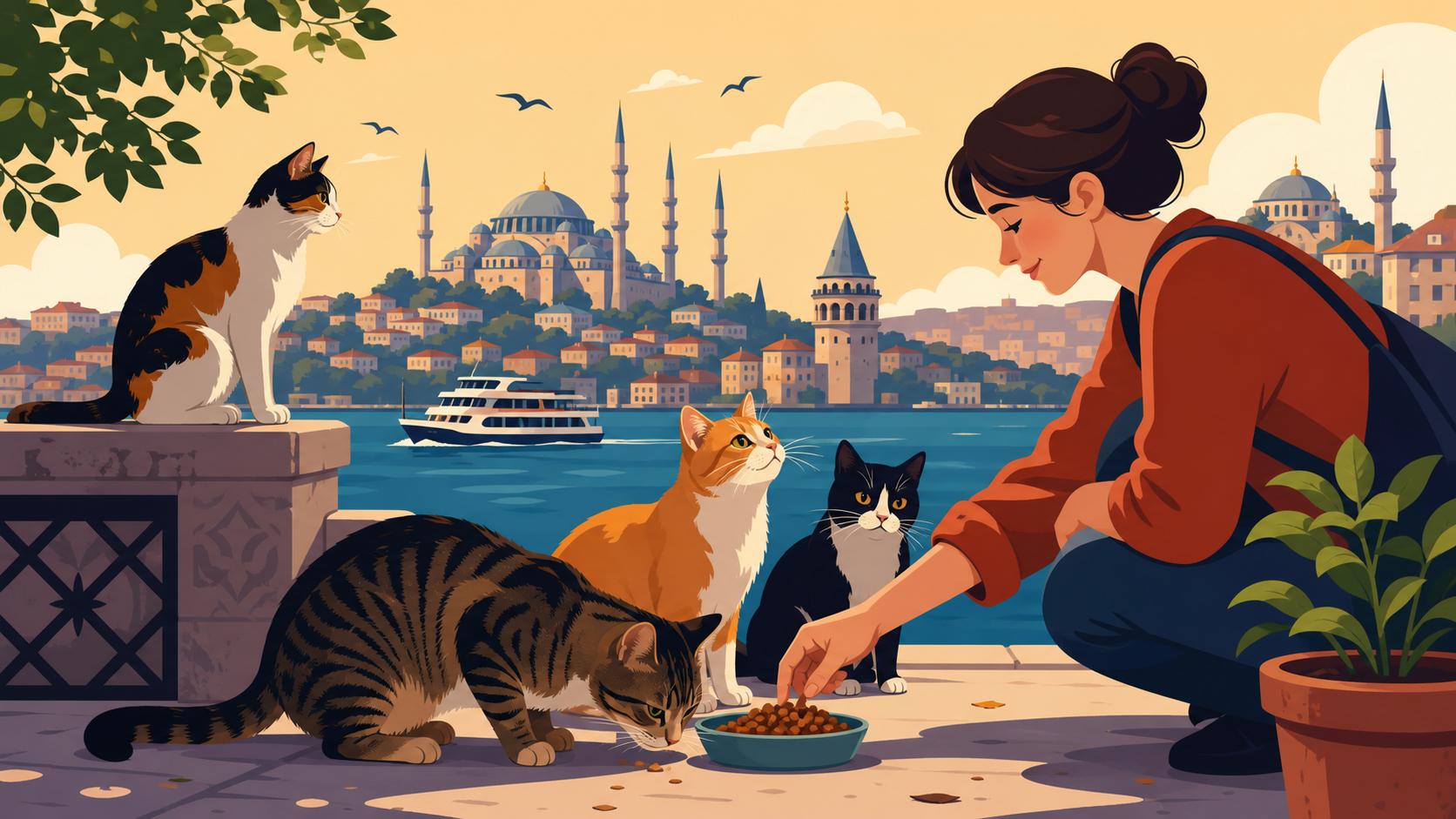
Stray Cats of Istanbul: Unspoken Rules and Community Feeding Etiquette
Walking down a narrow Istanbul side street, you might feel like you have accidentally stumbled into a feline kingdom where humans are merely invited guests. I remember my first winter in the city, feeling heartbroken for a shivering calico until a neighbor laughed and showed me the heated, custom-built "cat house" the local bakery had installed. This guide solves the confusion around community feeding, medical responsibilities, and the unspoken social contracts of Istanbul's cat culture.
The Cultural Framework: Why Istanbul Belongs to the Cats
To live in Turkey is to accept that your doorstep, your favorite cafe chair, and even the hood of your car are essentially shared property with the local cat population. This isn't just a quirk of the city; it is a deeply rooted cultural phenomenon that blends religious tradition with modern communal responsibility. Unlike many Western cities where stray animals are seen as a "problem" for animal control to solve, in Istanbul, they are considered "neighborhood residents" (mahalle sakinleri).
The Concept of Neighborhood Ownership
In most parts of the world, an animal is either owned or stray. In Turkey, there is a third category: the community-owned animal. These cats often have names, preferred sleeping spots inside boutiques, and a network of humans who provide for them. If you move into an apartment through a service like Blueground, you might find that the previous tenant or the building’s doorman has already established a feeding routine for the "regulars" at the entrance. This collective care system means that no single person is responsible for the cat’s survival, but everyone contributes to its well-being.
I have seen shopkeepers in Kadıköy stop serving customers just to open a can of premium tuna for a tabby that decided it was lunchtime. This level of devotion is part of the Daily Life & Culture: Religion, Social Etiquette, and Making Friends experience in Turkey. Ignoring this dynamic can actually lead to friction with your neighbors. If you are seen as "anti-cat," you might find it harder to integrate into the local social fabric.
Islamic and Secular Influences on Animal Welfare
The respect for cats in Turkey has both religious and historical roots. In Islamic tradition, cats are admired for their cleanliness and are famously allowed to enter mosques. There are numerous tales of the Prophet Muhammad’s love for his cat, Muezza, which has fostered a centuries-old culture of kindness toward felines. Even as Turkey has modernized and become more secular in many urban areas, this protective instinct remains.
The legal framework has caught up with culture. The Turkish government has strengthened animal protection laws, moving animals from the category of "commodity" to "living beings" with rights. This means that harming a street cat isn't just a social faux pas; it’s a criminal offense that can lead to prison time. For those just starting out with Living in Turkey as a Foreigner: The Ultimate Starter Guide (2027), understanding that these animals are legally protected is the first step toward avoiding major administrative headaches.
Practical Etiquette: How to Feed and Shelter Strays Correctly
While it is tempting to dump a bag of leftovers on the sidewalk to help a hungry kitten, there is a "right" way to do things that maintains neighborhood harmony. Improper feeding can attract pests, lead to complaints from neighbors, and ironically, harm the cats you are trying to help.
Choosing the Right Food and Water Stations
The gold standard for feeding is dry kibble (kuru mama). It doesn't spoil quickly in the heat, it’s easier to clean up, and it’s nutritionally balanced. You can find bulk bags of high-quality food on Amazon Turkey which is much more cost-effective than buying small bags at the local supermarket.
When setting out water, use heavy ceramic or weighted plastic bowls that won't blow away or be easily tipped over. One unspoken rule is that water is non-negotiable, especially during the scorching summer months on the coast. However, always place these bowls against a wall or in a corner—never in the middle of a sidewalk where someone might trip over them. If you’re living in a building with a shared courtyard, check the rules regarding Understanding 'Aidat': Apartment Complex Maintenance and Pool Fees to see if there are designated areas for animal care.
Managing Waste and Neighbor Relations
The quickest way to alienate your Turkish neighbors is to leave "wet food" (can food) on the pavement in the middle of a hot July afternoon. Within hours, it will smell, attract flies, and create a sticky mess. If you must provide wet food, wait for the cat to finish and then immediately dispose of the container.
Cleanliness is the most important part of the unspoken feeding contract. Many expats make the mistake of thinking they are being kind by leaving food, but if they don't clean up the empty containers, the neighbors will blame the "foreigner" for the mess. I always carry a small pack of wet wipes and a plastic bag for disposal. It’s also wise to check the Health Hazards and Prevention: Tap Water Safety and Common Stomach Bugs guide to remind yourself that keeping the environment clean protects both the animals and the human residents.
| Feeding Do's | Feeding Don'ts |
|---|---|
| Use dry kibble (Kuru Mama) | Don't leave milk (it causes digestive issues) |
| Place bowls in quiet corners | Don't leave plastic food trays on the sidewalk |
| Change water daily | Don't feed in high-traffic doorways |
| Use designated cat houses | Don't feed near children's playgrounds |
| Coordinate with the "Kedici" (Cat Lady) | Don't ignore neighbor complaints about smells |
Medical Emergencies and the 153 White Table System
One of the most stressful experiences for an expat is finding an injured or sick street cat and not knowing who to call. You might worry about the costs or the language barrier. Fortunately, Istanbul has a surprisingly robust—though often overwhelmed—municipal system for street animals.
What to Do If You Find an Injured Street Animal
If you encounter a street animal that has been hit by a car or looks severely ill, your first point of contact should be the "White Table" (Beyaz Masa) by dialing 153 from any local phone. This is the municipal helpline. If you are using an eSIM from Airalo to stay connected, make sure you have enough credit to make local calls.
When you call 153, you can request an animal ambulance (Vetbus). Be prepared to give a very specific location. However, be aware that the municipal service is primarily for emergencies. They will pick up the animal, treat it at a government facility, and—by law—must return it to the exact spot where it was found once it is healthy. This is part of the Keeping Pets in Turkey: Vet Care, Microchipping, and Street Animal Culture policy that prevents strays from being moved to "camps" far from their familiar territory.
Private Vets vs. Municipal Centers
While 153 is free, it can be slow. If you have the financial means, many expats choose to take the cat to a private "Veteriner." Most private vets in neighborhoods like Cihangir, Beşiktaş, or Moda offer a "stray animal discount" (sokak hayvanı indirimi). They know that you are a "Good Samaritan" and will often charge 30% to 50% less than they would for a house pet.
If you are bit or scratched during the process of helping a cat, don't panic, but do take it seriously. You should consult the guide on Stray Dog and Cat Bites: Navigating the Rabies Vaccine Protocol in Turkey immediately. While rabies is extremely rare in Istanbul's urban cat population, the protocol is strict, and you will likely need a series of shots at a local state hospital.
Logistics for the Cat-Loving Expat
Managing your relationship with street cats becomes more complex when it involves your living space. Should you let them in? Should you adopt one? How do you handle the "neighborhood politics" of your specific street?
Moving into a New Neighborhood and Setting Boundaries
Every street in Istanbul has a hierarchy. Usually, there is a "Kedici" (Cat Person)—an older man or woman who has lived there for 40 years and knows every cat’s lineage. When you first move in, observe who is feeding the cats. If you want to help, introduce yourself. Even a simple "Merhaba" goes a long way. If you are still looking for a place to live, check the Istanbul Neighborhood Guide: European vs Asian Side Lifestyles for Expats to see which areas are most famous for their cat-friendly vibes.
Boundaries are essential. If you start feeding a cat on your balcony, that cat—and likely six of its friends—will consider your balcony their permanent residence. If you are Renting in Turkey: Lease Contracts, Deposits, and Tenant Rights Explained, be aware that while landlords generally can't stop you from feeding cats outside, they can certainly charge you for damage caused by cats living inside or on your balcony furniture.
The Trap-Neuter-Return (TNR) Strategy
The most "pro-level" thing an expat can do for the local cat population is to assist with sterilization. The population of strays is managed through a process called TNR (Kısırlaştır-Aşılat-Yaşat). If you notice a cat with a small "notch" or "clip" on the tip of its ear, that means it has already been neutered and vaccinated by the municipality.
If you have a "regular" cat at your door that hasn't been fixed, you can apply through the local "Belediye" (municipality) for a free spay/neuter appointment. You will likely have to transport the cat yourself, but the procedure is free for street animals. This is a much better long-term solution than just providing food, as it prevents the cycle of kittens being born into the harsh winter streets.
Dealing with Conflict and Differing Opinions
Not everyone in Turkey loves cats. While they are a minority, some neighbors may be allergic, have phobias, or simply dislike the mess. As a guest in the country, it is important to handle these conflicts with diplomacy rather than confrontation.
If a neighbor complains about you feeding cats near their door, the best response is to apologize and move the feeding station five meters away. Arguments rarely end well and can make your life difficult in the "mahalle." Use the time you spent learning from the Essential Turkish Phrases for the Doctor: Communicating Symptoms Effectively guide to also learn a few polite phrases for your neighbors, such as "Özür dilerim, temizleyeceğim" (I'm sorry, I will clean it up).
Living among the cats of Istanbul is one of the most rewarding parts of the expat experience. Once you earn the trust of a local "street boss," you’ll find that you have a loyal friend who will greet you every time you come home from work. Just remember: in this city, you don't own the cats; they simply allow you to live in their neighborhood.
Disclaimer
This guide is for informational purposes only and reflects the cultural and legal landscape of Turkey as of 2026. While the author has extensive experience living in Istanbul, municipal rules and animal welfare laws can change. Always consult with a local veterinarian or the official "153 Beyaz Masa" helpline for the most current advice regarding animal care and emergency procedures. Individual experiences with neighbors and landlords may vary based on local customs and specific rental agreements.