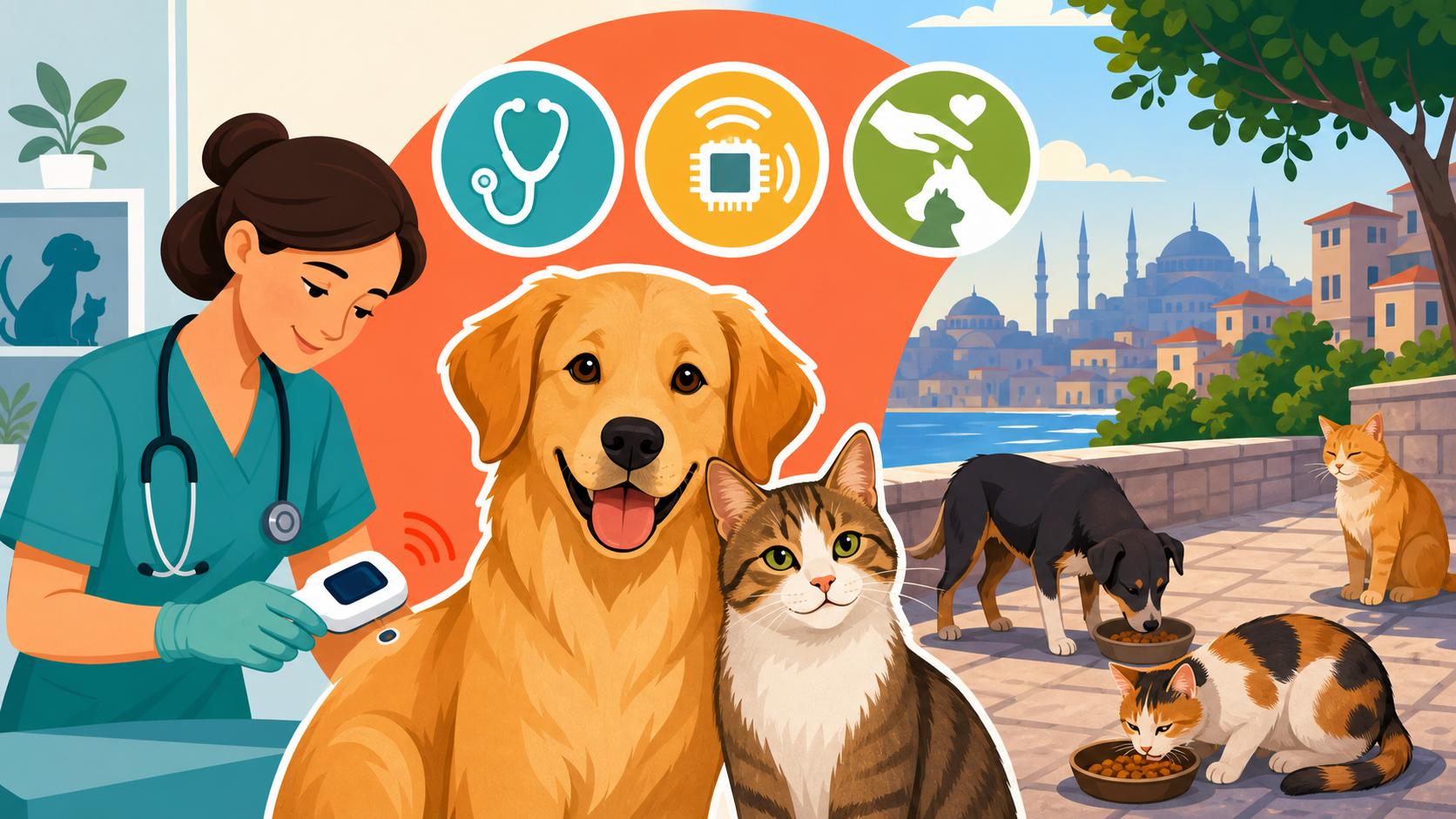
Keeping Pets in Turkey: Vet Care, Microchipping, and Street Animal Culture
Moving to Turkey with a cat or dog—or suddenly finding yourself adopting a stray—is a rollercoaster of emotions and confusing paperwork. When I first arrived with my own dog, I was completely overwhelmed by conflicting advice on microchipping and the intense politics of neighborhood street animals. This guide simplifies the legalities, veterinary standards, and cultural nuances of keeping pets in Turkey.
The Legal Side of Pet Ownership: Microchipping and Registration
The days of casual pet ownership in Turkey are long gone, replaced by a much more structured digital system that caught many of us off guard a few years ago. Since 2023, the Turkish government has mandated that all household cats, dogs, and even ferrets must be microchipped and registered in a national database known as PETVET. This isn't just a suggestion; it is a legal requirement that links your animal to your Turkish ID number or your residence permit (Ikamet).
If you are just arriving, you have a specific window to get this sorted. For those of us who brought pets from abroad, the process begins at the border, but it must be finalized at a local veterinary clinic or the district Directorate of Agriculture and Forestry. I remember the panic when I realized my dog’s international chip wasn’t automatically in the Turkish system. You must take your pet’s passport and your own identification to a licensed vet to ensure they are registered in PETVET. This digital record is what allows you to receive a Turkish pet passport, a small blue booklet that becomes your most important document for travel and healthcare.
The penalties for non-compliance have become quite stiff by 2026. Beyond the fines, an unregistered pet can technically be considered "ownerless" in certain legal disputes, which is a nightmare scenario for any expat. This registration also helps if your pet ever gets lost; the system is nationwide, and any vet who scans a lost animal can immediately see the owner’s contact details. While you are getting your life settled, using an e-sim from Airalo can be a lifesaver, allowing you to use map apps to find the nearest authorized vet without worrying about finding a local SIM shop on your first day.
The PETVET System and Mandatory Chips
Every vet clinic in Turkey now has access to the PETVET portal. When you visit, they will scan the chip located between the shoulder blades. If your pet was chipped in the US, UK, or EU, the vet can usually register that existing number into the Turkish system. However, if the chip is unreadable or non-ISO compliant, they may need to insert a new one. It’s a quick procedure, similar to a vaccination, and it costs very little compared to Western prices.
Once registered, your pet’s name, breed, age, and vaccination history are uploaded. This is particularly important for the annual rabies vaccination, which is the only shot strictly required by law. The system also tracks ownership transfers. If you adopt a kitten from a friend, you both must go to the vet to "hand over" the digital registration. This level of bureaucracy might feel intense, but it has significantly reduced the number of abandoned pets in major cities like Istanbul and Izmir.
Passports and Paperwork for Imported Pets
If you are moving to Turkey and bringing a pet, you should have already dealt with the "Annex IV" forms and the titer tests required for entry. But once you land, your foreign passport for the pet is only a temporary measure. To live here long-term, you need the Turkish version. The local vet will transcribe the data from your foreign records into the Turkish booklet. Always keep this booklet in a safe place—you will need it for every vet visit and any time you stay at a pet-friendly hotel.
When moving into your new home, especially if you are using a service like Blueground to find high-end, pet-ready apartments, you’ll find that having your pet's paperwork in order makes the move-in process much smoother. Many building managers in modern complexes (sites) will ask for a copy of the pet’s registration to keep on file. This is just one of many steps to becoming a legal resident, much like what you can read about in Living in Turkey as a Foreigner: The Ultimate Starter Guide (2027).
Penalties and Compliance in 2026
The Turkish Ministry of Agriculture and Forestry has stepped up inspections. While they aren't going door-to-door, if you are stopped in a park or if your pet is involved in any kind of incident, the first thing authorities will do is scan for a chip. In 2026, the fine for an unregistered pet can exceed several thousand Turkish Lira. More importantly, if you ever plan to leave Turkey with your pet, the customs officers will cross-reference the PETVET data with your export health certificate. If the digital record doesn't exist, you won't be getting on that plane.
Finding Quality Vet Care in Turkey
One of the pleasant surprises about living in Turkey is the exceptionally high standard of veterinary medicine. Turkish vets are generally very well-trained, and in cities like Istanbul, Ankara, and Antalya, you can find clinics that rival the best hospitals in Europe or North America. Most clinics are private, but they are regulated by the provincial Chamber of Veterinary Surgeons, which sets a minimum price floor for services. This means you won't see wild price gouging, though "hospital" style clinics with 24-hour emergency care will naturally be more expensive than small neighborhood practices.
When searching for a vet, look for the sign that says "Veteriner Polikliniği" (for smaller clinics) or "Hayvan Hastanesi" (for full-scale hospitals). In expat-heavy areas like Kadıköy, Beşiktaş, or Konyaaltı, you will easily find English-speaking vets. I personally found that many Turkish vets actually studied their textbooks in English, so even if their conversational skills are basic, they understand medical terminology perfectly. It’s a good idea to have a translation app ready, and staying connected with Airalo ensures you can look up symptoms or translate "kidney stones" or "ear infection" on the fly.
Clinics vs. 24-Hour Animal Hospitals
For routine check-ups, vaccinations, and minor issues, a neighborhood clinic is your best bet. They are often run by one or two dedicated vets who get to know your pet personally. They are also much more affordable. However, for surgeries, X-rays, or late-night emergencies, you’ll need a "Hayvan Hastanesi." These facilities are equipped with advanced diagnostic tools like MRI machines and on-site labs.
It is wise to finding your local 24-hour hospital before you actually need it. Save their number in your phone and know the route. Turkish traffic can be brutal, and the last thing you want is to be lost while your cat is having a crisis. If you are still in the process of settling in, you might want to review Renting in Turkey: Lease Contracts, Deposits, and Tenant Rights Explained to ensure your housing location is within a reasonable distance of these critical services.
Costs of Routine Procedures
Pet care in Turkey remains significantly cheaper than in the West, though inflation has pushed prices up recently. A standard consultation fee is usually very reasonable, and vaccinations like the "Karma" (combination) shot or Rabies are quite affordable. Dental cleanings and blood tests are also accessible for most expats.
| Service Type | Estimated Cost (TL) | Frequency |
|---|---|---|
| Annual Rabies Vaccine | 600 – 900 | Once a year |
| Combination Vaccine (Karma) | 800 – 1,200 | Once a year |
| Basic Consultation | 700 – 1,500 | As needed |
| Microchipping & Registration | 1,000 – 1,500 | Once |
| Internal/External Parasite Treatment | 500 – 1,000 | Every 2-3 months |
Many expats choose to buy specialized pet food or high-quality flea treatments through Amazon Turkey, as it often has better prices and more reliable stock than small local pet shops. For more on managing your household expenses, check out our guide on Buying Furniture and Appliances: Using Trendyol, Hepsiburada, and IKEA.
English-Speaking Vets and International Standards
If you are worried about the language barrier, focus your search on clinics that advertise as "International" or those located near embassies or university hospitals. In Istanbul, the Veterinary Faculty at Istanbul University (in Avcılar) is a world-class institution, though it can be a bit of a trek. Many private clinics also hold international certifications and follow the same protocols for anesthesia and post-operative care that you would expect in London or New York. Don't be afraid to ask about their sterilization procedures or the types of vaccines they use—most Turkish vets are proud of their facilities and happy to give you a tour.
Navigating Street Animal Culture: The Mahalle Dogs and Cats
The most striking aspect of pet ownership in Turkey isn't what happens inside your home, but what happens outside on the sidewalk. Turkey has a unique "community care" model for street animals. In most neighborhoods (mahalle), the cats and dogs aren't "strays" in the Western sense of being homeless and neglected. They are neighborhood residents. They are fed by the local butcher, given water by the pharmacy, and often have designated "cat houses" provided by the municipality.
As an expat with a pet, this can be a bit of a culture shock. Your dog will likely be barked at by the local street dogs, and your cat will see dozens of feline neighbors through the window. Understanding the hierarchy of these animals is essential for a peaceful life. Most street dogs are tagged (look for a plastic colorful tag on their ear), which means they have been vaccinated and neutered by the city. You can learn more about this in Stray Cats of Istanbul: Unspoken Rules and Community Feeding Etiquette.
The Community Care Model
The Turkish people generally have a deep, culturally ingrained empathy for animals. This stems from both religious traditions and a long history of urban coexistence. You will see people carrying bags of kibble to feed the "sokak hayvanları" (street animals) every morning. It is considered a communal responsibility.
If you want to help, the best thing to do is support your local community's efforts. You can buy bulk bags of food on Amazon Turkey and leave small amounts in designated feeding spots. However, be careful not to leave food directly in front of people's doorways or in a way that creates a mess, as this can lead to friction with neighbors who might not be as "animal-friendly." For more on the social nuances of your new home, see Daily Life & Culture: Religion, Social Etiquette, and Making Friends.
Dealing with Territorial Behavior
The local street dogs can be very territorial. They often form packs that "patrol" specific blocks. If you are walking your own dog, you might find these packs a bit intimidating. In my experience, most of these dogs are all bark and no bite—they just want to let your dog know whose turf it is. However, it is always best to stay calm, keep your dog on a short lead, and avoid areas where you know a large pack congregates at night.
If a street dog approaches you, do not run. Usually, a firm "Hayır" (No) or simply ignoring them and walking away is enough. Most long-term expats eventually learn which streets to avoid during certain times of the day. If you are looking for a home in a quieter area, you should research Navigating Closed Neighborhoods (Kapalı Mahalleler) Before Signing a Lease to ensure you find a spot that suits your walking routine.
Ethical Support for Local Strays
If you find a sick or injured street animal, you can call the local municipality (Belediye) by dialing 153. They have "animal ambulances" that will pick up the animal, treat it at a municipal vet, and—usually—return it to the same spot once it's healthy. Alternatively, many expats take the animal to a private vet and pay out of pocket. Many vets offer a "street animal discount" for these cases. It’s a wonderful way to integrate into the community and show that you care about the neighborhood's four-legged residents.
Housing and Daily Life with Pets
Finding an apartment in Turkey that allows pets is generally easier than in many European countries, but there are still hurdles. While there is no national law banning pets in apartments, individual "site" (complex) management or landlords can include "no pet" clauses in rental contracts. Always be upfront about your animals before signing a lease.
If you are moving into a furnished apartment, such as those provided by Blueground, they are often very clear about their pet policies, which saves a lot of the back-and-forth negotiation with traditional landlords. This is especially helpful if you have a large dog, as many Turkish landlords are fine with cats or "toy" breeds but hesitant about Labradors or Shepherds.
Finding Pet-Friendly Rentals
When searching on sites like Sahibinden, look for the "Evcil Hayvan" (Pet) section in the filter. If it's not mentioned, assume you need to ask. In older buildings without a "site" management, the landlord has the final say. In newer complexes, you might be subject to the "Yönetim Planı" (Management Plan), which could have rules about where you can walk your dog or which elevators you can use.
Be aware that certain neighborhoods are much more pet-friendly than others. For instance, the lush parks of Maçka or the seaside path in Caddebostan are dog havens. If you are moving to a more conservative or crowded area, you might find fewer green spaces. It's also worth checking Navigating Closed Neighborhoods (Kapalı Mahalleler) Before Signing a Lease to ensure your chosen area is actually open to foreign residency before you get too attached to a specific park.
Pet Supplies and Delivery Services
Gone are the days when you had to lug heavy bags of litter up five flights of stairs. Turkey has incredible delivery infrastructure. Amazon Turkey is a fantastic resource for international brands like Royal Canin, Hills, or Acana, which can be expensive in local boutiques. You can also find everything from cat trees to orthopedic dog beds with next-day delivery.
If you are looking for more "Western" treats like pig ears or specific chew toys, you might have to look a bit harder. While Turkey is great for standard supplies, specialized items can be hit or miss. For more on finding specific items, you might find Finding Pork, Bacon, and International Ingredients in Major Turkish Cities useful, as those same shops often carry higher-end imported pet treats.
Transporting Pets: Public Transport Rules
Public transport with pets in Turkey is a bit of a mixed bag. In Istanbul, you can take cats and small dogs on the Metro, Marmaray, and ferries, provided they are in a hard-shell carrier. Large dogs are generally not allowed on buses or the Metrobus, though the rules have been relaxing slightly for muzzled, leashed dogs during off-peak hours on ferries.
Taxis can be hit or miss. Some drivers will refuse to take a dog, while others will welcome them with open arms. Using a dedicated app like BiTaksi and adding a note that you have a pet can help filter out the drivers who aren't interested. For those planning to travel between cities, the high-speed train (YHT) allows small pets in carriers for an extra fee, but long-distance buses are much stricter and usually require the animal to travel in the (ventilated) luggage compartment, which many expats (including myself) avoid at all costs.
Importing and Exporting Pets: The Logistics
Whether you are bringing a pet into Turkey or planning your eventual departure, the logistics require months of planning. Turkey is considered a "high-risk" country by some nations for rabies, even though the actual incidence in urban areas is extremely low. This means that if you want to take your pet back to the EU or the US, you often need a Rabies Titer Test performed at least three months in advance.
I learned this the hard way when a friend had to stay behind for two months because they missed the titer test window. Don't let that happen to you. Start your paperwork at least six months before any planned international move. You can read more about the entry requirements in Bringing Your Dog to Turkey: Customs Clearance, Vaccines, and Pet Passports.
Titre Tests and Timing
The titer test (FAVN) measures the level of rabies antibodies in your pet’s blood. Turkey has several authorized labs, the most famous being the Etlik Central Veterinary Control and Research Institute in Ankara. Your vet will draw the blood, send it to the lab, and you will receive a certificate in about 3-4 weeks. This certificate is valid for the life of the pet, provided you never miss a rabies booster. If you are moving from a country like the UK or Australia, the requirements are even stricter, so always check the latest IATA regulations.
Flying with Pets: Turkish Airlines Rules
Turkish Airlines (THY) is one of the most pet-friendly airlines in the world, but they have very specific rules. If your pet and their carrier weigh less than 8kg, they can usually fly in the cabin with you (KİH). If they are heavier, they fly in the "AVIH" (ventilation-controlled hold). You must call the airline to book your pet's "seat" as soon as you buy your ticket, as there are limits on how many animals are allowed per flight.
Always double-check the dimensions of your carrier. Turkish Airlines is very strict about this. Also, ensure you have the original copy of your PETVET passport and a "fit to fly" health certificate issued by your vet within 48 hours of departure. Navigating these rules can be stressful, but once you’re in the air, THY’s staff are usually very helpful.
Essential Health Hazards and Prevention
Living in Turkey brings a few specific health risks for pets that you might not be used to. The most common issues are related to parasites. Because of the large street animal population and the warm climate, fleas and ticks are a year-round problem. Heartworm (transmitted by mosquitoes) and Leishmaniasis (transmitted by sandflies) are also prevalent in coastal areas like Bodrum and Antalya.
Regular preventative treatment is not optional here. Most expats use a "spot-on" treatment every month. Your vet can also recommend a Leishmaniasis vaccine if you live in a high-risk area. Additionally, be careful with tap water. While it’s generally fine for washing, many expats give their pets the same bottled (damacana) water they drink to avoid any potential stomach upsets or mineral buildup.
Disclaimer
The information provided in this guide is for general informational purposes only and does not constitute professional veterinary or legal advice. Laws regarding pet ownership, microchipping (PETVET), and immigration in Turkey are subject to change. Always consult with a licensed Turkish veterinarian or a qualified legal expert to ensure you are in compliance with the most current regulations. We do not accept any liability for actions taken based on the content of this article.