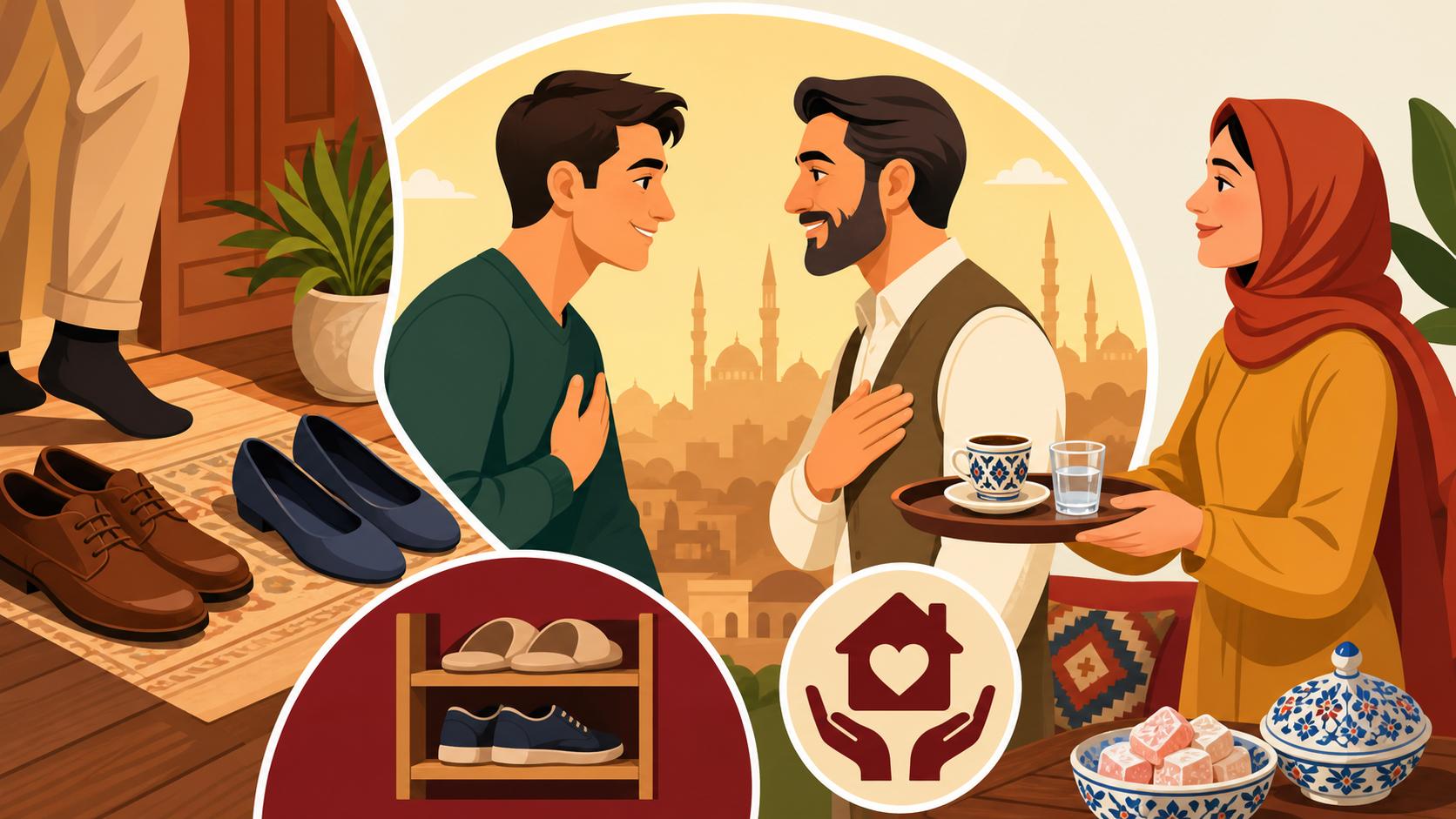
Social Etiquette in Turkey: Greetings, Removing Shoes, and Hospitality Norms
Walking into a Turkish dinner party and realizing you are the only one in socks while everyone else is wearing plastic slippers can be a social nightmare. I remember my first month in Istanbul, standing frozen in a doorway in Nişantaşı, wondering if I’d offended my hosts by not kissing their grandmother’s hand. This guide solves the complex, unwritten rules of Turkish social etiquette to ensure you feel like a local, not an outsider.
The Art of the Turkish Greeting
The way you enter a room in Turkey sets the tone for your entire relationship with the people inside. Unlike the more reserved greetings found in Northern Europe or the professional distance often maintained in North America, Turkish greetings are warm, tactile, and deeply rooted in a hierarchy of respect. Whether you are meeting a potential landlord for one of the Blueground apartments in Istanbul or simply greeting a neighbor, understanding the physical nuances of a "Merhaba" is essential.
Handshakes and the First Meeting Protocols
In a formal or first-time setting, a firm handshake is the standard. However, it is slightly different from the Western "power shake." In Turkey, the handshake is often accompanied by sustained eye contact and a slight nod of the head. If you are meeting a group of people, always start with the eldest person in the room. This is a non-negotiable rule of Turkish society. Ignoring the grandmother or the family patriarch to greet a peer first is seen as a significant social slight.
If you are a man meeting a woman for the first time, it is often polite to wait for her to extend her hand first. In more conservative circles, some women may prefer a simple nod and a hand over the heart instead of physical contact. If you are ever unsure, placing your right hand over your heart and saying "Memnun oldum" (Nice to meet you) is a universally respected gesture that bypasses any potential awkwardness. This level of cultural awareness is just as important as knowing Daily Life & Culture: Religion, Social Etiquette, and Making Friends when you are trying to build a life here.
The Kiss on Both Cheeks: Navigating Social Circles
Once you have moved past the "acquaintance" phase, the greeting shifts to a kiss on both cheeks. This is common between men and men, and women and women. Between men and women, it depends entirely on the level of friendship and the specific subculture of the city you are in. In liberal neighborhoods like Kadıköy or Beşiktaş, cheek-kissing is the norm. In more traditional areas, a handshake or a verbal greeting remains the safer bet.
The "Turkish kiss" is usually more of a temple-to-temple touch rather than a literal kiss. You lean in, touch your right temple or cheek to theirs, and then repeat on the left. Sometimes, men will skip the kiss and simply bump their heads together on the sides—a gesture often associated with more nationalistic or traditional brotherhood. If you are traveling between cities, perhaps using Airalo to keep your maps updated, you will notice these subtle regional shifts in how people touch and greet one another.
Respecting Elders: The Hand-Kissing Tradition
The most traditional and respectful greeting you will encounter is the "el öpmek" (hand kissing). This is reserved for the elderly—usually your own grandparents, your spouse’s parents, or very senior members of a community. The person younger than the elder takes the elder's right hand, kisses the back of it, and then touches the back of the hand to their own forehead.
As a foreigner, you are rarely expected to do this, and doing it correctly often surprises and delights Turkish elders. It is a sign that you have deeply integrated into the culture. However, never attempt this with someone close to your own age, as it can be interpreted as a joke or a sign of extreme submission. If you are living in Istanbul Neighborhood Guide: European vs Asian Side Lifestyles for Expats, you will see this most frequently during religious holidays like Bayram, where families gather and younger generations pay their respects to the old.
Crossing the Threshold: The Sacred Rule of Removing Shoes
If there is one rule that defines the Turkish home, it is that the "dirty" outside world must never touch the "clean" inside world. This starts with your shoes. To a Turk, the floor is where children play, where people sit, and sometimes where they eat. Bringing the dust and grime of an Istanbul sidewalk into that space is considered genuinely offensive. Expats have been known to lose their security deposits or ruin neighborly relations simply because they refused to leave their boots at the door.
Why Taking Off Shoes is Non-Negotiable
The moment you step into the "hol" (the entryway) of a Turkish home, you should be prepared to step out of your footwear. Most Turkish apartments have a dedicated shoe rack (ayakkabılık) either just inside the door or, more commonly, in the hallway outside the apartment. If you see a pile of shoes in the hallway, that is your cue. Even if the host says, "Oh, please, keep them on," they are often just being polite. The correct response is to insist on taking them off.
This rule applies to everyone—from the plumber you found on a local app to the high-end real estate agent showing you Blueground properties. The only exception might be a very formal, Western-style "salon" party where the hosts have explicitly stated it is okay, but even then, look at the feet of the other guests. If you are worried about your socks, you can always order a bulk pack of decent ones from Amazon Turkey before you start your social rounds.
Guest Slippers and What to Expect
Once your shoes are off, your host will almost immediately offer you "terlik" (slippers). Every Turkish household has a stash of guest slippers, ranging from plush, hotel-style ones to basic plastic clogs. It is considered a mark of good hospitality to ensure the guest's feet never touch the cold floor. If the slippers offered are too small or not your style, it is still polite to wear them.
Refusing slippers can sometimes cause your host anxiety, as they may worry you will catch a cold from the floor—a common Turkish health belief. If you are staying in one of the Best Cities in Turkey for Expats: Comparing Istanbul, Izmir, Ankara, and Antalya, you’ll find that the types of slippers offered might even change with the season—felt in the winter and light plastic in the summer.
Apartment Hallway Etiquette: Where Do the Shoes Go?
In many "Sits" (apartment complexes), there is a silent battle over shoe placement. Some buildings allow shoes to be left outside the door in the communal hallway, while others find this "varoş" (unsophisticated) and insist that shoes be brought inside immediately. Observe your neighbors. If the hallway is clear, bring yours in. If there is a row of shoes, feel free to join them.
When leaving shoes outside, make sure they are tucked neatly against the wall so they don't trip anyone. It is also a good idea not to leave your most expensive designer sneakers in a communal hallway in a building without a doorman. If you are moving into a new place and need to stock up on hallway organizers, Amazon Turkey has a massive selection that can be delivered to your door within a day or two.
Turkish Hospitality and Dining Norms
Hospitality, or "Misafirperverlik," is the backbone of Turkish social life. A guest is seen as a "guest of God" (Tanrı misafiri), meaning they deserve the absolute best the household can offer. This often means you will be fed until you can barely move. Understanding the rhythm of a Turkish meal and the social cues involved will save you from accidental rudeness or extreme overeating.
The Tea is Never Just Tea
In Turkey, tea (çay) is the universal lubricant of social interaction. It is served in small, tulip-shaped glasses and is almost always offered the moment you sit down, whether you are at a friend’s house or negotiating at a carpet shop. The most important thing to know is that your glass will be refilled the moment it is empty. Your host will not ask if you want more; they will simply pour.
If you have reached your limit, do not say "No, thank you" while leaving your glass empty. The signal for "I am finished" is to place your small tea spoon across the top of the glass. This tells the host that you are satisfied. This culture of constant offering extends to food as well. If you are enjoying Turkish Dining Culture: Lavish Breakfast Spreads (Kahvaltı) and Late Dinners, remember that the meal is a marathon, not a sprint. Pace yourself, because there is always another course coming.
| Gesture | Meaning | Context |
|---|---|---|
| Hand over heart | Sincere thanks / "Nice to meet you" | Meeting new people or thanking a waiter |
| Spoon across tea glass | I am finished drinking tea | Social visits and restaurants |
| Raising eyebrows & clicking tongue | "No" (sometimes seen as rude) | Informal disagreement |
| Fingers together, palm up | "Very delicious" or "Great" | While eating or praising a service |
Dinner Party Etiquette: Arriving and Eating
When invited to a Turkish home, never arrive empty-handed. A box of high-quality baklava, chocolates, or flowers is the standard. Avoid bringing alcohol unless you are absolutely certain your hosts drink, as many observant families do not keep it in the house. If you are looking for a specific gift, Amazon Turkey offers a variety of gourmet gift sets that are appropriate for these occasions.
During the meal, wait for the eldest person to start eating before you begin. It is also polite to try a little bit of everything offered. If you truly cannot eat something, decline it with a hand over your heart and a compliment about how wonderful everything else looks. Finishing everything on your plate is a compliment to the cook, but be careful—a completely clean plate often invites an immediate second helping. If you are navigating your first few invites, having a data plan from Airalo is helpful so you can quickly look up the ingredients of a dish if you have allergies.
Paying the Bill: The Friendly Fight for the Check
If you are dining out with Turkish friends, be prepared for "the fight." Turkish culture dictates that the person who issued the invitation pays for the entire meal. The concept of "going Dutch" or splitting the bill is traditionally viewed as "Alman usulü" (German style) and is often considered cold or stingy among close friends.
You should make a sincere effort to offer to pay, but if your host insists, allow them to win. You can then say, "Next time is mine," and make sure you follow through. In more modern circles in cities like Izmir, splitting is becoming more common, but the initial dance of who pays the bill remains a staple of social etiquette. If you are renting through Blueground, their concierge services can sometimes recommend restaurants where the service is accustomed to expat dining norms.
Navigating Public Spaces and Social Sensitivity
Turkish public life is a blend of intense crowdedness and surprisingly strict social codes. Whether you are on a ferry crossing the Bosphorus or shopping in a local pazar, knowing how to carry yourself will help you avoid friction with the locals.
Religious Etiquette: Mosques and Ramadan
While Turkey is a secular republic, Islam is a deep part of the cultural fabric. When visiting mosques, both men and women should dress modestly. Women must cover their heads with a scarf and ensure their shoulders and knees are covered. Men should avoid wearing shorts. Always remove your shoes before entering the carpeted area of the mosque; there are usually cubbies provided.
During the holy month of Ramadan, sensitivities are higher. While it is not illegal to eat or drink in public during daylight hours, it is polite to be discreet, especially in more conservative neighborhoods. Many restaurants will be closed or have curtains up during the day. Understanding the nuances of Navigating Ramadan (Ramazan) as a Non-Muslim Expat in Turkey will help you navigate this month with grace. Even if you aren't fasting, joining an "Iftar" (the breaking of the fast) dinner is a beautiful way to experience Turkish community life.
Personal Space and Body Language
Personal space in Turkey is much smaller than in many Western countries. On public transport, people will stand very close to you, and "queueing" can often feel more like a polite huddle. Do not take this as a sign of aggression; it is simply the way of life in a city of 16 million people. However, physical contact between men and women who are strangers is generally avoided.
If you need to get someone's attention, a polite "Bakar mısınız?" (Could you look here?) is better than pointing. Avoid using the "OK" sign (thumb and forefinger in a circle), as it has a vulgar connotation in Turkey. Similarly, sitting with your feet pointing directly at someone or showing the soles of your shoes is considered disrespectful in traditional settings.
Communication Styles: The Turkish "No"
Turkish communication is often indirect. People rarely say a flat "no" to an invitation or a request because they don't want to cause offense. Instead, you might hear "Bakarız" (We’ll look into it) or "İnşallah" (God willing). As an expat, you’ll need to learn to read between the lines. If someone keeps giving vague answers about a meeting, it’s likely a polite "no."
Conversely, Turks are very expressive with their faces. A sharp upward movement of the head accompanied by a "tsk" sound is a shorthand for "no." It can feel dismissive to a foreigner, but it’s a standard non-verbal cue. If you're struggling to get your point across, having a stable internet connection via Airalo to use translation apps can be a lifesaver in those "lost in translation" moments.
Living in a Turkish Apartment Building
Turkish apartment life, or "Apartman Kültürü," has its own set of unwritten laws. When you move into a building, you aren't just renting a space; you are joining a small community. Whether you are in a luxury development or a traditional walk-up, your relationship with your neighbors will define your living experience.
Neighborly Relations and the Role of the Kapıcı
The "Kapıcı" is the soul of the Turkish apartment building. Part doorman, part maintenance man, and part neighborhood gossip, the Kapıcı is responsible for taking out the trash, cleaning the hallways, and sometimes even bringing you fresh bread in the morning. Treating your Kapıcı with respect is the first rule of building life. A small tip (bahşiş) at the end of the month or a gift during holidays goes a long way.
Neighbors will often bring you a "welcome" dish when you move in. The rule of the "returning plate" is crucial: never return an empty plate. If a neighbor brings you a plate of "sarma" (stuffed vine leaves), you should return it a few days later with something you’ve cooked, or even some nice cookies from the bakery. If you're too busy to cook, you can find great kitchen gadgets on Amazon Turkey to help you whip something up quickly.
Noise Levels and the Importance of "Hayırlı Olsun"
Turks are generally tolerant of noise, but there is a strict "no noise" rule after 10:00 PM and on Sunday mornings. If you are planning a party, it is customary to inform your neighbors or even invite them. When you see a neighbor who has bought something new or started a new job, saying "Hayırlı olsun" (May it be beneficial) is the standard way to acknowledge their good fortune.
If you're moving into a Blueground apartment, they often handle the initial introductions or have building rules clearly outlined, which can save you some of the initial social guesswork. However, you should still make an effort to say "Günaydın" (Good morning) or "İyi akşamlar" (Good evening) to everyone you encounter in the elevator.
Handling Deliveries and Service Personnel
Turkey has an incredible delivery culture. From Shopping in Turkey: Local Bazaars, Malls, and Delivery Apps to water delivery (damacana), you will have service people coming to your door frequently. It is polite to offer a small tip to delivery drivers, especially if they are carrying heavy water jugs up stairs.
When a repairman enters your home, remember the shoe rule—most will carry their own overshoes (galoş), but if they don't, you should offer them. Offering a glass of water or tea to someone doing a long repair in your home is also a standard mark of a good "ev sahibi" (homeowner). If you need to stay connected while waiting for these deliveries, Airalo ensures you don't miss that crucial "I'm at your door" phone call because your home Wi-Fi is still being set up.
Disclaimer Regarding Social Etiquette
This guide is intended for informational purposes and reflects the personal experiences and observations of the author within the context of 2026 Turkish social norms. Etiquette can vary significantly between regions, age groups, and social classes. What is considered standard in a cosmopolitan Istanbul neighborhood may differ in rural Anatolia. Readers are encouraged to observe their specific surroundings and consult with local friends to ensure they are acting in accordance with the specific expectations of their immediate community. Always prioritize local laws and official regulations over traditional customs where applicable.