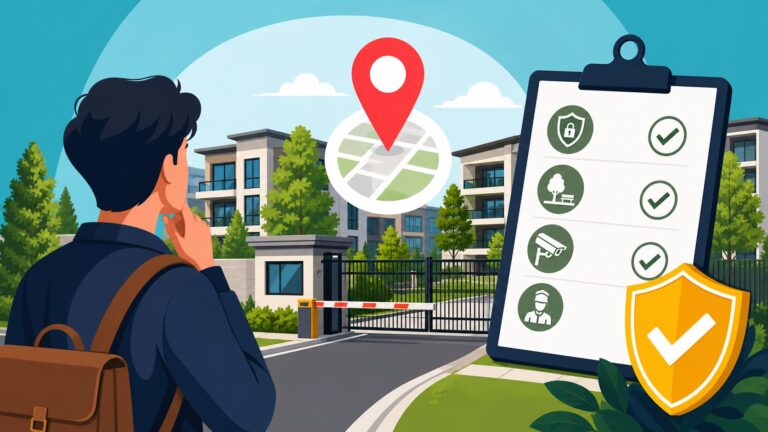
Understanding ‘Aidat’: Apartment Complex Maintenance and Pool Fees
Moving into a modern residential complex in Turkey feels like a major lifestyle upgrade until the first of the month arrives and you are hit with a bill that isn't rent or electricity. I remember vividly when I first moved into a "site" in Istanbul; I thought I had my budget perfectly calculated, only to realize I hadn't accounted for the hefty monthly fee known as aidat. This guide will walk you through everything you need to know about these maintenance fees so you can navigate Turkish housing without any expensive surprises.
What Exactly is Aidat and Why is it Mandatory
In the Turkish real estate market, aidat is the monthly maintenance fee paid by residents of an apartment building or a gated complex (known as a "site"). It is not an optional "service charge" that you can opt out of if you decide not to use the gym or the pool. Instead, it is a legal requirement governed by the Turkish Condominium Law (Kat Mülkiyeti Kanunu). This law dictates that every resident must contribute to the upkeep of the building's common areas and the salaries of the staff who keep the place running.
If you are looking for a more streamlined experience where these costs are clearly managed or sometimes bundled, companies like Blueground offer fully furnished apartments that take much of the administrative guesswork out of the equation. However, for the vast majority of expats renting directly from landlords, understanding the legal grounding of aidat is the first step toward financial stability in Turkey. The law is quite strict; even if you are away for three months on holiday, your obligation to pay remains because the building’s fixed costs, like security and landscaping, do not stop.
The Condominium Law (Kat Mülkiyeti Kanunu)
The Kat Mülkiyeti Kanunu is the backbone of housing management in Turkey. It stipulates how expenses are shared among owners and tenants. Typically, the aidat is calculated based on the "land share" (arsa payı) of each apartment, though in many modern complexes, it is simply a flat rate per square meter or per unit type (1+1, 2+1, etc.). This law ensures that the building doesn't fall into disrepair because a few residents refuse to pay. It gives the building management (Yönetim) significant power to collect these funds.
When you sign a contract, as detailed in Renting in Turkey: Lease Contracts, Deposits, and Tenant Rights Explained, you are essentially agreeing to abide by the decisions made by the building’s board of residents. If the board votes for a specific maintenance project, the law requires you to contribute. This is why it is so important to ask for the "Yönetim Planı" (Management Plan) before you move in. This document outlines exactly how the aidat is calculated and what your specific obligations are.
Fixed vs. Variable Maintenance Costs
Aidat is generally split into two categories: operational expenses and capital expenses (often called "demirbaş"). Operational expenses cover the day-to-day running of the building—think electricity in the hallways, water for the garden, and the salary of the "kapıcı" (doorman/caretaker). As a tenant, you are responsible for these operational costs. You should factor this into your monthly planning, much like you would check the Cost of Living in Turkey 2026: Detailed Budgets for Singles and Families to ensure your lifestyle is sustainable.
Capital expenses, on the other hand, are for long-term improvements or major repairs, such as replacing the elevator motor, painting the building’s exterior, or upgrading the security camera system. Under Turkish law, these are the responsibility of the property owner, not the tenant. Many cases arise where landlords try to pass these costs onto unsuspecting expats. Always ask for a breakdown of your bill. If you see a charge for "Asansör Yenileme" (Elevator Renewal), that’s a conversation you need to have with your landlord immediately.
What Your Aidat Actually Pays For
Many expats are shocked by high aidat prices, especially in cities like Istanbul or Bodrum. However, when you break down the services provided, the cost often starts to make sense. In a luxury "site," you aren't just paying for a hallway light; you are paying for a mini-ecosystem of services. To keep track of these communications and the apps many buildings use for billing, having a reliable data connection through Airalo is essential, especially during your first few weeks when your home internet might still be in the installation phase.
The level of service varies wildly. In an older, single-block building in a neighborhood like Kurtuluş, your aidat might only be a few hundred Lira to cover the cleaning of the stairs. In a massive complex in Başakşehir or Maslak, it can be several thousand Lira. The amenities provided directly correlate to the price, and for many, the convenience of having everything on-site justifies the cost.
Common Areas and Security
Security is often the largest line item in a site’s budget. Most modern complexes have 24/7 security guards at the gates, CCTV monitoring, and sometimes even patrol guards. For many foreigners, this peace of mind is worth the extra cost. Beyond security, this portion of the aidat covers the lighting, heating, and cleaning of the lobby, hallways, and elevators. It also covers the landscaping—those perfectly manicured lawns and tulip beds don't maintain themselves.
If you are a remote worker, you’ll appreciate the maintenance of these common areas. You might find yourself working from a communal garden or a lobby lounge. Staying connected while moving through these spaces is easier with an Airalo eSIM, ensuring you don't drop a Zoom call when you step away from your apartment’s Wi-Fi. The cleaning of these areas is also rigorous; in Turkey, the "temizlik" (cleaning) standards for common areas in high-end buildings are generally very high.
Luxury Amenities Pools and Gyms
This is where the aidat usually spikes. If your building has an outdoor pool, an indoor heated pool, a sauna, a Turkish bath (Hamam), and a fitness center, the chemical, heating, and staffing costs are immense. Even if you never swim a single lap, you are legally required to pay your share of the pool’s maintenance. These facilities require specialized technicians and regular health inspections, all of which are funded by your monthly payment.
For those who enjoy these amenities, it can be a great deal compared to a separate gym membership. You can find high-quality workout gear or even pool accessories on Amazon Turkey and have them delivered right to your secure lobby. Having a "site" with a gym means you can skip the commute to a local fitness club, but you must be prepared for the fact that the "pool fee" portion of your aidat will remain constant even in the winter months when the outdoor pool is covered and unused.
Management and Staff Salaries
Turkish apartment complexes are often staffed by more people than you might realize. There is the "Müdür" (Manager), the accounting staff, technical maintenance workers (electricians and plumbers on call), and the "Kapıcı." In traditional Turkish culture, the Kapıcı is a vital figure who collects trash, cleans the floors, and sometimes even brings fresh bread and newspapers to your door in the morning. Their salary, social security (SGK), and often their housing (if they live in a dedicated apartment in the basement) are all paid through the aidat.
| Building Type | Typical Amenities | Aidat Level | Staffing |
|---|---|---|---|
| Old Apartman | Stair cleaning, hallway lights | Low | Part-time cleaner |
| Modern Site | Security, elevator, small garden | Medium | 24/7 Security, Gardener |
| Luxury Residence | Pool, Gym, Hamam, Valet, Café | High | Full Management Team, Technicians |
| Serviced Apartment | All-inclusive, cleaning, Wi-Fi | Very High | Full Hotel-style Staff |
Calculating and Increasing Aidat
One of the most frustrating aspects of living in Turkey recently has been the rapid increase in aidat prices. Because Turkey has experienced high inflation, the costs of electricity, cleaning supplies, and staff salaries have climbed significantly. Building managements usually adjust the aidat once or twice a year to keep up with these costs. If you are browsing apartments on sites like Blueground, you might find that some of their premium listings help insulate you from these sudden fluctuations by providing more stable, all-inclusive pricing structures.
The process of increasing the aidat isn't arbitrary; it follows a specific legal procedure. Understanding this can help you feel less like a victim of a random price hike and more like a participant in your building's community. If you feel an increase is unfair, there are legal avenues to challenge it, though this is often difficult for foreigners without fluent Turkish.
The Annual Management Meeting (Genel Kurul)
Every year, the "Kat Malikleri Kurulu" (Board of Property Owners) holds an annual meeting, usually in January or February. During this meeting, the previous year’s spending is audited, and the budget for the coming year is proposed. This is where the new aidat rate is decided. While tenants (kiracı) do not have a legal right to vote—only property owners do—the owners can give a proxy (vekalet) to their tenants to vote on their behalf.
I highly recommend asking your landlord for a proxy to attend these meetings. It is the best way to see where your money is going. You can see the invoices for the landscaping, the elevator maintenance contracts, and the staff's salary increases. If the building is spending too much on "flowers" and not enough on "security," this is the time to speak up. Having your phone ready with a translation app—and a solid data connection from Airalo to run it—can make these meetings much less intimidating.
Inflation and Minimum Wage Adjustments
In Turkey, the minimum wage (Asgari Ücret) is typically adjusted by the government once a year. Since the majority of a building's aidat goes toward the salaries of security guards and cleaners, any increase in the national minimum wage results in an almost immediate increase in your aidat. This is usually the "January Shock" many expats experience.
In addition to wages, the cost of "ortak alan" (common area) utilities like electricity and water has seen sharp rises. If the building has a massive pool that needs constant pumping and heating, your bill will reflect the national energy price hikes. You can often find energy-saving tips or even small solar lights for your own balcony on Amazon Turkey to help offset your personal utility costs, but the building's common costs are fixed by the management's contracts with utility providers.
Managing Payments and Delinquency
Paying your aidat is just as important as paying your rent. In modern complexes, the days of handing cash to a guy in the lobby are mostly over. Most "sites" use professional management software like Apsiyon or Senyonet. You can log into these apps, see your debt, and even pay via credit card. Again, this is where having a reliable mobile connection via Airalo is useful, as these apps often send SMS verification codes for payments.
If you are renting a place where the aidat is not included in the rent, you must ensure you are sending the payment to the correct IBAN. Many buildings have a dedicated bank account for the "Yönetim." Do not simply give the money to your landlord unless it is explicitly stated in your contract that they will handle the payment for you. For more on the financial side of living in Turkey, check out Real Estate Taxes and Fees in Turkey: Buying, Selling, and Renting Costs.
Payment Methods and Bank Transfers
Most managements prefer a bank transfer (EFT/FAST) to the building's official account. When making this transfer, the "Açıklama" (Description) field is crucial. You must write your apartment number and the month you are paying for (e.g., "Daire 14 – Ocak 2026 Aidat Ödemesi"). Without this, the accountant might not be able to match the payment to your unit, and you could be flagged as a non-payer.
Some expats prefer using corporate housing providers like Blueground because they often streamline these payments into one monthly invoice, saving you the hassle of managing multiple Turkish bank transfers. If you are doing it yourself, make sure to save every digital receipt. Management systems can "glitch" more than once, and having that PDF receipt on your phone is your only shield against being asked to pay twice.
Legal Consequences of Non-Payment
If you are late on your aidat, the consequences in Turkey are swift and expensive. By law, building management can charge a late penalty of 5% per month. This is not 5% per year—it is 5% for every month the payment is overdue. This can snowball very quickly. If you continue to refuse to pay, the management has the right to initiate "İcra" (legal enforcement/debt collection) proceedings against you.
This could lead to a freeze on your Turkish bank accounts or even a visit from a court bailiff to seize property. Furthermore, being involved in legal disputes with building management can negatively impact your Mandatory Ikamet Insurance: What Health Policies Actually Cover for Visas or your future residence permit renewals, as you may be flagged in the system. It is always better to pay the fee and dispute it later through the proper channels than to simply stop paying.
Common Conflicts and How to Resolve Them
Conflict over aidat is a national pastime in Turkey. Whether it's a dispute over why the pool isn't open in May or why the elevator is always broken despite a high maintenance fee, you will likely encounter some friction. One of the best ways to avoid conflict is to be proactive. If something in the building is broken, report it through the official channels. Use your Amazon Turkey account to buy any small items you might need for your own apartment maintenance, but leave the common areas to the "Usta" (technician) hired by the building.
Transparency is the most common issue. Many residents suspect the management of overspending or favoring certain contractors. As a foreigner, you might feel particularly vulnerable to being overcharged. This is why staying informed and connected is your best defense.
Transparency and Auditing
Every building management is required to have an "Denetçi" (Auditor), usually one of the residents, who checks the books. You have the right to request the year-end financial report. This report will show exactly how much was spent on everything from elevator oil to the security guards' uniforms. If you find the management is being evasive, it’s a red flag.
In some cases, the management might be a professional outside firm rather than a board of residents. These firms are generally more transparent but also more expensive. If you are struggling to communicate with them, you might need help from someone who knows the local system, as described in Hiring an Immigration Lawyer in Turkey: Spotting Red Flags and Standard Costs, although a lawyer is usually overkill for aidat unless the amounts are massive. Usually, a Turkish-speaking friend or a relocation consultant can help bridge the gap.
Tenant vs. Owner Responsibilities
The most common source of confusion is who pays for what. Let's make it clear:
- Tenant Pays: Monthly aidat, cleaning staff salaries, hallway electricity, garden water, pool chemicals.
- Owner Pays: New elevators, roof repairs, painting the building, buying new gym equipment, structural reinforcements.
If your building decides to install a new high-tech security system, your landlord should pay for the equipment, but your monthly aidat might go up because you now need more guards to monitor the screens. This distinction is often blurred in the bills sent by management. Always check the line items. If you are asked to pay for a "Yatırım" (Investment) or "Demirbaş" (Fixed Asset), politely forward that portion of the bill to your landlord. Referencing What Specific Clauses to Check Before Signing a Turkish Lease (Kira Sözleşmesi) can help you remind your landlord of their legal obligations.
Tips for Expats Navigating Complex Living
Living in a "site" offers a fantastic quality of life, but it requires active management of your expectations and your budget. Before you fall in love with a flat because it has a view of the Bosphorus and an Olympic-sized pool, ask the real estate agent: "Aidat ne kadar?" (How much is the maintenance fee?). Then ask: "Is the pool fee separate?" In some places, the gym and pool are managed by a third party, and you have to pay an extra membership fee on top of your aidat.
Choosing the right building can save you thousands of Lira and hours of stress. If you prefer a "lock-up-and-leave" lifestyle without any of these administrative headaches, looking into premium managed options like Blueground is a smart move. They handle the messy details so you can focus on enjoying your time in Turkey.
Choosing the Right Building
When looking at different neighborhoods, remember that aidat levels vary by city. For instance, Antalya Medical Network: Where to Go for Care on the Mediterranean Coast areas often have sites with lower aidat than Istanbul because the cost of labor and certain utilities is slightly different, though pool maintenance remains high everywhere. In a city like Izmir, which has a more liberal, laid-back vibe, you might find smaller complexes with fewer "fluff" services and more reasonable fees.
Compare the Best Cities in Turkey for Expats: Comparing Istanbul, Izmir, Ankara, and Antalya not just for rent, but for these hidden costs. A 10,000 TL rent with a 5,000 TL aidat is much worse than a 12,000 TL rent with a 1,000 TL aidat. Always look at the total monthly cost of occupation.
Communication with the Yönetim
Building a good relationship with the management office and the "Kapıcı" is essential. In Turkey, a little bit of kindness goes a long way. A friendly "Kolay Gelsin" (May it come easy to you) to the security guard or a small tip to the caretaker during the holidays can make your life much smoother. When you have a problem with your aidat or a leak in your bathroom, these are the people who will help you first.
Make sure they have your correct contact information. Most buildings use WhatsApp groups or apps to announce water outages or upcoming maintenance. Having an Airalo eSIM ensures you are always in the loop, even if you are out exploring a new part of the city. Being part of the building’s digital community is the best way to avoid being the last person to know about a price increase or a change in the pool schedule. By being proactive and understanding the system, you can turn the potential headache of aidat into just another manageable part of your wonderful expat life in Turkey.
Disclaimer
This guide is for informational purposes only and does not constitute legal or financial advice. Turkish laws regarding property and residency, including the Condominium Law, are subject to change. Always consult with a qualified local professional or legal expert before signing any contracts or making significant financial commitments in Turkey.