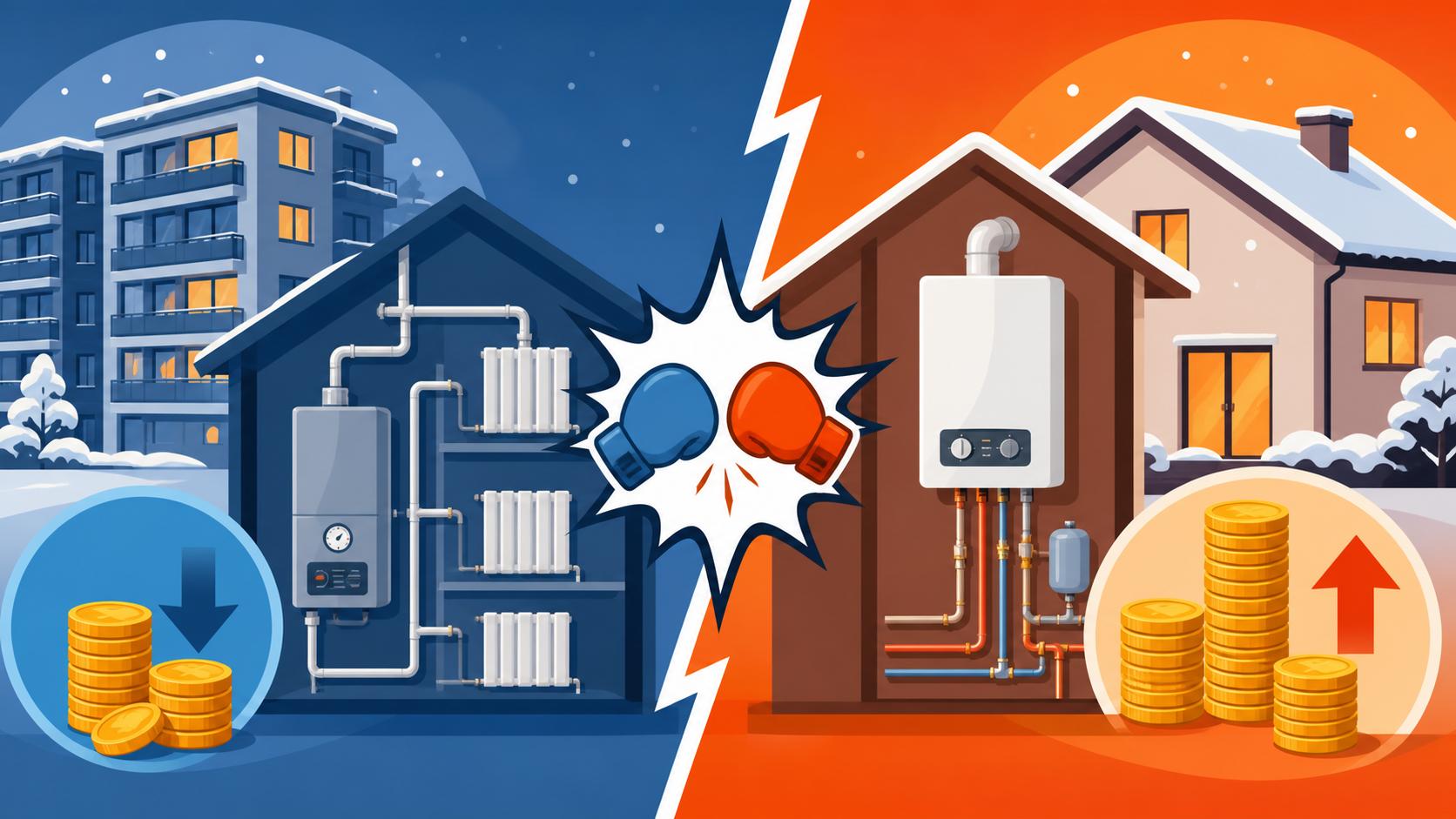
Central Heating (Merkezi Sistem) vs Kombi Boilers: Winter Heating Costs
Waking up in a beautiful high-ceilinged apartment in Cihangir only to realize you can see your own breath indoors is a rite of passage for many newcomers. I remember my first winter in Istanbul, huddled under three blankets because I didn't understand how my building's heating schedule worked. This guide solves the confusion between central heating and individual boilers so you can stay warm without draining your bank account.
Understanding the Core Differences: Merkezi Sistem vs. Kombi
When you are browsing listings on sites like Sahibinden, you will notice a specific field for heating type. The two main contenders are Merkezi Sistem (central heating) and Kombi (individual natural gas boiler). Each carries a completely different lifestyle implication and, more importantly, a different way of billing. If you are just arriving and looking for a soft landing, you might want to read our Living in Turkey as a Foreigner: The Ultimate Starter Guide (2027) to understand how these utilities fit into your broader relocation plan.
What is Merkezi Sistem?
Merkezi Sistem is the traditional way many older, larger apartment blocks in cities like Ankara and Istanbul operate. In this setup, there is one massive boiler in the basement of the building that serves every single unit. The building management (Site Yönetimi) decides when the heat turns on for the season—usually based on a specific date in November—and when it turns off in April.
The most important thing to understand here is the "Pay Ölçer" or heat share meter. Modern central systems are required by law to have these small electronic devices attached to every radiator. They measure exactly how much thermal energy your specific apartment consumes. However, even if you turn your radiators off, you are still legally required to pay a share of the "common area" heating and a minimum baseline fee. This is designed to prevent one neighbor from keeping their heat off and "stealing" warmth through the walls of the neighbors who are paying. It is a communal way of living that can be frustrating if you like total control.
What is a Kombi Boiler?
A Kombi (short for combination boiler) is a wall-mounted unit, usually located in the kitchen or on a balcony, that provides both hot water and radiator heating. This is the gold standard for most expats because it offers total autonomy. If you want to blast the heat in October because you’re from a warmer climate, you can. If you want to turn it off entirely while you travel for three weeks, you can.
The trade-off is maintenance. With a Kombi, you are responsible for the annual service and any repairs. If the motherboard fries during a power surge, that's on you or your landlord, depending on your Renting in Turkey: Lease Contracts, Deposits, and Tenant Rights Explained agreement. For those who want to avoid the headache of managing these local contracts, companies like Blueground offer fully serviced apartments where the heating systems are already vetted and maintained, which can be a lifesaver during your first winter.
Calculating Your Winter Budget: Real-World Cost Factors
Heating costs in Turkey have seen significant fluctuations over the last few years due to global energy prices and local inflation. Budgeting for winter is no longer as simple as it was in 2020. You need to factor in your specific neighborhood’s climate—heating a flat in the humid, windy hills of Beşiktaş is a different beast than heating one in the dry cold of Ankara.
The Hidden Costs of Merkezi Sistem (Aidat and Isınma)
In a central heating building, your heating bill is often split into two parts. First, there is the "Isınma" (heating) fee, which is based on your meter reading. Second, there is a portion of the Understanding 'Aidat': Apartment Complex Maintenance and Pool Fees that covers the maintenance of the massive central boiler and the fuel for common areas like hallways.
One thing that catches expats off guard is the 15-degree rule. According to Turkish energy efficiency regulations, in buildings with central heating, you are technically not allowed to let your apartment temperature drop below 15 degrees Celsius. If you turn your radiators completely to zero, the management can actually fine you or calculate a "default" usage fee. This is a common point of friction in Istanbul Neighborhood Guide: European vs Asian Side Lifestyles for Expats where older buildings still rely heavily on communal systems.
Managing Kombi Expenses in 2026
With a Kombi, your costs are directly reflected in your monthly "Doğalgaz" (natural gas) bill. In 2026, a typical two-bedroom apartment might see bills ranging from 1,500 TL to 4,500 TL per month during the peak of winter (January and February), depending on your insulation and usage habits.
To keep these costs down, many expats use smart thermostats. You can find a variety of these on Amazon Turkey, which is often the easiest way to get electronics delivered without navigating the complexities of local tech markets. Setting your Kombi to a "burn-low-and-slow" setting is generally more efficient than turning it off entirely during the day and cranking it to maximum when you get home from work. This constant cycling actually uses more gas as the water in the pipes has to be reheated from scratch.
| Feature | Merkezi Sistem (Central) | Kombi (Individual) |
|---|---|---|
| Control | Fixed by building management | Total individual control |
| Billing | Shared + Usage (Heat Share Meter) | Direct usage billed by gas company |
| Hot Water | Usually separate (electric heater) | Integrated into the boiler |
| Maintenance | Handled by the building | Handled by the tenant/landlord |
| Efficiency | Better for large, well-insulated blocks | Better for small flats and frequent travelers |
| Baseline Cost | Always pay a minimum (approx 30%) | Pay zero if gas valve is shut (not recommended) |
Pros and Cons: Which System Wins for Expats?
Choosing between these two isn't just about the money; it’s about your tolerance for Turkish bureaucracy and social norms. After living in both types of apartments, I’ve found that your lifestyle should dictate your choice. If you are moving between cities frequently, perhaps comparing the Best Cities in Turkey for Expats: Comparing Istanbul, Izmir, Ankara, and Antalya, you’ll find that certain regions favor one over the other.
Why Nomads and Short-Term Residents Prefer Kombi
For the digital nomad crowd, the Kombi is almost always the better choice. If you’re using an Airalo e-sim to stay connected while you hunt for the perfect flat, you probably value independence. Being able to control your environment is key when your home is also your office.
Kombi systems also mean you have "instant" hot water. In many Merkezi buildings, the central system only handles the radiators, meaning you have to install a separate electric water heater (often called a Termosifon) for your shower and sinks. These electric heaters can be incredibly expensive to run, often costing more than the gas heating itself. If you book through Blueground, they typically prioritize modern buildings with efficient Kombi systems, so you don't have to worry about the "cold shower" surprise that often comes with older central-heat flats.
The Reliability of Central Heating in Older Buildings
There is one major "pro" for Merkezi Sistem: it is incredibly warm. Because the entire building is heated as a single unit, the thermal mass of the structure stays high. In a Kombi building, if your neighbors above, below, and beside you are all "frugal" and keep their heat off, your apartment will lose heat through the floor and ceiling much faster. You'll end up spending a fortune just to keep your room lukewarm.
In a central system, everyone is paying, so everyone keeps their heat on. This creates a cozy environment where you can often walk around in a t-shirt even when it's snowing in Sultanahmet. This is a factor often overlooked in Cost of Living in Turkey 2026: Detailed Budgets for Singles and Families, where people only look at the raw gas price and not the "thermal efficiency" of the living situation.
Practical Tips for Reducing Your Turkish Heating Bill
Regardless of which system your apartment uses, Turkish construction can be "breathable" (a polite way of saying drafty). Improving your efficiency is the only way to survive a long winter without a heart-attack-inducing bill.
Insulation Hacks and Smart Home Tech
The first thing I do in every new Turkish apartment is check the windows. Most use PVC frames that have a "winter" and "summer" setting on the locking mechanism. If you don't know how to flip this small screw, your windows will let in a constant stream of cold Bosphorus air.
You should also look into:
- Draft Stoppers: You can order these in bulk from Amazon Turkey for the bottom of your front door and balcony doors.
- Radiator Reflectors: These are silver sheets you put behind the radiator to reflect heat back into the room rather than letting it soak into the cold exterior wall.
- Humidity Management: Dry air feels colder. While it sounds counter-intuitive, keeping a small bowl of water on your radiator (a very Turkish tradition) helps the air hold heat better.
If you are still in the process of Setting Up Your Turkish Home: Utilities, Internet Providers, and Aidat, make sure you ask the previous tenant or the agent for the previous year’s winter bills. This is the only way to get an honest look at the costs.
Legal Rights and Tenant Responsibilities
If your Kombi breaks down, who pays? In Turkey, the law generally states that "wear and tear" or major component failure (like a pump or heat exchanger) is the landlord's responsibility. However, the annual maintenance—which usually costs about 500-1,000 TL—is the tenant's responsibility.
If you are in a Merkezi building and the management refuses to turn on the heat despite it being 5 degrees outside, you have rights. There are usually municipal dates set for the "heating season." If they are violating these, you can contact the local Belediye (municipality). Knowing these small details is part of Why Drinking Tap Water is Rare and How to Order Damacana Water Delivery—it's all about understanding the local systems that make life run smoothly.
Finally, always keep an eye on your e-Devlet portal. Your gas bills and any building-related debts will appear there. If you haven't set up your e-Devlet yet, do it immediately; it is the only way to track your utility usage and ensure you aren't being overcharged by a rogue building manager in a central heating setup.
Disclaimer Regarding Heating and Utilities in Turkey
This guide is intended for informational purposes for expats and tourists in Turkey. Utility costs, regulations, and "heating season" dates can vary significantly by province and are subject to change by the Turkish Energy Market Regulatory Authority (EPDK) or local municipal decisions. While we strive to provide the most accurate and up-to-date information, always verify specific contract terms with your landlord or building management before signing a lease. Any technical repairs to gas boilers (Kombi) should only be performed by authorized, licensed service technicians to ensure safety and compliance with Turkish law.