Can You Drink the Tap Water in Istanbul, Ankara, and Antalya?
Landing in a new country usually involves a steep learning curve, but few things are as immediately stressful as standing over a kitchen sink with a parched throat, wondering if the liquid coming out of the faucet is a biological hazard. I still remember my first week in a fifth-floor walk-up in Cihangir, eyeing the tap with deep suspicion and eventually caving to a desperate thirst, only to be met with a taste so metallic it felt like I was chewing on a copper coin. This guide provides a definitive, realistic answer to whether you can drink the tap water in Istanbul, Ankara, and Antalya, and how to navigate the logistical hurdles of staying hydrated without getting sick.
The Short Answer: Can You Drink It?
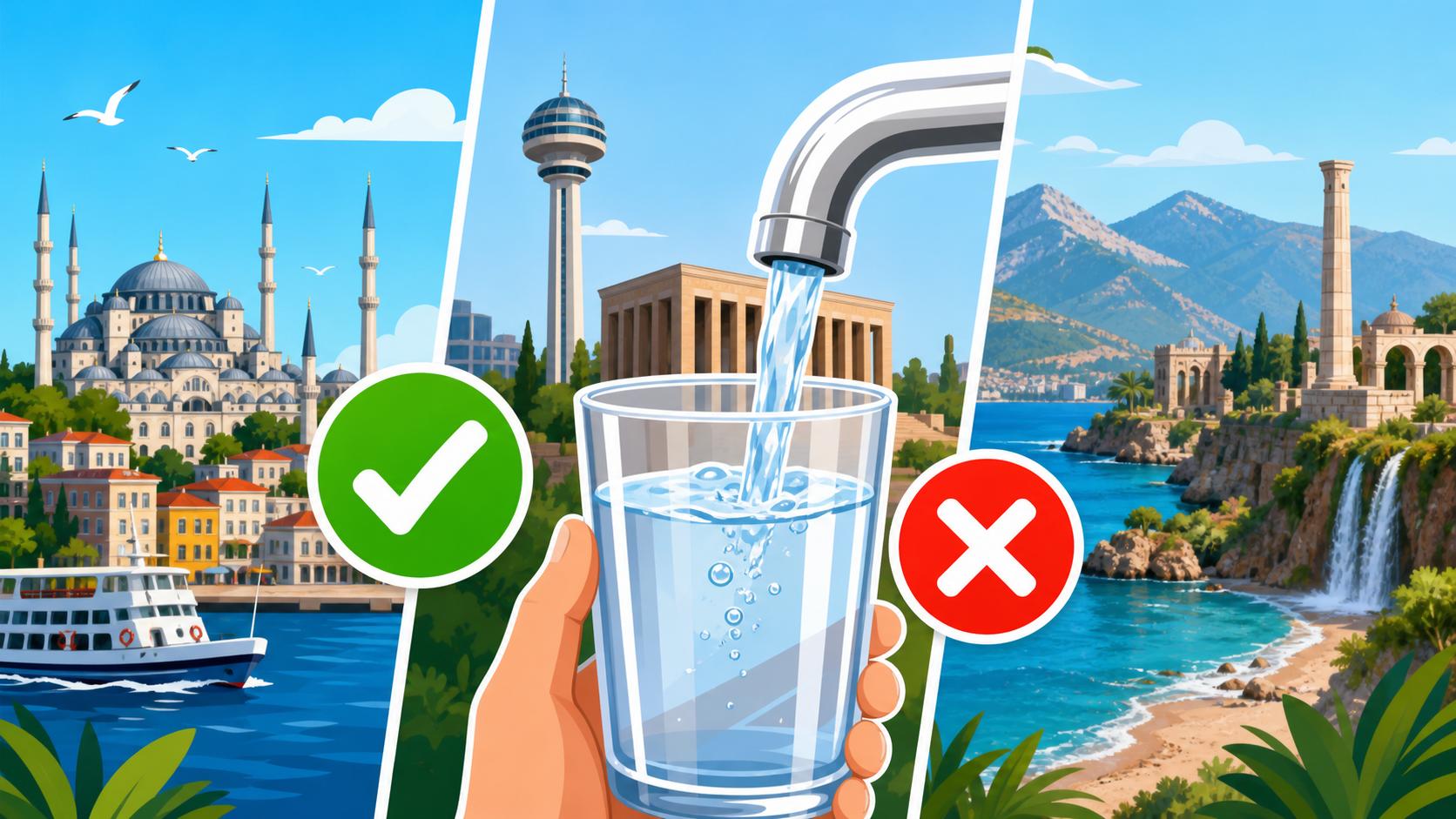
If you ask a local official, they will tell you that the water leaving the treatment plants in Turkey’s major metropolitan areas is perfectly safe and meets World Health Organization standards. If you ask a local resident, they will laugh and hand you a glass of bottled water. The reality sits somewhere in the middle of these two perspectives. While the municipal water authorities like ISKI in Istanbul or ASKI in Ankara do an incredible job of treating water at the source, the journey that water takes to reach your glass is the problem.
Most of the infrastructure in older neighborhoods of Istanbul or Ankara consists of aging pipes that have been in the ground for decades. These pipes can leach minerals or, in some cases, have microscopic cracks that allow contaminants to enter the flow. Furthermore, most Turkish apartment buildings utilize roof or basement water tanks (depo) to ensure supply during water cuts. These tanks are notoriously difficult to clean and often become breeding grounds for sediment and bacteria. Therefore, while the water might be "safe" when it leaves the plant, it is rarely "potable" by the time it exits your kitchen faucet.
For those concerned about long-term health or the occasional stomach bug, understanding Health Hazards and Prevention: Tap Water Safety and Common Stomach Bugs is essential for any expat. You will find that while you likely won't die from a glass of tap water, the heavy chlorine used to keep it "safe" and the high mineral content make it a poor choice for daily consumption.
Water Quality in Istanbul: The Great Divide
Istanbul is a massive sprawl, and the water quality can vary significantly between the European and Asian sides. The city's water is primarily sourced from a series of dams located outside the city limits. Because the water travels such long distances, the municipal authority, ISKI, uses high levels of chlorine to prevent bacterial growth during transit. This results in a strong chemical smell and taste that most expats find unbearable.
In neighborhoods like Fatih, Beyoglu, or Besiktas, the pipes are often ancient. Water can come out of the tap with a brownish tint after a particularly heavy rain or a local pipe repair. This is usually just rust or sediment, but it’s enough to turn anyone off the idea of drinking it. On the other hand, newer developments in areas like Basaksehir or certain parts of Atasehir might have modern PVC piping, but even there, the preference for bottled water remains culturally ingrained.
Brushing your teeth with Istanbul tap water is generally considered safe for healthy adults. However, if you have a sensitive stomach or are new to the country, you might want to use bottled water even for that until your gut flora adjusts. If you do happen to ingest something that doesn't agree with you, knowing the protocols for Food Poisoning in Turkey: When to Go to the ER vs Relying on a Pharmacy can save you a lot of grief.
Ankara’s Water: The Landlocked Struggle
Ankara, being an inland city, faces different challenges than its coastal counterparts. The water in the capital is often criticized for its "hardness" and its distinctive flat taste. ASKI, the municipal provider, frequently releases reports showing the water is within safety limits, but the public perception remains steadfastly negative.
One of the unique issues in Ankara is the seasonal fluctuation in water levels. During dry summers, the concentration of minerals and the necessity for heavier chemical treatment increases. Expats living in Ankara often report that the tap water leaves a white, chalky residue on everything—from their kettles to their showerheads. This "kireç" (lime/calcium) is not necessarily harmful to drink in small quantities, but it’s terrible for your hair, skin, and appliances.
If you are moving to the capital, it’s worth reading the Ankara Expat Healthcare Guide: Hospitals and Embassy-Recommended Clinics just to have a point of contact should you experience any dermatological issues from the hard water, which is a common complaint among foreigners with sensitive skin. Many expats find they need to supplement their skincare routine with products from iHerb to combat the drying effects of the local water.
Antalya and the Mediterranean Lime Problem
Antalya is the king of hard water. Because the city's water often comes from underground karst sources, it is incredibly rich in calcium and magnesium. While this sounds healthy on paper, it is a nightmare for daily use. If you boil Antalya tap water in a kettle, you will see a thick layer of white flakes within just two or three uses.
Drinking this water consistently can lead to a higher risk of kidney stones for those predisposed to them, and the taste is often described as "thick" or "chalky." In the heat of the Turkish Riviera, hydration is a life-or-death matter, but tap water is rarely the solution. Locals and expats alike rely almost exclusively on delivery services. For those spending their first summer there, Managing Summer Heatstroke and Hydration on the Turkish Riviera is a must-read, as the heat can often mask the symptoms of dehydration until it’s too late.
The 19-Liter Damacana Culture
Since drinking from the tap is a no-go, you will quickly become acquainted with the "Damacana"—the 19-liter blue plastic jugs that are the lifeblood of Turkish households. When you first move into an apartment, one of your first tasks will be to find your local water "sucusu" (water man). You pay a one-time deposit for the plastic bottle itself, and then you pay a much smaller fee for each refill.
The logistics are surprisingly efficient. Most neighborhoods have several competing water brands, and you can order via a phone call, a WhatsApp message, or increasingly, through apps. In fact, Getir and Yemeksepeti: A Guide to Using Turkey’s Top Food Delivery Apps have made ordering water as simple as a few taps on your smartphone. The delivery man will usually bring the heavy bottle right to your kitchen and even help you load it onto your water dispenser or pump.
| Feature | Tap Water | 19L Damacana | Glass Bottled Water |
|---|---|---|---|
| Potability | Low (not recommended) | High | Highest |
| Cost | Negligible | Moderate (~60-90 TL) | High |
| Convenience | Instant | Requires ordering | Heavy to carry |
| Taste | Metallic/Chlorinated | Neutral | Crisp/Natural |
| Sustainability | High (No plastic) | Moderate (Reusable) | Low (Single-use) |
Filtration Systems: A Viable Alternative?
Many long-term expats eventually tire of the "Damacana dance"—waiting for deliveries and lugging heavy bottles around. This leads many to install Reverse Osmosis (RO) filtration systems under their kitchen sinks. These systems are widely available in Turkey through brands like Ihlas or Waternet.
A good RO system will remove the heavy chlorine, sediment, and excess minerals that plague Turkish tap water. However, there is a catch: you must be diligent about changing the filters. In cities like Antalya or Ankara, the high lime content will clog filters much faster than the manufacturer's estimate. If you neglect maintenance, you could end up drinking water that is more contaminated than what's coming out of the tap.
For those who choose the filtration route, it’s a good idea to keep Essential First Aid Items to Keep in Your Turkish Apartment, including rehydration salts or electrolytes, just in case a filter failure leads to a minor stomach upset. Some expats also order specialized mineral drops from iHerb to add back the "good" minerals that RO systems often strip away along with the contaminants.
Cooking and Household Use: Where to Draw the Line
One of the most common questions I get is: "Is it okay to cook with the tap water?" The answer depends on what you’re making. If you are boiling pasta or potatoes, most people consider tap water to be fine because the water is drained away. However, for soups, rice, or anything where the water is absorbed, most expats and many locals prefer to use bottled or filtered water.
Tea and coffee are another story entirely. If you want a "clear" Turkish tea (berrak çay), you absolutely cannot use tap water. The minerals will make the tea look cloudy and taste bitter. The same applies to your expensive espresso machine; using Antalya or Ankara tap water will kill your machine with limescale in six months.
For general household cleaning, tap water is obviously fine, though you will find yourself buying "Kireç Çözücü" (limescale remover) by the gallon to keep your bathroom tiles and faucets looking shiny. If you are ever unsure about the safety of your environment, the Healthcare in Turkey for Foreigners: Complete Expat Guide (2027) provides a broader context on how to maintain your well-being in the country.
Health Insurance and Water-Borne Illness
While the risk of contracting a serious disease like Cholera or Typhoid from the tap water in major Turkish cities is virtually zero in 2026, minor parasitic infections or bacterial gastroenteritis can still happen, especially if a building’s water tank hasn't been cleaned since the 1990s.
If you do fall ill, you'll want to ensure you have robust coverage. This is where having a policy with Cigna Global can be a lifesaver, as it allows you to access top-tier private hospitals like American Hospital or Acibadem without worrying about the bill. These facilities are much better equipped to handle diagnostic testing for "traveler's diarrhea" or more persistent water-borne ailments.
You should also be aware of the locations of nearby Pharmacies (Eczane): Prescriptions, Duty Hours, and Medications, as Turkish pharmacists are highly trained and can often provide effective over-the-counter treatments for minor stomach issues before they require a hospital visit.
Practical Hydration Tips for New Expats
When you first arrive, follow these "I've-been-there" rules to avoid the dreaded Istanbul Belly:
- The Ice Rule: In high-end restaurants in Istanbul, ice is usually made from purified water. In smaller, local "büfes" or coastal beach bars, it might be tap water. When in doubt, skip the ice.
- The "Damacana" Deposit: Don't lose your receipt for the first water bottle you buy. You'll need it to get your deposit back if you switch brands or move house.
- The Pump: Buy a decent electric water pump for your Damacana. The manual ones are noisy and tend to break right when you're the thirstiest.
- App Delivery: Download the "BiSu" app. It allows you to compare all the water brands in your area based on their laboratory analysis scores and price.
- Brushing Teeth: If you are staying in an Airbnb or an older building, use bottled water for the first few days. If you feel fine, transition to tap water.
Living in Turkey is an incredible experience, but it requires adjusting your habits. You’ll eventually find that Why Drinking Tap Water is Rare and How to Order Damacana Water Delivery is just one of those quirks of life here, much like the call to prayer or the endless offers of tea. By treating the tap water as "utility water" rather than "drinking water," you'll keep your health intact and your tea tasting exactly the way it should.
Disclaimer
The information provided in this guide is for informational purposes only and is based on personal expat experiences and local knowledge as of 2026. Water quality can change due to local maintenance, weather events, or infrastructure failure. Always follow the advice of local health authorities and consult a medical professional if you experience symptoms of water-borne illness.