Healthcare in Turkey for Foreigners: Complete Expat Guide (2027)
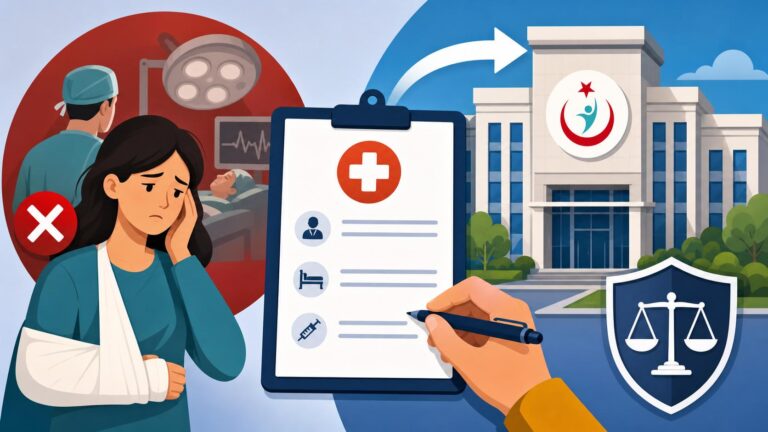
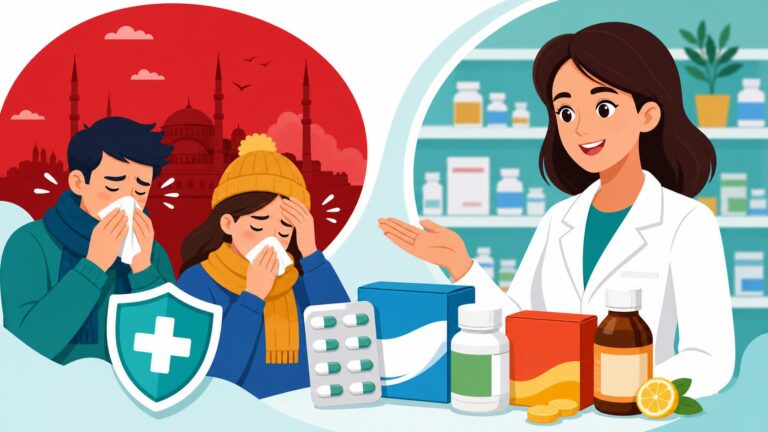
Waking up in a foreign city with a pounding fever or a sudden injury is one of the most isolating experiences an expat can face. I vividly remember my first winter in Istanbul, clutching a scribbled note in Turkish while trying to explain a sinus infection to a confused pharmacist. This guide solves the mystery of the Turkish medical system, transforming it from a bureaucratic maze into a manageable part of your new life.
The Architecture of Turkish Healthcare
The Turkish healthcare system is a sophisticated, dual-track machine that has undergone massive modernization over the last decade. It is essentially divided into two worlds: the public sector, managed by the Ministry of Health (Sağlık Bakanlığı), and the rapidly expanding private sector. For a foreigner, understanding where you fit into this structure is the difference between a five-minute check-up and a five-hour wait. Turkey continues to be a global hub for medical tourism, which means the private facilities in major cities like Istanbul, Ankara, and Izmir are often more luxurious than what you would find in Western Europe or North America.
The public system is built around the Social Security Institution (SGK). This is the backbone of the country’s “Universal Health Insurance” scheme. While it provides incredibly affordable care, it is often characterized by high patient volumes and a language barrier, as most staff in state hospitals communicate primarily in Turkish. However, the quality of medical education in Turkey is exceptionally high, and many doctors working in these state facilities are among the top experts in their fields.
The private sector, on the other hand, is where most expats spend their time. These hospitals, often referred to as “Özel Hastane,” feel more like five-star hotels. They offer English-speaking “International Patient” departments, streamlined booking systems, and cutting-edge technology. Whether you are navigating the system for a routine check-up or a specialized surgery, you will likely find that the private sector offers a level of convenience and speed that makes the transition to living in Turkey much smoother.
The Role of JCI Accreditation in Private Care
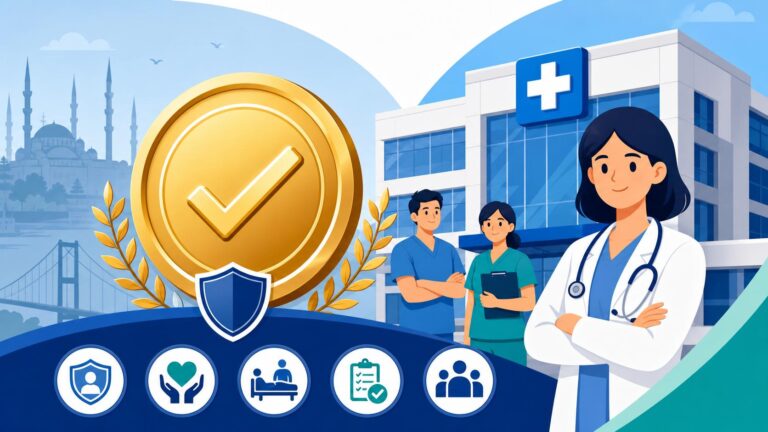
When you are looking for a hospital in Turkey, you will often see the JCI (Joint Commission International) seal of approval. Turkey has one of the highest numbers of JCI-accredited hospitals in the world. This accreditation means the facility adheres to strict international standards for patient safety and quality of care. For an expat, choosing a JCI-accredited clinic provides an extra layer of peace of mind, knowing that the protocols for everything from surgery to hygiene are identical to those in top-tier global institutions.
In cities like Istanbul, hospitals such as Acıbadem, Memorial, and American Hospital are the gold standards. They are accustomed to dealing with foreigners and often have dedicated floors for international residents. When I first moved here, I was surprised to find that these hospitals even have translators on staff who will literally walk with you from the reception to the doctor’s office. This level of service is a hallmark of the Turkish private medical experience and is a core reason why Finding Medical Care in Turkey: Public Hospitals vs JCI-Accredited Clinics is such a vital topic for newcomers to research.
However, do not let the glitz of private hospitals make you overlook the local clinics. Every neighborhood has a “Sağlık Ocağı,” or family health center. These are smaller, community-based clinics where you can get basic blood tests, vaccinations, and prescriptions. While they are public and usually require some Turkish language skills, they are incredibly efficient for routine matters and are often the first point of contact for families with children.
Understanding the 99 Number and Your Digital Identity
In Turkey, your medical existence is tied to your “99” number—the Foreigner Identity Number (Yabancı Kimlik Numarası) issued with your residence permit. This number is your key to the entire healthcare database. Every time you visit a doctor, get a blood test, or buy a prescription, the data is logged under this ID.
This centralized system is remarkably advanced compared to many other countries. The integration between your ID and the health system means that any doctor at any hospital can, with your permission, pull up your entire medical history. This prevents redundant testing and ensures that if you move from Antalya to Istanbul, your records move with you. If you are still waiting for your residence permit, you can still access care as a tourist, but you will be charged the international patient rate and won’t have a centralized digital record until your permit is approved.
For those planning a long-term stay, it is essential to understand Healthcare in Turkey for Foreigners: Complete Expat Guide (2027) as it relates to this digital identity. Without your 99 number, you are essentially a ghost in the system, which can make things like Enrolling in SGK (Public Health Insurance): The 1-Year Residency Rule much more complicated once you hit your 12-month mark in the country.
Health Insurance Options for Expats
If you are applying for a residence permit (Ikamet), health insurance is not optional; it is a legal requirement. The type of insurance you choose will dictate not only your legal status but also the quality and cost of the care you receive. The immigration office (Göç İdaresi) is stricter than ever about the policies they accept. You cannot simply use a travel insurance policy from your home country; it must be a policy issued by a Turkish company or a globally recognized provider that meets specific Turkish legal criteria.
Most first-year expats opt for what we call “Ikamet Insurance.” This is a basic, low-cost private policy designed specifically to satisfy the visa requirements. While these are great for the paperwork, they often have very limited coverage. They might cover 60% of outpatient costs and 100% of inpatient costs at “contracted” hospitals, but the network of hospitals can be quite small. I always tell new arrivals that if they have a chronic condition or want high-end care, they should look beyond these basic plans.
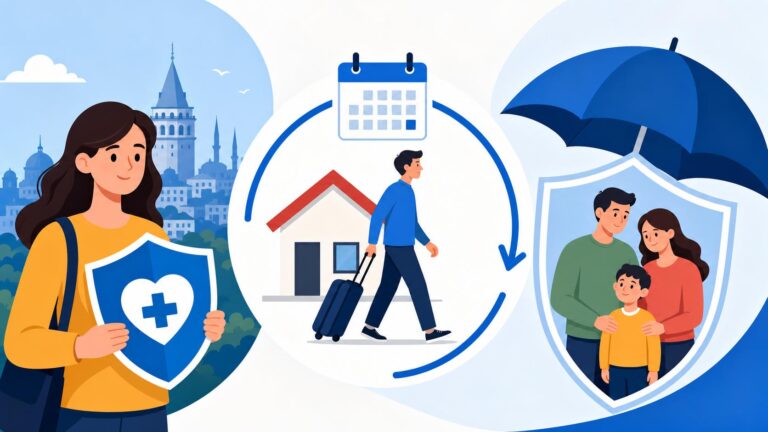
For those who want a “safety net” that works both in Turkey and when they travel home, an international policy like Cigna Global is often the preferred choice. These plans offer much higher coverage limits and allow you to see doctors at the most prestigious hospitals without worrying about whether they are “contracted” with a local Turkish budget insurer. Cigna Global provides that level of portability that digital nomads and retirees often need, especially if they are splitting their time between Turkey and other countries.
The SGK Public Insurance System
Once you have lived in Turkey legally for one year, you become eligible to join the state’s SGK system. This is a game-changer for many expats, especially retirees or those with families. By paying a fixed monthly premium, you and your dependents (spouse and children under 18) gain access to all state hospitals for free and receive heavy discounts at private hospitals that have an agreement with the state.
The 2026 premiums for SGK are based on a percentage of the minimum wage, and while they have risen with inflation, they still represent incredible value for money. However, there is a catch: you must undergo a health screening before joining, and pre-existing conditions are generally not covered for the first period of your enrollment. For more details on how to navigate this, check out our guide on Health Insurance in Turkey: SGK Public System vs Private Coverage Explained.
It is also important to note that if you are working for a Turkish company, your employer is legally required to pay your SGK premiums from day one. In this case, you don’t have to wait for the one-year residency mark. Many expats who work locally find that their employer-provided SGK is sufficient for emergencies, but they still keep a supplemental private policy or a plan like Cigna Global for elective procedures or to ensure they can always access English-speaking specialists.
Private Medical Insurance (Özel Sağlık Sigortası)
Beyond the basic visa-compliant insurance and the state SGK, there is a middle ground: comprehensive local private insurance. Companies like Allianz, Axa, and Anadolu Sigorta offer “Özel Sağlık Sigortası” (OSS). These plans are significantly more robust than the basic ikamet versions. They often include perks like dental check-ups, eye exams, and even gym memberships.
The benefit of OSS is that it is tailor-made for the Turkish private hospital network. If you live in a neighborhood with a high-end hospital like Acıbadem, you can choose a “Network A” policy that gives you seamless, card-based access to that facility. However, the premiums for these policies can be high, and the fine print is usually in Turkish. This is why many expats still find it easier to manage their health through an international provider like Cigna Global, where the terms are clear, the support is in English, and the claims process is designed for people who move around the world.
| Insurance Type | Best For | Typical Coverage | Cost Level |
|---|---|---|---|
| Basic Ikamet Insurance | Residency Permit Applicants | Emergency + Limited Outpatient | Low |
| SGK (Public) | Long-term residents / Families | State Hospitals + Subsidized Private | Medium |
| Local Private (OSS) | Residents wanting top-tier local care | Wide Private Hospital Network | Medium-High |
| International (Cigna Global) | Expats, Nomads, and Retirees | Global Coverage + High Limits | High |
Navigating the Turkish Pharmacy System (Eczane)
The Turkish pharmacy, or “Eczane,” is more than just a place to pick up pills; it is often your first line of medical advice. Pharmacists in Turkey are highly trained and often have more autonomy than their counterparts in the US or UK. If you have a minor ailment like a cold, a skin rash, or a stomach bug, you can walk into an Eczane, describe your symptoms, and the pharmacist can often recommend an effective treatment on the spot.
In 2026, regulations on certain medications, especially antibiotics and strong painkillers, have tightened. You can no longer buy these over-the-counter (OTC) without a prescription. However, many other medications that require a script in other countries are available freely here. This is why it is helpful to know the local names for common meds. For example, you won’t find “Tylenol” or “Advil,” but you will find Parol and Arveles. For a deeper dive into what you can buy and how to find equivalents, see our article on Pharmacies (Eczane) in Turkey: Prescriptions, Duty Hours, and Medications.
One thing that often surprises expats is the price of medication. Because the Turkish government negotiates prices for the entire country, drugs are significantly cheaper than in many Western nations. Even if you are paying out of pocket in the private sector, your monthly prescription bill will likely be a fraction of what you are used to.
Finding a Night Pharmacy (Nöbetçi Eczane)
In Turkey, pharmacies are generally open from 9:00 AM to 7:00 PM, Monday through Saturday. On Sundays and during the night, only a few select pharmacies in each district remain open. These are called “Nöbetçi Eczane” (On-duty Pharmacies). Every pharmacy is required by law to post a list in its window showing the names and addresses of the nearest on-duty locations.
I recommend downloading a mobile app like “Eczane” or using Google Maps to search for “Nöbetçi Eczane” if you find yourself needing help at 3 AM. It can be a bit of a hunt, especially in more rural areas, but in the cities, there is always one within a 10-15 minute drive. Remember to bring cash or a card, as these pharmacies operate just like normal ones, albeit with a smaller, more tired staff.
Vitamins and Supplements: The iHerb Strategy
While Turkish pharmacies carry a decent range of vitamins, the selection of high-quality, organic, or specific Western brands can be limited and expensive due to import taxes. This is where iHerb becomes an expat’s best friend. Many of us living in Turkey use iHerb to order our specific supplements, protein powders, and specialized skincare that isn’t readily available in the local market.
The key to using iHerb in Turkey in 2026 is understanding the customs limits. To avoid high taxes or having your package held at the border, it is best to keep your orders under the 150 Euro threshold and limit the number of items. I have found that smaller, more frequent orders are the secret to success. If you are looking for specific brands that you can’t find at the local Eczane, checking iHerb is usually the first thing seasoned expats do.
How to Book Appointments and Access Care
The days of standing in long lines at 6 AM are largely over, thanks to the MHRS (Merkezi Hekim Randevu Sistemi), Turkey’s centralized medical appointment system. This digital platform allows you to book appointments at any state hospital or family health center online or via the 182 phone line. As a foreigner, you can log in using your 99 number and your e-Devlet password.
While the MHRS is great, it is primarily in Turkish. If your language skills aren’t up to par yet, you might want to look at our A Step-by-Step Guide to Booking MHRS Appointments Without Perfect Turkish. For private hospitals, the process is even easier. Most major private chains have their own apps or websites with English interfaces where you can choose your doctor based on their biography and specialty.
One thing I love about the Turkish system is the speed. In many countries, seeing a specialist can take months. In Turkey, even in the private sector, you can often see a top-tier cardiologist or dermatologist within 48 hours. If you are willing to pay the out-of-pocket consultation fee—which usually ranges from 1,500 to 4,000 TL in 2026—you can get high-quality care almost instantly.
The Neighborhood Health Center (Sağlık Ocağı)
Every expat should register with their local “Sağlık Ocağı.” This is your “Aile Hekimi” or Family Physician. To register, you generally need to show your residence permit and proof of address. Once registered, you have a dedicated doctor who handles your basic needs for free.
The Sağlık Ocağı is perfect for routine blood work. You go in early in the morning, they take your blood, and by the next afternoon, your results are usually available on your digital portal. This is also where you should go for the mandatory health reports required for things like a Turkish driver’s license conversion. For more on this essential step, read Choosing a Primary Care Physician (Aile Hekimi) at a Local Health Center.
Emergency Triage and Calling 112
In a true emergency, the number to dial is 112. This is the unified emergency number for ambulances, police, and the fire department. In 2026, the 112 dispatch centers in major cities often have English-speaking operators, but it’s not a guarantee. It helps to know a few Essential Turkish Phrases for the Doctor: Communicating Symptoms Effectively just in case.
When you arrive at an “Acil” (Emergency Room), you will be triaged based on a color system: red for life-threatening, yellow for urgent, and green for non-urgent. If you go to a state hospital ER with a “green” condition (like a sore throat), be prepared for a very long wait. Private hospital ERs are much faster but will charge you a premium unless it is a life-threatening emergency, which by law must be treated for free (though “free” can be a gray area when it comes to follow-up care). For more on what to expect, see Emergency Medical Care in Turkey: Dialing 112, Ambulances, and Triage.
Specialized Care and Support Services
One area where Turkey truly shines is in specialized care, particularly dental work and aesthetics. You have likely seen the “bandage brigade” at Istanbul airport—people who have come from all over the world for hair transplants or dental veneers. As a resident, you have access to these same world-class surgeons at local prices.
Dental care in Turkey is exceptionally affordable compared to Western Europe. A routine cleaning might cost around 1,000 to 2,000 TL, and even complex procedures like implants are a fraction of the cost elsewhere. Most expats find that their local private insurance doesn’t cover much dental work, so they simply pay out of pocket. If you are looking for a dentist, focus on clinics in areas like Nişantaşı or Kadıköy, where English-speaking staff are the norm.
Mental Health Resources for Expats
Living abroad can be stressful, and culture shock is real. For a long time, mental health was a bit of a taboo subject in Turkey, but that has changed rapidly. Today, there is a wide network of psychologists and psychiatrists, particularly in Istanbul, who offer therapy in English.
While the SGK system does provide access to psychiatrists, the sessions are often short and focused on medication. For “talk therapy,” most expats look to the private sector. There are also several online platforms and expat support groups that can connect you with therapists who understand the specific challenges of living in Turkey. If you are feeling overwhelmed, don’t hesitate to check our guide on Mental Health in Turkey: Counseling, Psychiatry, and Expat Support Systems.
Maternity and Pediatric Care
If you are planning to grow your family in Turkey, you are in good hands. Turkish culture is incredibly child-friendly, and the maternity care in private hospitals is world-class. Most private hospitals offer “Maternity Packages” that cover everything from your first ultrasound to the delivery and the first pediatric check-up.
These packages offer a level of luxury that is hard to find elsewhere—private suites for the mother, catering for guests, and even photographers to capture the first moments. Pediatricians are also very accessible; most parents have their pediatrician’s WhatsApp number and can message them with concerns at any time. This cultural emphasis on family means that children’s healthcare is both high-quality and deeply empathetic.
Digital Health: The e-Nabız Revolution
Perhaps the most impressive part of the Turkish healthcare system is the e-Nabız (Electronic Health Pulse) system. This is a personal health record portal available via an app or website. Every scan, every blood test result, every prescription, and every doctor’s note is recorded here in real-time.
As an expat, e-Nabız is a lifesaver. You can see your lab results—often within hours of the test—and the system even flags results that are outside the normal range. You can also use the app to share your records with a doctor in your home country if you need a second opinion. The app has become quite user-friendly, and while it’s mostly in Turkish, the data (like blood counts and chemical levels) is universal.
To get started with this, you first need an e-Devlet password from any PTT (Post Office). Once you have that, you can log into e-Nabız and see your entire Turkish medical history. This is particularly useful for tracking your vaccination records or managing chronic conditions. For a step-by-step on how to use this tool, see Using e-Nabız: Accessing Your Medical Records on the Ministry of Health App.
Managing Chronic Conditions and Specialized Meds
If you move to Turkey with a chronic condition like diabetes or hypertension, your first task should be to find a local specialist and show them your previous records. They will then “enter” your condition into the Turkish system. Once this is done, you can often get “reports” (rapor) that allow you to get your medications for free or at a massive discount through SGK or your private insurance.
For specialized medications, such as those for ADHD or certain autoimmune disorders, you may need a specific type of prescription from a university hospital or a senior consultant. It is always a good idea to bring a three-month supply of your essential meds from home, along with a legalized translation of your doctor’s note, while you get set up in the local system. If you find that certain niche supplements are hard to find, remember the iHerb strategy mentioned earlier—it has saved many of us from running out of our favorite brands.
Final Thoughts for the Veteran Expat
Turkey’s healthcare system is a reflection of the country itself: it is fast-paced, high-tech, deeply hospitable, and occasionally a bit confusing. The key to navigating it successfully is to be proactive. Don’t wait for an emergency to find out which hospital is closest to your house or whether your insurance is accepted there.
Take the time to register with your local Sağlık Ocağı, get your e-Devlet password, and choose an insurance plan that truly fits your lifestyle—whether that’s the budget-friendly SGK or a comprehensive international plan like Cigna Global. Once you understand the rhythm of the “Eczane” and the efficiency of the private hospitals, you’ll find that being sick in Turkey is a lot less scary than you initially imagined. In fact, you might find the level of care so good that you’ll dread going back to the medical systems in your home country!
Disclaimer
This guide is for informational purposes only and does not constitute professional medical or legal advice. Healthcare regulations and insurance requirements in Turkey can change frequently. Always consult with a qualified medical professional or a licensed insurance broker before making decisions about your health or coverage. For the most current official information, refer to the Turkish Ministry of Health or the Social Security Institution (SGK).