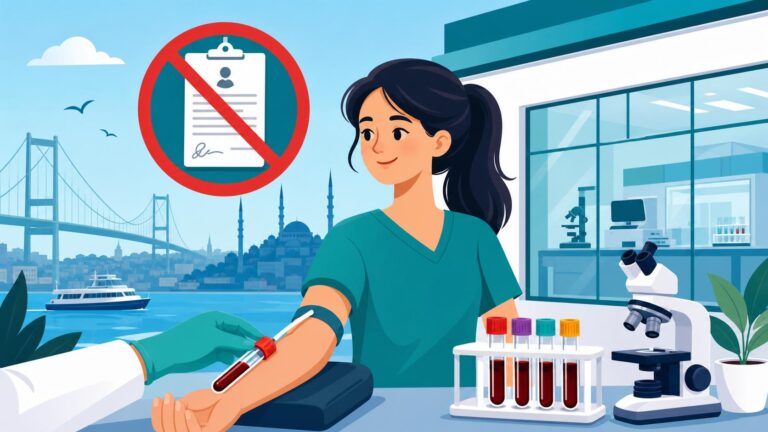
Health Insurance in Turkey: SGK Public System vs Private Coverage Explained
Navigating the bureaucracy of a new country is stressful enough, but when it involves your physical well-being, the stakes feel impossibly high. I still remember the cold sweat I broke into during my first month in Istanbul when a simple toothache turned into a feverish nightmare. This guide breaks down the complex choice between Turkey’s SGK public system and private insurance options to ensure you never feel that panic.
The Dual Nature of Turkish Healthcare
Turkey operates a two-tier healthcare system that can be both a blessing and a source of deep confusion for the uninitiated. On one hand, you have the Social Security Institution, known locally as the Sosyal Güvenlik Kurumu or SGK. This is the massive, state-run machine designed to provide universal coverage to all citizens and legal residents. On the other hand, a thriving private sector offers gleaming, JCI-accredited hospitals that look more like five-star hotels than medical facilities.
When you first arrive, you will likely be pushed toward a basic private policy simply because it is a requirement for your residence permit. However, as the months turn into years, you will need to decide if that “visa-only” policy is enough or if you should transition into the public system. The reality of Healthcare in Turkey for Foreigners: Complete Expat Guide (2027) is that neither system is perfect, but understanding how they interact is the key to your peace of mind.
Most expats find themselves caught in the middle. The public system is incredibly affordable but can be bogged down by wait times and a lack of English-speaking staff. The private system is efficient and luxurious but can become prohibitively expensive if you aren’t careful with your policy limits. For those who travel frequently or want the highest tier of international protection, providers like Cigna Global offer a middle ground, providing comprehensive coverage that works both in Turkey and when you fly back home to visit family.
The SGK Public System Deep Dive
The SGK is the backbone of Turkish society. If you are employed by a Turkish company, your employer is legally mandated to pay into this system for you. If you are a freelancer, a retiree, or living on savings, you can opt into the system voluntarily after you have completed one full year of legal residency. This is a critical milestone that many newcomers overlook.
The One Year Residency Rule and Enrollment
You cannot simply walk into an SGK office the day after you get your Ikamet (residency card) and sign up. The law requires you to have held a valid residence permit for a continuous 12-month period before you are eligible for voluntary enrollment. Expats can get turned away at the provincial social security office because they tried to apply at month eleven. Once you hit that one-year mark, the process involves a health check-up, a trip to the Nüfus (population) office to ensure your address is registered, and a visit to your local SGK center.
Enrolling in the system is a family affair. One of the biggest perks of the SGK is that a single monthly premium covers the primary policyholder, their non-working spouse, and their dependent children under the age of 18 (or 25 if they are students). This makes Enrolling in SGK (Public Health Insurance): The 1-Year Residency Rule a highly cost-effective strategy for families who might otherwise pay thousands of dollars for individual private plans. However, keep in mind that the “health report” required for entry into SGK is designed to screen for massive pre-existing conditions that might affect your premium or eligibility.
What the SGK Actually Covers
The coverage provided by the SGK is surprisingly broad. It includes everything from emergency room visits and major surgeries to outpatient consultations and even a significant portion of your prescription medication costs. When you go to a state hospital, you often pay nothing or a very symbolic “participation fee” of a few Liras. Even at many private hospitals that have an agreement with the SGK, your state insurance will cover a portion of the bill, leaving you to pay the “difference fee.”
However, there is a catch. The SGK is designed for the masses. This means Booking Public Hospital Appointments via the MHRS Digital System is an absolute necessity, and you might find that the next available slot for a specialist is three weeks away. Furthermore, while the doctors in state hospitals are often the most experienced in the country, they are also the most overworked. You will not get a 30-minute chat about your lifestyle; you will get a focused, five-minute clinical assessment. If you value bedside manner and English-speaking receptionists, the SGK might feel like a culture shock.
Managing SGK Premiums and Payments
For those not employed by a Turkish firm, the monthly premium for voluntary SGK is linked to the national minimum wage. As of 2026, these rates are adjusted annually to keep up with inflation. It is your responsibility to ensure these payments are made on time. If you miss a payment, your coverage is suspended immediately. There is no grace period in the eyes of the SGK digital system.
Most expats handle SGK Monthly Premiums 2026: Payment Methods and Coverage for Expats through their Turkish bank’s mobile app or via the e-Devlet portal. It is a seamless digital process, but it requires a bit of Turkish language navigation. If you are someone who struggles with local tech interfaces, it might be worth sticking with a private international plan like Cigna Global, where the customer service is handled in English and the billing is straightforward.
Private Health Insurance Options
Private health insurance in Turkey is generally split into two categories: local policies (Özel Sağlık Sigortası) and international policies. For most expats, the journey starts with a very basic, low-cost local policy required to secure their first residency permit.
Mandatory Ikamet Insurance vs Comprehensive Plans
Let’s be brutally honest: the cheap insurance you buy from a small office near the immigration building is almost useless for actual medical care. These policies are designed to meet the legal minimums for the visa. They often have low caps on outpatient care and high copays. If you are serious about your health, you need to look at Mandatory Ikamet Insurance: What Health Policies Actually Cover for Visas and realize it is a “break glass in case of emergency” tool, not a daily wellness plan.
If you want real coverage, you need to upgrade to a comprehensive local plan or an international provider. Companies like Allianz, Axa, and Anadolu Sigorta offer “Expat Packages” that include access to the best private hospitals in the country, such as Acıbadem or American Hospital. These plans often cover 80% to 100% of inpatient costs and offer a set number of outpatient visits. The benefit here is speed. You can usually see a specialist the same day or the next, and the facilities are indistinguishable from luxury clinics in London or New York.
The International Solution for Digital Nomads
If you are a digital nomad or an expat who spends six months in Turkey and six months traveling, a local Turkish policy is a poor investment because it won’t cover you once you cross the border. This is where Cigna Global becomes a superior choice. They offer modular plans that allow you to include or exclude the USA, providing a level of global portability that local Turkish firms simply cannot match.
When you have an international policy, you aren’t tied to the Turkish “network” system as strictly. While you still want to visit Finding Medical Care in Turkey: Public Hospitals vs JCI-Accredited Clinics for major procedures, an international plan gives you the freedom to seek second opinions abroad. This is particularly relevant for expats dealing with complex chronic conditions where the latest treatments might not yet be approved or available in the local Turkish market.
Comparison Table: SGK vs Private Coverage
| Feature | SGK (State Insurance) | Local Private Insurance | International (e.g. Cigna Global) |
|---|---|---|---|
| Eligibility | After 1 year of residency | Immediate | Immediate |
| Monthly Cost | Fixed (approx. $100-$150) | Varies by age/health | Premium but comprehensive |
| English Support | Rarely available | Common in top hospitals | 24/7 in English |
| Wait Times | Can be long (weeks) | Very short (days/hours) | Very short |
| Portability | Turkey only | Turkey only | Worldwide coverage |
| Family Coverage | Spouse/Kids included | Paid per person | Customizable for families |
| Pre-existing | Generally covered (with fee) | Often excluded | Can be underwritten |
Navigating the Pharmacy and Medication Landscape
Whether you choose SGK or private insurance, you will eventually find yourself at a local “Eczane” (pharmacy). Turkey has a unique approach to medication. Many drugs that require a strict prescription in the US or UK are available over-the-counter here, while others—like antibiotics—are strictly regulated.
Prescriptions and the SGK Advantage
If you are on the SGK system, your medications are heavily subsidized. The doctor enters your prescription into the national system using your 99-number, and you simply go to the pharmacy and provide your ID. You will pay a fraction of the retail price. For those without SGK, you will pay the full “retail” price, which, thankfully, is still much lower than in North America but can add up if you are managing a chronic illness.
Expats often struggle with Pharmacies (Eczane) in Turkey: Prescriptions, Duty Hours, and Medications because of the rotating “Nöbetçi” (on-duty) system. On Sundays and late at night, only one or two pharmacies in each neighborhood are open. I’ve spent many a rainy Sunday night hunting for the one open Eczane in Beşiktaş. Most private insurance policies do not cover outpatient medications unless you pay for a premium add-on, so factor this into your monthly budget.
Supplements and Hard-to-Find Brands
One frustration for many expats is the limited selection of high-quality vitamins and specialized supplements in local Turkish pharmacies. While the local brands are fine for basic Vitamin C, those who need specific formulations often turn to international shipping. I personally use iHerb to get the specific magnesium and probiotic brands that aren’t stocked locally.
When ordering from iHerb, you must be aware of Turkish customs regulations. The rules remain strict: you can generally order supplements for personal use, but if you order too many bottles of the same item, customs may flag it as a commercial shipment. Using iHerb is a lifesaver for maintaining your specific wellness routine, but always keep your orders small and frequent rather than one massive haul to avoid a headache at the PTT (postal) office.
Specialized Care: Dental, Vision, and Maternity
While the SGK and basic private plans cover the big stuff like appendectomies, the “extras” are where you can get caught out. Dental and vision care are rarely included in standard packages.
The Reality of Dental Care
Turkey is a global hub for dental tourism, but as a resident, you aren’t looking for “Hollywood Smiles”—you just want a reliable cleaning. The SGK does cover dental work at state dental hospitals (Ağız ve Diş Sağlığı Merkezi), but the wait times are legendary. Most expats choose to pay out-of-pocket at private clinics because the costs are so reasonable compared to the West. If you have an international plan like Cigna Global, you can often add a dental rider that covers a significant portion of these costs, which is well worth it if you have kids needing braces.
Maternity and Giving Birth in Turkey
For expat families, maternity care is a top priority. The SGK covers childbirth in state hospitals completely, and many private hospitals offer “maternity packages” for those with SGK. However, be warned: most private health insurance policies in Turkey have a “waiting period” of 12 months for maternity. This means if you are already pregnant, a new local private policy will not cover the birth.
In these cases, you either rely on the SGK (if you’ve been here a year) or you pay the “global” price at a private hospital. The quality of care in Turkish private maternity wards is exceptional, often including private suites and high-tier neonatal care. To manage the ongoing health of the mother and baby, many parents rely on iHerb for prenatal vitamins and high-quality baby supplements that are often more expensive or harder to find in local Turkish grocery chains.
Practical Steps to Get Started
If you are a new arrival, do not leave your health to chance. The first thing you should do is find your local “Sağlık Ocağı” or family health center. Even before you get SGK, you can register with a Choosing a Primary Care Physician (Aile Hekimi) at a Local Health Center based on your registered address. This doctor is your first point of contact for vaccinations, basic blood tests, and sick notes for work.
Using Digital Tools: e-Devlet and e-Nabız
Turkey’s medical system is surprisingly high-tech. Once you have your residence permit and an e-Devlet password (obtained from any PTT office), you must download the e-Nabız app. This is a centralized portal where every blood test result, every X-ray, and every prescription you’ve ever had in Turkey is stored.
Using e-Nabız: Accessing Your Medical Records on the Ministry of Health App allows you to show a new doctor your entire history with a few taps on your phone. It even allows you to track your organ donation status and book appointments. For an expat, this level of digital integration is a godsend, as it bypasses the need to carry around folders of paper records when you switch from a state clinic to a private specialist.
Making the Final Choice
So, which is better? For the budget-conscious long-term resident with a family, the SGK is an unbeatable value once you pass the one-year mark. It provides a safety net that covers almost everything. However, for those who want comfort, speed, and English-speaking doctors, Private Health Insurance (Özel Sağlık Sigortası): Top Providers for Foreigners is the way to go.
If you have the means, the “Gold Standard” for many veteran expats is a combination: we use the SGK for our “catastrophic” coverage and subsidized meds, but we maintain a high-tier international policy like Cigna Global for quick access to specialists and peace of mind when traveling. And for the smaller, daily health needs—from high-quality vitamins to specialized skincare—we supplement local pharmacy finds with occasional orders from iHerb.
Summary of Next Steps for New Expats
- First 30 Days: Buy the basic private insurance required for your Ikamet. It’s a formality, but a necessary one.
- First 90 Days: Register your address at the Nüfus office and find your local Aile Hekimi (Family Doctor).
- Month 12: Decide if you want to opt into the SGK. If you have a family, this is usually the smartest financial move.
- Ongoing: Set up your e-Nabız account to keep your records organized.
- Wellness: Use iHerb for specific supplements that are unavailable or overpriced in local markets.
- Travel: Ensure you have a plan like Cigna Global if you plan to spend significant time outside of Turkey, as SGK and local private plans offer zero protection abroad.
Healthcare in Turkey is a journey, not a destination. You will likely have some frustrating interactions with hospital receptionists and some confusing moments at the pharmacy. But once you understand the rhythm of the system—the efficiency of the private sector and the solid foundation of the SGK—you’ll realize that you are in one of the best countries in the world for medical care. Stay proactive, keep your paperwork in order, and don’t be afraid to ask for help from the expat community when the bureaucracy feels overwhelming.
Disclaimer
The information provided in this article is for informational purposes only and does not constitute legal, financial, or professional medical advice. Healthcare regulations and insurance premiums in Turkey are subject to frequent change. Always consult with the official Social Security Institution (SGK) or a licensed insurance broker before making any decisions regarding your coverage. For medical emergencies, always dial 112 immediately.