Blood Tests Without a Doctor’s Note: Using Private Laboratories in Turkey
Trying to get a routine blood test in Turkey often feels like navigating a labyrinth where every turn requires a new stamp, a specific doctor's referral, and hours of waiting in a crowded hallway. I remember the sheer exhaustion of trying to check my thyroid levels through the state system, only to be told I needed a separate appointment just to ask for the test. This guide solves that frustration by showing you how to bypass the referrals and use private laboratories for direct, stress-free health tracking.
The Doctor Note Hurdle: Why Private Labs are the Solution
For many expats, the primary point of contact with the Turkish medical system is the local family health center (Sağlık Ocağı) or a state hospital. While these are excellent for basic care, they operate under strict protocols. If you want a specific marker checked—perhaps something niche like C-Reactive Protein or a full hormonal panel—a public doctor might refuse if you don't show acute symptoms. This is where the private laboratory system in Turkey becomes your best friend.
Unlike many Western countries where you cannot get blood work done without a practitioner's signature, Turkey has a robust network of independent, JCI-accredited diagnostic labs. These facilities allow you to walk in off the street, select the tests you want from a menu, pay the fee, and have your results within hours or days. It provides a level of medical autonomy that is incredibly refreshing. When you are trying to understand Healthcare in Turkey for Foreigners: Complete Expat Guide (2027), knowing you can monitor your own health without a middleman is a massive advantage.
The shift toward private diagnostics is also a response to the "Referral Fatigue" many foreigners face. In the public system, you must first book an appointment via the MHRS system, wait for your slot, convince a physician to order the tests, and then return another day for the results. Private labs eliminate these three steps entirely. Whether you are Managing Chronic Illnesses: Diabetes, Hypertension, and Medication Supply or just want a baseline check, the private route is the most efficient path.
Finding the Right Laboratory: Top Names and Local Favorites
In major cities like Istanbul, Ankara, and Izmir, you aren't just limited to hospital labs. In fact, many of the best diagnostic facilities are standalone centers. Brands like Biruni, Synevo, and Düzen are the "big three" that most veterans recommend. They function with clinical precision, often have English-speaking staff, and provide results in both Turkish and English.
Biruni, for instance, is one of the most comprehensive labs in the country. They often handle the complex samples that smaller clinics can't process. Synevo, part of a massive European network, is known for its sleek, modern clinics and easy-to-use online portal. Düzen has a long-standing reputation for accuracy, particularly for rare genetic or metabolic testing. Choosing these over a general hospital setting is often a better move when Finding Medical Care in Turkey: Public Hospitals vs JCI-Accredited Clinics because their sole focus is diagnostics.
Beyond the big names, you will find smaller "Tıp Merkezi" (Medical Centers) in every neighborhood. While these can perform basic tests like a Complete Blood Count (Hemogram), they might lack the sophisticated equipment of the dedicated labs. If you are doing a deep dive into your health, it is worth traveling to a dedicated laboratory. Most of these centers also offer a "home service" (mobil hizmet). For a small extra fee, they will send a nurse to your apartment in the morning to draw blood on your dining table. This is a game-changer if you are fasting and don't want to commute across Istanbul before breakfast.
The Walk-In Experience: What to Expect from Needle to Result
Walking into a Turkish lab for the first time is surprisingly straightforward, but there are a few cultural and administrative nuances to keep in mind. First, you will need your passport or your 99-series residence permit number. Even though you are paying out of pocket, every medical action in Turkey must be logged against an official ID.
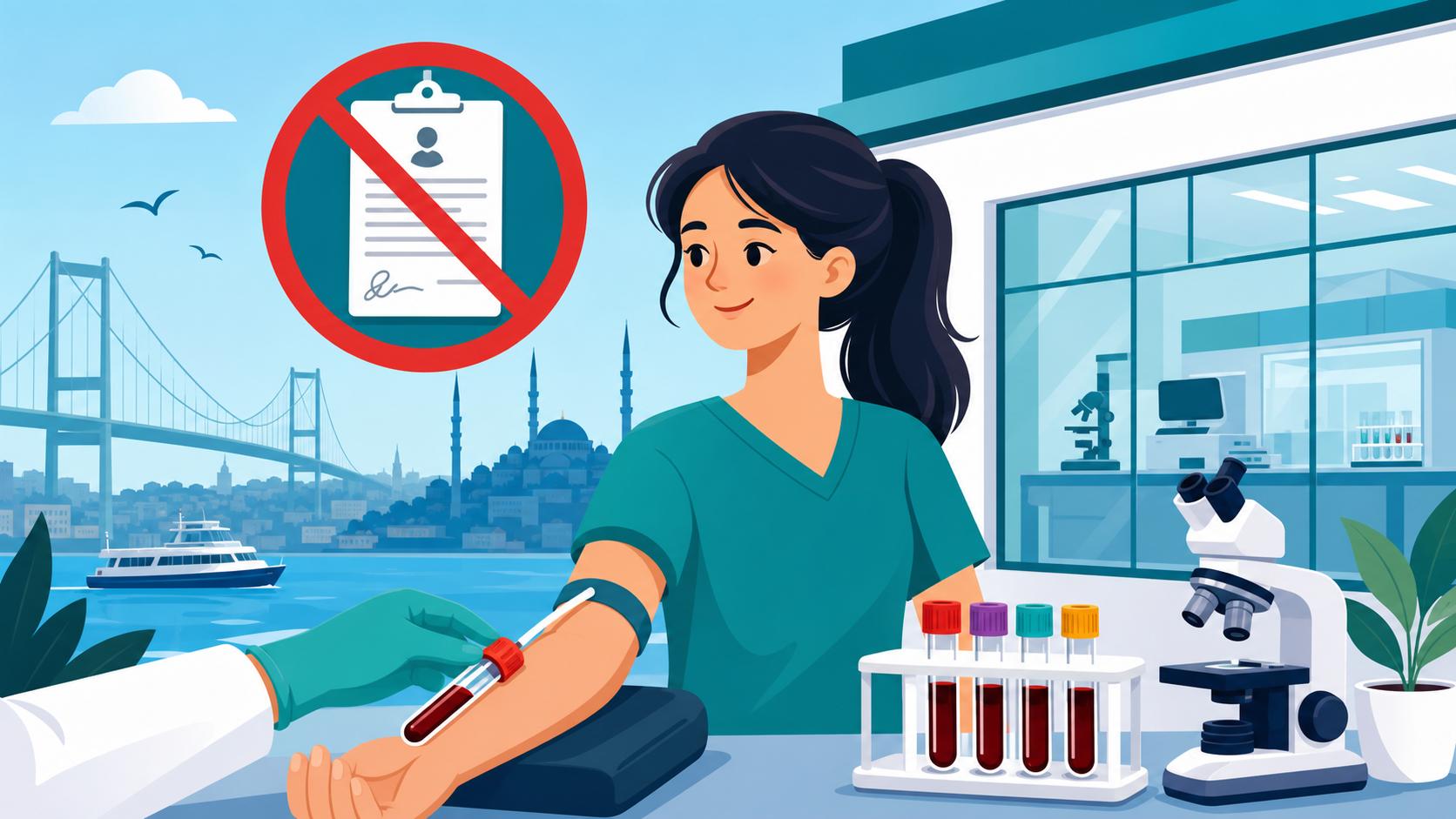
Once you arrive, you will be directed to a registration desk. This is the moment where you list the markers you want. If you don't have a doctor's note, you can simply say "I want a check-up" or provide a list of specific markers. Many labs offer pre-set Preventative Health Checkup Packages (Check-Up): A Guide to Private Clinics that are tiered by age and gender. These are usually much cheaper than ordering 20 individual tests. After payment, you'll be called to the "Kan Alma" (Blood Drawing) room. The technicians in these private labs are typically very skilled because they do nothing but draw blood all day, which is a relief if you have "difficult" veins.
The results are typically delivered via a PDF sent to your email or WhatsApp, or you can log into their portal. One of the most important things to do once you have your results is to upload them to your Navigating the e-Nabız Website: Translating Your Blood Test Results profile. While private labs don't always sync automatically with the government's e-Nabız system, you can often ask them to push the data through using your T.C. Kimlik number, ensuring your entire Turkish medical history stays in one place.
Costs, Packages, and Insurance: Navigating the Financial Side
Pricing for private blood work remains competitive compared to North American or Northern European prices, but inflation has certainly left its mark. A basic Hemogram or Vitamin D test might cost a few hundred Lira, while comprehensive panels can run into the several thousands. It is always wise to ask for a "fiyat teklifi" (price quote) via WhatsApp before you show up.
If you have a high-end private insurance policy like Cigna Global, you might be able to claim these costs back, provided you have "outpatient" coverage. However, most local "ikamet" (residence) insurance policies will not cover self-ordered tests without a doctor's referral. When you are looking at Health Insurance in Turkey: SGK Public System vs Private Coverage Explained, remember that "convenience" is what you are paying for with private labs. For many of us, the 1,500 TL spent on a private test is worth more than the eight hours of lost work time spent in a state hospital queue.
Below is a comparative table of common tests and why they are specifically relevant for the expat community in Turkey.
| Test Name (English) | Turkish Name | Why it matters for Expats |
|---|---|---|
| Complete Blood Count | Hemogram / Tam Kan Sayımı | General health baseline and detecting infections. |
| Vitamin D | Vitamin D (25-OH) | Surprisingly common deficiency even in sunny Turkey. |
| Vitamin B12 | B12 Vitamini | Essential for those struggling with "expat brain fog." |
| Thyroid Stimulating Hormone | TSH | Critical for managing metabolism and energy levels. |
| Fasting Blood Sugar | Açlık Kan Şekeri | Monitoring diet changes after discovering Turkish pastries. |
| Liver Function Panel | Karaciğer Fonksiyon Testleri | Important if you are taking local medications or enjoy the nightlife. |
| Ferritin / Iron | Ferritin | Common deficiency, especially for those new to the local diet. |
Many expats find that once they get their results, they are deficient in things like Vitamin D or B12. While local Pharmacies (Eczane) in Turkey: Prescriptions, Duty Hours, and Medications carry many supplements, some specific high-dosage or organic brands are harder to find. This is where I often turn to iHerb for international shipping of specific health boosters that aren't readily available on the local shelves. Mentioning iHerb is common in expat circles because it fills the gap between local availability and international standards.
Decoding Your Results: English Support and Next Steps
Once that PDF hits your inbox, the real work begins. While the "big three" labs provide English translations, many smaller labs will give you results entirely in Turkish. You might see terms like "Yüksek" (High), "Düşük" (Low), or "Referans Aralığı" (Reference Range). Don't panic if you see a few red marks; the reference ranges used in Turkey can sometimes differ slightly from those in your home country.
If your results show something concerning, your next step should be to book a consultation with a specialist. You now have the data in hand, which makes your appointment much more productive. Instead of spending your first visit asking for a test, you can spend it discussing the treatment. Using Essential Turkish Phrases for the Doctor: Communicating Symptoms Effectively will help you bridge the gap during that follow-up.
If you are using an international provider like Cigna Global, they often provide a telehealth service where you can upload your Turkish lab results and speak with a doctor in English to get a second opinion. This is a fantastic safety net. It allows you to utilize the fast, high-quality infrastructure of Turkish labs while maintaining the comfort of a consultation in your native language.
Finally, remember that while you can order these tests yourself, you shouldn't "self-medicate" based on them. If your Iron is low, don't just start popping pills you ordered from iHerb without a professional's guidance on dosage. The goal of using private labs is to be an informed patient, not to replace the doctor entirely. When you master Healthcare Budgeting: Understanding Copays, Tariffs, and Billing in Turkey, you realize that private labs are just one tool in a very large, very capable Turkish medical kit.
Essential Turkish Vocabulary for the Lab
Navigating a lab without a doctor's note requires a bit of specific lingo. While many technicians speak "medical English," the receptionists often do not. Being able to ask for exactly what you want will save you from getting the wrong (and expensive) test.
- Aç mısınız?: Are you fasting? (Most tests require 8-12 hours of no food).
- Kan tahlili yaptırmak istiyorum: I want to have a blood test.
- Doktor yönlendirmesi yok: There is no doctor referral (This tells them you are a self-payer).
- Sonuçlar ne zaman çıkar?: When will the results be ready?
- E-posta ile gönderir misiniz?: Can you send them by email?
- İngilizce rapor istiyorum: I want an English report.
Most labs are open very early, usually by 7:30 AM, to accommodate those who are fasting. I recommend going as early as possible. Not only is the wait shorter, but getting your blood drawn early means you might even have your results by the afternoon. This level of efficiency is exactly why the private lab system is the gold standard for expats living in Turkey. It turns a potential week-long bureaucratic headache into a 20-minute errand.
Disclaimer
The information provided in this guide is for informational purposes only and does not constitute professional medical advice, diagnosis, or treatment. Always seek the advice of a qualified healthcare provider in Turkey with any questions you may have regarding a medical condition. Never disregard professional medical advice or delay in seeking it because of something you have read in this article. External brand mentions like Cigna Global or iHerb are for contextual reference and do not imply a medical endorsement.