JCI Accredited Hospitals in Turkey: What the Certification Actually Guarantees
Choosing a hospital in a foreign country is a recipe for a late-night anxiety spiral, especially when your Turkish is limited to ordering coffee. I’ve spent years navigating the labyrinth of Turkish healthcare, and I remember the sheer panic of trying to distinguish a high-end medical center from a flashy clinic that’s all marble floors and no substance. This guide breaks down exactly what JCI accreditation means in Turkey, stripping away the marketing jargon to ensure you receive world-class care when it matters most.
Understanding JCI Accreditation in the Turkish Context
When you start looking into Healthcare in Turkey for Foreigners: Complete Expat Guide (2027), you will inevitably see the blue JCI logo plastered on the websites of top-tier private hospitals in Istanbul, Ankara, and Izmir. But for most of us, it’s just another acronym. Joint Commission International (JCI) is a US-based nonprofit organization that audits healthcare facilities worldwide. In Turkey, it has become the "gold standard" for private hospitals catering to both the local elite and the growing expat community.
To be honest, the medical landscape here is polarized. You have public hospitals that are incredibly efficient but can feel like chaotic train stations, and you have private clinics that look like five-star hotels but might lack specialized equipment. JCI accreditation is the bridge. It signifies that a Turkish hospital has voluntarily submitted to a grueling inspection process that measures over 300 standards and 1,200 measurable elements. It is not a one-time trophy; hospitals must be re-evaluated every three years to keep the status.
What is JCI?
At its core, JCI focuses on the "Continuity of Care." This means that from the moment you walk through the sliding glass doors of a hospital like Acıbadem or Memorial until the moment you are discharged with a prescription, every step follows a documented, evidence-based protocol. For an expat, this is a massive relief. It means the hospital doesn’t just rely on the brilliance of one specific surgeon but on a system designed to prevent human error.
In Turkey, obtaining JCI status is a point of national pride. The country consistently ranks among the top in the world for the number of JCI-accredited facilities. This isn't just because they want to attract medical tourists; it’s because the competitive nature of the private healthcare sector here demands a high baseline of quality. If you are comparing Finding Medical Care in Turkey: Public Hospitals vs JCI-Accredited Clinics, the JCI badge is often the deciding factor for those with comprehensive private insurance.
The Rigorous Process of Getting Certified in Turkey
The path to accreditation for a Turkish hospital is a multi-year journey of administrative and clinical reform. It involves everything from how medicines are labeled in the pharmacy to the specific way nurses identify a patient before administering a shot. Hospital administrators in Istanbul have described the audit week as more stressful than a state inspection.
Auditors fly in and walk the halls. They don't just look at the shiny lobby; they go into the kitchens, the laundry rooms, and the server rooms where your data is stored. They interview cleaners about their disinfecting protocols and surgeons about their "time-out" procedures in the OR. When you see that JCI logo, you are seeing the result of thousands of man-hours spent ensuring that the facility operates on a level comparable to the Mayo Clinic or Johns Hopkins.
What JCI Actually Guarantees for Expats
It is easy to think that JCI is just about "quality," but quality is a vague term. For those of us living here, quality means not having a surgical sponge left inside us or not getting a hospital-acquired infection because someone forgot to wash their hands. Because these hospitals are often more expensive, many expats use Private Health Insurance (Özel Sağlık Sigortası): Top Providers for Foreigners to cover the costs, often opting for premium plans like those offered by Cigna Global to ensure they have access to the best JCI facilities.
Patient Safety and Error Reduction
The number one guarantee of JCI is a reduction in medical errors. In many non-accredited clinics, there is a traditional hierarchy where the head doctor’s word is law, and junior staff might be too intimidated to point out a mistake. JCI breaks this culture. It mandates a "Speak Up" environment.
For example, JCI hospitals in Turkey must use at least two patient identifiers (usually your full name and date of birth) before every single procedure, whether it’s a blood draw or a major surgery. They also implement strict "Look-Alike, Sound-Alike" medication protocols to ensure that the pharmacist doesn't hand over the wrong pill because the packaging looked similar. If you're recovering at home and need to supplement your diet with specific vitamins that aren't easily found in local eczaneler, many expats turn to iHerb for trusted international brands, but while you're in the hospital, JCI ensures the internal pharmacy is bulletproof.
Standardized International Communication
One of the biggest hurdles we face is the language barrier. While the surgeon might speak perfect English, the night nurse or the technician might not. JCI accreditation requires standardized communication protocols. This often includes SBAR (Situation, Background, Assessment, Recommendation) reporting during shift changes.
This guarantees that your medical history isn't "lost in translation" when the morning team takes over. Furthermore, JCI hospitals are much more likely to have a dedicated "International Patient Relations" department. These people are your lifelines. They don't just translate; they navigate the insurance paperwork for companies like Cigna Global and ensure your Navigating the e-Nabız Website: Translating Your Blood Test Results process is handled correctly so your records are available for future care.
Facility Management and Hygiene Protocols
The "smell" of a hospital tells you a lot. JCI hospitals have strict air filtration requirements for operating rooms and intensive care units. They also have rigorous "Hand Hygiene" campaigns. You will see hand sanitizer dispensers every five feet, and more importantly, you will see the staff actually using them.
They also have a guarantee on "Medical Equipment Maintenance." In a JCI facility, every machine—from the MRI to the bedside monitor—has a sticker showing its last calibration and maintenance date. This prevents the "it worked yesterday" excuse that you might encounter in smaller, less regulated clinics. If you ever face a crisis and need Emergency Medical Care in Turkey: Dialing 112, Ambulances, and Triage, knowing which JCI hospital is closest can be a literal lifesaver.
JCI vs. Non-Accredited Private Hospitals: Is the Extra Cost Worth It?
This is the million-lira question. Turkey has plenty of private hospitals that are "licensed" by the Ministry of Health but don't have JCI accreditation. Are they "bad"? Not necessarily. Many are excellent and offer great value. However, they don't offer the same systemic guarantee.
Comparing Costs and Transparency
JCI hospitals are generally the most expensive in the country. You are paying for the overhead of maintaining those high standards. However, they also tend to be the most transparent with their billing. You will usually receive a detailed, itemized invoice in English, which is crucial if you need to file a claim with your international insurance provider later.
In contrast, some smaller private hospitals might quote you a "foreigner price" that feels arbitrary. When you go the JCI route, the pricing is usually standardized. While you might pay more out of pocket if you only have Health Insurance in Turkey: SGK Public System vs Private Coverage Explained, the peace of mind regarding the lack of hidden fees is often worth the premium.
| Feature | JCI-Accredited Hospital | Standard Private Hospital | Public State Hospital |
|---|---|---|---|
| English Proficiency | High (Staff & Translators) | Moderate to Low | Very Low |
| Wait Times | Minimal | Low | High |
| Patient Safety Protocols | Rigorous / International | Local Standards | Variable |
| Cost | Highest | Moderate | Free / Low (with SGK) |
| Technology | State-of-the-Art | Modern | Modern but Overused |
| Insurance Acceptance | International & Private | Private & Some SGK | SGK Focused |
When JCI Matters Most (Surgeries vs. Checkups)
If you just have a sore throat or need a basic blood test, a JCI hospital might be overkill. You can probably get by at a local Sağlık Ocağı or a small private clinic using some Essential Medical Turkish: Vocabulary for Explaining Symptoms to Doctors. But if you are looking into Medical Tourism Guide 2027: Navigating Hair Transplants and Aesthetics Safely or elective surgery, JCI is non-negotiable.
For any procedure involving general anesthesia, the JCI "Safe Surgery Checklist" is your best friend. This checklist requires the surgical team to verbally confirm the patient's identity, the surgical site, and the procedure before the first incision is made. It sounds basic, but these are the steps that prevent catastrophic mistakes. I personally wouldn't go under the knife in Turkey anywhere that didn't have this level of oversight.
How to Identify and Verify JCI Status in Turkey
Don't just take the hospital’s word for it. In the world of Turkish medical marketing, everyone claims to be "the best" or "international." You need to verify.
Using the Official JCI Directory
The only way to be 100% sure is to visit the official Joint Commission International website. They maintain a searchable database of all accredited organizations. You can filter by country (Turkey) and city. You might be surprised to find that while a big hospital chain is accredited, a specific branch in a smaller suburb might not be. Always check the exact location where you will be treated.
If you are a Cigna Global policyholder, their provider network usually defaults to these accredited institutions, making the search easier. For daily wellness after a hospital stay, you might find that the specialized supplements recommended by international doctors are pricey locally; this is where using iHerb becomes a staple for many expats to maintain their health regimen without breaking the bank.
Beware of Accreditation Mimicry
Some hospitals will display logos that look like JCI or mention that they "follow JCI standards" without actually being accredited. They might have ISO 9001 certification, which is great for business management but doesn't focus on clinical patient safety. Others might be "Gold Certified" by a different, less rigorous body.
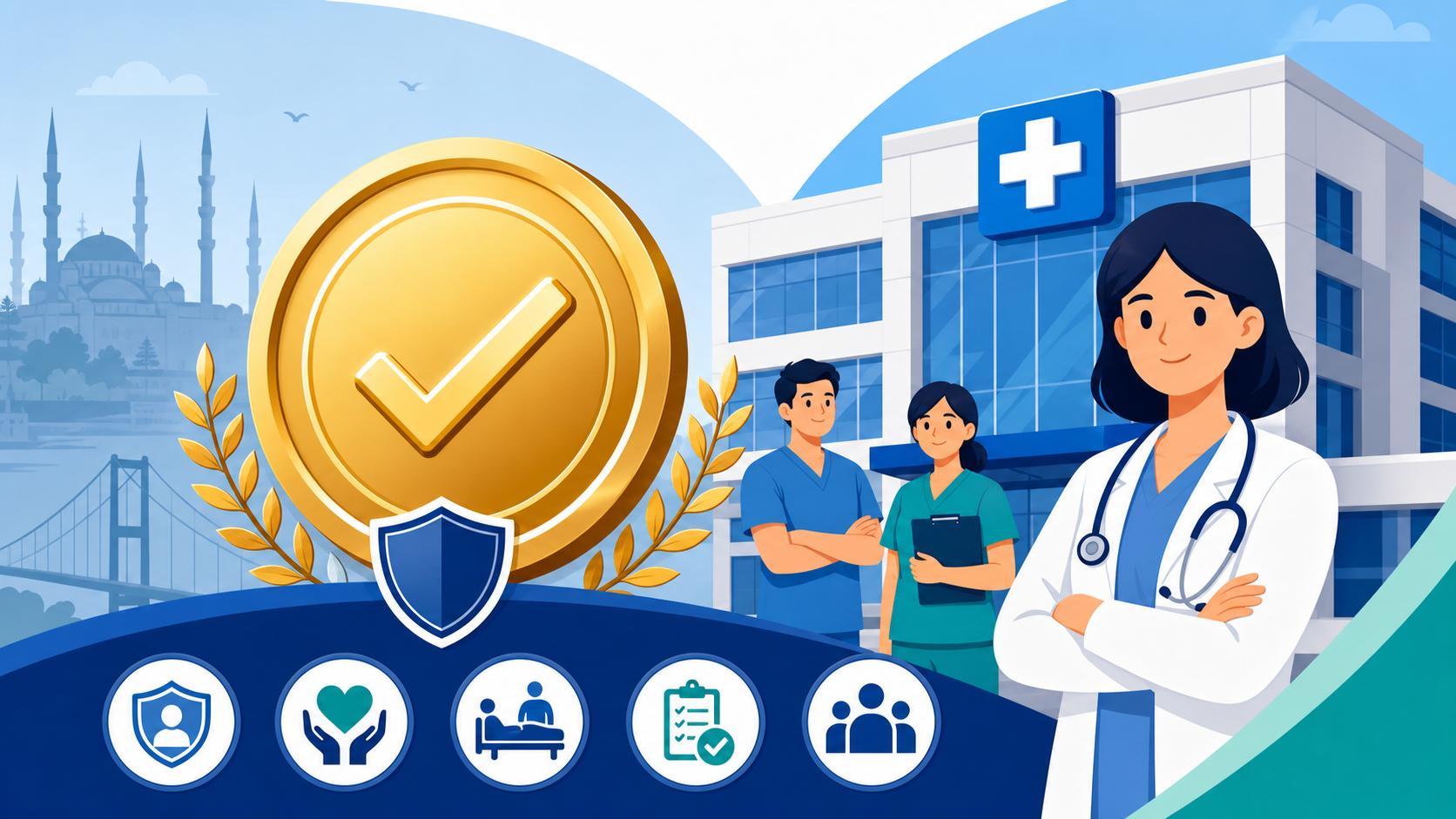
Always look for the specific JCI "Gold Seal of Approval." If you don't see the current year on their accreditation certificate in the lobby, ask the Patient Relations manager for proof of their current status. A truly accredited hospital will be more than happy to show it off—it’s an expensive and difficult badge to earn, and they are proud of it.
JCI Accredited Hospitals in Turkey Disclaimer
The information provided in this guide is for educational and informational purposes only and does not constitute medical or legal advice. While JCI accreditation is a high indicator of quality, it does not guarantee a specific medical outcome. Always consult with a qualified healthcare professional and your insurance provider before making decisions about your medical care in Turkey. Professional standards and accreditation statuses can change; always verify the current status of a facility directly with the accrediting body.