Enrolling in SGK (Public Health Insurance): The 1-Year Residency Rule
Many expats arrive in Turkey expecting to dive straight into the state’s affordable healthcare system, only to face a frustrating "1-year residency" rejection at the social security office. I personally remember the confusion of standing in a crowded office in Fatih, paperwork in hand, being told my time hadn't come yet. This guide solves the complex puzzle of the SGK 1-year residency rule and how to navigate your healthcare until you qualify.
Understanding the SGK Mandate for Expats
The Sosyal Güvenlik Kurumu, or SGK, is the backbone of Turkey’s social security system. For Turkish citizens, it is a birthright, but for us foreigners, it is a privilege that comes with specific strings attached. It is essentially an all-encompassing umbrella that covers health insurance, retirement, and even disability. However, the system is designed to ensure that those who benefit from it are truly residents, not just passing through, which is why the 1-year rule was implemented.
What is SGK and General Health Insurance
The specific branch of SGK that we care about as residents is the Genel Sağlık Sigortası (GSS). Once you are in the system, you and your dependents gain access to public hospitals with almost zero out-of-pocket costs and significant discounts at private hospitals that have an SGK agreement. It’s a fantastic safety net, but it isn't something you can just "buy into" on day one. Unlike some European systems where registration is immediate upon employment or residency, Turkey requires a proven commitment to staying in the country.
Many people find this frustrating, but looking at it from the state's perspective, it prevents "medical tourism" where someone might fly in for a surgery and leave. For a comprehensive overview of how this fits into the larger picture, you should check out the Healthcare in Turkey for Foreigners: Complete Expat Guide (2027) to see where SGK sits compared to other options.
The 1-Year Uninterrupted Residency Requirement
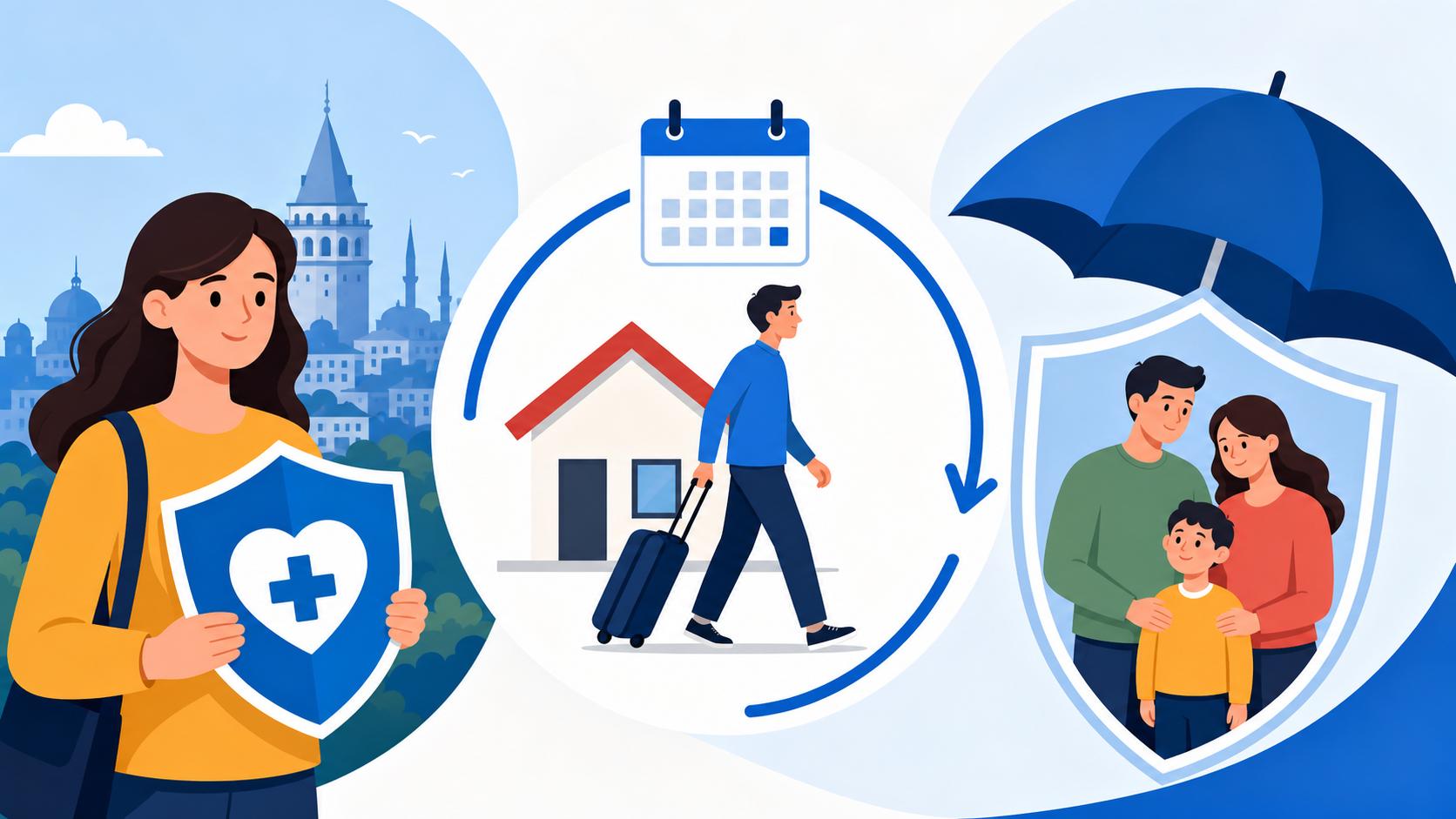
The law is very clear: a foreigner must have resided in Turkey for at least one year with a valid residence permit (Ikamet) before they are eligible to apply for GSS. This is often where the "uninterrupted" part trips people up. If you spend six months in Antalya, leave for three months, and come back for another six, you haven't met the continuous 1-year requirement in the eyes of many local SGK offices.
The clock starts from the date your first residence permit is issued. You must be able to show a full 365-day history of legal residency. During this year, you are expected to carry private insurance. If you are looking for high-tier coverage during this waiting period that goes beyond the basic visa requirements, a plan from Cigna Global can provide the peace of mind that basic local policies often lack, especially for major medical emergencies.
Why Private Insurance is Your Essential Bridge
Since you cannot join SGK immediately, the Turkish government makes it mandatory for you to have some form of insurance to get your initial residence permit. This creates a "bridge" period. Most expats opt for the cheapest possible local policy just to satisfy the immigration office, but this can backfire. Basic policies often have very low caps on outpatient care.
During this year, you’ll likely find yourself paying for vitamins or minor meds out of pocket. I personally used iHerb to source my regular supplements because local pharmacy prices for imported brands can be eye-watering. For a deeper look at what that initial policy actually covers, read up on Mandatory Ikamet Insurance: What Health Policies Actually Cover for Visas. It will help you realize why you might need to supplement your coverage during that first year of "purgatory."
Navigating the 1-Year Wait Period
Waiting out that first year is as much a test of patience as it is an administrative hurdle. You are essentially in a holding pattern. You need to ensure that your residence permit does not lapse, because if it does, the 1-year clock might just reset, depending on which officer you speak to at the Sosyal Güvenlik Merkezi (SGM).
Calculating Your 365 Days Correctly
Do not show up at the SGK office on day 364. In fact, I recommend waiting until day 370. The system updates can be slow, and if your entry/exit records haven't synced perfectly with the Göç İdaresi (Migration Office) database, you’ll be sent home. You can check your residency status and history on the e-Devlet portal, which is the "digital government" gateway every expat must master.
Keep in mind that if you are working on a sponsored work permit, the 1-year rule usually doesn't apply to you because your employer begins paying your SGK premiums from day one. This 1-year rule specifically targets those on "short-term" touristic or property-based residence permits who wish to voluntarily enroll in the state system.
Avoiding the Gap Trap
A common mistake is letting your initial private insurance expire a few days before your SGK enrollment is finalized. The SGK office will look for a gap in your health coverage. If you have a gap, you might face complications with your residency status later on. Always ensure your private insurance overlaps with your SGK application by at least a month.
Some expats have tried to save a few Lira by not renewing their private policy, thinking they’d get SGK the next day. They ended up in a bureaucratic loop where SGK wouldn't enroll them without a valid permit, and the permit required valid insurance. It's a mess you don't want. While waiting, you’ll still be using local pharmacies for your basic needs, so it’s worth understanding Pharmacies (Eczane) in Turkey: Prescriptions, Duty Hours, and Medications to manage your health during the transition.
| Feature | Private Ikamet Insurance | SGK (GSS) Public System | Global Insurance (e.g., Cigna Global) |
|---|---|---|---|
| Eligibility | Immediate upon arrival | After 1 year of residency | Immediate |
| Public Hospital Access | Limited / No coverage | Full coverage | Limited (via reimbursement) |
| Private Hospital Access | Limited to network | Deep discounts (contracted) | High-end access (direct billing) |
| Pre-existing Conditions | Usually excluded | Covered after enrollment | Varies by plan |
| Monthly Cost | Low (paid annually) | Moderate (fixed monthly) | High (premium service) |
The Enrollment Process: Step-by-Step
Once you’ve hit that magical 365-day mark, it’s time to head to the Sosyal Güvenlik Merkezi (SGM) in your district. Don’t just go to any office; it must be the one that serves your registered address. I suggest going early—like 8:30 AM early—and bringing a Turkish-speaking friend if your language skills aren't up to discussing "sosyal güvence" (social security).
Documents You Will Need for the SGK Office
Preparation is everything in Turkey. If you are missing one photocopy, you are out. Here is the standard "veteran's" checklist:
- Your original Residence Permit (Ikamet) and a color photocopy.
- Your Passport and a photocopy of the ID page and the page with your last entry stamp.
- Your Turkish Tax ID number (Vergi Numarası).
- A document from the Nüfus (Population) office confirming your registered address.
- A "provizyon" document or a letter from your home country's social security office stating you are not covered by them (this is often waived for certain nationalities but keep it in mind).
- A health report (Sağlık Raporu) from a state hospital.
The Medical Exam (Sağlık Raporu)
This is the step most people find the most daunting. You cannot just walk into SGK and sign a paper. They want to know your baseline health status. They will send you to a state hospital (Devlet Hastanesi) to get a report. You’ll be shuttled between different departments—blood tests, X-rays, and a brief chat with a general practitioner.
They are primarily looking for chronic conditions that might cost the state a lot of money immediately. However, unlike private insurance, being "sick" doesn't necessarily disqualify you from SGK; it just ensures your records are in the system. To understand how they handle things like diabetes or heart issues, see Does SGK Cover Pre-Existing Conditions for New Expat Enrollees? for the nuances of the law.
Visiting the Sosyal Güvenlik Merkezi
When you finally have all your papers, you'll go to the "Yabancılar Servisi" (Foreigners Service) at the SGM. There, an officer will review your file. If all is well, they will activate your "GSS" (General Health Insurance). They won't give you a card; your ID number on your residence permit becomes your insurance number.
At this point, you are officially in. However, you are now responsible for paying your own premiums. If you’ve been used to iHerb supplements, you might still keep that account active, as SGK covers medicine but rarely covers high-quality vitamins or "wellness" products. Cigna Global remains a popular choice for those who want to maintain their SGK but also want the luxury of seeing any doctor at an American Hospital or Acıbadem without the long wait times.
Coverage Benefits and Limitations
Now that you’re in, what do you actually get? SGK is surprisingly robust. It covers everything from emergency surgeries to cancer treatments and even some dental procedures. However, it is fundamentally a "public" system.
Public vs. Private Hospital Access Under SGK
With SGK, you can walk into any public hospital (Devlet Hastanesi) or Education and Research Hospital (Eğitim ve Araştırma Hastanesi) and receive care for a very small co-pay (usually around 15-20 TL for a consultation). However, these places are crowded. The wait times can be grueling.
The real "hack" for expats is using SGK at private hospitals. Many top-tier private hospitals have agreements with SGK. If a consultation normally costs 2,000 TL, as an SGK holder, you might only pay 800 TL. The state pays a portion, and you pay the "difference." This is why many foreigners love the system; it makes private healthcare much more affordable. You can learn more about managing your records for these visits in our guide on Using e-Nabız: Accessing Your Medical Records on the Ministry of Health App.
Costs and Payment Logistics
Once you are enrolled, you are a "Voluntary GSS" payer. This means you must manually ensure your premiums are paid every month. In 2026, these rates have adjusted with inflation, so it's vital to stay updated on the SGK Monthly Premiums 2026: Payment Methods and Coverage for Expats.
Failure to pay doesn't just mean a loss of coverage; it can lead to debt that accrues interest. The government is quite efficient at tracking this via your T.C. number. You can easily see your debt and pay it through the e-Devlet system or via a bank like Ziraat. I’ve written a step-by-step on How to Pay Your Monthly SGK Premium via e-Devlet or Ziraat Bank that covers the "FAST" payment system and other modern methods.
Adding Spouses and Children
One of the greatest benefits of SGK is that it covers your family. If you are the primary payer, you can often add your spouse and children under the age of 18 (or up to 25 if they are students) at no extra cost to your monthly premium. This is a massive saving compared to private insurance, where every family member needs their own policy.
To do this, you’ll need translated and notarized marriage certificates and birth certificates. The process is similar to your own enrollment but usually faster since you are already the "head" of the file. Check out Adding Spouses and Children to Your Turkish Health Insurance Policy for the specific documents required to prove these relationships to the Turkish authorities.
Common Pitfalls and How to Avoid Them
Even after you are enrolled, there are traps. The Turkish bureaucracy is a living, breathing entity that changes its mind often. People can lose their coverage for the smallest reasons.
The Address Registration Requirement
Your SGK is tied to your address. If you move house and don't update your address with the Nüfus office and then the SGK office within 20 days, your insurance could be suspended. The system is designed to check if you are actually living where you say you are. Sometimes, the police will even do a random spot check to see if you are residing at the registered address.
This is also why Choosing a Primary Care Physician (Aile Hekimi) at a Local Health Center is so important. Your "Family Doctor" is assigned based on your neighborhood. They are your first point of contact for prescriptions and minor illnesses, and they are completely free under SGK.
Missing Premium Payments
If you miss a payment, your "Provizyon" (provision) will turn red in the system. This means that if you go to a hospital, the system will show you as "uninsured." Unlike some systems that give you a grace period, SGK can be quite binary. You pay, you are covered. You don't pay, you aren't.
I’ve had friends who went to the ER only to find out they were 100 TL short on their last payment, resulting in a full-price hospital bill. It's heart-wrenching. Always check your status monthly. If you are worried about what happens when life gets in the way, read What Happens to Your SGK Coverage If You Miss a Premium Payment? to understand the "re-activation" process.
Understanding Your Rights and Limits
SGK is not a magic wand. It won't cover luxury "aesthetic" surgeries or the highest-end imported drugs if a local equivalent exists. For things like high-end skincare or specialized supplements, I still rely on iHerb because the local SGK-approved list is functional but basic.
If you want a truly global safety net that allows you to fly back to your home country for treatment or visit the most expensive clinics in Istanbul without a second thought, Cigna Global is still the gold standard to run alongside your SGK. Most veteran expats eventually find a balance between using the local Choosing a Primary Care Physician (Aile Hekimi) at a Local Health Center for routine issues and having a private backup for the "big stuff."
Disclaimer Regarding Health Information
This guide is for informational purposes only and is based on personal experiences and general administrative rules in Turkey. Health insurance laws and SGK premium rates are subject to frequent change by the Turkish government. Always consult with the official Sosyal Güvenlik Kurumu (SGK) or a qualified legal professional before making financial or medical decisions. Individual eligibility may vary based on nationality and specific residence permit types.