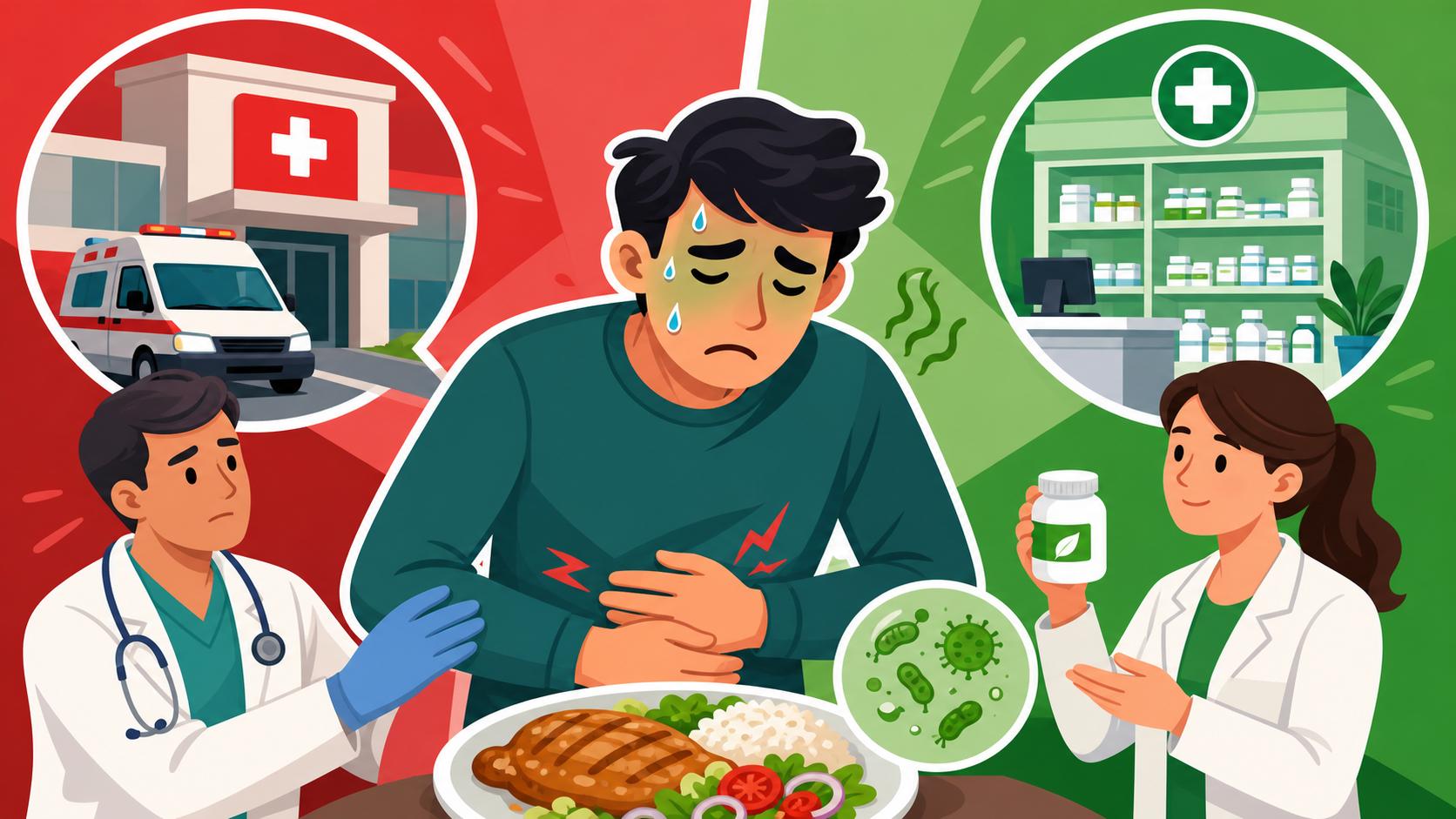
Food Poisoning in Turkey: When to Go to the ER vs Relying on a Pharmacy
Waking up at 3:00 AM in a cold sweat because those late-night midye dolma (stuffed mussels) didn't sit quite right is an unfortunate rite of passage for many in Turkey. I still vividly remember my second month in Istanbul, huddled on my bathroom floor in Kadıköy, wondering if I should call an ambulance or just wait for the sun to rise. This guide will help you determine whether your "Istanbul Belly" requires a quick trip to the local pharmacy or an immediate visit to the emergency room.
Identifying the Culprit: Is it Really Food Poisoning
Distinguishing between a simple case of overindulging in spicy Adana kebabs and a legitimate bacterial infection is the first hurdle. Turkey’s rich culinary landscape, while incredible, involves high-heat grilling, complex spice blends, and dairy products that can occasionally clash with a foreigner's digestive system. When we talk about food poisoning here, we are usually looking at Salmonella, E. coli, or the dreaded Campylobacter, often contracted from undercooked poultry or cross-contaminated vegetables.
Common Symptoms in the Turkish Context
The onset of food poisoning in Turkey can be deceptively slow or violently fast. If you start experiencing sharp abdominal cramps within two to six hours of eating, it’s often a toxin-based reaction. However, bacterial infections can take up to 48 hours to manifest. You should look for persistent nausea, projectile vomiting, and watery or bloody diarrhea. In my experience, the heat in coastal cities like Antalya or Bodrum during July and August can exacerbate these symptoms, leading to rapid dehydration that makes the illness feel much worse than it might be in a cooler climate.
If you are dealing with a mild case, you might just feel "off" with a low-grade fever. This is often where a Finding Medical Care in Turkey: Public Hospitals vs JCI-Accredited Clinics search begins. However, if the vomiting is uncontrollable and you cannot keep down a single sip of water, the situation has shifted from a nuisance to a medical priority. Pay close attention to the color of your urine; if it becomes dark or if you stop urinating altogether, your kidneys are under stress from dehydration.
Timeline of Illness and When to Panic
Most foodborne illnesses in Turkey resolve themselves within 24 to 48 hours. The "danger zone" is when symptoms persist beyond the third day. If you find yourself still rushing to the bathroom after 72 hours, you are likely dealing with a parasite or a particularly stubborn bacterial strain that requires antibiotics. This is especially true if you have been exploring rural areas where water filtration might not be as rigorous as in the central districts of Ankara or Izmir.
Newcomers are often told that the first 12 hours are the "observation phase." During this time, your body is essentially trying to flush the pathogen out. If you try to stop diarrhea too early with heavy medication, you might actually trap the bacteria inside your system, prolonging the infection. Instead, focus on monitoring your temperature. A fever over 39°C (102.2°F) is a clear sign that your immune system is struggling and you may need professional intervention.
The Eczane: Your First Line of Defense
In Turkey, the Eczane (pharmacy) is far more than just a place to pick up a prescription. Pharmacists here are highly trained and often act as a bridge between home care and the hospital. If your symptoms are manageable—meaning you can walk, talk, and keep some fluids down—your first stop should be the nearest pharmacy. They can provide over-the-counter solutions that are often "behind the counter" in other countries.
Finding an English-Speaking Pharmacist
In major expat hubs like Nişantaşı, Kas, or Alanya, finding an English-speaking pharmacist is relatively easy. Most have spent years studying medical terminology in English. If you are struggling to communicate your symptoms, simply saying "gıda zehirlenmesi" (food poisoning) or "ishal" (diarrhea) will get the point across. They will likely ask how many times you've gone to the bathroom and if you have a "ateş" (fever).
If it is a Sunday or late at night, you will need to find the Understanding Night Pharmacies (Nöbetçi Eczane): How the Roster Works. Every neighborhood has one pharmacy on duty 24/7 on a rotating basis. You can find the list posted in the window of any closed pharmacy or via a quick search on mobile apps designed for Turkish residents. These pharmacists are used to dealing with emergency stomach upsets and can recommend the right Turkish equivalents to brands you might know from home.
Essential Turkish Pharmacy Equivalents for Stomach Issues
Turkish pharmacies carry excellent local and international brands. For rehydration, which is the most critical step, ask for Ge-Oral. It is a powder packet you mix with a liter of water to restore electrolytes. For diarrhea, Reflor (a probiotic yeast) is the gold standard used by locals and expats alike. It doesn't "plug" you up like Imodium, but rather helps restore the gut flora.
| Turkish Product Name | Common International Equivalent | Purpose |
|---|---|---|
| Ge-Oral | Pedialyte / Oral Rehydration Salts | Electrolyte replacement and hydration |
| Reflor | Florastor (Saccharomyces boulardii) | Probiotic to restore gut balance |
| Ercefuryl | Nifuroxazide | Intestinal antiseptic for bacterial diarrhea |
| Metsil | Gas-X (Simethicone) | Relieving painful bloating and gas |
| Parol | Tylenol / Panadol (Paracetamol) | Reducing fever and mild aches |
While you are at the Eczane, you might also look for high-quality supplements. While local brands are good, many expats prefer to maintain their gut health with specific probiotics found on iHerb, especially if they have chronic sensitivities. However, for an acute attack, the local Turkish brands like Ercefuryl are remarkably effective at targeting the "bad" bacteria specifically in the gut.
When the Eczane Isnt Enough: Heading to the ER
There is a point where home remedies and pharmacist advice are no longer safe. In Turkey, the emergency room is called the Acil. If you are experiencing what I call the "red flag symptoms," do not hesitate. Turkish healthcare is efficient, and in private hospitals, you can often be seen by a doctor within minutes of walking through the door.
Red Flags for Immediate Medical Attention
You should head to the Acil immediately if you experience any of the following:
- Signs of severe dehydration: Dizziness when standing, extreme thirst, or a complete lack of urination for 8+ hours.
- High Fever: A temperature that stays above 39°C despite taking paracetamol.
- Blood in Stool: This indicates an invasive infection or significant inflammation in the colon.
- Intense Localized Pain: If the pain shifts from general cramping to a sharp, stabbing sensation in the lower right abdomen, it could be appendicitis mimicking food poisoning.
- Neurological Symptoms: Blurred vision, muscle weakness, or tingling in the limbs (which could indicate rare botulism).
If you are unable to drive or take a taxi, you should know the protocol for Calling 112 for an Ambulance: Dispatch Workflows and Language Support. In major cities, they can usually find an English speaker to help you, but be prepared to give your address clearly.
Public vs Private ER (Acil) Expectations
If you have Health Insurance in Turkey: SGK Public System vs Private Coverage Explained, you have a choice. Public hospitals (Devlet Hastanesi) are free or very low-cost for emergencies, but they are often incredibly crowded. You will be triaged based on severity. If you are "merely" vomiting but stable, you may wait several hours in a busy hallway.
On the other hand, private hospitals like Acıbadem, Memorial, or American Hospital offer a much more streamlined experience for those with private policies like Cigna Global. In a private ER, you will likely be placed in a private observation room, given an IV drip (serum) immediately to restore fluids, and have blood tests run to check for infection markers. The cost of a private ER visit for food poisoning typically ranges from 3,000 to 7,000 TL out-of-pocket if you don't have insurance, covering the doctor’s consultation, the IV, and basic labs.
Practical Steps for Recovery and Prevention
Once the worst of the "storm" has passed, your gut will be extremely sensitive. The way you handle the 48 hours post-infection will determine if you have a quick recovery or a week-long relapse. This is where local Turkish wisdom and expat experience merge.
Rehydration and Diet (The Turkish Way)
Forget the "BRAT" diet (Bananas, Rice, Applesauce, Toast) for a moment and look at what the Turks use: Ayran and Lavaş. Ayran, a salted yogurt drink, is actually a brilliant rehydration tool because it contains water, sodium, and probiotics. However, avoid it during the active vomiting phase; save it for when you can keep liquids down.
Focus on:
- Haşlanmış Patates (Boiled Potatoes): Plain, with just a pinch of salt.
- Lapa Pirinç: Overcooked, mushy white rice with no oil or butter.
- Sade Çubuk Kraker: Simple salty pretzel sticks found in every Bakkal (corner store).
- Tavuk Suyu Çorba: Clear chicken broth, but ensure it isn't "kremalı" (creamy), which can irritate a healing gut.
During this recovery phase, many expats find that taking a high-quality digestive enzyme or a specific probiotic blend from iHerb helps them transition back to normal food without the bloating that often follows a bacterial infection.
Preventing Future Bouts of Istanbul Belly
While you can't live in fear, there are ways to minimize the risk. First, be wary of "Open Buffet" (Açık Büfe) setups in tourist-heavy hotels where food might sit at lukewarm temperatures for hours. Second, check the turnover of street food vendors. A Döner stand with a massive line of locals is usually safer than a quiet one because the meat is being cooked and sliced constantly.
Always carry a small bottle of hand sanitizer, as Health Hazards and Prevention: Tap Water Safety and Common Stomach Bugs are often spread via hand-to-mouth contact after handling cash. Regarding the water: while the municipal water in cities like Istanbul is treated, the old piping systems in many buildings can introduce contaminants. Stick to bottled water (Erikli and Hayat are reliable brands) for drinking and even for brushing your teeth if you have a particularly sensitive stomach.
If you are planning a long-term stay, I highly recommend Choosing a Primary Care Physician (Aile Hekimi) at a Local Health Center. Having a doctor who knows your history and can quickly order a stool sample if you have a recurring stomach issue is much better than "ER-hopping" every time you eat a bad piece of chicken.
Disclaimer
This article is for informational purposes only and does not constitute professional medical advice, diagnosis, or treatment. Always seek the advice of a qualified healthcare provider in Turkey regarding any medical condition. Never disregard professional medical advice or delay in seeking it because of something you have read in this guide. If you think you may have a medical emergency, call 112 or go to the nearest emergency room immediately.