Calling 112 for an Ambulance: Dispatch Workflows and Language Support
Waking up in the middle of the night with a sharp, unexplained pain while living in a foreign city is a special kind of terror. I remember my first winter in Istanbul, clutching my side and staring at my phone, realizing I didn't even know if the person who answered 112 would understand my panicked English. This guide breaks down exactly how the Turkish 112 system works so you can get help without the added stress of a language barrier.
Understanding the 112 Unified Emergency Number in Turkey
For years, Turkey operated with several different emergency numbers—155 for police, 110 for fire, and 112 for medical emergencies. Thankfully, the government has moved to a unified system. Now, regardless of the crisis, you dial 112. This centralization was designed to streamline the dispatch process, yet for many expats, the fear of being misunderstood remains the biggest hurdle to calling for help.
The Consolidation of Emergency Lines
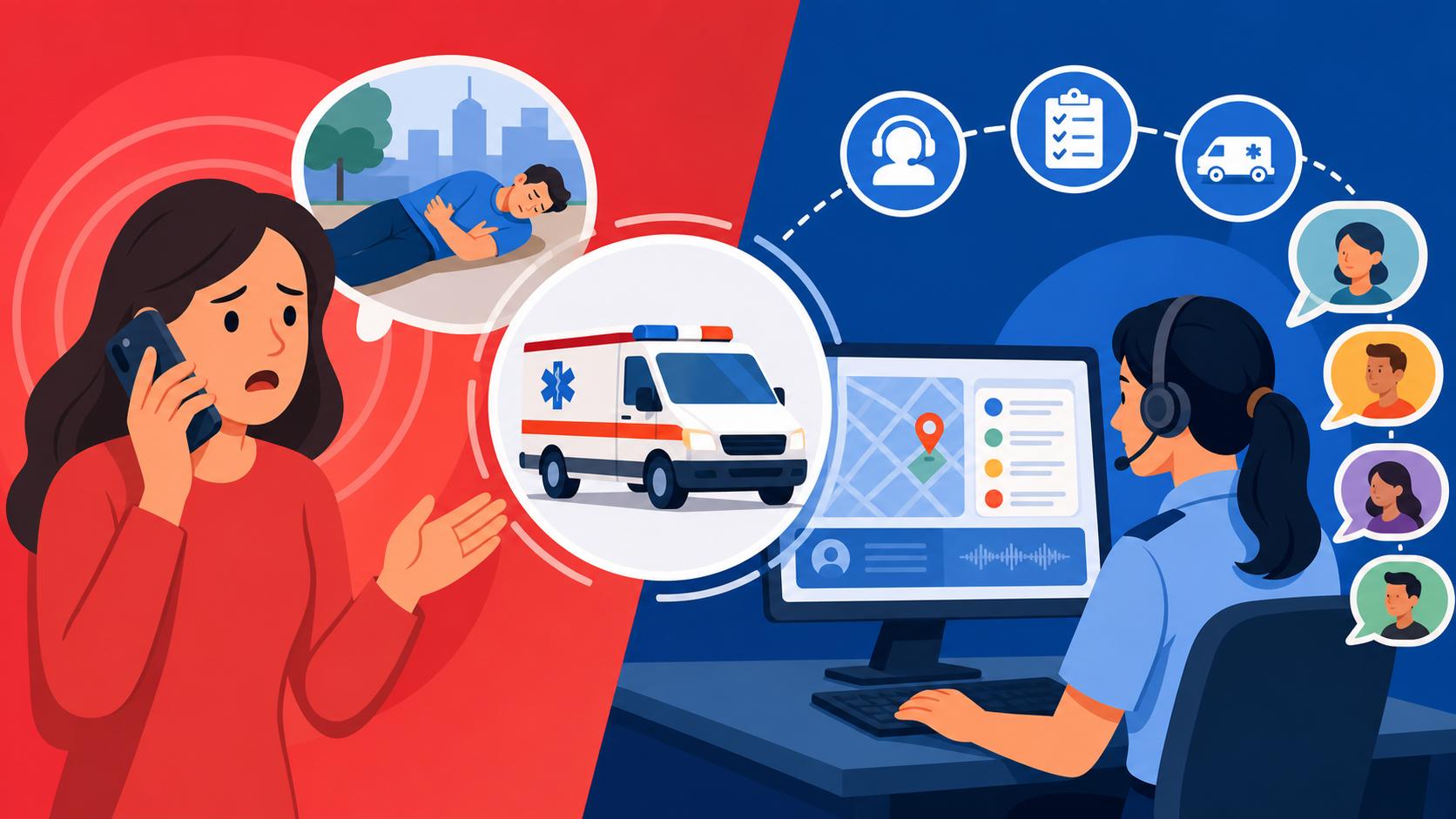
The move to a unified 112 system wasn't just a change in phone numbers; it was a massive technological overhaul of the Turkish emergency infrastructure. When you dial 112 from your mobile or landline, you are connected to a regional call center. These centers use sophisticated software to identify your location based on cell tower data, though you should still be prepared to give your specific address. In the past, calling the police meant one conversation, and then having to call the ambulance separately if there were injuries. Now, the 112 operator acts as a central coordinator, dispatching the necessary teams simultaneously.
This system is particularly helpful during complex situations, like a car accident, where you might need both medical and law enforcement assistance. Having lived through the transition, I can tell you that the response times have improved significantly, but the system relies heavily on the caller remaining calm enough to answer specific questions. If you are worried about the complexities of the local system, having a comprehensive policy from Cigna Global can often provide access to additional private assistance hotlines that help bridge the gap between you and local services.
When to Call 112 vs Taking a Taxi
One of the most common mistakes I see newcomers make is either calling 112 for something minor or, conversely, trying to drive themselves to the hospital during a life-threatening event. In major cities like Istanbul or Izmir, traffic is a literal killer. An ambulance with its sirens on can navigate the "E-5" or the "Sahil Yolu" far more effectively than a yellow taxi ever could.
If you are experiencing symptoms like chest pain, difficulty breathing, sudden slurring of speech, or severe trauma, do not hesitate. Dial 112 immediately. However, if it is a high fever or a minor cut, taking a taxi to the nearest "Acil" (Emergency Room) is often faster and leaves the ambulances free for critical cases. If you find yourself frequently dealing with minor health issues or need to restock your first aid kit, I often use iHerb to ship high-quality bandages and antiseptics directly to my door in Turkey, as some local brands can be quite different from what we are used to back home.
The Role of the Dispatcher
The person who answers your call is a trained professional whose primary goal is to determine the severity of your situation. They are not just "phone operators"; they are the first link in the chain of survival. They will ask a series of structured questions designed to "triage" your call over the phone. Expect them to ask for your name, your exact location, the nature of the emergency, and how many people are affected.
It is vital to stay on the line until they tell you to hang up. Many people have the instinct to shout "Emergency! Come to Kadıköy!" and then click off. This actually slows down the response because the dispatcher has to spend time trying to call you back to find out which street or apartment you are in. If you have international coverage like Cigna Global, you might also have access to 24/7 medical advice lines that can talk you through what to say to the local dispatcher if you are feeling overwhelmed.
Language Support and Communication for Non-Turkish Speakers
The "language wall" is the number one reason expats delay calling for help. While it is true that not every operator speaks fluent English, the Turkish Ministry of Health has made massive strides in providing language support through centralized translation hubs.
Accessing English-Speaking Operators
When you call 112, if the initial operator does not speak your language, they have the ability to patch in a translator. This is usually done through the "Müşterek Çağrı Merkezi" system. While there might be a few seconds of silence as they connect a third party, do not hang up. Most centers in expat-heavy areas like Antalya, Muğla, and the central districts of Istanbul have access to English, German, Arabic, and Russian speakers.
It is wise to start the call by clearly saying, "Ingilizce, lutfen" (English, please) or "Turkcem az" (My Turkish is little). This signals to the operator immediately that they need to activate translation protocols. If you are someone who struggles with anxiety in these situations, it’s worth checking out Essential Turkish Phrases for the Doctor: Communicating Symptoms Effectively to keep a few key words on a sticky note near your door or on your fridge.
Essential Medical Turkish for Emergencies
While there are translators available, knowing five or six key words can save precious seconds. Words like "Kalp krizi" (Heart attack), "Nefes alamıyorum" (I can’t breathe), and "Kanama" (Bleeding) are understood by almost anyone in the medical field. Even if you speak English, repeating these keywords can help the dispatcher categorize your call while the translator is being connected.
For those of us managing chronic conditions, being able to describe our history is crucial. the first place. I personally use iHerb for my specific probiotics and magnesium, as finding the exact equivalents in a local "Eczane" can be a bit of a treasure hunt.
Using Translation Services at the Triage Level
Once the ambulance arrives, the language barrier shifts from the phone to the paramedics. Many Turkish paramedics are young and have a basic understanding of English, but in high-stress moments, that knowledge can evaporate. This is where modern technology is your best friend. Have your phone ready with a translation app, or even better, have your Navigating the e-Nabız Website: Translating Your Blood Test Results records ready.
The paramedics will need to know your "Kimlik" (ID) or "Yabancı Kimlik Numarası" (99 number). If you are a tourist without a residence permit, have your passport handy. If you are an expat with private insurance, showing your Cigna Global card can sometimes help the paramedics decide which hospital to take you to, as private clinics often have more English-speaking staff on hand than the local state facilities.
The Dispatch Workflow: What Happens After You Dial
Once you’ve successfully communicated that there is an emergency, a complex logistics machine begins to move. Understanding this workflow can help you stay calm while you wait for the sirens.
Information the Dispatcher Will Request
The 112 dispatcher follows a strict protocol. They will first confirm your phone number in case the call drops. Next is your location. In Turkey, giving an address is an art form. You need to provide the "Mahalle" (Neighborhood), "Sokak" (Street), "Apartman Adı" (Building Name), and most importantly, the "Dış Kapı No" (Building Number) and "İç Kapı No" (Apartment Number).
They will also ask for a "Tarif"—a description of how to find you. Mentioning a nearby landmark like a specific mosque, a chain supermarket like Migros, or a primary school is incredibly helpful. Turkish streets can be winding and poorly marked, so these landmarks are often more useful to the driver than the actual street name. If you’ve recently moved, make sure you know How to Register Your Address with the Local Sağlık Ocağı (Health Clinic) so your location is officially on the grid.
GPS Tracking and Address Localization
Your smartphone is a lifeline. When you call 112, the system attempts to pull your GPS coordinates. However, in dense urban areas like Beyoğlu or the high-rises of Levent, GPS can be off by several meters. This is why you should never rely on technology alone. If you are in a gated community ("Site"), you must call the front security gate as soon as you hang up with 112. Many ambulances are delayed because they are stuck at a security barrier waiting for a gate code or a guard's approval.
For those living in more remote coastal areas, knowing your coordinates can be life-saving. If you are out hiking or in a rural villa, having your location ready on a map app is a must. If you’re ever in doubt about the quality of care in these remote spots, consulting a guide like Finding Medical Care in Turkey: Public Hospitals vs JCI-Accredited Clinics can help you understand the network of facilities available to you.
Triage and Priority Levels (Red, Yellow, Green)
Not all calls result in an immediate sirens-blaring response. The 112 system uses a triage method to prioritize calls. If someone has a minor injury but no way to get to the hospital, they might be placed in a "Green" category, which means the ambulance will come, but only after higher-priority calls are handled.
| Triage Color | Priority Level | Typical Scenarios |
|---|---|---|
| Red | Immediate Life Threat | Cardiac arrest, major trauma, unconsciousness, severe choking. |
| Yellow | Urgent but Stable | Compound fractures, severe abdominal pain, high fever with lethargy. |
| Green | Non-Urgent | Minor cuts needing stitches, sprains, mild allergic reactions. |
If you are categorized as Red, the nearest available team—whether it’s a state ambulance or a nearby private one contracted by the system—will be dispatched. Having premium insurance like Cigna Global often gives you more options for post-emergency care once you are stabilized, allowing you to be transferred to high-end private facilities that cater to expats.
Ambulance Fees and Insurance Coverage for Expats
The question of "who pays" is often on people's minds even during a crisis. In Turkey, the rules for emergency transport are quite different from the North American or UK systems.
Public vs Private Ambulance Costs
In Turkey, 112 ambulances are generally free of charge for emergency cases, even for foreigners. The state views emergency stabilization as a human right. If the 112 dispatcher sends an ambulance to your house and takes you to a public hospital, you will likely not see a bill for the ride itself. However, there is a catch: this only applies to true emergencies.
Private ambulances, on the other hand, are a different story. If you call a private hospital directly to send their own ambulance, you will be charged. These costs can range from 2,000 TL to 10,000 TL or more depending on the distance and the equipment used. Many expats prefer this because private ambulances often have better English-speaking staff and will take you directly to a private hospital where you probably have a policy. If you have international coverage through Cigna Global, these costs are typically reimbursed or handled via direct billing.
How Private Insurance Handles Emergency Transport
Most private health insurance policies in Turkey, including the mandatory ones for residence permits, cover emergency ambulance services. However, the level of coverage varies wildly. Basic "Ikamet" insurance might only cover the bare minimum. In contrast, comprehensive plans from companies like Cigna Global are designed to cover not just the ride, but also the advanced life support (ALS) fees and any medications administered during transport.
When you are discharged, keep every piece of paper. You will need the "Ambulans Raporu" (Ambulance Report) to file a claim. If you find yourself needing specialized medications or recovery supplements after a hospital stay, you can often find international brands on iHerb that might be more familiar to you than local Turkish versions, helping your recovery feel a bit more like home. You should also read up on Private Health Insurance (Özel Sağlık Sigortası): Top Providers for Foreigners to see how different plans stack up.
SGK Coverage for Emergency Services
If you are enrolled in the Turkish state insurance (SGK), emergency services are fully covered. This includes the ambulance and the initial ER visit. However, if you are taken to a private hospital by a 112 ambulance, the private hospital is required by law to stabilize you for free, but they can start charging you once the "emergency" state is over.
This is a common point of confusion. Once you are out of immediate danger, if you choose to stay in a private room or undergo elective procedures at that facility, the costs will mount quickly. Understanding Health Insurance in Turkey: SGK Public System vs Private Coverage Explained is vital for every long-term resident to avoid these "surprise" bills that often occur after the ambulance has left.
Practical Tips for a Smooth Emergency Response
Preparing for an emergency while you are healthy is the best way to ensure things go smoothly when you are not. I’ve learned these lessons the hard way so you don't have to.
Preparing Your Building for the Paramedics
Turkish apartment buildings can be confusing. Many have "back" entrances or are located on streets that are too narrow for an ambulance. If you are the one calling, and you are able, send someone down to the street to wave the ambulance down. This simple act can save five minutes of the driver circling the block.
Turn on all the lights in your apartment and leave the front door ajar. If you have pets, lock them in a separate room so they don't get under the feet of the paramedics. I also suggest keeping a small "Go-Bag" near the door. After a health scare, I started keeping my essentials—including my Cigna Global insurance card, my Kimlik, and a bottle of water—in a dedicated drawer. I even keep a few electrolyte packets from iHerb in there, as dehydration is a common cause of Turkish "emergency" calls during the blistering summer months.
Document Readiness for Hospital Admission
The moment you reach the hospital, the paperwork begins. If you are unconscious or unable to speak, the paramedics will look for your ID. I highly recommend having a "Medical ID" set up on your smartphone that can be accessed without a passcode. It should list your blood type, allergies, and emergency contacts.
In Turkey, the Emergency Rooms (Acil) in Turkey: Public vs Private Hospital Expectations can be chaotic. Having a folder with your previous records, your current prescriptions, and your insurance details is a godsend. If you are using international brands for your supplements, like the ones found on iHerb, write down the active ingredients, as the Turkish doctors might not recognize the brand name but will definitely know the chemical compounds.
Post-Emergency Follow-Up
Once the crisis has passed, your journey through the Turkish healthcare system is just beginning. You will likely need to see a specialist for a follow-up. This is where you move from "Emergency" to "Poliklinik" care. Don't expect the hospital to automatically send your records to your family doctor. You need to be proactive.
Use the Navigating the e-Nabız Website: Translating Your Blood Test Results system to track your reports. This government app is incredible; it stores every X-ray, blood test, and prescription you’ve ever had in Turkey. If you find the local recovery options lacking, you can always supplement your diet with high-quality proteins or vitamins from iHerb to get back on your feet faster. And of course, keep your Cigna Global representatives in the loop to ensure your long-term treatment plan is fully covered.
Healthcare in Turkey Disclaimer
This guide is intended for informational purposes only and does not constitute professional medical or legal advice. While every effort has been made to ensure the accuracy of the information provided regarding the 112 emergency system and insurance protocols in Turkey for 2026, procedures and laws can change without notice. In a medical emergency, always dial 112 immediately. The author and publisher are not responsible for any outcomes resulting from the use of this information. Always consult with a qualified healthcare provider or your insurance representative regarding your specific medical needs and coverage.