Understanding Night Pharmacies (Nöbetçi Eczane): How the Roster Works
It is 11 PM on a rainy Sunday in Istanbul, your toddler has a sudden, spiking fever, and every pharmacy on your street is shuttered and dark. I spent three frantic hours wandering the backstreets of Kadıköy during my first month here before I learned that the Turkish healthcare system relies on a rotating "Nöbetçi" system. This guide explains exactly how to navigate night pharmacies in Turkey so you are never left stranded in a medical pinch.
The Cultural and Legal Logic of the Nöbetçi System
In many Western countries, you might be used to 24-hour mega-pharmacies or dedicated sections in supermarkets that stay open late. Turkey operates very differently. Here, pharmacies (Eczane) are independent, highly regulated small businesses. To ensure that every neighborhood has access to medication without forcing every pharmacist to work 80 hours a week, the government mandates a "Nöbet" or duty roster.
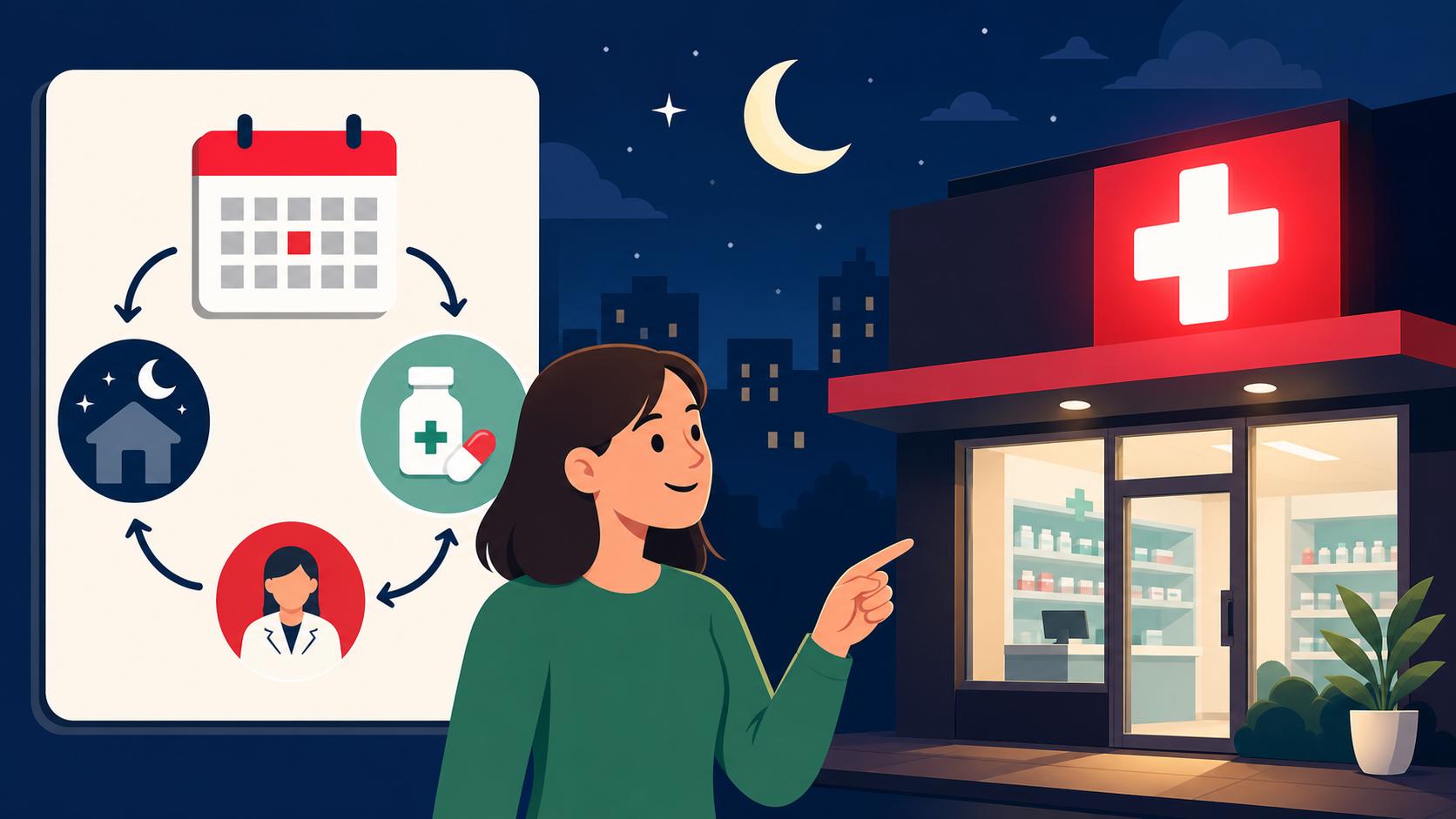
This system is a lifesaver once you understand it, but it can be a source of immense frustration for newly arrived expats. On a standard weekday, pharmacies typically close around 7:00 PM. On Saturdays, many close by early afternoon, and on Sundays, nearly all of them are closed. This is where the Nöbetçi Eczane comes in. In every district, a pre-selected group of pharmacies stays open from the moment the others close until the next morning’s opening bell.
I remember my first time trying to find an open pharmacy on a national holiday. I assumed that at least the big ones near the hospitals would be open. I was wrong. The roster is democratic; it doesn't matter if the pharmacy is a tiny shop or a large one; they all take their turn. This is why having a comprehensive insurance plan like Cigna Global can be so helpful, as their support teams can often help guide you toward the right facilities when you are feeling overwhelmed by these local logistical hurdles.
How the Roster is Organized and Updated
The roster is not random. It is carefully calculated by the local chambers of pharmacists in coordination with the Ministry of Health. They ensure that the pharmacies on duty are geographically distributed so that no resident has to travel an unreasonable distance. For example, in a massive district like Çankaya in Ankara or Muratpaşa in Antalya, there will be multiple duty pharmacies spread across different quarters.
The roster resets daily. A pharmacy that was open last night will almost certainly be closed tonight. This means you cannot rely on memory. You must check the "Nöbetçi" status every single time an emergency arises. If you are managing a long-term condition, it is often better to check Pharmacies (Eczane) in Turkey: Prescriptions, Duty Hours, and Medications to understand the standard operating hours before you find yourself relying on the night shift.
Furthermore, the duty pharmacy is responsible for the entire period from the closing of regular shops (usually 7:00 PM) until 9:00 AM the following morning. During this window, they are the only legal point of sale for medicine in their designated area. If you find yourself needing specialized care during these hours, you might also want to look into Finding Medical Care in Turkey: Public Hospitals vs JCI-Accredited Clinics to see if your issue requires a doctor’s intervention before the pharmacy visit.
Practical Ways to Find the Nearest Duty Pharmacy
When you are standing in front of a closed pharmacy, don't panic. Look at the window or the door. By law, every closed pharmacy must display a printed sign listing the names, addresses, and phone numbers of the nearest Nöbetçi Eczanes for that specific night. Usually, this list includes a small map or at least clear directions.
However, in the digital age, there are much more efficient ways to find this information. Most expats use mobile apps or official websites. The most reliable source is the Turkish Pharmacists’ Association (TEB) website or the local "Eczacı Odası" (Chamber of Pharmacists) site for your specific city. You can simply search for "Nöbetçi Eczane Istanbul" or "Nöbetçi Eczane Izmir" to find the live list.
I’ve often found that even if I have the address, navigating Turkish side streets at night can be tricky. Using a navigation app is essential. If your phone is currently blocked due to the local registration laws, you should read up on The Turkey IMEI Rule: How to Register Foreign Phones in 2026 to ensure you always have access to your maps. Additionally, keep an eye out for the glowing red "E" signs. In Turkey, pharmacies are identified by a large, neon red "E" (for Eczane). When a pharmacy is on duty, this sign stays lit, often flashing to grab your attention from down the block.
What to Expect at a Night Pharmacy
When you arrive at a Nöbetçi Eczane at 3:00 AM, the experience is quite different from a daytime visit. For security reasons, many pharmacies do not allow customers inside the shop during the late-night hours. Instead, they serve you through a "gece penceresi" (night window). This is a small reinforced glass window or a slot in the door.
You will hand your prescription or state your needs through the window. The pharmacist or their assistant (kalfa) will then go into the back, retrieve the items, and pass them through. This can be a bit intimidating if your Turkish isn't perfect. I highly recommend keeping a list of Essential Turkish Phrases for the Doctor: Communicating Symptoms Effectively on your phone, as many of those phrases apply to the pharmacist as well.
It is also important to note that duty pharmacies can get very busy. Since they are the only ones open in a large radius, you might find a line of people waiting on the sidewalk. Be patient. The pharmacists are often working under high pressure. If you have a complex international insurance policy like Cigna Global, make sure you have your digital card or policy number ready, although most night pharmacies will require you to pay upfront and claim reimbursement later.
Pricing and Payment at Night
One of the most common questions expats ask is whether medicine costs more at a night pharmacy. The answer is generally no. In Turkey, the prices of medications are strictly regulated by the government and are uniform across the country. There is no "convenience fee" or "night surcharge" added to the price of the medicine itself.
However, you should be prepared for the payment method. While almost all pharmacies in Turkey accept credit and debit cards, occasional technical issues with the "POS" machines or internet outages can happen late at night. It is wise to carry enough cash in Turkish Lira to cover your expected costs. If you are worried about the cost of common medications, checking Turkish Pharmacy Equivalents for Advil, Tylenol, and Common Painkillers can give you an idea of the price points for basic items.
For those who regularly take vitamins or specific health supplements that might not be stocked in a small local pharmacy, you might find that iHerb is a more reliable way to ensure your cabinet is stocked. However, for acute needs like antibiotics or painkillers, the Nöbetçi Eczane is your only legal route.
Understanding Prescription Rules at Night
The rules for purchasing medication do not relax just because it is midnight. In fact, they can feel even stricter. Turkey has implemented very rigorous controls on antibiotics and certain psychiatric medications. You cannot simply walk up to a night window and ask for Amoxicillin because you have a sore throat.
You will need a valid prescription (reçete) entered into the electronic system (e-Nabız) by a doctor. If you haven't seen a doctor yet, you may need to visit the "Acil" (Emergency) ward of a hospital first. For more on how those triage systems work, see Emergency Medical Care in Turkey: Dialing 112, Ambulances, and Triage. Once the doctor enters the prescription into the system using your 99-number (your foreigner ID), the pharmacist can see it instantly on their computer.
If you are looking for non-prescription relief, you can still get "Over-the-Counter" (OTC) style products. You can find Cold and Flu Relief in Turkey: Best OTC Brands to Ask the Pharmacist For without a doctor's note, but even then, the pharmacist at the night window may ask clarifying questions to ensure you aren't misusing the medication.
| Service Feature | Regular Pharmacy (Day) | Night Pharmacy (Nöbetçi) |
|---|---|---|
| Operating Hours | 09:00 – 19:00 (Approx) | 19:00 – 09:00 + Sundays/Holidays |
| Accessibility | Walk-in access | Often "Night Window" service only |
| Pricing | Standard Government Rates | Standard Government Rates |
| Staffing | Full team available | Limited "on-call" staff |
| Antibiotic Sales | Prescription Required | Prescription Strictly Required |
| Wait Times | Minimal | Can be long during flu season |
Managing Emergency Supplies at Home
The best way to handle the stress of the Nöbetçi system is to avoid needing it for minor issues. I’ve learned the hard way that keeping a well-stocked "emergency kit" is vital for expat life in Turkey. You don't want to be hunting for a pharmacy at 2 AM just because you ran out of bandages or basic antacids.
I suggest using services like iHerb to keep a backstock of high-quality vitamins, electrolytes, and supplements that might be harder to find or more expensive locally. For the actual medical components, you should consult Essential First Aid Items to Keep in Your Turkish Apartment to build a kit that handles the most common local ailments, from stomach bugs to minor cuts.
If you are a woman living in Turkey, it is also wise to keep a backup of your routine medications. While you can generally find what you need, Accessing Birth Control Pills and Contraceptives at Turkish Pharmacies can sometimes be a bit more awkward at a night window where privacy is limited and you are speaking through a slot in a door.
The Role of the Pharmacist as a First Responder
In Turkish culture, the "Eczacı" (Pharmacist) is a highly respected figure and often acts as a first point of medical advice. If you are unsure if your situation warrants a trip to the emergency room, the night pharmacist can often provide a preliminary opinion. They see hundreds of cases every night and are very good at identifying when a symptom is dangerous.
However, remember that they are not doctors. If you have a serious injury or symptoms of a heart attack or stroke, do not go to a pharmacy. You must call 112 or head straight to a hospital. For those with comprehensive coverage through Cigna Global, you can often call their 24/7 helplines to get a professional medical opinion in English before you even leave your house.
If you are new to the country and haven't set up your local healthcare ties yet, I strongly recommend Choosing a Primary Care Physician (Aile Hekimi) at a Local Health Center. Having a doctor who knows your history makes getting those late-night electronic prescriptions much smoother.
Common Pitfalls and How to Avoid Them
The most common mistake I see expats make is going to the "usual" pharmacy on a Sunday morning and being shocked it's closed. Then, they try to use Google Maps, which often incorrectly labels every pharmacy as "Open 24 Hours." This is a data error that can lead you on a wild goose chase. Always use the official local "Eczacı Odası" list or look for the physical paper sign on a closed pharmacy door.
Another pitfall is forgetting your ID. You cannot get most prescription medications without your residence permit (Ikamet) or at least a passport for tourists. The system requires a "Kimlik" number to log the sale. If you are in the process of renewing your permit, you can check Turkish Residence Permits (Ikamet): The Complete Application Guide (2027) to ensure you have the right temporary documents to show the pharmacist.
Lastly, be aware of the "antibiotic ban." Turkey used to be very lax with antibiotics, but a few years ago, the Ministry of Health implemented a near-total ban on sales without an electronic prescription to combat resistance. No amount of pleading at the night window will change the pharmacist's mind—they face heavy fines for non-compliance. If you need an antibiotic, you must get a prescription first. You can learn more about this in Buying Antibiotics in Turkey: Understanding Strict New Prescription Rules.
Navigating the Language Barrier at Night
Talking through a small window in the dark makes communication even harder. If your Turkish is still at a beginner level, I recommend using a translation app, but don't just type in "I'm sick." Be specific. Use the names of the active ingredients (like Paracetamol or Ibuprofen) rather than brand names from your home country, as brands differ.
I've found that writing down my symptoms on a piece of paper or my phone screen and holding it up to the window is much more effective than trying to pronounce complex Turkish medical terms while stressed. For those who want to be more prepared, Essential Medical Turkish: Vocabulary for Explaining Symptoms to Doctors is a great resource to study before an emergency occurs.
If you have a chronic condition, like diabetes or hypertension, it is also a good idea to keep a photo of your local Turkish medication boxes on your phone. This way, if you run out unexpectedly and have to visit a Nöbetçi Eczane, you can simply show the pharmacist the box. They will immediately know the dosage and the equivalent Turkish brand.
Summary Checklist for a Night Pharmacy Run
Before you head out into the night, take a deep breath and run through this checklist:
- Verify the Location: Do not trust Google Maps blindly. Check the official Chamber of Pharmacists website or the sign on the nearest closed pharmacy.
- Take Your ID: Your 99-number or passport is mandatory for prescriptions.
- Bring Cash and Card: Be prepared for POS machine failures.
- Charge Your Phone: You will need it for navigation and translation.
- Check Your e-Nabız: If a doctor prescribed something, ensure it’s showing in the system.
- Dress for the Weather: You might be waiting outside on the sidewalk.
Expats often find the Turkish medical system a bit daunting at first, but it is actually one of the most accessible and efficient in the region once you know the "unwritten rules." Whether you are using Cigna Global to manage your long-term health or just popping into a pharmacy for some aspirin, understanding the rhythm of the Nöbetçi system is a key part of "becoming a local."
Disclaimer
This guide is for informational purposes only and does not constitute professional medical or legal advice. Healthcare regulations and pharmacy rosters in Turkey are subject to change by the Ministry of Health and local authorities. Always consult with a qualified healthcare professional or your insurance provider for specific medical concerns. In the event of a life-threatening emergency, dial 112 immediately.