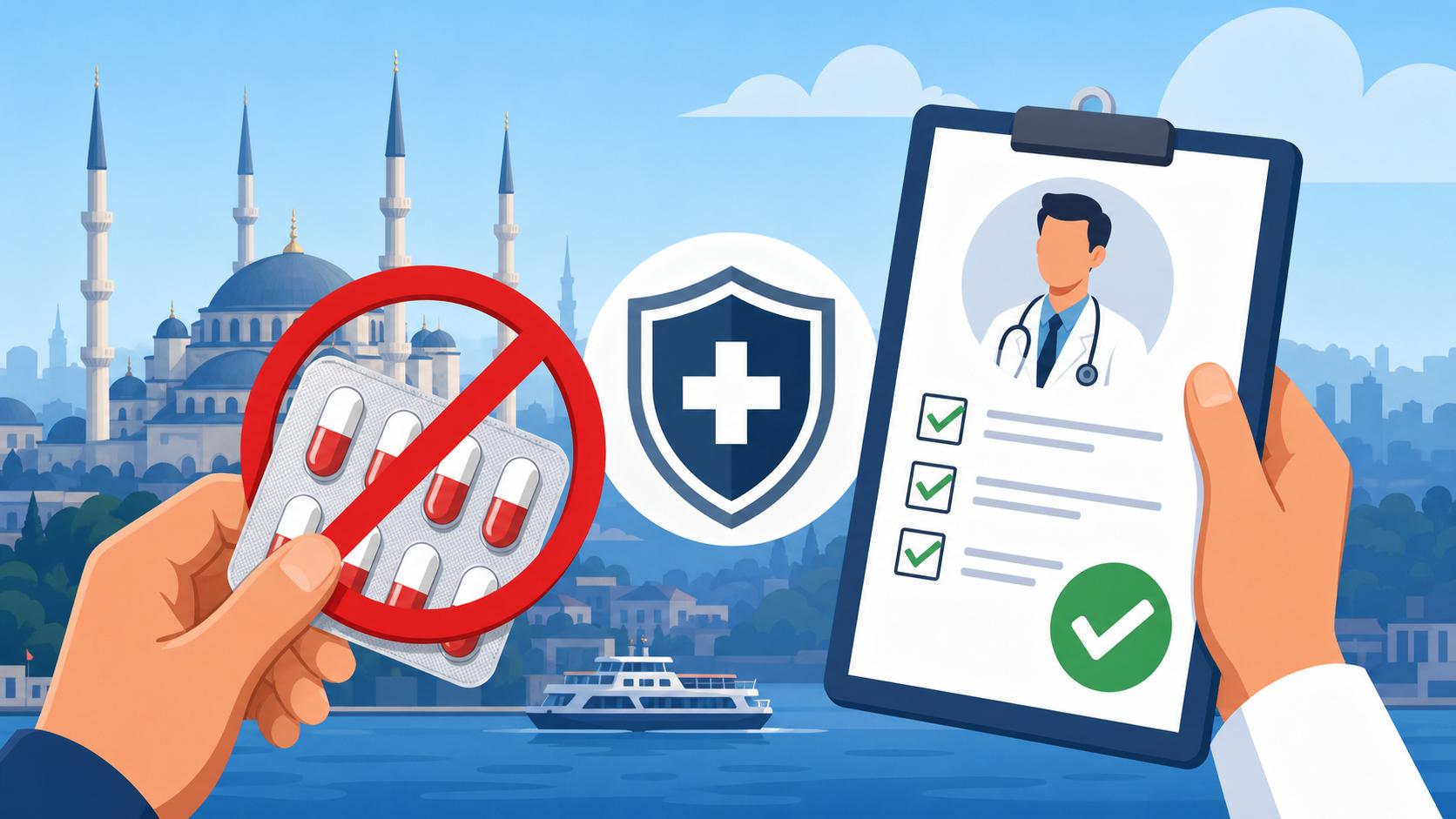
Buying Antibiotics in Turkey: Understanding Strict New Prescription Rules
Waking up in a foreign country with a throbbing sinus infection or a suspected case of strep throat is stressful enough without the added confusion of a shifting healthcare landscape. I still remember the first time I walked into a small pharmacy in the backstreets of Beyoğlu, expecting to walk out with a pack of Amoxicillin, only to be met with a firm "Hayır" and a demand for a prescription code. This guide clears up the confusion and details exactly how to navigate Turkey’s strict antibiotic regulations to get the care you need.
The Regulatory Shift: Why You Can No Longer Buy Antibiotics OTC
For many years, Turkey was known among expats as a place where you could walk into almost any pharmacy (Eczane) and purchase a wide range of medications, including antibiotics, without seeing a doctor. However, the Turkish Ministry of Health implemented a massive crackdown on "Rational Drug Use" to combat rising antibiotic resistance. Today, the days of over-the-counter antibiotics are officially over, and the enforcement is incredibly strict.
The current legal framework prohibits pharmacists from selling even a single box of antibiotics without a valid digital or paper prescription entered into the national tracking system. If a pharmacist is caught selling these drugs illegally, they face massive fines and the potential loss of their operating license. This isn't just a guideline; it is a hard rule that pharmacists across the country, from the bustling streets of Istanbul to the quiet coastal towns of Fethiye, follow religiously.
As a foreigner, this can be incredibly frustrating, especially if you come from a country where healthcare wait times are long. You might feel like you know exactly what you need, but the system now requires a professional diagnosis. This shift is part of a larger effort to integrate all health data into the Using e-Nabız: Accessing Your Medical Records on the Ministry of Health App system, which tracks every pill prescribed to your name and ID number. While it adds a layer of bureaucracy, it also ensures that your medical history is documented, which can be a lifesaver in emergencies.
The Step-by-Step Process for Obtaining Antibiotics Legally
If you are feeling unwell and believe you need antibiotics, your first step is not the pharmacy, but a doctor's office. Depending on your insurance status and your location, you have a few different paths to take.
Visiting a State Health Center (Sağlık Ocağı)
If you have a residence permit and are registered at a specific address, you are entitled to use the local Choosing a Primary Care Physician (Aile Hekimi) at a Local Health Center. These neighborhood clinics are the backbone of the Turkish health system. You will be assigned a specific family doctor based on your neighborhood.
When you visit, the doctor will examine you and, if antibiotics are necessary, they will issue an "e-reçete" (electronic prescription). They will provide you with a small piece of paper or an SMS containing a 5 or 6-digit code. You take this code to any Eczane, and they pull up the prescription on their computer. The cost of the consultation is usually free or very low for those on the public system, though you should check Health Insurance in Turkey: SGK Public System vs Private Coverage Explained to see how your specific policy handles co-pays.
Using Private Hospitals and International Clinics
For many expats, the public system can be daunting due to language barriers. If you need English-speaking staff and a faster experience, private hospitals like Acıbadem, American Hospital, or Memorial are the way to go. Here, you can usually get an appointment on the same day.
If you carry comprehensive private insurance like Cigna Global, these visits are often covered, though you may need to pay upfront and claim back later, or use a "provision" system where the hospital bills the insurer directly. The process is the same: the doctor examines you and issues a digital prescription code. These facilities are especially helpful if you are Finding English-Speaking Doctors in Istanbul: Top International Clinics and need someone who can explain the specific dosage and side effects in your native language.
The Digital Prescription System (e-Reçete)
Once the doctor enters the prescription into the system, it is live across all of Turkey. You do not have to go to a pharmacy near the hospital. If you saw a doctor in Ankara but traveled to Antalya that afternoon, any pharmacy in Antalya can access your medication using your 99-number (Foreigner ID) and the prescription code.
| Category of Access | Type of Facility | Average Wait Time | Language Support |
|---|---|---|---|
| Public (SGK) | Sağlık Ocağı | 1–3 hours | Limited Turkish |
| Public (Emergency) | State Hospital ER | 2–6 hours | Mixed |
| Private | Private Hospital/Clinic | 30–60 mins | High (English/Arabic) |
| Tourist | Tourist Health Centers | 1–2 hours | Mixed |
Managing Costs and Pharmacy Logistics in 2026
The cost of antibiotics in Turkey is generally lower than in the US or UK because the government heavily regulates drug pricing. However, there is a difference between "local" versions of drugs and "imported" brands.
When you take your code to the Pharmacies (Eczane) in Turkey: Prescriptions, Duty Hours, and Medications, the pharmacist will tell you the price. If you have SGK (social security), a large portion of the cost is covered, and you only pay a small "contribution fee." If you are paying out-of-pocket, the price is still usually reasonable, often ranging from 150 TL to 600 TL depending on the strength and type of the antibiotic.
It is also important to understand Healthcare Budgeting: Understanding Copays, Tariffs, and Billing in Turkey before you go. Some pharmacies might try to sell you additional vitamins or probiotics to accompany the antibiotics. While these can be helpful, they are often not covered by insurance and are priced higher as "over-the-counter" supplements.
If you find yourself needing medication late at night or on a Sunday, you will need to find the Understanding Night Pharmacies (Nöbetçi Eczane): How the Roster Works. Only a few pharmacies in each district remain open after hours. You can find the list posted in the window of any closed pharmacy or by using a local app. Be prepared for a bit of a trek, as the "duty" pharmacy might not be the one closest to your house.
Alternatives and Supportive Care When Antibiotics Aren't the Answer
Many times, we think we need an antibiotic for what is actually a viral infection, such as a standard cold or flu. In these cases, a Turkish doctor will refuse to prescribe antibiotics, and no amount of pleading will change their mind.
Turkish pharmacies are excellent at providing supportive care. They can offer high-quality local versions of decongestants, throat sprays, and pain relievers. It is often the case that focusing on immunity is a better long-term strategy. For specialized vitamins or specific herbal supplements that might not be readily available or are very expensive in local shops, many expats use iHerb to ship international brands directly to Turkey. Just keep in mind the local customs regulations regarding supplement imports.
If you are unsure whether your symptoms are a simple cold or something more serious, you should never hesitate to seek Emergency Medical Care in Turkey: Dialing 112, Ambulances, and Triage. If you have a high fever that won't break or difficulty breathing, skip the pharmacy and head straight to an "Acil" (Emergency Room). In Turkey, emergency care is prioritized via a color-coded triage system, and they can administer IV antibiotics on the spot if the situation is critical.
Finally, for those managing chronic conditions that require frequent antibiotic use, it is wise to look into Are Dietary Supplements and Vitamins Expensive in Turkey?) to help rebuild your gut health after a course of treatment. Turkish yogurt is world-class, but sometimes a high-potency probiotic is necessary to get your system back on track.
Disclaimer
The information provided in this guide is for informational purposes only and does not constitute medical or legal advice. Regulations regarding medication and healthcare in Turkey can change frequently. Always consult with a licensed medical professional in Turkey for diagnosis and treatment. Ensure you are compliant with all local laws regarding the purchase and possession of prescription medications.