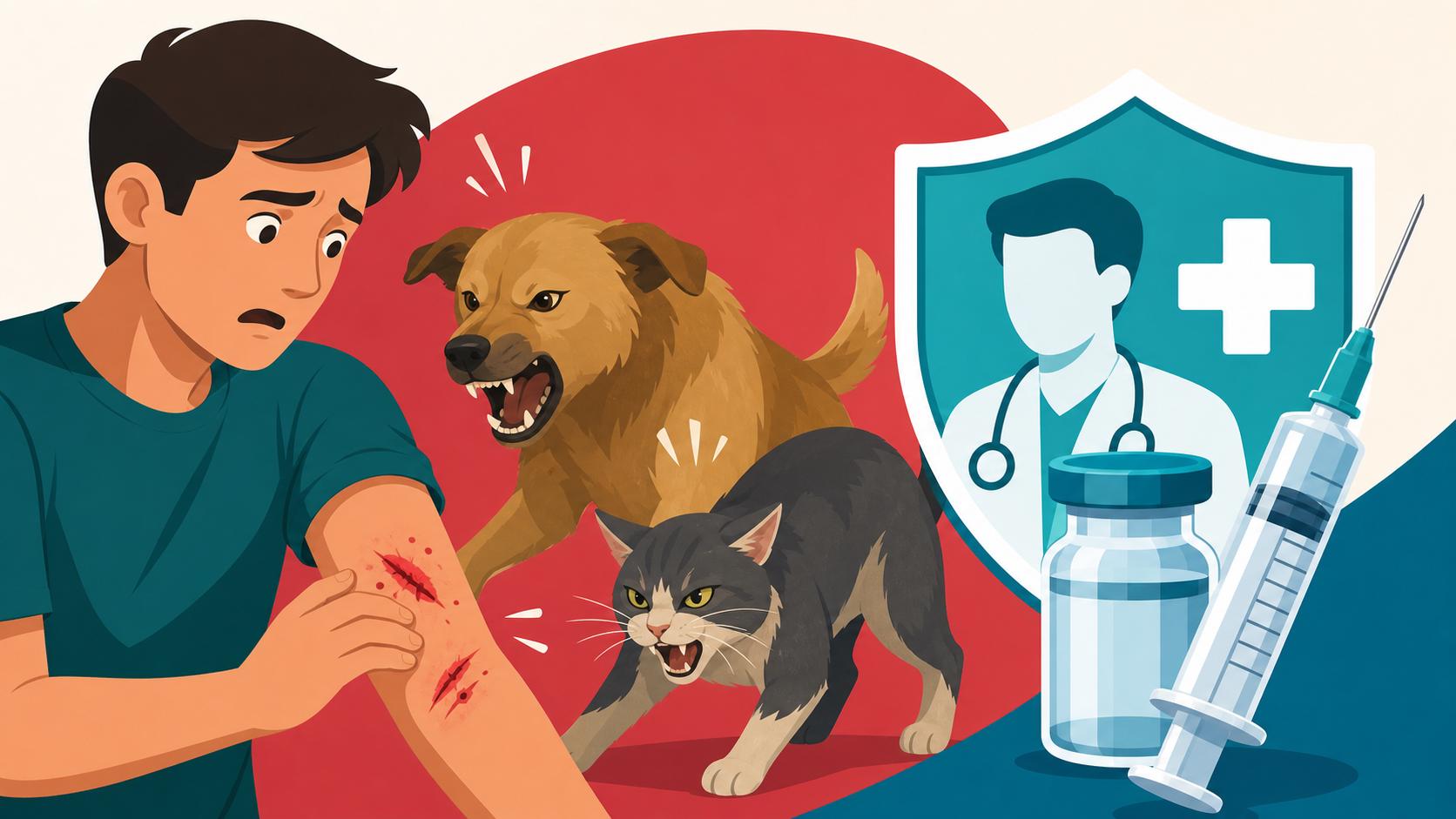
Stray Dog and Cat Bites: Navigating the Rabies Vaccine Protocol in Turkey
Getting bitten or scratched by a stray animal in Turkey is a terrifying experience that quickly turns from a cute photo op into a frantic search for the nearest hospital. I will never forget the panic when a neighborhood cat’s tooth grazed my hand and the confusion that followed at the local clinic. This guide solves the mystery of the Turkish rabies protocol, ensuring you know exactly where to go and what to expect.
Immediate Action: The First 15 Minutes After a Bite
The moments following a bite or a deep scratch from a stray dog or cat are the most critical. While your adrenaline is likely spiking, you must prioritize mechanical cleaning of the wound. In Turkey, medical professionals will tell you that the most effective way to neutralize the rabies virus—which is sensitive to soap—is a thorough 15-minute wash. Do not just splash water on it; use plenty of soap and running water to flush the area deeply.
If you are near a pharmacy (Eczane), you might want to pick up some antiseptic. However, do not let this delay your trip to the hospital. Even if the wound looks like a minor "nip," Turkey is considered a high-risk country for rabies in its stray populations. A scratch that draws blood is treated with the same urgency as a deep puncture wound. After the initial cleaning, try to take a photo of the animal from a safe distance. Look specifically for an ear tag. In Turkey, stray dogs are often tagged with a plastic marker in their ear (usually yellow, blue, or red), which indicates they have been vaccinated and neutered by the local municipality. However, medical professionals will rarely take this tag as a guarantee of current rabies immunity.
While you are managing the wound, consider your long-term recovery. Many expats use iHerb to source high-quality wound-healing supplements like Zinc or Vitamin C, which can be harder to find in specific dosages at local Turkish pharmacies. Once the area is cleaned, cover it with a clean bandage and head straight to the nearest medical facility. Do not go to a small local "Sağlık Ocağı" (Family Health Center) for the initial treatment, as they rarely stock the rabies vaccine or the immunoglobulin required for high-risk bites.
Navigating the Kuduz Merkezi: Where to Get the Vaccine
Not every hospital in Turkey is authorized to administer the rabies vaccine. You need to find a designated "Kuduz Merkezi" (Rabies Center). Typically, these are located within large state hospitals (Devlet Hastanesi) or university hospitals. If you show up at a high-end private clinic, they may provide initial wound care but will likely refer you to a state hospital for the actual vaccine series because the Turkish Ministry of Health tightly controls the distribution of the rabies vaccine.
When you arrive at the "Acil" (Emergency Room), you will undergo triage. It is helpful to have your residence permit (Ikamet) or passport ready. To help the staff understand the severity, you should use Essential Turkish Phrases for the Doctor: Communicating Symptoms Effectively to explain when the bite occurred and whether the animal appeared "agitated" (asabi) or "sick" (hasta). In Turkish hospitals, rabies cases are prioritized, but you may still face a wait depending on the "triage color" assigned to you. For a bite, you are usually placed in the "Green" or "Yellow" zone.
If you have premium international coverage like Cigna Global, you might be tempted to stick only to private facilities. However, for rabies, the state system is often the most efficient because they handle these cases daily. Private insurance is excellent for the follow-up care or if complications like a secondary bacterial infection occur, requiring hospitalization in a more comfortable setting. For more on the differences between these systems, read our guide on Finding Medical Care in Turkey: Public Hospitals vs JCI-Accredited Clinics.
The Turkish Rabies Vaccination Schedule
Once the doctor determines you need the vaccine, you will be started on a specific protocol. In 2026, Turkey generally follows the WHO-approved "Essen" or "Zagreb" schedules. The most common is the four-dose or five-dose regimen. You will receive your first shot (Day 0) immediately, followed by scheduled visits on Day 3, Day 7, and Day 14. In some cases, a final booster on Day 28 is required.
It is absolutely vital that you do not miss these dates. The hospital will give you a small "Kuduz Takip Kartı" (Rabies Follow-up Card). This card is your golden ticket; you must bring it to every subsequent appointment. The medical staff will record the serial number of the vaccine and the date of administration. If you are traveling within Turkey during your schedule, you can take this card to any other state hospital rabies center in cities like Izmir or Antalya to get your next dose.
| Dose Number | Timing | Importance |
|---|---|---|
| Dose 1 (Day 0) | As soon as possible after exposure | This "primes" the immune system. |
| Immunoglobulin | Day 0 (Only for Category III bites) | Provides immediate antibodies at the wound site. |
| Dose 2 (Day 3) | Exactly 72 hours later | Essential for building the immune response. |
| Dose 3 (Day 7) | One week after first dose | Reinforces antibody production. |
| Dose 4 (Day 14) | Two weeks after first dose | Standard completion for most healthy adults. |
| Dose 5 (Day 28) | One month later | Sometimes optional depending on the doctor's assessment. |
If the bite was particularly deep or located near the head or neck (Category III exposure), the doctor will also administer Rabies Immunoglobulin (RIG). This is a separate injection, often administered directly into and around the wound site. It provides immediate antibodies while your body works on building its own immunity from the vaccine. This process can be painful and stressful, so having a plan for Emergency Medical Care in Turkey: Dialing 112, Ambulances, and Triage is helpful if you have a severe reaction or the bite is life-threatening.
Dealing with the Language Barrier and Records
One of the biggest hurdles in a state hospital is the language barrier. While doctors often speak some English, the triage nurses and registration clerks rarely do. This is where your preparation pays off. You should have a translation app ready or a list of Essential Medical Turkish: Vocabulary for Explaining Symptoms to Doctors on your phone.
Your vaccination records will be uploaded to the "e-Nabız" system, which is Turkey's centralized health records portal. Even if you are a tourist, the hospital will create a temporary record. If you are a resident, you can track your doses and even set reminders on the app. This is incredibly useful for proving your vaccination status if you ever have another encounter in the future. For expats, having a robust health policy from Cigna Global can also provide access to 24/7 tele-health translators who can help explain the doctor's instructions over the phone.
Keep in mind that the rabies vaccine is free in state hospitals as it is a public health matter, but you may be charged for the initial emergency room entry or "registration fee" if you do not have SGK (the public health insurance). For a breakdown of these costs, see Healthcare Budgeting: Understanding Copays, Tariffs, and Billing in Turkey.
The 10-Day Observation Rule
In Turkey, if the animal that bit you is a "known" neighborhood pet or a stray that stays in a specific park, you might be told to "observe" the animal for 10 days. If the dog or cat remains healthy and alive after 10 days, it means they did not have the rabies virus in their saliva at the time of the bite, and you can potentially stop the vaccine series.
However, you must never wait for these 10 days to pass before starting the vaccine. You start the shots immediately on Day 0, Day 3, and Day 7. If on Day 10 the animal is still fine, the doctor may cancel the Day 14 and Day 28 doses. This is a common practice in neighborhoods like Kadıköy or Cihangir, where locals take care of specific "mahalle" (neighborhood) animals. If you're living in such an area, it's worth reading about Stray Cats of Istanbul: Unspoken Rules and Community Feeding Etiquette to understand how the community manages these animals.
If the animal disappears, dies, or shows signs of illness (drooling, aggression, paralysis) during those 10 days, you must complete the full course without exception. Many expats find that the stress of "animal watching" is too much and prefer to just finish the four doses for peace of mind. During this stressful time, maintaining your overall health is key; supplements from iHerb like B-complex vitamins can help manage the neurological stress that often accompanies a medical scare.
Tetanus Shots and Antibiotics
Rabies isn't the only concern when it comes to animal bites. The mouths of dogs and cats are full of bacteria that can cause severe infections like Pasteurella. Almost every doctor in Turkey will also administer a Tetanus booster if you haven't had one in the last five years. Unlike the rabies vaccine, the Tetanus shot is available at almost any hospital and even some pharmacies, though it is usually given as part of the "bite package" in the ER.
You will also likely be prescribed a course of broad-spectrum antibiotics, typically Augmentin (Amoklavin in Turkey). It is vital to finish the entire blister pack, even if the wound looks healed after two days. To understand how to fill these prescriptions and what the "duty hours" mean for late-night emergencies, refer to our guide on Pharmacies (Eczane) in Turkey: Prescriptions, Duty Hours, and Medications.
If you experience redness, warmth, or red streaks coming from the wound, this is a sign of cellulitis and requires an immediate return to the hospital. Having a comprehensive policy through Cigna Global can be a lifesaver here, as it may allow you to be admitted to a private hospital for IV antibiotics in a private room, rather than a crowded state ward.
Cultural Context: Why Are There So Many Strays?
Coming from a country where stray animals are rare, the sheer volume of dogs and cats in Turkey can be overwhelming. Turkish culture has a deep-seated respect for "sokak hayvanları" (street animals), stemming from both religious and historical traditions. You will see elaborate cat houses and bowls of food on every corner. Most of these animals are incredibly friendly, but they are still animals with instincts.
Most bites occur when a human accidentally startles a sleeping dog, tries to break up a fight between two cats, or approaches a mother with kittens. Understanding Social Etiquette in Turkey: Greetings, Removing Shoes, and Hospitality Norms extends even to how you interact with the local "belediye" (municipality) dogs. They are considered "communal pets," but they are not vaccinated with the same rigor as a domestic pet.
If you are a pet owner yourself and are bringing your dog to Turkey, you must be even more cautious. Resident dogs often get into "turf wars" with strays. For those moving here with furry friends, checking Bringing Your Dog to Turkey: Customs Clearance, Vaccines, and Pet Passports is essential to ensure your own pet doesn't become a target or a carrier.
Final Practical Tips for Expats
Navigating a medical emergency in a foreign language is never fun, but the Turkish healthcare system is highly experienced in dealing with rabies protocols. To make the process smoother:
- Always carry a digital or physical copy of your passport/Ikamet.
- Keep your vaccination card in your wallet until the final dose is finished.
- Download the "MHRS" and "e-Nabız" apps to keep track of appointments.
- Don't be afraid to ask for a "tercüman" (translator) in private hospitals, though in state hospitals, you'll likely need to rely on your own translation tools.
If you're feeling overwhelmed by the administrative side of living here, remember that thousands of us have been through the same "emergency room shuffle." It’s part of the expat initiation in Turkey. For more help on settling in, check out Healthcare in Turkey for Foreigners: Complete Expat Guide (2027) or read our tips on Daily Life & Culture: Religion, Social Etiquette, and Making Friends.
Medical Disclaimer
The information provided in this article is for educational and informational purposes only and is not intended as medical advice. Rabies is a fatal disease once symptoms appear. If you have been bitten or scratched by an animal, seek immediate medical attention from a qualified healthcare professional or visit the nearest emergency room. Protocol details and vaccine availability in Turkey may change; always follow the directions of the local Ministry of Health and your treating physician.