Over-the-Counter (OTC) Drugs in Turkey: Equivalents for Common Expat Meds
Standing in a Turkish pharmacy with a pounding headache or a child’s midnight fever can feel like navigating a maze without a map. I still remember the sheer panic during my first winter in Ankara, desperately trying to find "Advil" while the pharmacist stared blankly at my English bottle. This guide solves that confusion by providing a comprehensive list of Turkish equivalents for common Over-the-Counter (OTC) medications.
Navigating the Turkish Pharmacy System
In Turkey, the pharmacy—or Eczane—is more than just a retail shop; it is a vital healthcare hub where the pharmacist often acts as a first-line medical consultant. Unlike many Western countries where you might grab ibuprofen from a supermarket shelf, all medications in Turkey, including basic painkillers and vitamins, are sold exclusively within an Eczane. This can be frustrating when you just want to buy a pack of aspirin at 10:00 PM on a Tuesday, but it ensures that you are getting authentic products and professional advice.
The system is highly regulated, and the pharmacists are generally very well-educated. Many of them in urban centers like Istanbul, Antalya, or Izmir speak functional English, but having a list of local names is still your best defense against a communication breakdown. If you are covered by a comprehensive policy like Health Insurance in Turkey: SGK Public System vs Private Coverage Explained, you might even find that many of these local equivalents are partially subsidized if you have a prescription from a doctor.
Identifying Local Pharmacies and Duty Hours
When you walk down any major street in Turkey, you will see a glowing red "E" sign. This is the universal symbol for an Eczane. Most pharmacies operate from 9:00 AM to 7:00 PM, Monday through Saturday. However, Turkey has a strictly regulated "duty" system called Nöbetçi Eczane. On Sundays and every night after 7:00 PM, only a select few pharmacies in each district remain open.
Finding these can be a bit of a scavenger hunt if you don't know where to look. Every pharmacy is legally required to post a list of the nearby duty pharmacies in their front window. Alternatively, you can search for "Nöbetçi Eczane" on Google Maps or use local apps. To understand how this rotation works in more detail, you can check out our guide on Understanding Night Pharmacies (Nöbetçi Eczane): How the Roster Works. It’s worth noting that while Cigna Global and other private providers offer great coverage, they won't help you find a night pharmacy at 3:00 AM—that's a skill every expat must learn.
Communication Strategies for Non-Turkish Speakers
Even if the pharmacist doesn't speak fluent English, the "language of medicine" is largely Latin-based. If you know the active ingredient of your medication—such as paracetamol or ibuprofen—you are halfway there. I always recommend keeping a list of your current medications and their active ingredients on your phone.
Using a translation app is helpful, but showing the pharmacist a picture of the box from your home country and then pointing to the "Active Ingredient" section is often faster. For those who want to be fully prepared, learning a few Essential Turkish Phrases for the Doctor: Communicating Symptoms Effectively can make a world of difference when you are trying to explain that you have a "sharp pain" versus a "dull ache."
Pain Relief and Fever Management
When it comes to pain relief, you won't find brands like Tylenol, Advil, or Excedrin. Instead, you will find a range of local and international equivalents that use the same active chemicals. Most of these are available over-the-counter, although the pharmacist may ask a few questions to ensure you aren't exceeding safe dosages.
The most common request in any Turkish pharmacy is for something to treat a headache or a minor fever. Because the prices are regulated by the government, you will find that these medications are significantly cheaper than in the US or UK. For a deeper dive into this category, we have a dedicated post on Turkish Pharmacy Equivalents for Advil, Tylenol, and Common Painkillers.
Paracetamol Options in Turkey
If you are looking for Tylenol or Panadol, you are looking for paracetamol. In Turkey, the gold standard for paracetamol is Parol. You will see it in almost every household medicine cabinet. It comes in 500mg tablets and is incredibly affordable. Another common brand is Minoset, which is often favored by those who find Parol a bit too mild.
For children, these come in syrup forms like Calpol or Pedifen. If you are managing a chronic condition that requires regular pain management, you might want to look into Managing Chronic Illnesses: Diabetes, Hypertension, and Medication Supply to see how to integrate your pharmacy visits with your long-term care plan. It is also a good idea to check with your insurance provider, such as Cigna Global, to see if they offer any specific pharmacy benefits for chronic pain.
Ibuprofen and Anti-Inflammatories
If Advil or Motrin is your go-to for inflammation or muscle pain, you need to ask for ibuprofen. The most direct equivalent is Arveles, which is a powerful dexketoprofen (a cousin of ibuprofen) that Turks use for everything from toothaches to menstrual cramps. If you specifically want ibuprofen, brands like Dolorex or Suprafen are your best bets.
One thing to be aware of is that some of the stronger anti-inflammatories that might be OTC in your home country could require a "follow-up" here. While you can buy them, the pharmacist might urge you to see a doctor if the pain persists. This is especially true for those with existing health issues who are navigating Healthcare in Turkey for Foreigners: Complete Expat Guide (2027).
Stronger Painkillers and Prescription Requirements
If you are looking for something with codeine or other opioids, be prepared for a hard "no" without a red or green prescription. Turkey is very strict about narcotics and psychotropic drugs. Even medications that are common in the West, like certain high-dose migraine medications, are heavily monitored.
For expats, this means you cannot simply walk in and get a refill for a heavy-duty painkiller prescribed abroad. You will need to visit a local clinic to get a Turkish prescription. This is a common hurdle for newcomers, and understanding the Pharmacies (Eczane) in Turkey: Prescriptions, Duty Hours, and Medications rules will save you a lot of time and frustration at the counter.
Cold Flu and Allergy Medication
Turkey’s climate can be tricky—hot summers followed by damp, windy winters—which leads to a high frequency of seasonal colds and flu. The local approach to cold care is quite aggressive, often combining multiple active ingredients into a single "all-in-one" tablet or hot drink.
If you are used to NyQuil or DayQuil, you won't find them here. However, there are local equivalents that work just as well, often packaged as powders that you dissolve in hot water. These "hot sips" are a staple of Turkish winter life.
Decongestants and Multi-Symptom Cold Relief
The most popular multi-symptom cold medications in Turkey are Tylolhot, A-Ferin, and Katarin. Tylolhot is the local equivalent of something like Lemsip or DayQuil; it’s a lemon-flavored powder containing paracetamol, a decongestant, and an antihistamine. It’s effective, but be warned: the "night" versions can be quite sedating.
For nasal congestion, you will find sprays like Otrivin or Iliadin. Be careful with these, as Turkish pharmacists usually advise against using them for more than five consecutive days to avoid "rebound" congestion. If your cold turns into something more serious, you should know that Buying Antibiotics in Turkey: Understanding Strict New Prescription Rules means you cannot simply buy Amoxicillin anymore; you must have a doctor's order.
Managing Seasonal Allergies
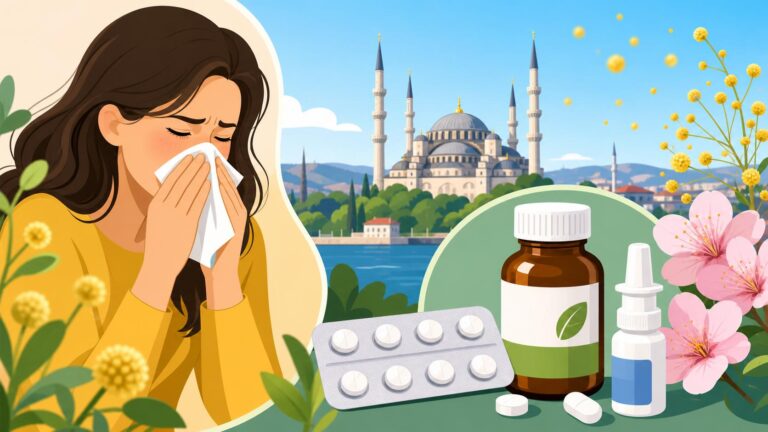
If you suffer from hay fever, Turkey’s spring can be a nightmare, especially in green cities like Bursa or certain parts of Istanbul. You will find familiar names here, but they might be branded slightly differently. Zyrtec and Claritin are available, often under the same names or as Allerset (cetirizine) and Clarizine (loratadine).
For those who prefer a more natural approach or want to supplement their allergy regimen, iHerb is a popular choice for expats in Turkey to order specific brands of quercetin or stinging nettle that aren't common in local pharmacies. Just be mindful of customs limits when ordering from iHerb to ensure your supplements don't get stuck at the border.
Cough Syrups and Throat Lozenges
For a dry cough, look for Perebron or Levotuss. For a productive "wet" cough, Mucosolvan or Asist (acetylcysteine) are the standard treatments. Turkish pharmacists often recommend "Asist" in sachet form, which you dissolve in water to help thin out mucus.
For sore throats, the brand Strepsils is widely available and comes in various flavors. Tantum Verde is another popular choice, both as a lozenge and a spray. If you find the local options aren't cutting it, some expats keep a stock of their favorite brands from home, but always check the legal limits for Bringing Prescription Medication Through Turkish Customs: Legal Limits before you pack your suitcase.
Digestive Health and Stomach Issues
Whether it's a reaction to the rich local cuisine or a standard bout of "traveler's belly," digestive issues are a common expat complaint. The Turkish pharmacy is well-equipped to handle everything from mild heartburn to more severe indigestion.
One local quirk is the popularity of "mide koruyucu" (stomach protectors). Many Turks take these daily, and pharmacists often suggest them alongside any strong painkiller to prevent stomach irritation.
Antacids and Heartburn Relief
If you need Tums or Rolaids, you won't find the chewable fruit-flavored tablets as easily. Instead, you will find Rennie (which comes in peppermint chewables) and Gaviscon. Gaviscon is available both as a liquid and as "Advance" chewable tablets and is highly effective for acid reflux.
For those with more chronic acid issues, PPIs (Proton Pump Inhibitors) like Nexium or Lansor (Lansoprazole) are available over-the-counter in lower dosages. However, for a higher dosage, a doctor's visit is recommended to ensure you are covered by Health Insurance in Turkey: SGK Public System vs Private Coverage Explained for long-term use.
Treating Traveler's Diarrhea and Indigestion
For an upset stomach or diarrhea, the most common OTC medication is Reflor. This is a probiotic-based treatment that helps restore gut flora and is very effective for mild cases of food poisoning. If you have cramping, Buscopan is the universal solution for "karın ağrısı" (stomach pain).
If you suspect something more serious, like a parasite or a severe bacterial infection, don't wait. Visit a clinic or an emergency room. You can learn about the differences in care in our guide on Emergency Medical Care in Turkey: Dialing 112, Ambulances, and Triage. For these unexpected visits, having a global policy like Cigna Global can help you access top-tier private hospitals without worrying about the bill.
Probiotics and Gut Health
Turkish people take gut health seriously, and you will find a wide variety of probiotics in the Eczane. Aside from Reflor, brands like Enterogermina are very popular, especially for children. These are often sold in small, drinkable vials that are easy to take on the go.
Many expats also choose to supplement their diet with products from iHerb, particularly for specific strains of probiotics that might not be available locally. While Turkish yogurt and kefir are fantastic natural sources, sometimes you need that extra boost, especially when adjusting to a new diet.
Common OTC Equivalents Comparison Table
| International Brand | Active Ingredient | Turkish Equivalent |
|---|---|---|
| Tylenol / Panadol | Paracetamol | Parol, Minoset |
| Advil / Motrin | Ibuprofen | Arveles, Dolorex, Suprafen |
| Zyrtec | Cetirizine | Allerset |
| Claritin | Loratadine | Claritine |
| Gaviscon | Alginate/Antacid | Gaviscon, Rennie |
| Buscopan | Hyoscine Butylbromide | Buscopan |
| NyQuil / DayQuil | Multi-Symptom | Tylolhot, A-Ferin, Katarin |
| Imodium | Loperamide | Lopermid |
| Aspirin | Acetylsalicylic Acid | Coraspin, Aspirin |
| Voltaren Gel | Diclofenac | Dikloron, Voltaren |
First Aid Skin Care and Supplements
The "wellness" section of a Turkish pharmacy is usually quite small compared to a US drugstore, but it covers the essentials. For anything more specialized, such as high-dose vitamins or specific organic brands, you might find yourself looking at iHerb or searching for a local Aktar (traditional herbalist).
However, for basic wounds, rashes, and skincare, the Eczane has some fantastic local secrets that expats swear by once they discover them.
Antiseptics and Wound Care
For cleaning cuts and scrapes, ask for Baticon (povidone-iodine), which is the standard antiseptic here. If you prefer a clear spray, Octenisept is also common. For bandages, ask for "yara bandı."
For healing, there is a legendary cream called Hametan. It’s a witch hazel-based ointment that Turks use for everything from diaper rash to minor burns and dry skin. It’s incredibly cheap and very effective. If you need something stronger for a suspected infection, Bactroban or Terramycin (an antibiotic ointment) is often available OTC, though this can vary by pharmacy.
Topical Creams for Rashes and Bites
If you are spending time on the coast in the summer, you will need something for mosquito bites. Fenistil gel is the standard antihistamine cream for itching. For more severe allergic reactions or rashes, Stafine or Advantan (a corticosteroid) might be suggested, but use these sparingly as they are potent.
For sun protection, pharmacies carry high-end brands like La Roche-Posay and Vichy. While effective, they can be pricey. This is another area where many expats use iHerb to stock up on their favorite sunscreen brands before the summer heat hits its peak.
Vitamins and Dietary Supplements in Turkey
Vitamins like Vitamin C, Vitamin D, and Magnesium are widely available but can be surprisingly expensive in Turkey compared to Europe or North America. Popular local brands include Ocean and Venatura. Most of these are "Eczane-only" products to ensure quality.
If you are on a specific vitamin regimen, you may find that iHerb offers a much wider selection and better pricing, even with shipping costs. However, for a quick fix—like effervescent Vitamin C during a cold—the local Supradyn or Redoxon tubes found in the Eczane are perfectly fine and taste quite good.
Critical Considerations for Expats
Before you run off to your local Eczane, there are a few "unspoken rules" and legal realities you need to understand. The Turkish medical system is efficient, but it has its own set of boundaries that can catch a foreigner off guard.
Most importantly, the days of "buying whatever you want" are largely over. Turkey has tightened its regulations significantly in the last decade to combat antibiotic resistance and drug abuse.
Understanding Prescription-Only Restrictions
The biggest shock for many newcomers is that you cannot buy antibiotics without a prescription. Not even if you "know" you have a sinus infection. Not even if you "always take them." The pharmacist's computer system is linked to the Ministry of Health, and they can face heavy fines for selling antibiotics over the counter.
This rule also applies to many hormonal medications, high-strength painkillers, and most psychiatric drugs. If you are moving to Turkey with a need for regular medication, it is vital to understand Managing Chronic Illnesses: Diabetes, Hypertension, and Medication Supply so you don't run out of your supply while waiting for a doctor's appointment.
Carrying Meds Across Borders and Customs Rules
If you are bringing a large supply of OTC or prescription meds from home, keep them in their original packaging with a copy of your prescription (translated into Turkish if possible). While customs officers usually don't bother tourists or expats with a few boxes of Advil, bringing in "commercial quantities" can lead to seizure.
For those ordering from abroad, such as through iHerb, be aware that Turkey has a monthly limit on international packages and a value limit (currently around 150 Euros) before heavy taxes apply. Always double-check the current Customs Taxes on International Amazon Packages Delivered to Turkey or similar regulations for other international shippers to avoid a nasty surprise at the post office.
Disclaimer
The information provided in this guide is for educational and informational purposes only and is based on the personal experiences of expats living in Turkey. I am not a doctor or a licensed pharmacist. Medications can have different effects on different people, and brand names or availability can change. Always consult with a qualified healthcare professional or a local pharmacist before starting any new medication, especially if you have pre-existing conditions, are pregnant, or are taking other drugs. If you experience a medical emergency, dial 112 immediately.