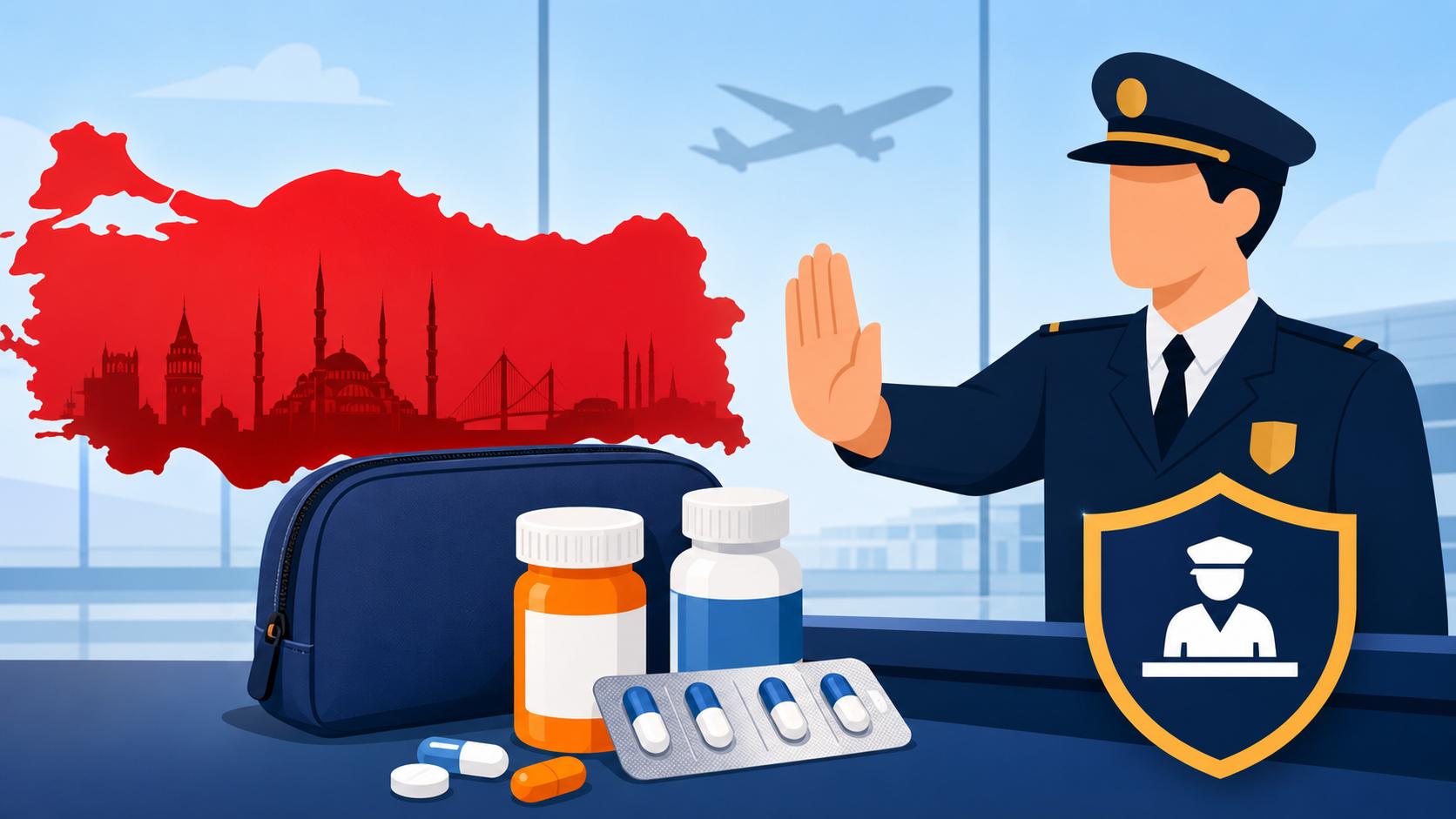
Bringing Prescription Medication Through Turkish Customs: Legal Limits
Arriving at Istanbul Airport or Sabiha Gökçen with a suitcase full of pills can feel like a high-stakes gamble when you aren't sure of the local laws. I remember vividly the first time I moved here, clutching a Ziploc bag of asthma inhalers and blood pressure meds, heart racing as I approached the customs officers, terrified they’d think I was some sort of international smuggler. This guide solves that anxiety by breaking down exactly what you can legally bring, the paperwork you need, and how to navigate Turkish customs without a hitch.
Understanding Turkey's Drug Classification System
Turkey takes a very structured approach to medication, and it’s a far cry from the "anything goes" reputation some might expect. The Ministry of Health categorizes drugs strictly to prevent misuse, particularly when it comes to narcotics and psychotropics. For an expat, understanding these tiers is the first step in ensuring your transit is smooth and legal.
Red and Green Prescriptions Controlled Substances
In the Turkish medical world, certain medications are classified under "Red" and "Green" prescriptions. Red prescriptions typically cover narcotics and strong painkillers, while Green prescriptions cover psychotropic drugs like benzodiazepines or certain stimulants used for ADHD. If your medication falls into these categories back home, you need to be extra cautious. These aren't just "suggestions" for the customs officers; they are high-alert items that require significant documentation.
Expats are sometimes stopped because they had a bottle of Xanax or Ritalin without a clear, verified medical justification. In Turkey, these are not just pills; they are controlled substances that require a specific type of local tracking once you are in the system. When bringing them across the border, the burden of proof is entirely on you to show that these were prescribed by a licensed physician for a legitimate chronic condition. For those with complex needs, having a plan like Cigna Global can be a lifesaver, as they often provide the international support needed to verify medical histories across borders.
Standard Prescription vs Over the Counter Meds
Then there are the "white" prescription drugs—your standard antibiotics, blood pressure medications, and cholesterol treatments. While these are less scrutinized than narcotics, you still can’t just bring a suitcase full of them. Turkey differentiates between "personal use" and "commercial quantities." If you show up with 20 boxes of the same antibiotic, customs will assume you're planning to sell them in a local bazaar, and that’s when the trouble starts.
On the other end of the spectrum are Over-the-Counter (OTC) meds. Interestingly, many things that are OTC in the US or UK, like high-dose Ibuprofen or certain cold medicines, are kept behind the counter in a Turkish Pharmacies (Eczane) in Turkey: Prescriptions, Duty Hours, and Medications hub. However, bringing a personal supply of Tylenol or Advil is generally fine. If you’re used to specific brands of vitamins or niche herbal supplements, you might find that iHerb is a more reliable way to restock once you're settled, rather than trying to haul a year's supply through the airport.
Essential Documentation for Carrying Meds into Turkey
The secret to a stress-free entry isn't just what is in your bag, but what is in your folder. Turkish customs officials are generally professional and efficient, but they operate on a "document first" basis. If you have the right papers, they usually won't give you a second look. If you don't, even a simple bottle of pills can lead to hours of questioning in a back office.
The Importance of a Translated Doctor’s Letter
You absolutely must have a letter from your prescribing doctor. This letter should clearly state your diagnosis, the generic name of the medication (not just the brand name), the dosage, and the total quantity you are carrying. While English is widely understood by many officials in major cities like Istanbul or Ankara, having a Turkish translation of this letter is a massive advantage. It shows respect for the local system and removes any "lost in translation" risks regarding your health.
I’ve found that even a simple, notarized translation can save you from a world of hurt. The letter should be on official letterhead and signed by the doctor. If you are a member of Cigna Global, you can often access their member services to help coordinate with international providers to ensure your documentation meets the necessary standards for travel. This is particularly important for Managing Chronic Illnesses: Diabetes, Hypertension, and Medication Supply where your life literally depends on getting these supplies through the border.
Original Packaging and Prescription Receipts
Never, ever put your pills into those "days of the week" plastic organizers before you fly. This is a massive red flag for customs. All medications must be in their original pharmacy packaging with the labels clearly visible. These labels should match the name on your passport. If the name on the bottle is different—perhaps a maiden name or a nickname—you are asking for a delay.
In addition to the packaging, it is wise to keep the original paper prescription or a digital copy of the receipt from your pharmacy. This acts as a secondary layer of proof. If you are bringing something specialized, like Bringing ADHD Medication (Stimulants) into Turkey: Legal Boundaries requires, these receipts prove the legality of the purchase. For supplements or non-prescription health aids, keeping the original invoice from a site like iHerb can also help clarify that the items are for personal health and wellness rather than resale.
Navigating Turkish Customs at the Airport
When you land at IST or SAW, you’ll be faced with the classic Green and Red channel choice. Most tourists and new expats instinctively head for the Green "Nothing to Declare" channel. However, if you are carrying more than a standard month’s supply of any medication, you need to be strategic about how you proceed.
Red Channel vs Green Channel When to Declare
If you are carrying controlled substances (those Red or Green prescription meds mentioned earlier), you should technically use the Red channel to declare them. It feels intimidating, but it is much safer than being caught with them in the Green channel. When you declare, you simply present your doctor’s letter and your passport. Most of the time, the officer will look at the paperwork, nod, and send you on your way.
If you are carrying standard, non-controlled medications for a 30-day period, the Green channel is usually fine. However, "when in doubt, declare" is a solid rule for Turkey. The penalties for "importing" medicines without declaration can be stiff, including fines and confiscation. If you are moving here for the long term and have a comprehensive policy with Cigna Global, they may have specific advisors who can guide you on the current "mood" of customs, which can sometimes fluctuate based on new regulations.
Quantity Limits The 90 Day Rule
The general rule of thumb for Turkish customs is that you can bring up to a 90-day supply of personal medications. Anything beyond three months is considered a commercial quantity. If you are planning to stay longer, you might think, "I'll just bring a year's supply so I don't have to deal with Turkish doctors." Don't do it. You risk losing the entire batch.
Instead, bring your 90 days of supplies and use that time to register with a local Choosing a Primary Care Physician (Aile Hekimi) at a Local Health Center to get your prescriptions transferred into the Turkish system. It might seem like an extra hurdle, but it’s the only legal way to maintain your supply. If you find that certain vitamins or specialty health foods you rely on aren't available at the local Eczane, you can always use iHerb to have them shipped directly to your new Turkish address, which is perfectly legal for personal quantities.
Sourcing Medications Locally After Your Supply Runs Out
So, you’ve made it through customs, and you’ve been living the dream in a seaside town or a bustling Istanbul neighborhood. Eventually, that 90-day supply is going to dwindle. This is where many expats panic, but the Turkish pharmacy system is actually one of the best in the world once you know how to use it.
Finding Equivalents at the Eczane
Turkish pharmacies are ubiquitous—look for the big red "E" sign. The pharmacists here are highly trained and often act as a first line of medical advice. If you bring your empty box of foreign medication to an Eczane, they can usually find the Turkish equivalent (muadil) in seconds. They use a centralized system to look up active ingredients and dosages.
You might find that Turkish Pharmacy Equivalents for Advil, Tylenol, and Common Painkillers are incredibly affordable. In many cases, you'll be shocked at how much cheaper your maintenance meds are here compared to the US or even parts of Europe. However, for specialized or biologics, you'll want to ensure your Health Insurance in Turkey: SGK Public System vs Private Coverage Explained is active, as these can still be pricey without a local policy. Cigna Global is particularly useful here because they often cover a wider range of brand-name medications that local policies might try to swap for generics.
Managing Specialized Meds and Supplements
For those on very specific, cutting-edge medications, you might find that they aren't stocked in the local Eczane. In these cases, the pharmacist can often order them for delivery within 24 hours. However, some medications are simply not licensed in Turkey yet. If you have a very rare condition, you need to check the "Titck" (Turkish Medicines and Medical Devices Agency) list before you move.
When it comes to supplements, the Turkish market is growing, but it can be expensive due to import taxes. I personally find that the selection of magnesium, high-quality probiotics, or specific herbal blends is much better and more cost-effective on iHerb. Just be aware that when ordering from iHerb to Turkey, you should keep your order value under the 150 Euro threshold to avoid complex customs duties, and limit the number of items to five per order to comply with personal import laws.
| Category | Typical Limit | Required Documents | Channel to Use |
|---|---|---|---|
| Standard Meds (Blood pressure, etc.) | 90 Days | Doctor's Letter / Original Box | Green (unless >90 days) |
| Controlled Substances (Narcotics, Psychotropics) | 30-90 Days | Notarized/Translated Letter / Prescription | Red (Recommended) |
| OTC Vitamins/Supplements | Reasonable Personal Use | Original Packaging | Green |
| Injectables (Insulin, etc.) | 90 Days | Diagnosis Letter / Travel Cooler | Green/Red |
Practical Tips for Expats with Chronic Conditions
Living in Turkey with a chronic condition requires a bit of proactive planning. The system is empathetic and generally very helpful to foreigners, but you have to play by the rules. From my experience, being "over-prepared" is the only way to go.
Legal Boundaries for ADHD and Psychotropic Meds
If you are someone who relies on ADHD medication, you need to be aware that Turkey has very strict rules. Medications like Ritalin or Concerta are Red Prescription drugs. You cannot simply walk into a pharmacy and ask for them. You will need to see a Turkish psychiatrist, show them your foreign diagnosis, and have them enter you into the national "e-Nabız" system.
This process can take a few weeks, which is why bringing that initial 90-day supply is so critical. During this transition, having a policy with Cigna Global can help you access private English-speaking psychiatrists in places like Nişantaşı or Kadıköy who are more familiar with international diagnosis standards. They can help bridge the gap and ensure you don't face a lapse in your treatment. Check out our guide on Finding English-Speaking Doctors in Istanbul: Top International Clinics for more specific recommendations.
Using International Insurance for Local Costs
While many expats eventually join the SGK (public system), it can be a bit of a maze for specialized care. High-end private hospitals in Turkey are JCI-accredited and world-class, but they come with a price tag to match. This is where your international coverage really earns its keep. A provider like Cigna Global allows you to bypass the long waits of the public system and go straight to the best specialists who can renew your prescriptions and manage your care.
When you go to a pharmacy in Turkey with a private prescription, you will usually pay out of pocket first. Keep every single receipt (fatura). These receipts are essential for reimbursement. If you are also ordering wellness products or support items from iHerb, keep those invoices too, as some comprehensive plans may cover medical-grade supplements if they are part of a doctor-prescribed treatment plan. Managing your Healthcare Budgeting: Understanding Copays, Tariffs, and Billing in Turkey is much easier when you have a clear understanding of what your insurance will and won't pick up.
Final Logistics and Safety Checks
Before you head to the airport, do one last sweep of your medical kit. Check the expiration dates on everything. There is nothing worse than getting to Turkey and realizing your inhaler expired last month. Also, make sure you have a digital backup of all your documents on a secure cloud drive or your phone.
If you are carrying liquids (like insulin or liquid cough meds over 100ml), ensure they are in a separate clear bag for the security screening before you even get to customs. Mentioning to the security staff that you have "medical supplies" (tıbbi malzeme) usually speeds things up. If you are worried about the temperature of your meds during the hot Turkish summers, ensure your travel cooler is high-quality.
Once you are on the ground, remember that the e-Nabız website: Translating Your Blood Test Results will eventually become your best friend for tracking your local prescriptions. And for those daily health needs—things like high-quality protein powders, specialty teas, or vitamins that aren't quite "medications" but keep you feeling human—having a recurring iHerb order can make your new Turkish apartment feel a lot more like home. Turkey is a beautiful place to live, and as long as you respect the customs rules, your health doesn't have to be a source of stress.
Disclaimer
The information provided in this guide is for informational purposes only and does not constitute legal or medical advice. Customs regulations in Turkey can change without notice, and you should always verify current requirements with the nearest Turkish Consulate or the official Ministry of Health website before traveling. Always consult with your physician before changing your medication regimen.