Allergy Medicine in Turkey: Managing Spring Pollen with Local Antihistamines
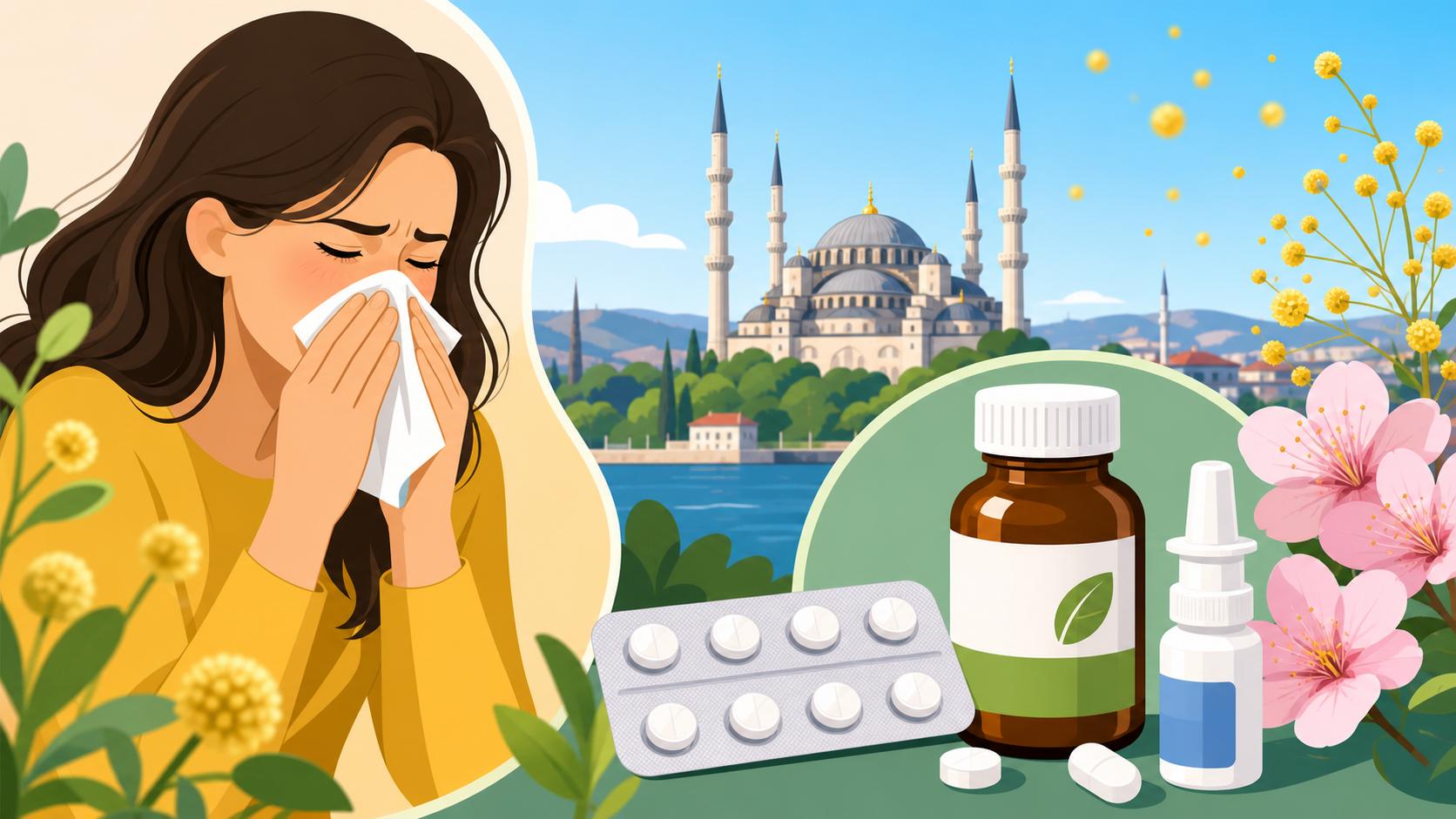
You land in Istanbul in April, dreaming of the famous tulip festivals and sunny walks along the Bosphorus, but instead, you are hit with an uncontrollable sneezing fit that feels like a personal attack from the Turkish spring. I remember my first year living in the Kadikoy district, where I spent three weeks thinking I had a chronic cold until a neighbor explained that the "yellow dust" on my balcony was actually cypress pollen. This guide solves your seasonal misery by identifying local Turkish antihistamines, navigating the pharmacy system, and finding the right medical support so you can stop sneezing and start enjoying the season.
The Turkish Allergy Landscape: Why Your Sinuses Are Screaming
Turkey is a botanical paradise, which is great for hikers but a nightmare for those with hay fever (known locally as Bahar Nezlesi). Because the country spans several different climate zones—ranging from the humid Black Sea to the arid Central Anatolia and the Mediterranean coast—the allergy season can be exceptionally long and varied. In cities like Istanbul and Ankara, the primary culprits are the Plane trees (Çınar), which line many of the historical avenues, and the Cypress trees often found in the city’s vast cemeteries.
The "Çınar" tree is particularly notorious among expats. In late spring, these trees release tiny, fuzzy fibers that act as a mechanical irritant, often making people feel like they have a scratchy throat even if they don't have a traditional pollen allergy. If you move toward the Aegean or Mediterranean coasts, such as Izmir or Antalya, you will encounter a heavy concentration of olive tree pollen and various grasses that thrive in the warmer, saltier air. Understanding exactly what is blooming in your specific region is the first step toward effective management. Many expats find that Using e-Nabız: Accessing Your Medical Records on the Ministry of Health App helps them track their symptoms alongside local weather reports that often include pollen counts during peak months.
Navigating the Eczane: Your First Line of Defense
In Turkey, you won't find antihistamines in a supermarket or a convenience store. All medication, even basic over-the-counter allergy relief, must be purchased at a pharmacy, marked by a prominent red "E" sign. These pharmacies are generally open from 9:00 AM to 7:00 PM, but if your allergy attack hits in the middle of the night or on a Sunday, you will need to find the "Nöbetçi Eczane" or duty pharmacy.
To avoid this, you can check the list posted in the window of any closed pharmacy or use a mobile app to find the nearest open one. For more details on how this works, check out our guide on Understanding Night Pharmacies (Nöbetçi Eczane): How the Roster Works. The pharmacists in Turkey are highly trained and often act as a first point of medical consultation. In expat-heavy areas, you can usually find an English-speaking pharmacist who can help you translate your symptoms. If you are struggling to explain your itchy eyes or runny nose, referring to Essential Turkish Phrases for the Doctor: Communicating Symptoms Effectively can be a lifesaver.
Common Turkish Antihistamines and Their International Equivalents
One of the biggest frustrations for newcomers is walking into an Eczane and asking for "Claritin" or "Zyrtec" only to be met with a blank stare. While some international brands exist under the same name, many are sold under local Turkish brand names with the exact same active ingredients. It is always best to know the generic name of the drug that works for you.
Turkish pharmacies carry a wide range of second-generation antihistamines that are non-drowsy, which is essential if you are navigating the chaotic traffic of Istanbul or Ankara. The table below provides a quick reference for the most common allergy medications found in Turkey.
| International Brand | Active Ingredient | Common Turkish Brand Name | Form |
|---|---|---|---|
| Claritin | Loratadine | Claritine / Loritine | Tablet / Syrup |
| Zyrtec | Cetirizine | Allerset / Zyrtec | Tablet / Drops |
| Xyzal | Levocetirizine | Xyzal / Crebros | Tablet |
| Aerius | Desloratadine | Aerius / Deloday / Lordes | Tablet / Syrup |
| Allegra | Fexofenadine | Fexadyne / Mayfex | Tablet |
| Kestine | Ebastine | Kestine | Tablet |
| Estivan | Ebastine | Estivan | Tablet |
When shopping for these, keep in mind that many expats find Over-the-Counter (OTC) Drugs in Turkey: Equivalents for Common Expat Meds helpful for cross-referencing other household staples. Most of these antihistamines are available without a prescription, but if you want the cost to be covered by your insurance, you will generally need a doctor's note. If you have private coverage like Cigna Global, you might find it easier to visit a private clinic to get a prescription that allows for direct billing or reimbursement.
Nasal Sprays and Eye Drops: Targeted Relief
Sometimes a tablet isn't enough to combat the "Istanbul Sneeze." If you suffer from severe nasal congestion or those dreaded "sandpaper eyes," you will need to look into sprays and drops. In Turkey, corticosteroid nasal sprays like Flixonase or Nasonex are widely available. A popular local equivalent for Nasonex is called "Mometix AQ," and it is often much more affordable than the imported versions.
For itchy eyes, "Pataday" or its local versions containing Olopatadine are the gold standard. I’ve found that keeping these in the refrigerator provides an extra cooling sensation that is incredibly soothing during a high-pollen day in the humid coastal regions. If you are unsure about the rules regarding these medications, it is worth reading about Pharmacies (Eczane) in Turkey: Prescriptions, Duty Hours, and Medications to understand which items might require a formal consultation.
When to See an Allergy Specialist in Turkey
If your symptoms are interfering with your sleep or causing asthma-like symptoms, it is time to move beyond the pharmacy counter. Turkey has an excellent network of specialists (Alerji Uzmanı). You have two main routes: the public system and the private system.
If you are enrolled in the state insurance, you should start by Choosing a Primary Care Physician (Aile Hekimi) at a Local Health Center. They can provide initial relief and refer you to a state hospital if necessary. However, for those who prefer English-speaking staff and shorter wait times, private hospitals are the way to go. Using Finding English-Speaking Doctors in Istanbul: Top International Clinics can help you locate specialists who are familiar with treating international patients. Many of these clinics are JCI-accredited and offer comprehensive allergy testing, including skin prick tests and blood work, to identify exactly which Turkish plants are triggering your immune system. Having a policy like Cigna Global ensures that these specialist visits and the subsequent diagnostic tests don't become a massive out-of-pocket expense.
Natural Remedies and Supplements for Allergy Season
While pharmaceutical intervention is often necessary, many expats in Turkey also turn to local and international natural remedies. Turkey is famous for its honey, and some believe that consuming local "Yayla" (highland) honey can help desensitize you to local pollens. While the scientific evidence is mixed, it certainly makes for a delicious addition to your morning tea.
For those who rely on specific vitamins or organic supplements not always found in the local Eczane, ordering from iHerb is a common practice among the expat community. Many people supplement with Quercetin, Vitamin C, or stinging nettle root to help stabilize their mast cells during the peak of spring. Just be aware of the customs regulations when ordering supplements from abroad. Additionally, using a saline nasal rinse (often sold as "Sinus Rinse" kits in Turkey) with distilled water is a highly effective way to wash out the Bosphorus pollen after a day spent outdoors.
Managing Your Environment: Practical Tips for Expat Homes
The way Turkish apartments are built can sometimes exacerbate allergy issues. Many older buildings in central districts have high ceilings and wooden floors that can trap dust and pollen. If you live near a park or a wooded area like Belgrad Forest, the wind will inevitably bring the outdoors inside.
One of the best investments I made was a high-quality HEPA air purifier. You can find these easily on local shopping sites or at major electronics retailers. Additionally, pay attention to the "Lodos" winds—these are warm southern winds that often bring dust and allergens up from the Mediterranean and even North Africa. During a Lodos, it is best to keep your windows tightly shut, even if the weather feels pleasantly warm.
If you are currently navigating the process of setting up your new home, understanding Health Insurance in Turkey: SGK Public System vs Private Coverage Explained is vital for ensuring you have access to the right medical equipment and specialists if your allergies transition into more serious respiratory issues.
Understanding Insurance Coverage for Allergy Treatments
Allergy treatments in Turkey can range from a 100 TL box of generic antihistamines to several thousand TL for a series of immunotherapy shots (Aşı tedavisi). If you are working legally and paying into the social security system, your SGK coverage will significantly reduce the price of medications, provided you have a prescription from a state doctor.
However, many expats find the bureaucracy of the public system overwhelming for routine allergy care. This is where private health insurance shines. A comprehensive plan like Cigna Global often covers the cost of specialist consultations and advanced allergy testing that the state system might deem "elective" or low priority. Whether you are a digital nomad or a long-term resident, having that private safety net allows you to bypass the long queues at public hospitals and head straight to a JCI-accredited facility in areas like Nişantaşı or Kadıköy.
Disclaimer
The information provided in this guide is for informational purposes only and does not constitute professional medical advice, diagnosis, or treatment. Always seek the advice of your physician or other qualified health provider with any questions you may have regarding a medical condition. Never disregard professional medical advice or delay in seeking it because of something you have read in this article. The availability of specific brand names and the legal status of medications in Turkey may change; always consult with a licensed Turkish pharmacist (Eczacı) before purchasing or consuming any medication.