Booking Public Hospital Appointments via the MHRS Digital System
Trying to navigate the Turkish state healthcare system can feel like being stuck in a maze where all the signs are in a language you only half-understand. I remember spending three hours on a Tuesday morning just trying to figure out which poliklinik I needed for a simple persistent cough. This guide simplifies the process of using the MHRS system so you can get medical care without the administrative headache.
Understanding the MHRS Ecosystem in Turkey
The Merkezi Hekim Randevu Sistemi, or MHRS, is the backbone of the Turkish public healthcare experience. If you are living here as an expat, you quickly realize that walking into a large state hospital (Devlet Hastanesi) without an appointment is a recipe for a long, frustrating day in a crowded waiting room. The system was designed to centralize all appointments for state hospitals, oral and dental health centers, and family health centers across all 81 provinces.
For those of us coming from countries where you might just call your GP, the scale of MHRS can be intimidating. It is a massive digital infrastructure that handles millions of requests daily. When you use MHRS, you aren't just booking a time; you are entering your data into a system that tracks your medical journey across the country. This integration is why it is so crucial to have your residency paperwork in order before you even attempt to log in.
The system is available via three main channels: the web portal, the smartphone application, and the ALO 182 telephone line. While the phone line is an option, it is notoriously difficult for non-native speakers because the operators rarely speak English. For most of us, the app or the website is the way to go, especially since modern browsers can help translate the Turkish interface in real-time. This is often the first step in Healthcare in Turkey for Foreigners: Complete Expat Guide (2027) as you transition from guest to resident.
What is MHRS and Why is it Essential
MHRS stands for the Central Physician Appointment System. Its primary goal is to reduce the "queue culture" that once dominated Turkish hospitals. Before this system, patients would arrive at sunrise to grab a paper ticket for a doctor’s visit. Now, the system allocates specific time slots, usually in 10-to-15-minute intervals. Without an MHRS record, you may be turned away at the hospital desk unless it is a life-threatening emergency.
For expats, the system is essential because it is the only way to access the heavily subsidized care provided by the state. If you are enrolled in the Health Insurance in Turkey: SGK Public System vs Private Coverage Explained program, your MHRS appointments are often free or require only a nominal "participation fee" (katılım payı) that you pay later at the pharmacy. It ensures that your visit is recorded under your Foreigner ID Number (the 99 number), which is vital for maintaining your medical history.
I have found that using the system also helps you understand the hierarchy of care. You can book appointments with general practitioners at your local Sağlık Ocağı or with highly specialized surgeons at University Research Hospitals. The level of detail available—down to the specific doctor's name and their available hours—allows for a level of autonomy that was previously impossible for foreigners to navigate without a translator.
The Digital Transformation of Turkish Healthcare
Turkey has invested billions into its "e-health" initiatives. MHRS is not an isolated tool; it lives within a broader ecosystem that includes the e-Nabız personal health record system. When you book an appointment on MHRS, the system automatically checks your insurance status and your residency records. This digital synchronization is impressive but can be a double-edged sword: if your address is not correctly registered at the Nüfus (Population) office, the system might block you from booking a local doctor.
This transformation means that paper prescriptions are largely a thing of the past. Once your MHRS appointment is over, the doctor enters your prescription into the system, and you simply take your ID card to any Pharmacies (Eczane) in Turkey: Prescriptions, Duty Hours, and Medications to pick up your meds. This level of efficiency is something I truly appreciated once I got over the initial learning curve.
However, the digital nature of the system means you must be proactive. If you miss an appointment without canceling it through the app, the system may penalize you by preventing you from booking that same department for 15 days. It is a strict system designed for a high-volume population, so understanding the "rules of the game" is part of being a successful expat in Turkey. If the digital complexity feels like too much, some expats prefer the simplicity of private care through providers like Cigna Global, which allows for a more "concierge" style of booking.
Eligibility Who Can Use the System
To use MHRS, you must have a valid Republic of Turkey Foreigner Identification Number starting with 99. Tourists who are here on a 90-day visa usually cannot use MHRS because they are not registered in the central system. If you are a tourist and need a doctor, you typically have to visit a private clinic or the emergency room of a public hospital. For those on a residence permit (Ikamet), the system becomes available once your data is synced from the Migration Office to the Ministry of Health.
Many new arrivals struggle because they try to register before their residency card is physically in their hands. The system requires a verification check against the Ministry of Interior database. Once you have your card, you can create a password. If you are working legally, your employer-sponsored insurance (SGK) will be recognized by the system, often covering the bulk of the costs.
It is also important to note that your family members need their own accounts. While you can sometimes add dependents, I’ve found it much cleaner to manage my spouse’s and children’s appointments through their own 99-number logins. If you find yourself in a situation where you are still waiting for your residency and need urgent but non-emergency care, you might consider external health supplements from iHerb for minor ailments, but for anything serious, you will need to find a private clinic that accepts out-of-pocket payments or international insurance like Cigna Global.
Setting Up Your MHRS Account as an Expat
Setting up your account is the first major hurdle. The website (mhrs.gov.tr) is the standard portal, but I highly recommend downloading the MHRS mobile app on your phone. It is much easier to manage notifications and cancel appointments on the go. When you first open the portal, you will see a "Randevu Al" (Get Appointment) button. This will lead you to a login screen where you can choose "Üye Ol" (Sign Up) if it is your first time.
The sign-up process asks for your T.C. Kimlik Number (your 99 number), your name, surname, and birth date exactly as they appear on your residency card. I cannot stress this enough: the system is incredibly sensitive to spelling. If your name has a special character or if the order is swapped on your card, you must enter it exactly that way. Once registered, you will set a password and provide a Turkish mobile number for SMS verification.
If you already have access to the e-Devlet (Electronic Government) portal, you can bypass the MHRS registration entirely. On the login screen, there is a button for "e-Devlet ile Giriş." This is the gold standard for expats because it uses your verified government credentials. If you haven't set up e-Devlet yet, go to any PTT (post office) with your residency card and 5 TL to get your initial password. This is a crucial step mentioned in the Using e-Nabız: Accessing Your Medical Records on the Ministry of Health App guide.
Creating an Account via the Website or App
The mobile app is available on both iOS and Android. Once you log in, you will be greeted by a dashboard that shows your "Aktif Randevular" (Active Appointments) and "Geçmiş Randevular" (Past Appointments). The interface is mostly in Turkish, so learning a few key terms like "Hastane" (Hospital) and "Hekim" (Physician) is helpful. I spent my first few weeks with a translation app open next to my phone, but the layout is fairly intuitive once you’ve done it once or twice.
When creating the account, the system will ask for an email address. Use one that you check regularly, as MHRS sends confirmation emails and reminders. One "pro-tip" from my experience: if the system says your ID number is not found, it usually means your residency data hasn't been shared with the health ministry yet. This can take 2-4 weeks after you receive your card. During this waiting period, if you need a doctor, you may have to rely on private options or international coverage like Cigna Global.
Another common issue is phone number verification. The system generally only accepts Turkish mobile numbers (+90). If you are using a foreign SIM, you might not receive the verification code. Make sure your local SIM is active and has a signal before starting the process. Once you are in, you can start Choosing a Primary Care Physician (Aile Hekimi) at a Local Health Center which is often the first type of appointment you’ll need to make for routine checkups.
Integrating with e-Devlet for Seamless Access
Integrating with e-Devlet is the smartest move you can make as a resident in Turkey. E-Devlet is the portal for everything from checking your tax debt to viewing your residency status. By logging into MHRS through e-Devlet, you ensure that all your records are perfectly synced. If you ever lose your MHRS password, you don't have to go through a complex recovery process; you just log back in via the government portal.
The integration also allows you to see your "Aile Hekimi" (Family Doctor) information automatically. Every resident is assigned to a specific health clinic (Sağlık Ocağı) based on their registered address. If you haven't registered your address at the Nüfus office, this section will appear blank, and you may be blocked from booking appointments. This is a common frustration for expats who move frequently.
Once you are logged in via e-Devlet, you can also easily jump over to e-Nabız to see your laboratory results or X-rays from previous visits. This connected ecosystem is actually quite advanced compared to many Western countries. For those who want more personalized care or English-speaking staff, having insurance from Cigna Global often provides a dedicated app that mirrors some of these functions but links you to private hospitals instead.
Troubleshooting Registration Hurdles
The most frequent hurdle I hear about from the expat community is the "Identity Not Verified" error. This usually happens because of a discrepancy between how your name is recorded in the Nüfus system and how you are typing it. For example, if your middle name is on your passport but not on your residency card, the system might reject your input. Always follow the spelling on your Turkish residency card (Ikamet).
Another issue is the "Address Not Found" error. Turkey has been very strict about address registration lately. If you live in one of the "closed neighborhoods" for foreigners, or if your landlord hasn't properly updated the records, the MHRS system might not let you book an appointment at the local clinic. You may need to visit your local Nüfus directorate to ensure your address is "yerleşim yeri" (place of residence) verified.
If you are stuck and cannot register, the ALO 182 line is your last resort. You can call from any Turkish phone. While English isn't guaranteed, you can sometimes ask for a "Yabancı Şubesi" (Foreigner branch) or have a Turkish-speaking friend help you with the initial setup. If the bureaucracy of the state system becomes a recurring headache, many expats find that simply paying for high-quality vitamins and supplements on iHerb and using private healthcare is a better use of their time and energy.
A Step-by-Step Guide to Booking Your Appointment
Once you are logged in, the actual booking process begins with the "Randevu Al" button. You will be presented with two main options: "Aile Hekimi Randevusu Al" (Book Family Doctor) or "Hastane Randevusu Al" (Book Hospital). For a simple flu, a prescription refill, or a basic blood test, always start with your Aile Hekimi. They are your primary point of contact and can often solve your issue without the need for a massive hospital visit.
If you choose "Hastane Randevusu Al," the system will ask you to filter by city (İl), district (İlçe), and clinical department (Klinik). This is where the Finding Medical Care in Turkey: Public Hospitals vs JCI-Accredited Clinics guide becomes relevant, as you have to decide which hospital suits your needs. In major cities like Istanbul or Ankara, you will see a long list of hospitals. Some are "Devlet Hastanesi" (General State Hospitals), while others are "Eğitim ve Araştırma Hastanesi" (Training and Research Hospitals). The latter often have more specialized equipment but are also much busier.
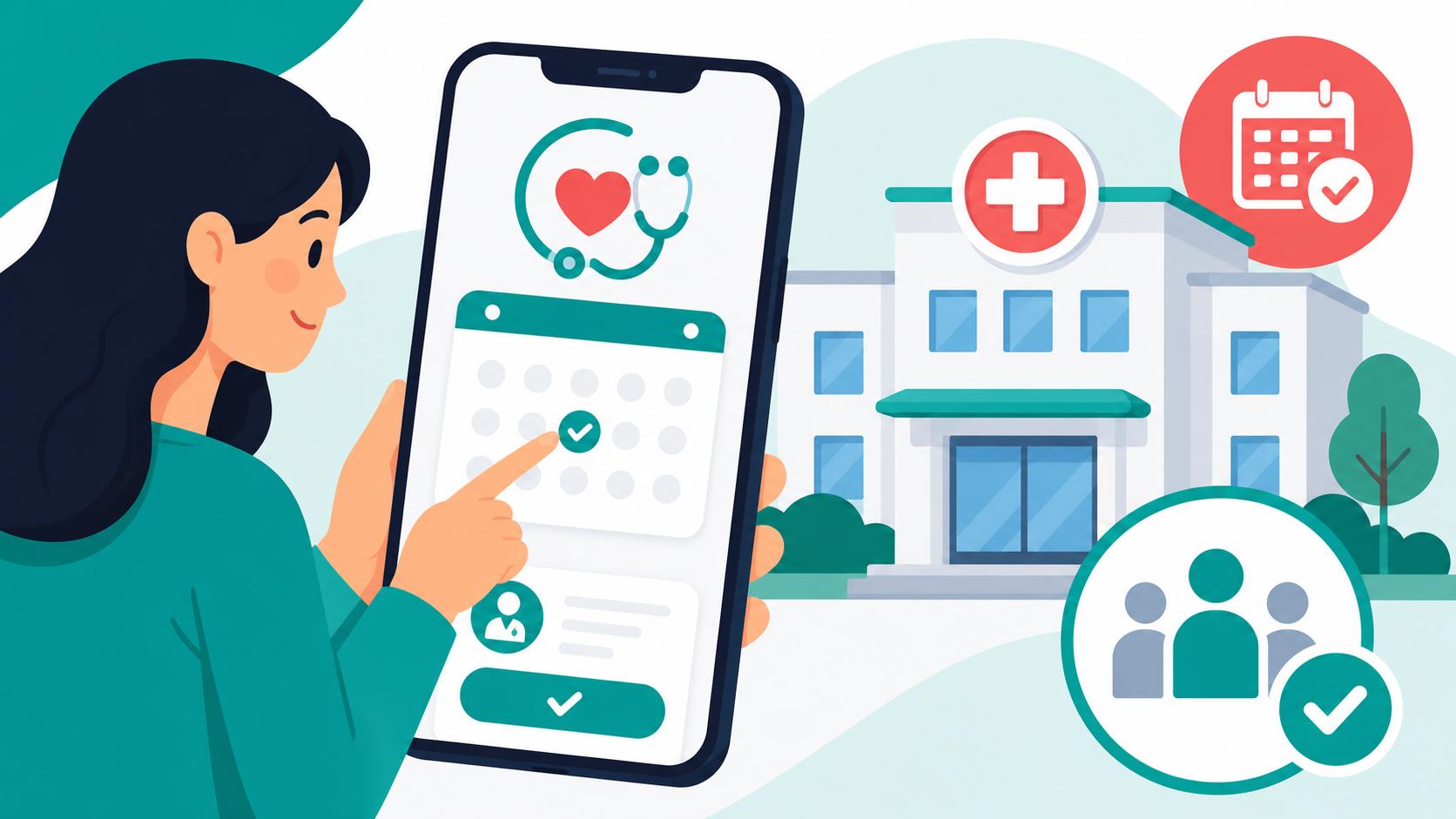
After selecting the hospital, you pick the specific doctor. The system shows a calendar with green and red slots. Green means available. You click the time, confirm the details, and you will receive an SMS and an email. I always take a screenshot of the confirmation page just in case the SMS is delayed. If the doctor you want is fully booked, you can set a "Randevu Hatırlatıcı" (Appointment Reminder), and the app will notify you if a slot opens up due to a cancellation.
Selecting the Right Specialist Poliklinik
Choosing the right department (Poliklinik) is where most foreigners get confused. In Turkey, you don't always need a referral from a GP to see a specialist, but some departments are "locked" unless a primary doctor opens the path. For example, you can usually book "Göz Hastalıkları" (Ophthalmology) or "Kardiyoloji" (Cardiology) directly. However, for highly specific sub-specialties, you might need to see an internal medicine (İç Hastalıkları) doctor first.
Here is a quick reference for common departments:
- Dermatoloji: Skin issues.
- KBB (Kulak Burun Boğaz): Ear, Nose, and Throat.
- Ortopedi: Bone and joint issues.
- Kadın Hastalıkları ve Doğum: Gynecology and Obstetrics.
- Nöroloji: Issues related to the nervous system.
I remember once trying to book a "General Surgeon" for a simple skin cyst, only to find out I should have booked "Dermatology." The system won't stop you from booking the wrong thing, but the doctor might tell you they can't help you once you arrive. If you are dealing with a chronic or complex condition and the public wait times for a specialist are several weeks away, having comprehensive coverage like Cigna Global allows you to book the same specialist in a private hospital often within 24 hours.
Choosing Between Hospitals and Local Clinics
The choice between a local Sağlık Ocağı and a major hospital depends on the severity of your issue. Local clinics are fantastic for "small" things. They are usually located within walking distance of your home, the staff often get to know the locals, and there is much less stress. However, they lack advanced diagnostic tools like MRI or CT scans. For those, you must go to a hospital.
In big cities, you might have to travel across districts to find an available appointment. If you live in Kadıköy but the only "Cildiye" (Dermatology) appointment is in Pendik, you have to decide if the two-hour round trip is worth it. I’ve often found that checking the MHRS app late at night or very early in the morning reveals newly opened slots in more convenient locations.
Public hospitals can be overwhelming—they are loud, busy, and the signage can be confusing. If you prefer a quieter environment, you might use your public insurance for routine things but keep a private backup. Many expats supplement their health regimen with high-quality products from iHerb, especially when looking for specific western brands of probiotics or vitamins that might not be stocked in the smaller pharmacies near local clinics.
Navigating the Calendar and ALO 182
The MHRS calendar typically opens up 15 days in advance. If you look for an appointment and everything is red, it means you are either looking too far out or the department is extremely popular. New slots usually refresh at midnight. If you are desperate, keep the app open and refresh frequently; people cancel appointments all the time, and those slots go back into the pool instantly.
If the digital system is giving you an error, dialing 182 is your alternative. When you call, you will be asked for your ID number. You then tell the operator which city, hospital, and department you want. Because this is a government service, it is free to call (standard local rates apply). If you are struggling with the language, have the phrase "İngilizce bilen biri var mı?" (Is there someone who speaks English?) ready, though don't hold your breath.
For those who simply cannot find an appointment via MHRS and are in pain, the "Acil" (Emergency) department is always open. However, "Acil" is for emergencies. If you show up with a mild skin rash, you will be given a "Green" triage code and might wait 6 hours. In these instances, having a private insurance plan like Cigna Global is a lifesaver, as you can bypass the triage of the public ER and go straight to a private emergency room with much shorter wait times.
| Feature | MHRS Website | MHRS Mobile App | ALO 182 (Phone) |
|---|---|---|---|
| Ease of Use | Moderate (Best with Auto-Translate) | High (Intuitive Layout) | Low (Language Barrier) |
| Speed | Fast | Fastest | Slow (Queue Times) |
| Visual Calendar | Yes | Yes | No |
| Notification Reminders | Push Notifications | None | |
| Cancellation | Easy | One-Tap | Requires a Call |
| Best For | Initial Registration | Daily Management | Tech-averse users |
Managing and Attending Your Appointment
Booking the appointment is only half the battle; attending it is where the "real" Turkey experience begins. You should aim to arrive at the hospital at least 20-30 minutes before your time slot. Public hospitals are huge, and just finding the right block (Blok) and floor (Kat) can take 15 minutes. When you arrive at the department, you must "check in." This is usually done at a small desk or an automated kiosk where you scan your residency card.
If you don't check in, the doctor’s screen won't show that you are in the waiting room, and they will skip over your name. Once checked in, your name (usually masked, e.g., JO*** DO***) will appear on a monitor above the doctor's door. When it's your turn, your name will turn green or blink. There is no one to call you in; you simply open the door and enter when the screen tells you to.
It is culturally normal in Turkey for the "waiting room" to be a bit chaotic. People might try to pop their heads in to ask a quick question while you are with the doctor. Don't be offended; it’s just the fast-paced nature of the system. If you find this lack of privacy stressful, this is another area where private clinics accessible via Cigna Global shine, as they offer much more privacy and longer consultation times.
Modifying or Canceling Bookings
Life happens. If you can’t make it to your appointment, you must cancel it at least 30 to 60 minutes before the scheduled time. This is a matter of courtesy, but also of policy. As I mentioned earlier, the Ministry of Health has started cracking down on "no-shows." If you miss an appointment without canceling, you might find yourself blocked from making a new one in that same department for a couple of weeks.
To cancel in the app, just go to "Randevularım," select the active appointment, and hit "İptal Et" (Cancel). You will get a confirmation message. You cannot "reschedule" in the sense of moving the slot; you have to cancel the old one and book a new one. This can be nerve-wracking if appointments are scarce, so I always check for a new available slot before I cancel my existing one.
If you are chronically ill and managing multiple appointments, I suggest keeping a dedicated calendar. If you find the public system’s cancellation policies too rigid, private care is much more forgiving. Even if you are using public care, you can maintain your health at home by ordering high-quality supplies from iHerb, ensuring you have your preferred supplements even if you have to miss a doctor's visit for a week or two.
On-Site Procedures Triage and Registration
In larger research hospitals, you might have to go through a central registration desk before heading to your poliklinik. They will check your insurance status. If you are an expat with a 99 number but no SGK (perhaps you have private "ikamet insurance"), you will be asked to pay a fee before the appointment. This fee is usually much lower than in Western countries but higher than what a Turkish citizen pays.
Once you see the doctor, the visit will likely be very fast. Turkish state doctors see a staggering number of patients per day. Have your symptoms written down or translated beforehand. The doctor will enter your data into the system, and if you need blood tests, they will give you a small barcode paper. You take this to the "Laboratuvar" in the same building. You don't need a separate appointment for the lab; you just join the queue.
After the lab work, your results will usually be ready in 24 hours. You don't need to return to the hospital to get them. You can view them on the e-Nabız app or website. If the results are concerning, you can then book a "Sonuç Gösterme" (Show Results) appointment through MHRS, which is usually a shorter slot just to discuss the findings. For more detailed explanations, consult Essential Medical Turkish: Vocabulary for Explaining Symptoms to Doctors.
Dealing with Language Barriers in Public Hospitals
This is the biggest pain point for expats. While many doctors in Turkey speak excellent English—having studied from international textbooks—the administrative staff, nurses, and receptionists rarely do. You should not expect an English-speaking experience in a state hospital. I have found that having a translation app (like Google Translate with the "Conversation" mode) is indispensable.
If you are going for something serious, like a surgery or a complex diagnosis, I highly recommend bringing a Turkish-speaking friend or hiring a professional medical translator. Miscommunication in a medical setting can be dangerous. Some hospitals have a "Yabancı Hasta Birimi" (Foreign Patient Unit), but these are primarily for medical tourists paying full price, not necessarily for residents using the MHRS/SGK system.
If the language barrier is a deal-breaker for you, you should focus your search on Finding English-Speaking Doctors in Istanbul: Top International Clinics. These facilities operate outside the MHRS system and cater specifically to the expat community. While more expensive, the peace of mind of being understood is often worth it. You can still order your post-visit wellness products from iHerb to ensure you're getting exactly what you're used to from back home.
Comparing Public Appointments vs Private Alternatives
The choice between using the MHRS system for public care and going private is usually a balance of cost versus convenience. Public care is incredibly affordable. If you have SGK, a visit to a specialist might cost you less than 50 TL in co-pays. The doctors are often the best in the country, as the most complex cases are sent to state research hospitals. However, the experience is "no-frills." You will wait in crowded halls, and the doctor might only have 10 minutes for you.
Private hospitals, on the other hand, feel like five-star hotels. You can book an appointment by calling the hospital directly (many have English-speaking call centers) or through their own apps. There is no central "MHRS" for private hospitals. You get a private room, the staff often speaks English, and you can usually get an appointment for the very next day. This is where a plan from Cigna Global becomes invaluable, as it covers these high-end costs that can otherwise reach thousands of liras.
Many expats use a hybrid model. They use MHRS for routine things, like blood tests or basic prescriptions, but go private for anything involving specialists, surgeries, or "quality of life" issues. For instance, you might get your annual check-up at a private clinic but use the state system for a generic prescription. Regardless of the route, maintaining your health with supplements from iHerb is a consistent way to bridge the gap between different styles of care.
Wait Times and Accessibility
Wait times are the Achilles' heel of the public system. For popular departments like "Göz" (Eye) or "Diş" (Dental), you might find no appointments available for weeks in your city. I’ve known expats who had to travel to a neighboring province just to see a dentist in the state system. Accessibility is also an issue for those with mobility challenges, as older state hospitals may not be as "barrier-free" as the newer "City Hospitals" (Şehir Hastaneleri).
Private hospitals do not have these wait times. If you are willing to pay, you are the priority. For those living on a budget, the MHRS system requires patience and strategy—checking the app at midnight, being willing to travel to a different district, and perhaps taking a day off work. If your schedule doesn't allow for that flexibility, the private route is the only realistic option.
Accessibility also refers to the ease of getting a second opinion. In the MHRS system, getting a second opinion means booking a whole new appointment at a different hospital, which can be another 15-day wait. In the private sector, you can simply book another doctor the same afternoon. If you are managing your health through a private insurer like Cigna Global, they often have built-in "second opinion" services with international experts.
Cost Breakdown and Insurance Integration
The cost of public care is subsidized by the government. If you are a resident without SGK but with "mandatory ikamet insurance," you will pay a "foreigner rate" at state hospitals. This rate is set by the Ministry of Health and is usually 2-3 times higher than the citizen rate but still much cheaper than a private hospital. For example, a consultation might be 600-900 TL (roughly $20-$30 USD).
Private hospital costs vary wildly. A consultation at a mid-tier private hospital might be 1,500 TL, while a top-tier hospital like American Hospital or Acıbadem could be 4,000 TL or more. Without a robust international insurance plan like Cigna Global, these costs can add up quickly, especially if you need imaging like an MRI, which can cost 5,000-10,000 TL in a private setting.
Here is a quick look at the insurance integration:
- SGK (State Insurance): Fully integrated with MHRS. Almost everything is covered.
- Private Turkish Insurance: Usually not integrated with MHRS. You pay at state hospitals and maybe get reimbursed, or use their "contracted" private hospitals.
- International Insurance (e.g., Cigna Global): Best for private care. They often offer "direct billing" with major private hospital chains, meaning you don't even have to pay upfront.
For daily health maintenance, don't forget the cost of medications and vitamins. While SGK covers some, many expats prefer the quality and variety available on iHerb, which ships directly to Turkey (though be mindful of the customs limits on supplements!).
Practical Tips for a Smooth Experience
After years of navigating this, I’ve developed a few "hacks." First, always use the web version of MHRS with Google Chrome’s "Translate to English" feature if you are doing a complex search. Second, keep your e-Nabız profile updated. If you have a document from a doctor back home, you can sometimes upload it there so the Turkish doctor can see your history.
Another tip: if you are in a small town, your Aile Hekimi (Family Doctor) is your best friend. They can often "squeeze you in" without a formal MHRS appointment if you show up early and are polite (a little Turkish goes a long way here). However, this does not work in the big hospitals. In the big city hospitals, the "system is king," and the doctor cannot physically open your file if you aren't in the MHRS list for that day.
Finally, always carry a physical copy of your residency card. While some places accept a digital version or just the number, many state hospital systems require the physical card to be swiped or scanned to verify your insurance status. And if you are feeling under the weather but don't want to deal with the hospital at all, remember that iHerb offers a wide range of wellness products that can help you manage minor symptoms from the comfort of your home.
Essential Phrases and Vocabulary
Even if you aren't fluent, knowing a few words will change how you are treated. "Randevum var" (I have an appointment) is the most important sentence you'll learn. When you get to the desk, say "Randevum var," and hand over your card. The staff will immediately know what to do.
Other helpful terms:
- İptal etmek: To cancel.
- Reçete: Prescription.
- Tahlil: Test (usually blood/urine).
- Röntgen: X-ray.
- Vezne: The payment desk.
If the doctor gives you a prescription, they will usually write a "barkod" or give you a digital code via SMS. You take this to the Eczane. If the doctor recommends a brand that is out of stock, you might check iHerb for a similar high-quality alternative, especially for things like specialized magnesium or specific herbal extracts that are less common in Turkey. For more help, see Essential Turkish Phrases for the Doctor: Communicating Symptoms Effectively.
The Role of e-Nabız in Appointment History
E-Nabız is where your MHRS data "lives" after the appointment is over. Once the doctor hits "save," the notes from your visit, your vitals, and your prescriptions are uploaded to e-Nabız. This is incredibly useful if you ever change doctors or need to show your history to a specialist in a private hospital. You can even "share" your e-Nabız data with a private doctor temporarily by giving them a one-time access code.
I use e-Nabız to track my lab results. Instead of waiting at the hospital for a printout, I go home, have a tea, and check the app a few hours later. If I see "H" (High) or "L" (Low) next to a result, I know I need to book a follow-up on MHRS. It’s an empowering way to manage your health in a foreign country.
If you are using a plan from Cigna Global, they might ask for copies of these reports if you file a claim for a major procedure. Being able to download a PDF of your entire Turkish medical history in one click is a feature I wish every country had. It makes the transition between the state system and private specialists much smoother.
Disclaimer
The information provided in this guide is for educational and informational purposes only and does not constitute legal or medical advice. Procedures for the MHRS system, residence permit requirements, and insurance regulations in Turkey are subject to frequent change by the Turkish Ministry of Health and the Presidency of Migration Management. Always verify the latest rules on official government websites or consult with a qualified legal or medical professional before making healthcare decisions. The mention of specific brands is based on expat experience and does not imply a medical endorsement.