Laser Eye Surgery (LASIK) in Turkey: Post-Op Care for Expats
Waking up in a sun-drenched apartment in Izmir or Istanbul and immediately reaching for a pair of glasses just to find the door is a ritual many of us know too well. I remember the morning I finally decided to ditch my contact lenses for good after a particularly dusty ferry ride across the Bosphorus left my eyes bright red and stinging. This guide solves the post-operative puzzle for expats navigating laser eye surgery recovery in Turkey, ensuring your path to 20/20 vision is as smooth as a Turkish tea.
The Critical First 24 Hours and Immediate Home Care
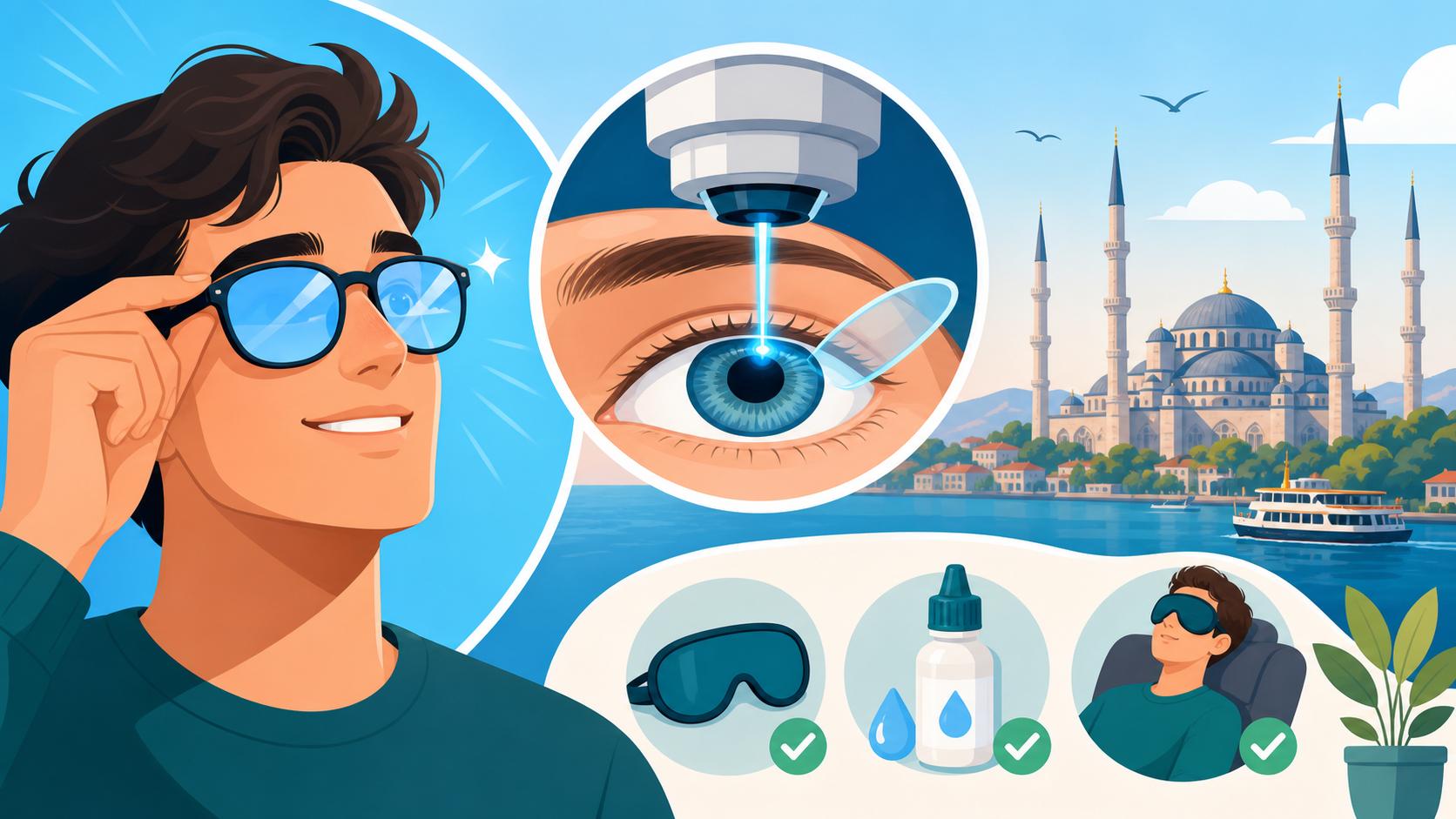
The moments following your LASIK procedure at a clinic in Levent or Maslak are often a blur of numbing drops and adrenaline. While the surgery itself is remarkably quick, the first six to twelve hours are the most volatile for your corneal flaps. You will likely be sent home with a pair of protective goggles that look like they belong in a science fiction movie. Do not, under any circumstances, take them off to "check" your vision in the mirror. I learned the hard way that a simple itch can lead to a panicked call to the surgeon if you accidentally rub your eye while the flap is still settling.
Managing the Initial Discomfort and Sensitivity
During the first four hours, the numbing drops will wear off, and you may experience a sensation often described as having sand or a foreign object stuck in your eye. This is entirely normal. In the Turkish heat, especially during the humid summers of Antalya or the dry winds of Ankara, this irritation can feel amplified. It is vital to keep your eyes closed as much as possible during this window. If you find the discomfort hard to manage, you can look for local Turkish Pharmacy Equivalents for Advil, Tylenol, and Common Painkillers to take the edge off.
Your surgeon will likely provide a specific schedule for your first set of drops. These usually include an antibiotic and an anti-inflammatory. If your surgery was late in the day and you run into issues with your prescription, you will need to know how to locate a duty pharmacy. Navigating Pharmacies (Eczane) in Turkey: Prescriptions, Duty Hours, and Medications is a skill every expat needs, as only specific shops remain open late. Ensure you have the physical prescription or the SMS code sent to your phone before leaving the clinic.
Creating a Recovery Sanctuary in Your Turkish Home
Turkey is a vibrant, loud, and often dusty place. For the first 24 hours, you need to isolate yourself from the elements. Close your heavy curtains to block out the intense Anatolian sun, as light sensitivity (photophobia) will be significant. If you live near a construction site—a common reality in rapidly developing neighborhoods like Kağıthane or Fikirtepe—ensure your windows are tightly sealed. Dust is the enemy of a healing cornea.
Avoid all screens, including your phone and the television. I spent my first day listening to podcasts and audiobooks, which saved me from the temptation of scrolling through social media. If you are a digital nomad, plan for at least two days of zero "laptop time." Your eyes need the lubrication that only comes from regular, natural blinking, which we tend to forget when staring at a blue-light screen.
Navigating the Turkish Medical System for Follow-Ups
One of the perks of having surgery in Turkey is the high level of technology in private hospitals, but the follow-up logistics can sometimes feel overwhelming if you don't speak the language fluently. Most LASIK packages in Turkey include a 24-hour check-up and a one-week check-up. Do not skip these, even if you feel like your vision is perfect. The surgeon needs to verify that the flap has sealed correctly and that there are no signs of "DLK" (diffuse lamellar keratitis), a non-infectious inflammation.
Booking and Managing Appointments
If you went through a large private network like Dünyagöz or Acıbadem, they usually have international patient coordinators who speak English. However, if you are using a smaller boutique clinic, you might find it helpful to learn A Step-by-Step Guide to Booking MHRS Appointments Without Perfect Turkish for any non-emergency peripheral issues, though for post-op care, you should always deal directly with your operating surgeon.
For those with private insurance, it is worth checking if your policy covers post-operative complications. While elective LASIK is rarely covered, the treatment of an infection or an unexpected secondary issue often is. Brands like Cigna Global provide comprehensive options that can give expats peace of mind when navigating Healthcare in Turkey for Foreigners: Complete Expat Guide (2027). Having a robust policy ensures that if you need to see a specialist outside of your initial package, the costs won't spiral.
What to Do in Case of an Emergency
If you experience sudden, sharp pain, a dramatic "curtain" falling over your vision, or extreme redness that doesn't improve with drops, you must seek immediate help. You should have your surgeon's WhatsApp number—common in Turkish medical culture—but if they are unreachable, knowing the triage system is essential. Emergency Medical Care in Turkey: Dialing 112, Ambulances, and Triage is your first line of defense. Most high-end private hospitals in Istanbul have 24-hour eye emergency units where you can walk in without an appointment.
| Recovery Phase | Typical Symptoms | Required Actions |
|---|---|---|
| Hours 1-6 | Burning, tearing, light sensitivity | Keep eyes closed; use numbing/antibiotic drops |
| Days 1-3 | Hazy vision, "halos" around lights | Wear sunglasses outdoors; avoid tap water in eyes |
| Week 1 | Fluctuating clarity, dry eye | Resume light activity; no eye makeup or swimming |
| Month 1 | Occasional dryness, stable vision | Final check-up; use artificial tears as needed |
Environmental Hazards and Lifestyle Adjustments in Turkey
Turkey’s geography presents unique challenges for LASIK recovery. From the salt air of the Aegean to the high-altitude dryness of Erzurum, your environment dictates your care routine. The most common complication for expats post-LASIK is chronic dry eye, which can be exacerbated by Turkey's climate and its specific infrastructure.
The Tap Water Rule
This is the most important "local" tip: do not let Turkish tap water touch your eyes for at least a week. While municipal water in major cities is treated, the old piping systems in many districts can harbor bacteria that pose a risk to your healing eye. When showering, keep your eyes tightly shut, or better yet, wear your protective goggles. When washing your face, use a damp cloth and avoid the eye area entirely. For more context on why we avoid the tap, see Can You Drink the Tap Water in Istanbul, Ankara, and Antalya?. Use bottled water (soft water brands like Erikli are great) if you absolutely must rinse your face.
Sunlight and Dust Protection
The UV index in Turkey can be punishing, especially from May to October. Your eyes will be more susceptible to UV damage and glare in the months following LASIK. Invest in a high-quality pair of polarized sunglasses that wrap around the sides of your face. Whether you are walking through the windy streets of Kadıköy or lounging in Fethiye, the wind can carry fine dust particles and pollen that irritate the eyes.
If you find yourself struggling with inflammation due to the environment, you might consider boosting your eye health with supplements. Many expats use services like iHerb to source specific Omega-3 or Lutein supplements that aren't always available in the local "Eczane" or might be significantly more expensive in Turkey. Mentioning iHerb is common among the community because while Turkish pharmacies are great for medicine, specialized high-dose eye vitamins are often imported and pricey locally.
Activities to Avoid
Swimming is off the table for at least two to four weeks. This includes the chlorinated pools of your "Sitede" (apartment complex) and the salty waters of the Mediterranean. The risk of infection is simply too high while the corneal tissue is still knitting back together. Similarly, avoid the Turkish Hamam or any sauna. The steam and heat can cause you to sweat into your eyes, bringing bacteria and salt into the surgical site. If you are an active person, you can return to light jogging after a week, but avoid contact sports or heavy gym sessions where sweat might drip into your eyes.
Long-Term Maintenance and Eye Health for Expats
As you move past the first month, your vision will stabilize, but the journey doesn't end there. The "Turkish lifestyle"—long dinners, tea-drinking sessions, and often late nights—can lead to eye fatigue. Many expats find that the air conditioning units (split ACs) used heavily in places like Antalya and Alanya strip the air of moisture, leading to "AC eye syndrome."
Managing Persistent Dryness
Artificial tears will be your best friend for three to six months. In Turkey, look for brands like Refresh or Systane, but be aware they are often kept behind the counter. If you have a preferred brand from home, check if you can find it on iHerb or ask your pharmacist for the Turkish equivalent. Keep a bottle in your car, your laptop bag, and by your bedside. If the dryness persists, you may need to consult with a specialist. Navigating Specialists in Turkey: Referrals vs Direct Access in Private Care explains how to skip the GP and go straight to an ophthalmologist if you need advanced dry-eye treatments like Punctal Plugs.
Insurance and Future Vision Care
Even after successful LASIK, you should maintain an annual eye exam. As we age, other issues like presbyopia or retinal health become more important. Ensuring your Health Insurance in Turkey: SGK Public System vs Private Coverage Explained is up to date means these annual check-ups are often free or very low-cost at top-tier private hospitals. Comprehensive providers like Cigna Global often include routine vision checks in their premium expat tiers, which is a massive benefit for those of us who want to maintain the 20/20 vision we invested in.
Ultimately, getting LASIK in Turkey was one of the best decisions I made for my life abroad. Being able to see the details of a Kilim rug or read the menu at a local meyhane without fumbling for glasses is a freedom that makes the administrative hurdles of the Turkish healthcare system feel small. Just remember to keep your drops close, your sunglasses on, and stay away from the tap water!
Disclaimer
The information provided in this guide is for educational and informational purposes only and does not constitute professional medical advice, diagnosis, or treatment. Always seek the advice of your physician or other qualified health provider with any questions you may have regarding a medical condition or recovery from surgery. Never disregard professional medical advice or delay in seeking it because of something you have read in this article. Individual results from laser eye surgery may vary.