Cold and Flu Relief in Turkey: Best OTC Brands to Ask the Pharmacist For
There is nothing quite as disorienting as waking up with a pounding sinus headache in a foreign country where you can’t even read the labels on the medicine bottles. I have spent more than one winter morning in Istanbul wandering through the rain, desperately searching for something that resembled the relief I was used to back home. This guide is your cheat sheet for navigating Turkish pharmacies and finding the best over-the-counter relief for cold and flu symptoms.
Understanding the Turkish Pharmacy Landscape
The first thing you need to know as an expat or traveler is that the Turkish pharmacy, or Eczane, is not just a place to pick up a box of pills; it is a vital pillar of the community. Unlike in the United States or parts of Europe, you won’t find cold medicine in a supermarket aisle or a gas station. In Turkey, every single medicinal product, even basic painkillers, must be sold within a licensed Eczane.
The Role of the Turkish Pharmacist
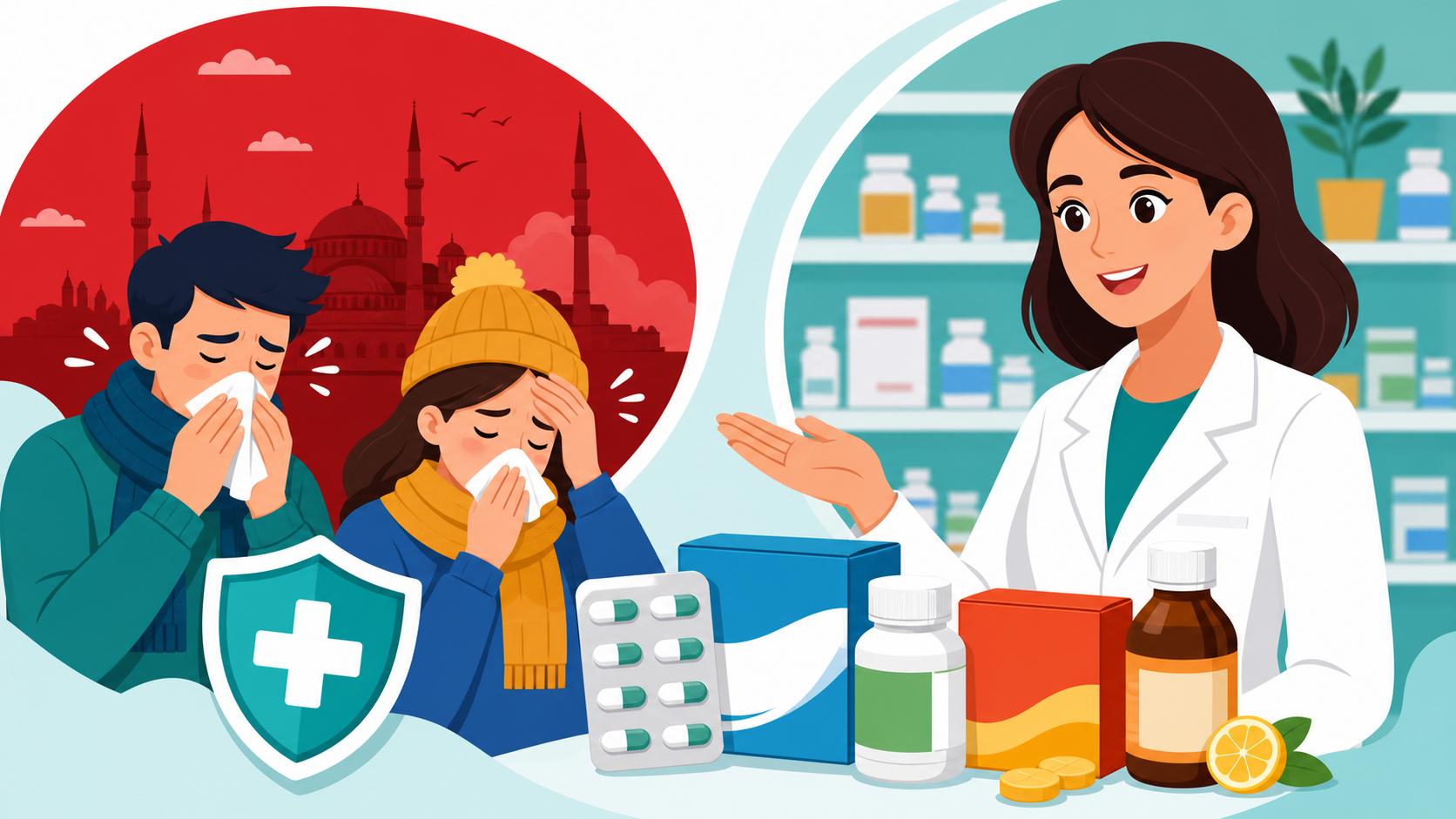
Pharmacists in Turkey are highly trained and often act as a first point of contact for minor ailments. In my experience, if you walk into an Eczane and point to your throat or mimic a cough, the pharmacist will often provide a mini-consultation right there. They can recommend specific brands and dosages that would normally require a prescription in other countries. However, they are also strict about regulations. For example, you will find that Buying Antibiotics in Turkey: Understanding Strict New Prescription Rules is a reality you cannot bypass. If the pharmacist suspects your "cold" is actually a bacterial infection, they will firmly direct you to a doctor rather than selling you amoxicillin over the counter.
Finding Help After Hours
One of the most unique—and sometimes frustrating—aspects of life here is the "Nöbetçi Eczane" or duty pharmacy system. On Sundays and after 7:00 PM on weekdays, only a few selected pharmacies in each district remain open. I remember the panic of trying to find an open shop for my daughter's fever at midnight, only to realize I had to check the sign in the window of the closed pharmacy down the street. To avoid this, you should learn about Understanding Night Pharmacies (Nöbetçi Eczane): How the Roster Works and keep a dedicated app on your phone. Most expats find that How to Find the Nearest Nöbetçi Eczane (Night Pharmacy) Using Online Maps is the most efficient way to navigate this during a flu-induced haze.
Top Turkish OTC Brands for Cold and Flu Relief
When you are standing at the counter, the names on the boxes will likely be unfamiliar. While you might be looking for DayQuil, NyQuil, or Lemsip, Turkey has its own "superstar" brands that every local keeps in their medicine cabinet.
The Power of Tylolhot
If there is one name you must memorize, it is Tylolhot. This is the Turkish equivalent of a hot lemon drink like Lemsip or Theraflu. It comes in sachets of granulated powder that you mix with hot water. It contains paracetamol (for pain and fever), pseudoephedrine (for congestion), and chlorpheniramine (an antihistamine to help you sleep). There are different versions: Tylolhot (the standard), Tylolhot D (for diabetics, no sugar), and Tylolhot Day (no antihistamine, so it won’t make you drowsy). In my years here, Tylolhot has been the absolute go-to for that "hit by a bus" feeling that accompanies a winter flu.
Multi-Symptom Relief: A-Ferin and Nurofen
For those who prefer pills over hot drinks, A-Ferin is a household name. You will see A-Ferin Forte and A-Ferin Sinus. The "Forte" version is quite strong and excellent for body aches and high fevers. If you have a history of sensitive stomach issues with ibuprofen, you might prefer Turkish Pharmacy Equivalents for Advil, Tylenol, and Common Painkillers like Parol or Minoset, which are pure paracetamol. However, for a full-blown cold, Nurofen Cold & Flu is widely available and very effective at reducing the inflammation in your sinuses.
While these local options are fantastic, some expats prefer to supplement their recovery with high-quality vitamins or specific herbal extracts they trust from home. For things like high-dose Zinc or Elderberry gummies that aren't always stocked in every local Eczane, many of us use iHerb to ship international supplements directly to our door. This helps bridge the gap between local medicine and the specific wellness routines we had before moving to Turkey.
Soothing the Throat and Cough
Turkish pharmacies excel in throat care. Kloroben or Tanflex sprays are the gold standard here; they are numbing and antibacterial. If you prefer lozenges, Strepsils are everywhere, but ask for "Peralgon" if you want something local and effective. For a persistent cough, "Brodil" is a common syrup for productive coughs, while "Assist" (N-acetylcysteine) is frequently recommended to break up mucus.
| Symptom | Turkish Brand Name | Active Ingredients | International Equivalent |
|---|---|---|---|
| General Cold/Flu | Tylolhot | Paracetamol, Pseudoephedrine | Lemsip / Theraflu |
| Pain & Fever | Parol / Minoset | Paracetamol | Tylenol / Panadol |
| Severe Congestion | Nurofen Cold & Flu | Ibuprofen, Pseudoephedrine | Advil Cold & Sinus |
| Sinus Pressure | A-Ferin Sinus | Paracetamol, Phenylephrine | Sudafed PE |
| Sore Throat Spray | Kloroben | Benzydamine, Chlorhexidine | Chloraseptic |
| Mucus/Phlegm | Assist | N-acetylcysteine | Mucinex |
Cultural Remedies and the "Nane Limon" Tradition
You cannot talk about recovering from a cold in Turkey without mentioning the cultural side of healing. Your Turkish neighbors and friends will likely tell you that medicine is only half the battle. There is a deep-seated belief in the power of "Nane Limon" (Mint and Lemon tea) and "Ihlamur" (Linden tea).
The Ritual of Recovery
If you tell a Turk you are sick, the first thing they will say is "Geçmiş Olsun" (May it pass). The second thing they will do is suggest a bowl of "Mercimek Çorbası" (Lentil Soup) with heavy lemon and red pepper. There is a physiological logic to this; the steam clears the nose, the lemon provides Vitamin C, and the pepper acts as a natural decongestant. If you find the local vitamin options a bit limited in the pharmacy, utilizing iHerb can ensure you have a steady supply of Vitamin D3 or specialized probiotics to support your gut health while you rely on these local soups and teas.
Natural Decongestants
You will also find that many Turks use a "Vicks" style ointment, but they might call it "Buğu" for steam inhalation. Placing a dollop of menthol ointment in a bowl of hot water and breathing in the steam is a standard practice. I have found this especially helpful during the dry winters in Ankara or the damp, chilly months in Istanbul.
When OTC Relief Isn't Enough: Navigating the Medical System
Sometimes, a cold isn't just a cold. If your fever persists for more than three days or you start to feel a sharp pain in your chest, it is time to step away from the pharmacy counter and head to a clinic. Turkey has a two-tiered healthcare system, and as a foreigner, your experience will vary based on your insurance.
Private vs. Public Care
Many expats find that Finding Medical Care in Turkey: Public Hospitals vs JCI-Accredited Clinics is the most important research they do after arriving. Private hospitals like Acıbadem or Memorial feel like five-star hotels and usually have English-speaking staff. If you are worried about the cost of these high-end facilities, having a comprehensive international policy from a provider like Cigna Global can be a lifesaver. It allows you to skip the long queues of the public system and get a specialist appointment almost immediately.
When you do see a doctor, being prepared is key. It is wise to have a list of your symptoms ready. If your Turkish is still a work in progress, checking Essential Medical Turkish: Vocabulary for Explaining Symptoms to Doctors will help you communicate whether your pain is "keskin" (sharp) or "künt" (dull).
The Cost of Getting Sick
One of the pleasant surprises about Turkey is that OTC medications are relatively affordable. A box of Tylolhot or a strip of Parol will usually cost less than the equivalent of a few dollars. However, hospital visits can add up if you are uninsured. While the Healthcare in Turkey for Foreigners: Complete Expat Guide (2027) covers the broad strokes, remember that private care is the standard for most expats. This is why many of us choose Cigna Global to ensure that if a simple flu turns into something more serious like pneumonia, we aren't stuck with a massive bill or struggling to find a doctor who speaks our language.
Essential Tips for the Eczane Visit
To make your trip to the pharmacy as smooth as possible, keep these veteran tips in mind:
- Bring the Box: If you have a specific medication from home you want to match, bring the empty box. The pharmacist will look at the active ingredients (the chemical names like Paracetamol or Ibuprofen) rather than the brand name.
- Ask for "Eşdeğer": This means "equivalent." If they don't have the specific brand you asked for, they will offer an eşdeğer which has the same ingredients.
- Check the Expiry: In smaller, neighborhood pharmacies, always do a quick check of the "S.K.T." (Son Kullanma Tarihi) on the box to ensure it hasn't expired.
- Understand Dosage: The pharmacist will often write the dosage on the box in pen (e.g., 1×2 means once a day, two pills, or more commonly 2×1 meaning twice a day, one pill). Always clarify if the "1" means the pill or the time of day.
- Identify Yourself: You will often need to show your residence permit (Ikamet) if you are getting anything through a prescription. For OTC, you generally don't need ID, but it's good to have a digital copy of your passport on your phone just in case.
Living in Turkey is an adventure, but being sick here shouldn't be a struggle. By knowing your way around the local Eczane and keeping a few packets of Tylolhot in your drawer, you can handle the Turkish winter just like a local. Whether you are relying on the expertise of a neighborhood pharmacist, supplementing with products from iHerb, or resting easy knowing your Cigna Global policy has you covered for the big stuff, you have all the tools you need to get back on your feet.
Disclaimer
This guide is for informational purposes only and does not constitute medical advice. Always consult with a qualified healthcare professional or pharmacist before starting any new medication, especially if you have pre-existing conditions, are pregnant, or are taking other medicines. The author is an expat sharing personal experiences, not a medical doctor.