Beachwear vs Streetwear: Cultural Dress Codes in Different Turkish Regions
Packing for a move to Turkey often triggers a specific kind of "wardrobe anxiety" because the country is a beautiful, confusing paradox of secular modernity and deep-rooted tradition. I still remember my first summer in Istanbul, sweating in a long-sleeved shirt because I was terrified of offending someone, only to see locals in Nişantaşı wearing crop tops and mini-skirts. This guide solves the "what to wear" dilemma by breaking down regional expectations, religious etiquette, and the unspoken rules of the Turkish street.
Decoding the Turkish Modesty Spectrum: Why Location Matters
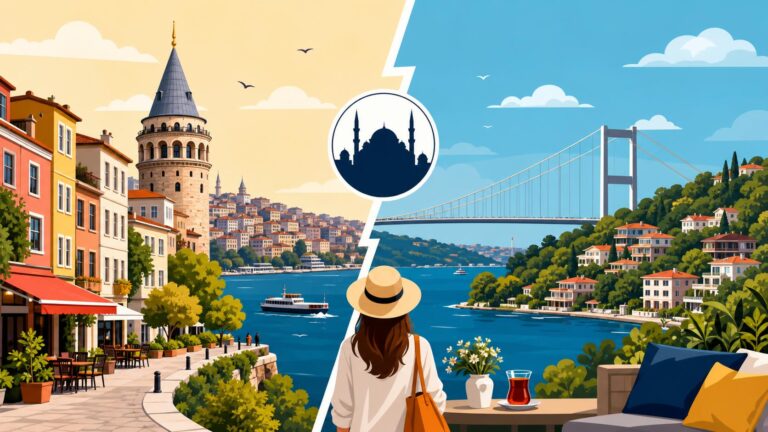
Turkey is not a monolith, and your outfit choice should reflect the specific vibe of the neighborhood or province you are in. The contrast remains stark: one hour you might be in a liberal coastal enclave where anything goes, and the next, you could be in a conservative district where a sleeveless top attracts unwanted stares. Understanding this spectrum is the first step to feeling at home and avoiding the "tourist trap" of feeling perpetually out of place.
The Cosmopolitan Hubs: Istanbul, Izmir, and Ankara
In the major cities, streetwear is largely dictated by global trends, but with a local twist. In neighborhoods like Kadıköy or Beşiktaş in Istanbul, or the Kordon in Izmir, you will see a fashion scene that rivals London or Berlin. Short skirts, shorts, and tank tops are common and generally well-accepted. However, even in these liberal bubbles, there is a certain "urban polish" expected. Turks generally take great pride in their appearance, and looking "too casual"—think pajama-style sweatpants or overly distressed gym gear—can sometimes feel out of step with the local aesthetic.
If you are using a service like Blueground to stay in a high-end neighborhood like Levent or Alsancak, you’ll find that "smart casual" is the golden rule for evenings. When I first moved here, I realized that while I could wear shorts during the day, switching to chinos or a sundress for dinner wasn't just about style; it was about showing respect for the social setting. To stay connected and research the specific "vibe" of a new district before you head out, having a reliable data connection through Airalo is a lifesaver, especially when navigating the sprawling European and Asian sides. You can dive deeper into these city dynamics in our Istanbul Neighborhood Guide: European vs Asian Side Lifestyles for Expats.
The Conservative Heartlands and Eastern Anatolia
As you move away from the coast and into Central or Eastern Anatolia—cities like Konya, Kayseri, or Erzurum—the needle moves significantly toward modesty. In these regions, "streetwear" means covering shoulders and knees for both men and women. For women, loose-fitting trousers or long skirts are the standard. Men should generally avoid wearing short-shorts in these city centers, as it is often viewed as overly casual or even disrespectful in a traditional context.
I learned this the hard way during a road trip through the Black Sea region. While a sundress was fine in a seaside cafe, as soon as we moved inland to visit a local market, I felt much more comfortable throwing on a light cardigan and leggings. It isn’t about a legal requirement—Turkey is a secular republic—but about social harmony. Adapting your wardrobe slightly helps you blend in and often results in warmer interactions with locals. For those moving to these areas, it is helpful to consult the Daily Life & Culture: Religion, Social Etiquette, and Making Friends guide to understand the nuances of social integration.
Beachwear Etiquette: Sunbathing Without Crossing Lines
The Turkish coastline, stretching from the northern Aegean down to the Mediterranean, is world-famous for its "Blue Flag" beaches. Here, the rules for dress are much more relaxed, but there is still a clear distinction between what you wear on the sand and what you wear once you step onto the sidewalk.
The Turkish Riviera: Antalya, Bodrum, and Fethiye
In major resort towns like Bodrum and Çeşme, beachwear is fashion-forward and very liberal. Thong bikinis and speedos are common at high-end beach clubs. However, the "beach-to-street" transition is where many expats get it wrong. It is considered quite uncouth to walk through a town center, enter a supermarket, or sit in a restaurant in just a swimsuit. Always have a cover-up, a sarong, or a light shirt ready.
The "Beach Club" culture has reached new heights of luxury. If you are Living in Fethiye and Bodrum: Year-Round Life vs Peak Tourist Season Chaos, you’ll notice that the "pazar" or local market is another place where beach attire is frowned upon. Even in the heat of July, a quick change into a t-shirt and shorts shows that you understand the local boundaries. Many tourists have been asked to leave small "bakkals" (corner shops) because they tried to buy water in a bikini. It’s a small friction point that is easily avoided with a bit of foresight.
Public Beaches vs. Private Beach Clubs
There is a noticeable difference in atmosphere between a public municipality beach (Belediye Plajı) and a private beach club. Public beaches are frequented by local families, and you will see a wide variety of swimwear, including the "haşema" (full-coverage Islamic swimwear). While you are perfectly free to wear a standard bikini at a public beach, you might feel more comfortable in a one-piece or a more modest set if you are the only foreigner there.
Private beach clubs, on the other hand, are essentially outdoor lounges where fashion is part of the entertainment. Here, the "see and be seen" element is high, and you can be as adventurous as you like with your style. If you are missing any beach essentials, Amazon Turkey offers fast delivery on international brands and high-quality local textiles, which is much easier than hunting through overpriced tourist shops. For more on how these coastal towns operate, check out our guide on Antalya Medical Network: Where to Go for Care on the Mediterranean Coast to see how even health services are geared toward the expat community.
Religious Sites and Government Offices: The Non-Negotiables
Regardless of how liberal the neighborhood might be, there are two places where the dress code is non-negotiable: mosques and government offices. Failure to adhere to these rules isn't just a social faux pas; it can result in being denied entry or service.
Visiting Mosques (Camiler) and Sacred Spaces
When entering a mosque, the requirements are clear. Women must cover their heads with a scarf, and their shoulders and legs must be fully covered (to the ankles). Men should wear long trousers; shorts are generally not allowed. Most major tourist mosques, like the Blue Mosque or Hagia Sophia, provide robes and scarves at the entrance, but as a resident, it is much more hygienic and respectful to carry your own light "başörtüsü" (headscarf) in your bag.
The atmosphere in a mosque is one of quiet contemplation. Visitors are often told that it’s not just about the clothes, but the "vibe" of respect. If you are exploring the historical heart of the city, wearing "convertible" clothing—like zip-off trousers or carrying a large pashmina—is a smart move. This applies even if you are just walking through the courtyards. Understanding these nuances is a key part of Living in Turkey as a Foreigner: The Ultimate Starter Guide (2027).
| Setting | Women's Suggested Attire | Men's Suggested Attire |
|---|---|---|
| Mosque | Headscarf, long skirt/trousers, long sleeves | Long trousers, t-shirt or shirt (no tank tops) |
| Gov. Office | Smart casual, no revealing tops, closed shoes | Trousers (no shorts), polo or button-down |
| Beach Club | Bikini, one-piece, high-fashion beachwear | Swim trunks, designer shorts |
| City Center | Jeans, sundress, sneakers or sandals | Jeans, chinos, t-shirts |
| Rural Village | Long trousers/skirt, modest top | Long trousers, polo or t-shirt |
Administrative Appointments and Professional Settings
If you have an appointment at the Göç İdaresi (Migration Office) for your residency or you are visiting a bank, dress as if you are going to a business-casual job interview. Turkish bureaucracy is formal, and the officials often judge your "seriousness" by your appearance. Reports suggest people in flip-flops and tank tops are often treated with less patience than those who dress professionally.
This formal approach extends to Turkish Business Culture: Communication Styles, Meetings, and Etiquette. If you are applying for a Digital Nomad Visa Turkey (2027): Full Requirements and Application Guide, you might think your "office" is a cafe, but any face-to-face interaction with the authorities should be handled with a polished wardrobe. It sounds old-fashioned, but in Turkey, clothing is a form of social currency.
Shopping for Your Turkish Wardrobe: Practical Advice
Turkey is a textile powerhouse, so there is no need to overpack before you move. From the high-end boutiques of Nişantaşı to the sprawling Weekly Pazar Markets: How to Buy Fresh Produce and Negotiate Like a Local, you can find everything you need locally.
Dealing with Seasonal Extremes
One thing many newcomers underestimate is the Turkish winter. Istanbul can be grey, rainy, and surprisingly cold, while Ankara and the east see heavy snow. Your wardrobe needs to be modular. In the summer, natural fibers like linen and cotton are essential to survive the humidity of the coast. In the winter, you’ll need a heavy coat and waterproof boots.
Shopping on Amazon Turkey is a great way to find specific winter gear or international brands that might be harder to find in local malls. If you are currently Navigating Closed Neighborhoods: A Guide to Areas Where Foreigners Cannot Register, you might find yourself in more residential districts where local shopping malls (AVMs) are the primary social hubs. These malls are great places to observe local fashion trends and see how Turkish youth blend Western styles with traditional modesty.
Local vs. International Brands
Turkey has incredible local brands like LC Waikiki, Koton, and Mavi that offer high-quality clothing at very reasonable prices. Mavi, in particular, is world-famous for its denim. Shopping at these stores is a great way to see what the "average" Turk is wearing on the street. You’ll notice that layering is a huge trend—long cardigans over jeans, or stylish scarves that can be used for both fashion and warmth.
When you are out shopping or dining, remember that Turkish Dining Culture: Lavish Breakfast Spreads (Kahvaltı) and Late Dinners often involves sitting for long periods. Comfort is key, but "comfort" in Turkey rarely means "sloppy." Even a casual weekend breakfast is an occasion to look put-together. If you are still setting up your life, ensuring you have the right Choosing an Internet Provider in Turkey: Fiber vs VDSL (Turk Telekom, Superonline) will help you browse local online fashion retailers and stay ahead of the sales cycles.
A Final Note on Cultural Sensitivity
Ultimately, the "correct" way to dress in Turkey is whatever makes you feel confident while showing a baseline of respect for the people around you. You will rarely be confronted directly about your clothes, but you will certainly feel the difference in how you are treated. By balancing your personal style with the local "Streetwear vs. Beachwear" norms, you’ll find that doors open more easily, and your transition into Turkish life becomes much smoother. Whether you are Living in Izmir: The Liberal, Laid-Back Coastal Alternative to Istanbul or exploring the ancient ruins of the east, let your wardrobe be a bridge, not a barrier, to the incredible culture of this country.
Disclaimer
This guide is intended for informational purposes and reflects the personal experiences and observations of the author living in Turkey as of 2026. While Turkey is a secular country, local customs and expectations vary significantly by region and social context. Always research specific local guidelines, especially when visiting religious or conservative areas, to ensure a respectful and safe experience.