Expat Families: Choosing Between International Schools and Turkish Public Schools
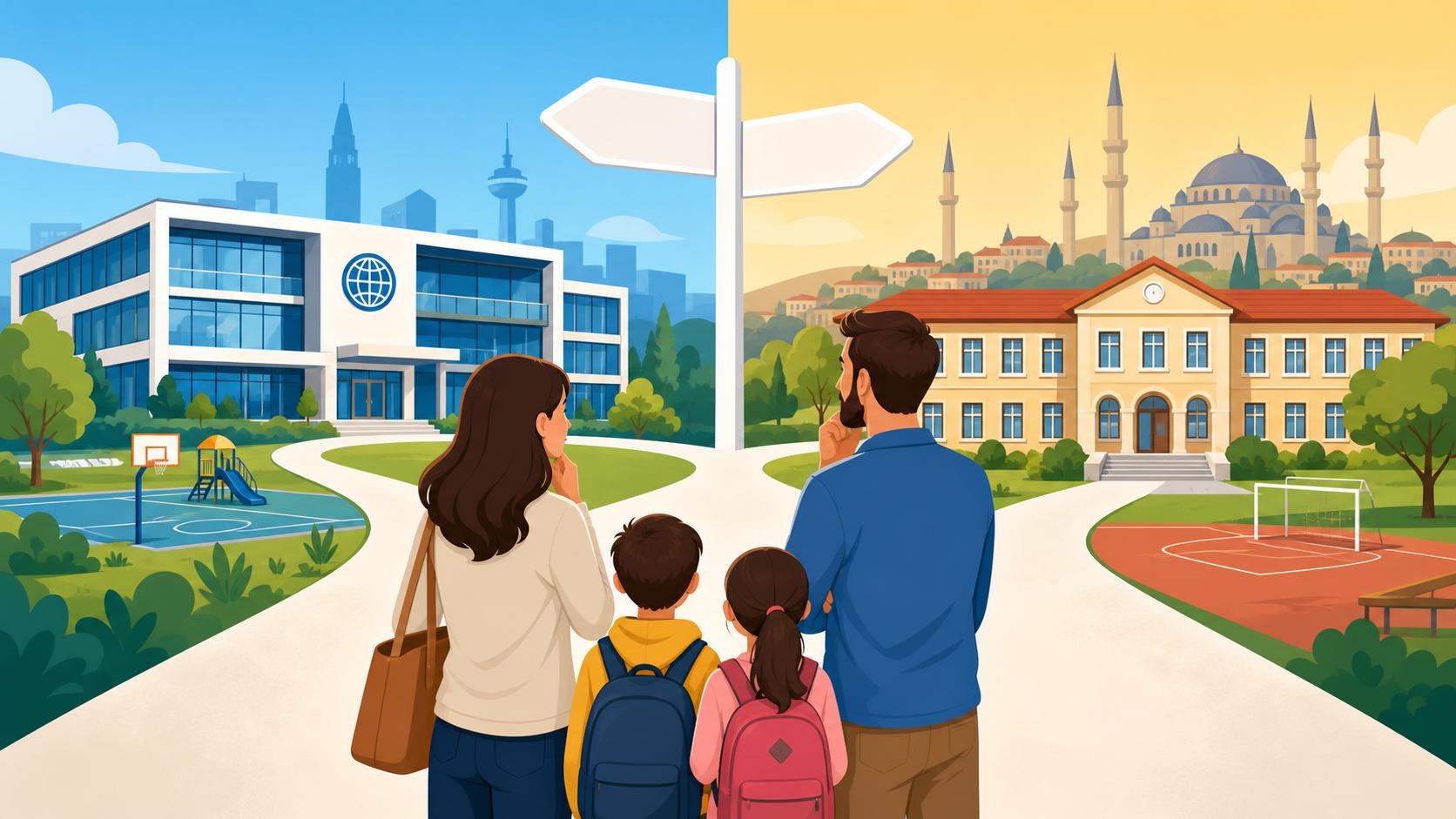
Finding the right school for your children while simultaneously wrestling with residency permits and apartment leases is one of the most high-stakes hurdles you will face in Turkey. I remember the paralyzing anxiety of staring at a map of Istanbul, trying to balance a reasonable commute with a school that wouldn't leave my kids feeling like outsiders. This guide meticulously weighs the pros and cons of international versus public education to help you decide which path fits your family’s long-term goals.
The Landscape of Education for Foreigners in Turkey
The Turkish education system is a complex tapestry of state-run institutions, "college-style" private schools, and elite international academies. For an expat family, the choice isn't just about the curriculum; it is about how deeply you want your children to integrate into the local culture. In 2026, the demand for high-quality English-medium instruction has skyrocketed, but so have the administrative requirements for enrollment.
Understanding the Turkish Public System (Devlet Okulları)
Public schools in Turkey, known as Devlet Okulları, are the backbone of the country's social structure. They are free for citizens and legal residents, provided you have completed your Address Registration (Nüfus): The Most Critical Post-Arrival Step for Foreigners. These schools follow the national curriculum set by the Ministry of National Education (MEB). While the resources can vary significantly between a school in a wealthy neighborhood like Nişantaşı and one in a developing district, the core curriculum remains standardized. For families planning to stay in Turkey for a decade or more, the public system offers the most direct route to fluency and cultural assimilation.
The Rise of Private Turkish Schools (Özel Okullar)
Many middle-class Turkish families and long-term expats opt for private Turkish schools, often referred to as "Colleges" (e.g., TED, Bahçeşehir, or Doğa). These schools follow the MEB curriculum but supplement it with intensive English programs and better facilities. They act as a middle ground between the sparse public schools and the prohibitively expensive international options. If you are staying in Blueground managed apartments in central hubs, you will likely find several of these private colleges within a short bus ride. They offer a more cushioned environment for foreign children while still maintaining a strong Turkish linguistic foundation.
International Schools: The IB and British Curriculum Options
International schools are independent entities that usually follow the International Baccalaureate (IB) or the British National Curriculum. Schools like the British International School Istanbul (BISI) or the Istanbul International Community School (IICS) cater almost exclusively to the expat community and the children of diplomats. These institutions are the gold standard for families who move every few years, as the credits are easily transferable. However, they come with a "bubble" effect; your child may live in Turkey for five years and only learn enough Turkish to order a kebab.
Deep Dive into Turkish Public Schools (Devlet Okulları)
Choosing a public school is a "sink or swim" decision for most expat children. If your child is under the age of eight, the immersion process is often remarkably fast. However, for teenagers, the transition can be academically brutal.
Language Barriers and the 'Immerse or Drown' Reality
In a public school, the language of instruction is 100% Turkish. There are no "ESL" (English as a Second Language) support systems like you might find in Western countries. Your child will be expected to follow history, math, and science in Turkish from day one. Some children go from zero to fluent in six months, but those first few weeks are often filled with tears and frustration. As a parent, you will need to navigate the Essential Turkish Phrases for the Doctor: Communicating Symptoms Effectively just to explain to the school nurse why your child is staying home with a fever. The communication from teachers usually happens via WhatsApp groups, and you will need a translation app constantly open to keep up with homework assignments and school events.
Curricula and Cultural Integration
The Turkish curriculum is rigorous and places a heavy emphasis on rote memorization and national history. Students in public schools are also required to take "Religious Culture and Moral Knowledge" classes. While non-Muslim foreigners can technically apply for an exemption, the administrative process is often so tedious that many families simply let their children attend to pick up the vocabulary. On the plus side, public schools offer a front-row seat to Turkish hospitality. Your child will likely be invited to dozens of birthday parties and family dinners, which is the fastest way to build a local support network.
Registration Requirements: Ikamet and Adress Kayıt
You cannot simply walk into a public school and sign up. The system is strictly tied to your registered address in the Mernis (central population) database. This means you must first secure your residence permit and then visit your local Nüfus office. Before you even think about school supplies, you'll be spending days on the e-Ikamet System: How to Apply, Renew, and Track Your Residence Permit. If your address is in a "closed neighborhood," you may find it impossible to register for the local school. Once your address is set, the e-Okul system automatically assigns your child to the nearest school based on your doorstep.
International Schools: Prestige, Price, and Peace of Mind
For many, the cost of an international school is a necessary evil to ensure their child’s mental health and academic continuity. These schools are designed to feel like a home away from home.
Curriculum Comparison: IB vs. Cambridge vs. American
Most top-tier schools in Istanbul and Ankara offer the IB Diploma Programme, which is highly regarded by universities worldwide. Others follow the Cambridge International curriculum, leading to IGCSEs and A-Levels. If you are living in a tech-heavy area and using Airalo to manage your global data needs, you’ll appreciate that these schools are highly digitized, often requiring students to have their own laptops or tablets. The choice of curriculum should depend on where you plan to move next. If the US is in your future, an American-curriculum school like the Istanbul International School might be the best fit.
The True Cost of International Education in 2026
Budgeting for international schools in Turkey is a sobering exercise. In 2026, tuition fees for the top-tier schools range from $15,000 to $35,000 per year per child. This often does not include the mandatory "capital levy" (a one-time entrance fee), bus fees, uniforms, or lunches. When you are doing your Healthcare Budgeting: Understanding Copays, Tariffs, and Billing in Turkey, make sure the school fees don't cannibalize your emergency fund. Many companies that sponsor work permits will include school fees in the expat package, but if you are a digital nomad or an entrepreneur, this cost comes directly out of your pocket.
Social Circles and the Expat Bubble
The social life at an international school is vibrant but transient. Your child will make friends from all over the world, but those friends will often move away after two or three years. This can lead to "friendship fatigue." However, the parent community is a lifesaver. These schools often have active Parent-Teacher Associations (PTAs) that help newcomers find everything from the best dentist to a reliable plumber. It is a curated experience that shields you from the more chaotic aspects of Turkish bureaucracy.
Practical Logistics for Expat Families
Regardless of the school you choose, the logistics of being a "school parent" in Turkey are unique and require a certain level of stamina.
The Denklik Process: Validating Foreign Report Cards
One of the most frustrating hurdles is the Denklik (equivalence) process. The Turkish Ministry of Education must officially recognize your child's previous schooling before they can be fully enrolled in the Turkish system (public or private). This involves getting your child's last two years of report cards apostilled in your home country, translated by a sworn translator, and then submitted via an online portal. You can find more details on The Denklik Process: Step-by-Step Equivalency Guide via e-Devlet and YÖK. Do not leave this until the last minute; without a Denklik certificate, your child's status in the e-Okul system will remain "temporary," which can cause issues with their student residence permit.
School Commutes and the 'Servis' Culture
In Turkey, the school bus (the servis) is a way of life. Due to the intense traffic in cities like Istanbul and Izmir, children often spend 60 to 90 minutes on a shuttle each way. These shuttles are privately operated but regulated. They have a "hostess" (usually a woman who ensures the kids are buckled in) and a GPS tracking app. When choosing a home through a provider like Blueground, always ask if the building has a designated pick-up point for the major school shuttles. It saves you from standing on a rainy corner at 7:00 AM every morning.
Hidden Costs: Uniforms, Books, and Extra-Curriculars
Even in "free" public schools, there are costs. You will be expected to buy a specific brand of uniform from a local tailor and a long list of stationery. For international schools, the book lists can be extensive and expensive. It is often advisable to use Amazon Turkey to source English-language textbooks and high-quality backpacks, as local shops may have limited stock of specific international editions. Also, be prepared for "voluntary" donations to the school's "Parent-Family Association" (Okul Aile Birliği) in the public system, which helps pay for cleaning staff and security.
Choosing the Right Path: A Comparative Analysis
To help visualize the differences, I have broken down the key factors that usually sway an expat family's decision.
| Feature | Public School (Devlet) | Private Turkish College | International School |
|---|---|---|---|
| Cost | Free (Nominal fees) | $5,000 – $12,000 / year | $15,000 – $35,000 / year |
| Primary Language | Turkish | Turkish (Intensive English) | English (Limited Turkish) |
| Curriculum | National (MEB) | National (MEB) + extras | IB / British / American |
| Class Size | 30 – 45 students | 15 – 25 students | 10 – 20 students |
| Demographics | 99% Local | 90% Local, 10% Foreign | 90% Foreign, 10% Local |
| Extracurriculars | Limited | Broad | Extensive |
Short-term vs. Long-term Residency Goals
If your stay in Turkey is a two-year stint, the disruption of learning Turkish might not be worth it. The academic gap created by a two-year "immersion" could hurt your child's chances when they return to their home country's system. However, if you are applying for Turkish Citizenship by Investment 2026: The $400,000 Property Route Explained and plan to raise your children here, the public or private Turkish systems are essential for their future. They need to be able to pass the national entrance exams (LGS and YKS) if they want to attend a top-tier Turkish university for free.
Child's Age and Adaptability
The "Golden Rule" for expat parents in Turkey is usually: Public school for primary, private for middle school, and international/private for high school. Younger children are linguistic sponges and will thrive in the neighborhood public school. However, as the academic pressure ramps up in the 8th grade for the national high school entrance exams, many expats move their children to schools that offer more international flexibility. If your child has special needs, you must be extremely cautious. The Autism and Neurodiversity Support Services for Expat Children in Istanbul are far more accessible in the international school circuit than in the state system, where resources for "special education" are often stretched thin.
Final Considerations Before Enrollment
Before you sign any contracts, visit the schools in person during a school day. Observe the "servis" area at drop-off time; it will tell you everything you need to know about the school’s organization. Check the school’s proximity to your home and ensure you have your Health Insurance in Turkey: SGK Public System vs Private Coverage Explained sorted, as schools will require a health report before enrollment.
Living in Turkey as a family is a rewarding, albeit chaotic, adventure. Whether you choose the path of full immersion in a Devlet Okulu or the comfort of an international academy, the key is to stay flexible. If one system isn't working after a year, the Turkish education landscape is diverse enough that you can always pivot—provided you have your paperwork in order and a healthy dose of patience.
Disclaimer Regarding Education and Legal Advice
This guide is for informational purposes only and reflects the personal experiences of expat residents and general research. Education laws, school fees, and residency requirements in Turkey are subject to frequent change by the Ministry of National Education (MEB) and the Directorate General of Migration Management. Always consult with official school administrators or a qualified legal professional before making financial commitments or withdrawing your child from their current educational system.