The 120-Day Phone Rule: Understanding When Your Foreign Phone Will Block
You wake up, reach for your phone to check the morning news, and notice those dreaded words in the top corner: "No Service." That sinking feeling is a rite of passage for nearly every foreigner who stays in Turkey beyond a standard vacation. I remember sitting in a seaside cafe in Kadıköy three years ago, staring at my expensive, suddenly useless smartphone, wondering how I’d even call a taxi home. This guide solves the mystery of the Turkish IMEI tracking system and provides a clear roadmap to keep your device—and your sanity—connected.
What Exactly is the 120-Day Phone Rule
The 120-day rule is a regulatory measure enforced by the BTK (Information Technologies and Communication Authority) to prevent the "grey market" import of mobile devices. Essentially, any mobile device brought into Turkey from abroad that uses a local SIM card is tracked via its International Mobile Equipment Identity (IMEI) number. The system records the first time your device connects to a Turkish network tower using a local SIM. From that exact millisecond, a 120-day countdown begins. Once that clock hits zero, the device is blacklisted from all Turkish mobile networks.
The Legal Basis of the Tracking System
This isn't just a random policy; it is deeply rooted in Turkish tax law and telecommunications security. The government views every foreign phone as an imported luxury good that hasn't paid its "fair share" of domestic taxes. By blocking these devices, the authorities force residents to either pay a significant registration tax or purchase a device locally from retailers like Amazon Turkey. When I first moved here, I thought I could outsmart the system by swapping SIM cards, but the tracking is tied to the hardware (the IMEI), not the phone number. Even if you change your SIM ten times, the network still sees the same foreign serial number and will pull the plug at the 120-day mark.
How the System Tracks Your Device
The moment you insert a local SIM card from providers like Turkcell or Vodafone, an automated handshake occurs between your phone and the network. Your IMEI is cross-referenced with the national database. If it’s not registered, the system flags it. You will usually receive a series of SMS warnings in Turkish, telling you that your device is "unregistered" and will be blocked on a specific date. It is vital to pay attention to these messages. If you’ve just moved into one of the Blueground serviced apartments and are busy setting up your life, these texts can easily be overlooked amidst the chaos of relocation.
Distinguishing Between Physical SIMs and E-SIMs
One common misconception is that E-SIMs are a magical loophole. In reality, modern smartphones often have two or even three IMEIs—one for the physical SIM slot and others for E-SIM profiles. Each of these IMEIs has its own 120-day window. This means if your physical SIM slot gets blocked, you might be able to squeeze another 120 days out of the device by switching to an E-SIM. However, this is merely a delay of the inevitable. Once every available IMEI on the motherboard is blocked, the hardware is essentially banned from Turkish cellular towers until the next calendar year begins.
The Financial Nightmare Why Registration Costs So Much
The biggest shock for most expats isn't the block itself, but the cost to prevent it. Over the last few years, the fee for IMEI registration has skyrocketed to levels that often exceed the value of the phone itself. We are currently looking at a situation where IMEI Registration Cost 2026: Navigating the 57,241 TL Tax Fee Shock is a daily conversation topic in expat Facebook groups. When I arrived, the fee was a fraction of this; now, it is a significant financial hurdle that requires serious budgeting.
Eligibility and Passport Requirements
You cannot simply pay the fee and be done with it. To register a foreign phone, you must have entered Turkey on a foreign passport within the last 365 days. Furthermore, you must possess a valid residence permit (Ikamet). This creates a catch-22 for many: you need the phone to navigate the residency process, but you can’t register the phone without the residency. This is why Mandatory Ikamet Insurance: What Health Policies Actually Cover for Visas is usually the first priority for newcomers, as it’s the gateway to getting the legal status required for phone registration.
The Three-Year Transfer Lock
Another "gotcha" in the Turkish system is the ownership lock. Once you register a phone under your passport and T.C. Kimlik number, that device can only be used with a SIM card registered in your name. You cannot lend the phone to a friend or sell it to a local for at least three years. The system checks the name on the SIM account against the name on the IMEI registration. If they don't match, the phone stays blocked. This makes the resale value of a registered foreign phone almost zero within the Turkish market, as no one else can legally use it with their own SIM.
Comparing Costs: Registration vs. Buying Local
Before you drop over 50,000 TL on a registration fee, you must do the math. For many mid-range Android users, it is significantly cheaper to visit Amazon Turkey and buy a locally taxed device. You get a local warranty, and you never have to worry about the 120-day countdown. However, if you are an iPhone "pro" user or have a device with sentimental data, the registration might feel worth it. Many digital nomads choose to keep their foreign phone for apps and Wi-Fi, while carrying a "cheap" Turkish phone for local calls and mobile hotspots.
| Feature | Foreign Phone Registration | Buying a Local Turkish Phone |
|---|---|---|
| Initial Cost | Very High (57,241 TL tax) | Device Price (includes tax) |
| Resale Value | Zero (Locked for 3 years) | Normal Market Value |
| Warranty | International only | Local Turkish Warranty |
| SIM Lock | Restricted to your ID | Open to any SIM card |
| Hurdles | Requires e-Devlet & Ikamet | None (can buy as tourist) |
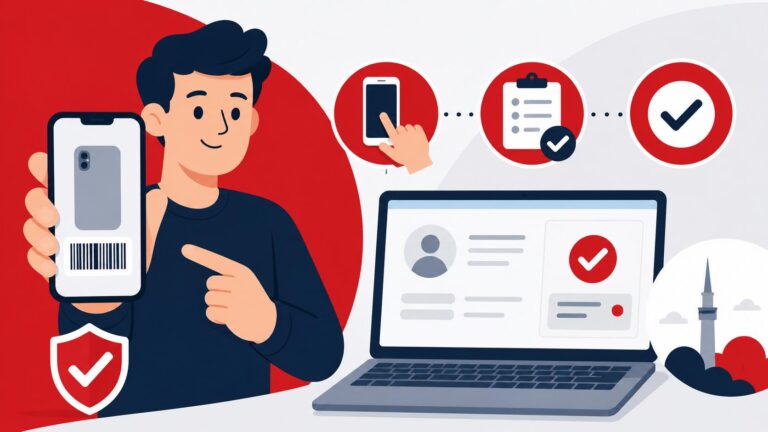
Step-by-Step Registration Guide via e-Devlet
If you have decided that your device is worth the investment, you need to prepare for a bit of digital bureaucracy. The process is handled through the e-Devlet portal, which is the backbone of Turkish administration. You will find that Using e-Nabız: Accessing Your Medical Records on the Ministry of Health App and other government services all require the same login credentials you'll use for your phone.
Obtaining Your e-Devlet Password
First, you need an e-Devlet password. You cannot get this online for your first time; you must visit a PTT (Post Office) in person with your residence permit card and a few Lira. They will give you a sealed envelope with a temporary password. Once you have this, you can log in to the portal and start the registration process. I highly recommend doing this as soon as your Ikamet arrives, as the PTT queues in places like Besiktas can be legendary.
Making the Tax Payment
Once logged in, search for "IMEI Kaydet." The system will ask for your device's IMEI numbers (found by dialing *#06#). Be extremely careful here—if you have a dual-SIM phone, you must enter both IMEI numbers during the same application. If you forget one, you cannot add it later without paying the massive fee a second time. After entering the data, you’ll be redirected to the Interactive Tax Office website to pay the fee. You can usually pay with a Turkish credit card or via a bank transfer from major institutions like Ziraat Bank or Garanti.
Finalizing the IMEI Matching Process
After the payment is confirmed, you must return to the e-Devlet page to "match" your SIM card with the IMEI. This is the final step where you input your phone number. It can take anywhere from a few hours to 48 hours for the block to be lifted. If your phone was already blocked, you might need to restart it several times or manually select the network in your settings once the system updates. This is a stressful window of time, and I spent most of it refreshing my signal bars every five minutes.
Practical Workarounds for the Savvy Expat
Not everyone wants to pay a king's ransom to use their own hardware. Over the years, expats often get very creative with how they maintain connectivity. While there is no legal way to "hack" the IMEI block, there are several legitimate ways to stay connected without paying the registration tax.
The Role of E-SIMs and Roaming
If you are only in Turkey for a few months, your best friend is Airalo. Using an international data E-SIM allows you to bypass the local SIM tracking entirely. Because an Airalo E-SIM uses international roaming protocols, the BTK tracking system generally doesn't trigger the 120-day block on your device. You won't have a local Turkish phone number, which can be a pain for food delivery apps like Getir, but your data will work perfectly for WhatsApp, Maps, and email.
Using Local Mobile Hotspots
Many digital nomads who stay in Blueground apartments or co-working spaces choose to buy a "pocket Wi-Fi" (Vınn) from Turkcell. You put a local SIM card into this small battery-powered modem. Since the modem is a Turkish device, it is already registered and won't block. You then connect your foreign phone to the modem via Wi-Fi. This keeps your phone "invisible" to the cellular tracking system while giving you high-speed local data. It’s a bit clunky to carry two devices, but it saves you 57,000 TL.
Understanding the Yearly Reset
Here is a little-known secret: the 120-day window is per calendar year. Every January 1st, the BTK database traditionally "resets" the counters for unregistered IMEIs. If your phone was blocked in October, it will likely start working again on New Year's Day for another 120 days. Many long-term residents use this to their advantage, using their foreign phone from January to April and then switching to a cheap local "burner" phone for the rest of the year. It’s a bit of a gamble, as regulations can change, but it’s been a reliable pattern for years.
Dealing with a Blocked Device Recovery and Prevention
If you missed the warnings and your phone is already a brick, don't panic. You haven't lost your data; you've just lost your cellular connection. You can still use Wi-Fi, and your phone will work perfectly once you leave Turkey. However, while inside the country, you need a recovery plan.
Can You Bypass the Block with Software?
You will see many shops in neighborhoods like Eminönü or Tahtakale claiming they can "repair" your IMEI for a small fee. This usually involves "cloning" the IMEI of an old, legal Turkish phone onto your foreign device. Do not do this. It is illegal, it voids your warranty, and the system often detects the duplicate IMEI and blocks both devices permanently. Furthermore, How to Handle Late Salary Payments Under Strict Turkish Labor Law and other legal protections won't help you if you've engaged in telecommunications fraud. Stick to the legal routes.
Transitioning to a Local Device
If your phone is blocked and you need to be reachable, your quickest path is Amazon Turkey. You can have a mid-range Samsung or Xiaomi delivered to your door in 24 hours. These phones come with a "BTK Approved" status, meaning they will never block. You can then use your foreign phone as a dedicated camera or social media device over Wi-Fi, while using the local phone for calls, SMS, and as a mobile hotspot. This is the strategy I eventually adopted, and it significantly lowered my stress levels.
The Importance of the 99 Number
Regardless of which phone you use, your life in Turkey revolves around your "99 number"—your foreigner identification number. You'll find that The 99-Number: What Your T.C. Kimlik Number Gives You Access To in Daily Life is the key to everything from opening a bank account to getting a local SIM plan that isn't a "tourist" rip-off. Once you have your residency and your 99 number, you can get a postpaid SIM plan which offers much better data rates than the prepaid cards sold at the airport.
Common Pitfalls and Frequently Asked Questions
Even with a guide, the Turkish mobile landscape is full of traps. Many seasoned expats make mistakes that cost them thousands of Liras simply because they didn't understand the nuances of the e-Devlet system or the customs rules.
My Phone Blocked Early—What Happened?
Sometimes people find their phones blocked well before the 120-day mark. This usually happens if you bought a "second-hand" phone that was previously used in Turkey by someone else, or if your phone was refurbished with parts from another device. The 120 days are cumulative for the hardware's lifetime in Turkey. If the previous owner used 100 days and then sold it to you, you only have 20 days left. This is why Navigating Sahibinden.com Safely for Apartment Rentals and Second-Hand Goods is so important—you must verify the IMEI status of any used device before paying.
Can You Register a Tablet or Laptop?
Generally, the 120-day rule applies to devices with a SIM slot (IMEI). If your iPad or laptop has a cellular module, it is subject to the same rules. However, if your tablet is Wi-Fi only, you are in the clear. It is generally wise for people to buy Wi-Fi-only tablets and use their phone or a mobile modem to provide data. It saves you from the headache of multiple registrations.
Selling a Registered Foreign Phone in Turkey
As mentioned, selling your registered foreign phone is almost impossible because of the ID-matching rule. However, if you are leaving Turkey for good, you should know that How to Cancel Your Ikamet Officially at the Airport When Leaving Turkey for Good doesn't automatically "unlock" your phone for others. The registration remains tied to your passport in the government database for three years. If you want to sell your phone, your best bet is to sell it to someone outside of Turkey or to another expat who is willing to wait out the three-year period (though this is technically a legal grey area).
Essential Medical and Legal Turkish for Phone Issues
When dealing with the BTK or a mobile provider, a few words of Turkish go a long way. If you find yourself in a Turkcell shop trying to explain that your phone is blocked, being able to say "Telefonum kapandı" (My phone is closed) or "IMEI kaydı yaptırmak istiyorum" (I want to do an IMEI registration) will save you a lot of miming and frustration.
Remember, the goal is to stay connected so you can enjoy the incredible lifestyle Turkey offers. Whether you are browsing for Amazon Turkey deals or navigating your way to a new city, having a working phone is your lifeline. Don't let the 120-day rule catch you off guard—plan your budget, choose your strategy, and keep your signal bars high.
Disclaimer
The information provided in this guide is for educational purposes only and reflects the regulations and costs as of mid-2026. Turkish telecommunications laws and IMEI registration fees are subject to frequent and sudden changes by the BTK and the Ministry of Finance. Always verify the current fees and procedures on the official e-Devlet portal or with a qualified legal professional before making significant financial decisions.