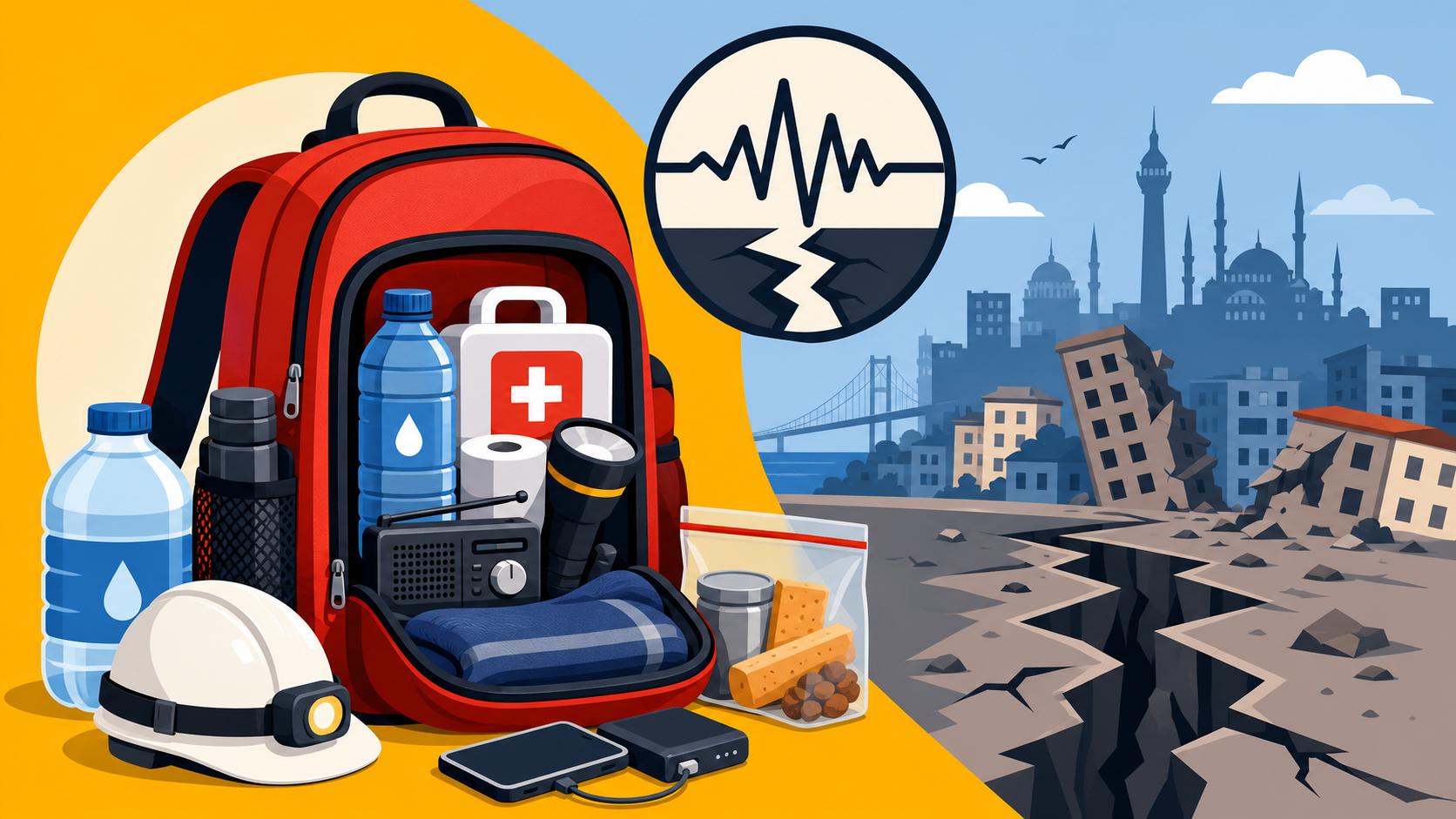
Earthquake Go-Bags (Deprem Çantası): What to Prepare for Your Home in Istanbul
Living in Istanbul means falling in love with the Bosphorus, the history, and the food, but it also means living with the quiet, persistent shadow of seismic activity. I’ll never forget my first minor tremor in a Kadıköy cafe; the rattling of the tea glasses wasn't just a vibration, it was a wake-up call to the reality of the North Anatolian Fault. This guide solves the "where do I even start" paralysis by detailing exactly how to build a professional-grade earthquake go-bag tailored for the Istanbul expat experience.
Why a Deprem Çantası is Non-Negotiable for Istanbul Expats
The term "Deprem Çantası" is one you will hear frequently in Turkish news cycles and neighborhood meetings. It translates literally to "Earthquake Bag," but for those of us living here, it represents the thin line between panic and prepared survival. Istanbul is a unique beast when it comes to disaster management; the city is densely packed, with narrow streets and a mix of ancient masonry and modern high-rises. If a significant event occurs, the logistical challenge for emergency services will be immense.
The Geologic Reality and the 72-Hour Rule
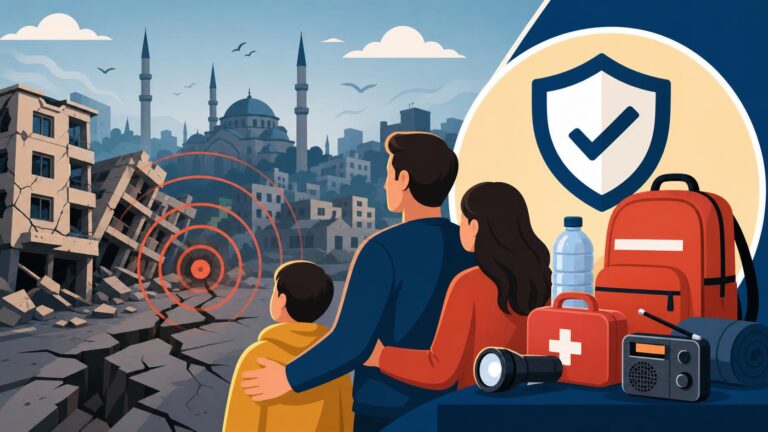
Experts and local authorities frequently discuss the probability of a major earthquake in the Marmara region. While we all hope it never happens during our residency, the "72-hour rule" is the gold standard for preparedness. This rule assumes that in the event of a catastrophic disaster, it may take up to three days for professional rescuers and aid organizations to reach every neighborhood. During these 72 hours, you are your own first responder. Your go-bag isn't just a collection of snacks; it is a life-support system designed to keep you hydrated, warm, and informed while the city's infrastructure recovers.
Lessons from the Field: 1999 and 2023
The collective memory of the 1999 Izmit earthquake and the devastating 2023 earthquake in Southeast Turkey has shaped how people view Natural Disasters in Turkey: Earthquake Preparedness and Safety for Expats. We’ve learned that the biggest hurdles aren't just the tremors themselves, but the aftermath: the loss of electricity, the cutting of water lines, and the total congestion of cellular networks. For an expat, these challenges are amplified by language barriers and a lack of local family networks to lean on. Having a bag ready means you don’t have to wonder where your passport is or how you’ll charge your phone when the grid goes down.
The Psychological Benefit of Preparedness
There is a specific type of anxiety that comes with living in a high-risk zone. I spent my first six months in Istanbul jumping every time a heavy truck drove past my building. That anxiety only subsided once I sat down and assembled my kit. Knowing that my essential documents are in a waterproof folder and that I have enough water for three days allows me to enjoy the city rather than fear it. If you are staying in premium managed housing like Blueground, you may already have modern building standards on your side, but the responsibility for personal supplies still rests on your shoulders.
Building the Ultimate Earthquake Go-Bag: Essential Supplies
When you start sourcing items, Amazon Turkey is often the most efficient way to gather specialized gear like solar chargers, tactical flashlights, and high-quality backpacks without navigating the chaos of the Grand Bazaar. Your bag should be a sturdy, water-resistant backpack—not a duffel bag—because you need your hands free to navigate debris or assist others.
Survival Essentials: Water and Nutrition
Water is your absolute priority. The general rule is 3 liters per person per day, but carrying 9 liters in a backpack is physically impossible for most. Instead, pack 1.5 liters of bottled water and supplement it with a portable water filtration straw or purification tablets. For food, ignore the urge to pack heavy cans. Focus on high-calorie, shelf-stable items that don't require cooking: protein bars, nuts, dried fruits, and "beksimet" (traditional Turkish hard tack) or glucose biscuits. Remember to rotate these every six months to ensure they haven't expired in the Istanbul heat.
Hygiene and Medical Kits
In a disaster, minor cuts can quickly become infected due to dust and lack of clean water. You need a robust first aid kit that goes beyond Band-Aids. Include antiseptic wipes, gauze, medical tape, and a multi-tool or surgical scissors. If you have specific health needs, you should also look into Essential First Aid Items to Keep in Your Turkish Apartment for a more comprehensive home-based backup.
Don't forget personal hygiene: wet wipes are a godsend when there is no running water. Include a small bottle of hand sanitizer, a travel toothbrush, and feminine hygiene products. For those with chronic conditions, keep a 7-day supply of your medication and a copy of your prescriptions. You can actually access your medical history through the Using e-Nabız: Accessing Your Medical Records on the Ministry of Health App portal, but having a paper backup in your bag is vital if the internet fails.
Documentation and Cash
As a foreigner, your "Kimlik" (ID card) and passport are your most important assets. Keep high-quality photocopies of your residence permit, passport, and insurance policies in a waterproof Ziploc bag. If you have it, include a copy of your How to Pay Your Mandatory DASK Earthquake Insurance Online receipt, as this will be crucial for post-disaster claims.
Cash is king in a crisis. ATMs will likely be offline or out of money. Keep at least 2,000 to 5,000 Turkish Lira in small denominations (20s, 50s, and 100s). This is for emergency transport, buying basic supplies from local "bakkals," or securing a spot on a ferry or bus out of the affected area.
Istanbul-Specific Challenges and Strategic Placement
The layout of Istanbul presents unique challenges. If you live in an older "giris kat" (ground floor) apartment in Cihangir, your exit strategy looks very different from someone on the 20th floor of a residence in Maslak. Your bag needs to be placed where it is most accessible during a quick exit.
High-Rise Living vs. Old Apartment Blocks
If you are in a modern building, the structure is designed to sway and remain intact, but elevators will automatically shut down. You will be walking down many flights of stairs. Ensure your go-bag has a chest strap to distribute weight and that you have a pair of sturdy, closed-toe shoes kept right next to your bed. If you are in an older building, your priority is getting out of the footprint of the structure immediately.
For those who move frequently, perhaps using services like Blueground to transition between neighborhoods, always re-evaluate your exit path. Know where the stairs are, and never leave your go-bag in a closet behind heavy boxes. The best spot is usually by the front door or under a sturdy piece of furniture near your bed.
Designated Assembly Areas (Toplanma Alanları)
Once you are out of your building, you cannot just stand in the street. Istanbul’s narrow roads are death traps for falling masonry and glass. You must head to your designated "Toplanma Alanı." You can find your specific neighborhood's assembly point by checking your Address Registration (Nüfus): The Most Critical Post-Arrival Step for Foreigners on the e-Devlet system. Mark this location on a physical paper map and keep it in your bag. Digital maps may fail if cell towers are overloaded.
Tech and Connectivity for Expats
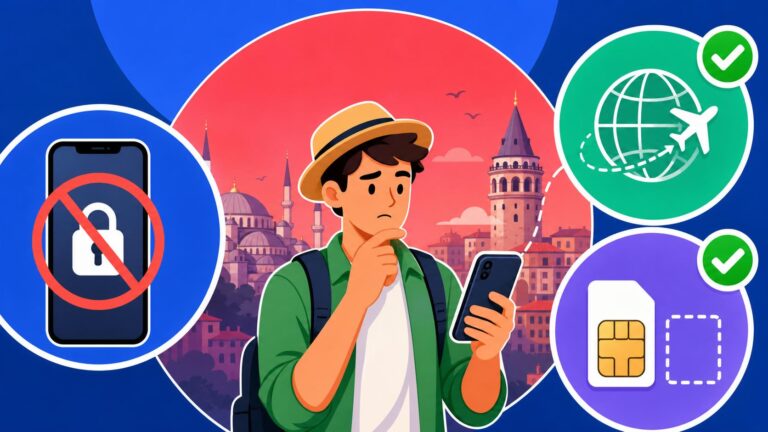
In the immediate aftermath of a quake, the "AFAD" (Disaster and Emergency Management Authority) will send alerts. It is essential to understand how these work by reading about Understanding the AFAD Emergency Alert System on Your Mobile Phone. To maintain connectivity when local networks are strained, many expats find that having a secondary data source like Airalo can be a lifesaver, as it allows you to toggle between different carrier infrastructures if one is down. Also, pack a high-capacity power bank (at least 20,000 mAh) and a long charging cable.
| Item Category | Essential (Must-Have) | Supplemental (Nice-to-Have) |
|---|---|---|
| Hydration | 1.5L Water + Purification Tabs | LifeStraw / Filtration Pump |
| Communication | Power Bank + Whistle | Crank Radio + Spare Batteries |
| Documentation | Passport/Ikamet Copies + Cash | Map of Assembly Areas |
| Medical | Prescription Meds + First Aid Kit | Multi-vitamin + Spare Glasses |
| Tools | Multi-tool + Flashlight | Work Gloves + Duct Tape |
| Clothing | Spare Socks + Thermal Blanket | Rain Poncho + Sturdy Boots |
Maintenance, Training, and Mental Readiness
Building the bag is only half the battle; maintaining it and knowing how to use it completes the circle of preparedness. Many expats build a bag, shove it in a corner, and forget about it for three years, only to find the batteries have leaked and the food has turned to dust.
The 6-Month Rotation Schedule
Set a recurring alarm on your phone for every March and September. This is when you "audit" your bag. Replace the water, check the expiration dates on your protein bars, and test your flashlight. This is also a good time to update your documentation if you have recently finished Opening a Bank Account in Turkey: Rules for Expats, Tourists, and Investors or renewed your residence permit. Istanbul’s climate is humid, so check for any signs of mold or fabric degradation in the bag itself.
Family and Community Communication Plans
If you live with a partner or roommates, everyone needs their own bag. "One bag for the couple" is a mistake; if you are separated during the initial tremor, one person is left with nothing. Establish a "check-in" point outside the city—a friend in Ankara or a relative back home—whom everyone will message as soon as they have a signal. Since English-speaking support might be limited during a crisis, knowing the basics of Emergency Medical Care in Turkey: Dialing 112, Ambulances, and Triage will help you communicate with first responders effectively.
Navigating the Neighborhood Dynamics
In Istanbul, your neighbors (komşular) are your first line of defense. In my building, we have an informal "check-in" system where the younger residents check on the elderly after any noticeable vibration. Understanding the Istanbul Neighborhood Guide: European vs Asian Side Lifestyles for Expats can help you gauge the density and community feel of your area. Get to know your "Kapıcı" (building manager); they usually know where the gas and water shut-off valves are, which is vital information for preventing fires post-earthquake.
Building an earthquake go-bag is an act of love for your future self and your family. It acknowledges the risks of this beautiful, ancient city while providing the practical tools to navigate them. By sourcing quality gear from Amazon Turkey, staying informed through official channels, and keeping your documents updated, you can live your Istanbul life with the confidence that you are ready for whatever the earth might do.
Disclaimer
This guide is for informational purposes only and does not constitute professional safety or engineering advice. Earthquake preparedness requirements may vary based on individual health needs, building types, and specific neighborhood risks in Turkey. Always follow the official guidance provided by AFAD (Disaster and Emergency Management Authority) and the Turkish Ministry of Interior. The author and publisher are not liable for any injury or loss resulting from the use of this information.