Giving Birth in Turkey: Comparing Public Hospital and Private Maternity Suites
Realizing you are pregnant while living as an expat in Turkey triggers a unique mix of excitement and absolute bureaucratic dread. I remember sitting in a small cafe in Kadıköy, staring at a positive test and wondering if I could even explain "epidural" in Turkish without sounding like a confused tourist. This guide solves the dilemma of choosing where to bring your child into the world by comparing the raw reality of public hospitals and private maternity suites.
The Structural Divide in Turkish Maternity Care
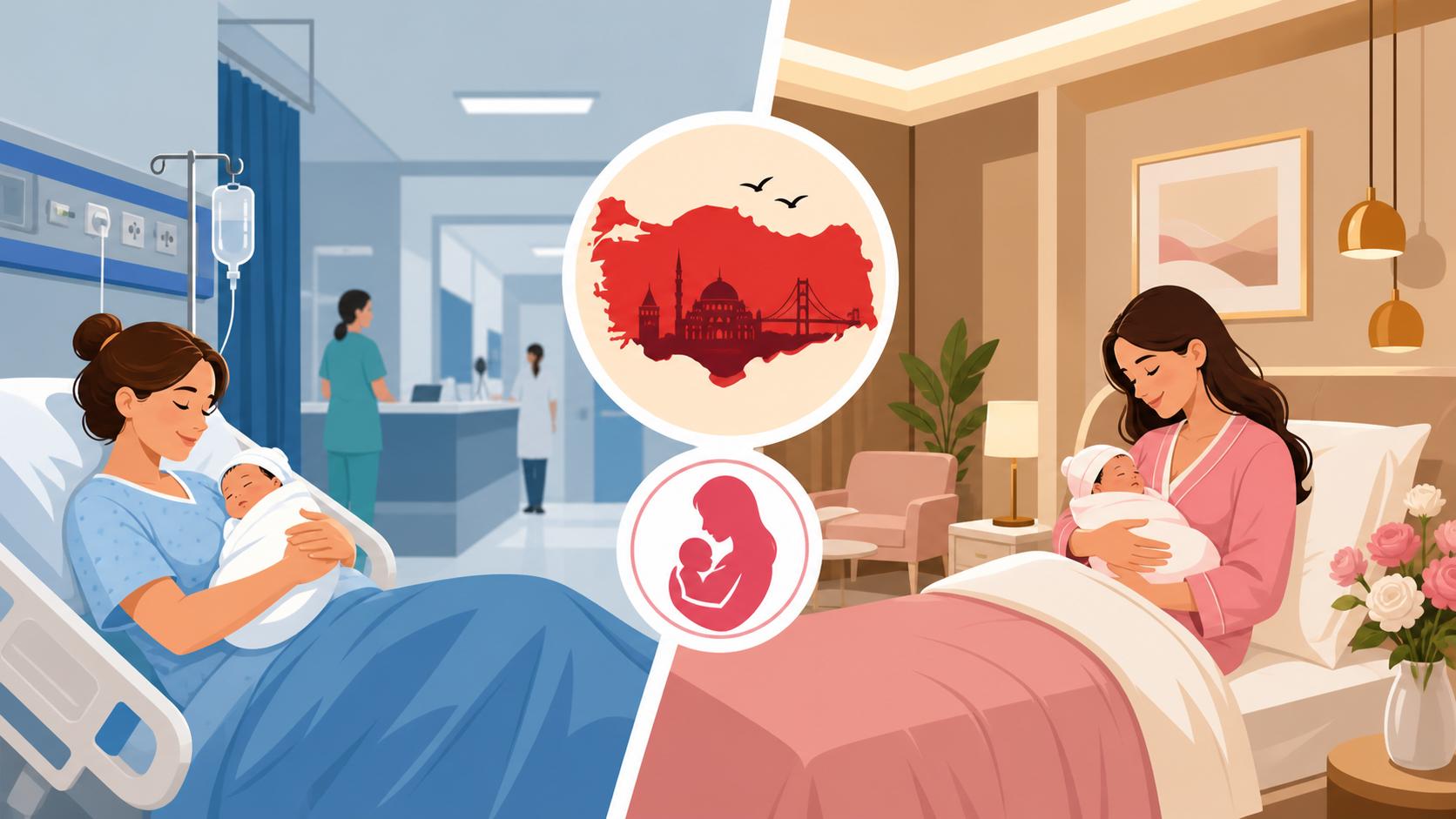
The first thing you need to grasp is that Turkey operates on a two-tier system that feels like two different centuries. On one hand, you have the sprawling, ultra-modern "City Hospitals" (Şehir Hastaneleri) run by the state. On the other, you have private hospitals like Acıbadem, Memorial, or American Hospital that look and feel more like five-star hotels than medical facilities. Understanding which one aligns with your birth philosophy and budget is the most critical decision you will make in your first trimester.
The Public State Hospital Experience
Public hospitals in Turkey are clinical, efficient, and high-volume. If you are enrolled in the Health Insurance in Turkey: SGK Public System vs Private Coverage Explained, your costs will be virtually zero. However, the trade-off is a lack of "hand-holding." In a public facility, you are unlikely to have the same doctor for every check-up, and the nursing staff will almost certainly speak only Turkish. The focus here is strictly medical: getting the baby out safely.
Public hospitals are also much stricter about birth companions. During labor, you might be in a shared ward, and your partner or doula may be restricted from the delivery room until the very last moment—or excluded entirely. If you choose this route, you must be prepared for a very "traditional" medical experience where the doctor's word is law and birth plans are often viewed as secondary to hospital protocol.
The Private Maternity Suite Advantage
For most expats, private hospitals are the gold standard. When we talk about "maternity suites," we are talking about private rooms with couches for partners, ensuite bathrooms, and sometimes even a small kitchenette. These facilities cater to the "birth experience." You can choose your specific OBGYN, and they will be the ones who show up at 3:00 AM when your water breaks.
In a private hospital, English is much more common among the senior medical staff. You will also find that these hospitals are more accommodating to Doulas and Midwives in Turkey: Navigating Alternative Birth Choices. The atmosphere is designed to reduce stress, offering "birth packages" that include everything from the first ultrasound to the postpartum photo shoot. However, this comfort comes at a premium that can fluctuate wildly based on the current exchange rate and the hospital’s prestige.
Comparing Medical Philosophies and Intervention Rates
A major point of contention for foreign parents in Turkey is the intervention rate. Turkey has one of the highest C-section rates in the world, particularly in private hospitals. If you are adamant about a natural, unmedicated birth, you need to be very vocal and choose your provider with extreme care.
The C-Section vs. Natural Birth Debate
In many Turkish private hospitals, C-sections are often presented as the "convenient" or "safer" option, sometimes scheduled weeks in advance for non-medical reasons. This is partly due to cultural preferences and partly because of the way doctors manage their schedules. If you are looking for a vaginal birth, you should specifically seek out doctors who identify as "natural birth friendly" (doğal doğum taraftarı).
State hospitals, interestingly, often have lower elective C-section rates because they follow strict Ministry of Health guidelines that prioritize vaginal delivery unless a medical necessity arises. However, the "natural" birth in a public hospital might not include the comforts you expect, such as a birthing ball or the ability to move around freely during labor. You are often expected to labor in bed, monitored constantly.
Language Barriers and Communication
Communication is the "make or break" factor for expat births. In the heat of labor, you do not want to be fumbling with a translation app. Private hospitals in major hubs like Istanbul, Ankara, and Izmir specifically hire Finding English-Speaking Doctors in Istanbul: Top International Clinics to attract the international community.
Even if your doctor speaks perfect English, the floor nurses—who you will spend 90% of your time with—might not. It is highly recommended to have a Turkish-speaking friend or a professional translator on call. In public hospitals, the lack of English can lead to high-stress situations where procedures are performed without a full explanation in your native tongue. This is a significant factor in why many expats opt for comprehensive international insurance like Cigna Global to ensure they can afford the higher-tier private hospitals where English is a standard.
The Financial Reality of Childbirth
Budgeting for a baby in Turkey has become increasingly complex due to inflation. What cost 20,000 TL two years ago might now be 80,000 TL or more. You need to look at "Birth Packages" (Doğum Paketleri) early on.
| Feature | Public Hospital (Devlet) | Private Hospital (Özel) |
|---|---|---|
| Cost with SGK | Mostly Free | Significant Copay (50-100%+) |
| Out-of-Pocket (No Insurance) | Low/Regulated | High (Variable by Brand) |
| Room Type | Shared or Single (Basic) | Private Suite (Luxury) |
| Partner Stay | Often restricted | Included |
| Neonatal Care (NICU) | Excellent but crowded | Top-tier / High Availability |
| Language | Turkish | English/Multilingual |
Understanding Birth Packages and Out-of-Pocket Costs
Most private hospitals offer a fixed-price package. This usually covers a standard two-night stay for a C-section or a one-night stay for a vaginal birth, the doctor's fee, standard lab tests for the newborn, and the first vaccinations. However, be very careful: these packages often exclude complications. If the baby needs a week in the NICU, the costs can skyrocket.
This is where having a robust policy from a provider like Cigna Global becomes a lifesaver. Unlike local "foreigner insurance" (which is often just a paper requirement for residency), high-end international plans often cover maternity complications and NICU stays that could otherwise bankrupt an expat family. Always check the waiting period on your policy; most require you to be a member for 10-12 months before they will cover a pregnancy. For more on managing these costs, see our guide on Healthcare Budgeting: Understanding Copays, Tariffs, and Billing in Turkey.
Local vs. International Insurance
Many expats rely on the SGK system, which is fantastic for basic care. However, if you want the private suite experience, SGK will only cover a tiny fraction of the bill. Local private insurances (Özel Sağlık Sigortası) are an option, but they often have strict limits on which hospitals you can use.
For those who want the freedom to choose the absolute best specialists, international coverage like Cigna Global is the preferred route. It allows you to access JCI-accredited facilities without worrying about the local "hospital tariffs" that can sometimes be higher for foreigners. Always ensure your insurance is coordinated with the hospital's billing department at least a month before your due date to avoid "surprise" deposits during admission.
Facilities and the Postpartum Experience
The days following birth in Turkey are steeped in cultural traditions that can be a bit overwhelming for the uninitiated. Whether you are in a public or private ward, the "Lohusa" (postpartum woman) period is treated with great respect.
The "Lohusa" Tradition and Room Amenities
In a private maternity suite, the hospital often encourages the decoration of the room. It is common to see door ornaments, ribbons, and "Lohusa Şerbeti" (a sweet, red cinnamon drink) served to guests. In Turkey, everyone visits the baby immediately. If you prefer privacy, you will need to be very firm with the hospital staff to "gatekeep" your room.
Private suites usually provide a bed for your partner, which is crucial. In public hospitals, you might only be allowed a female companion (like your mother or sister), and your husband might be relegated to specific visiting hours. If you are navigating Family Health in Turkey: Pregnancy, Maternity Care, and Pediatrics, you will find that the private sector's focus on family bonding is much more aligned with Western expectations.
Sourcing Quality Postpartum Supplies
One thing that surprises many expats is how expensive—or unavailable—certain high-end prenatal and postpartum supplements can be in local pharmacies. While Turkish pharmacies are great for basics, I always relied on iHerb for specific methylated vitamins and organic nipple creams that are hard to find in the local "Eczane."
Using iHerb for your prenatal regimen ensures you are getting the exact brands you trust from back home, which can be a huge comfort when everything else feels foreign. Just keep an eye on the customs limits for Turkey (currently around 150 EUR) to avoid your vitamins getting stuck at the border. Having a stash of high-quality supplements from iHerb can also help with the postpartum depletion that many new moms face.
Administrative and Cultural Hurdles After Birth
Once the baby is born, the "real" work begins: the paperwork. Turkey is a land of bureaucracy, and registering a foreign birth involves several layers of government offices.
Registering the Birth and Obtaining the Kimlik
You will receive a "Birth Report" (Doğum Raporu) from the hospital. This is the golden ticket. You must take this to the local Nüfus (Population) office to register the birth. If both parents are foreigners, the process is slightly different than if one parent is Turkish. You will need to bring translated and notarized copies of your passports and marriage certificate.
For a detailed walkthrough, check out Registering Newborns Born in Turkey to Foreign Parents with the Authorities. Do not delay this process; you typically have 30 days to register the birth without facing a fine. This registration is what allows you to then apply for your baby’s first residence permit (Ikamet) and their foreign passport at your embassy.
Navigating Local Medical Traditions
Turkish medical staff can be very "hands-on." It is common for nurses to whisk the baby away for a bath or a check-up without asking, or to suggest formula if the baby cries for more than five minutes. If you are committed to exclusive breastfeeding, you need to state this clearly and repeatedly.
The Postpartum Care in Turkey: Cultural Traditions (Lohusa) and Medical Follow-ups often include a 15-day and 40-day check-up. Culturally, the "40th day" is a major milestone where the mother and baby are finally considered "safe" to leave the house freely. Even if you don't follow these traditions, your Turkish neighbors and friends will certainly mention them!
Practical Preparation for Expat Parents
As your due date approaches, your preparation should shift from "finding a doctor" to "logistical mastery." Turkey is an amazing place to have a baby, but it requires a proactive mindset.
Creating and Communicating Your Birth Plan
In Turkey, the doctor-patient relationship is often hierarchical. To have your birth plan respected, you should discuss it in detail during your Prenatal Care Packages: Scans, Routine Tests, and Gynecological Support appointments. Don't just hand them a piece of paper; walk through scenarios like "What is your policy on episiotomies?" or "How long do you allow for the second stage of labor before intervening?"
Private hospitals are much more likely to accommodate requests like delayed cord clamping or immediate skin-to-skin contact. If you are at a public hospital, these may be more difficult to negotiate unless you have a Turkish-speaking advocate with you. In case of any emergencies, knowing the workflow of Emergency Medical Care in Turkey: Dialing 112, Ambulances, and Triage is essential, though most birth plans involve a direct drive to your chosen hospital.
Building Your Support System
Finally, don't try to do this alone. The expat community in Turkey is incredibly supportive. Seek out Facebook groups for "Moms in Istanbul" or "Expats in Antalya." These groups are where you will find the most up-to-date recommendations for English-speaking pediatricians and the best places to buy strollers.
Stock up on your essentials from iHerb well before your 36th week. From specialized baby probiotics to high-quality prenatal vitamins, having these on hand saves you from stressful trips to the mall when you're heavily pregnant. If you've secured international insurance through Cigna Global, make sure you have their 24/7 helpline saved in your phone. They can often provide "guarantees of payment" to hospitals, which prevents you from having to pay huge sums upfront in an emergency.
Disclaimer
This guide is for informational purposes only and reflects the personal experiences of the expat community. Medical regulations and insurance policies in Turkey change frequently. Always consult with a qualified legal professional regarding residency and birth registration, and speak with a licensed medical practitioner for all health-related decisions. The mention of specific brands does not constitute a medical endorsement.