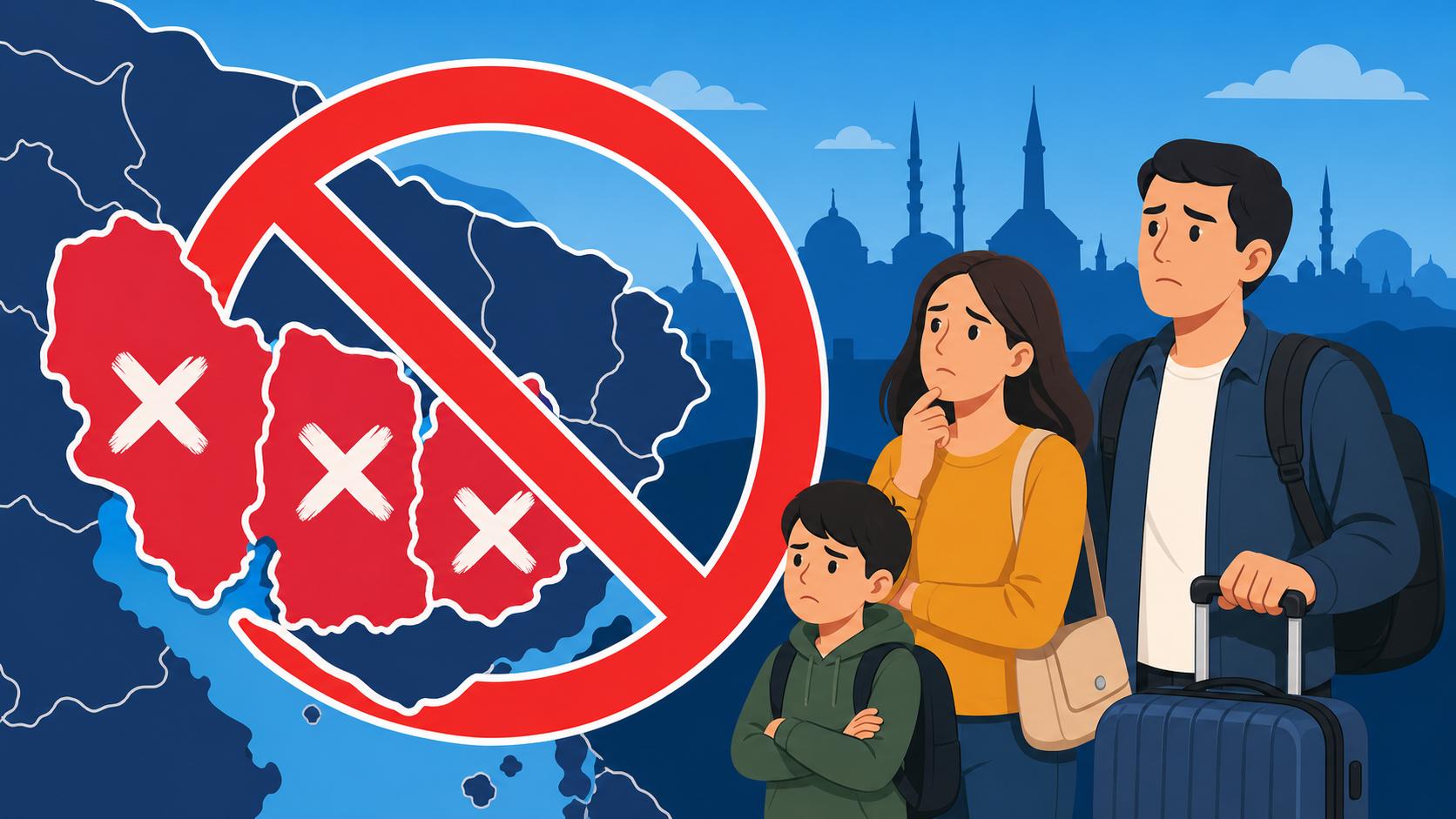
Why Esenyurt, Fatih, and Zeytinburnu are Completely Closed to New Foreign Residents
Imagine spending weeks scouting apartments in Istanbul, finally signing a lease in the historic streets of Fatih, only to have your residence permit application rejected because the neighborhood is "closed." I’ve sat in those crowded migration office waiting rooms and watched the heartbreak of expats who realized their new home was legally off-limits for residency. This guide breaks down the policy behind the closure of Esenyurt, Fatih, and Zeytinburnu and how you can navigate these restrictions safely.
The Demographic Balance Policy and the 20 Percent Rule
To understand why some of Istanbul’s most famous districts are now "no-go zones" for new residents, you have to look at the math used by the Presidency of Migration Management (Göç İdaresi). For years, Turkey was one of the most welcoming countries for long-term travelers and digital nomads. However, as the foreign population swelled in specific urban pockets, the government implemented a "demographic balance" policy. The core of this rule is simple but strict: if the number of foreigners in a particular neighborhood exceeds 20% of the total population, that neighborhood is closed to new foreign registration.
This isn't just about overcrowding in the literal sense; it’s an administrative strategy to encourage social integration and prevent the formation of "ghettos" where the local language and culture become secondary. I remember when this rule was first whispered about in expat forums; many of us thought it would only apply to small villages. Instead, it swallowed entire swaths of the country’s largest city. As of 2026, over 1,100 neighborhoods across Turkey are closed, but Fatih, Esenyurt, and Zeytinburnu remain the most high-profile victims of this policy due to their sheer density and popularity.
When you are preparing your application for a different, open area, you will still need to ensure your paperwork is flawless. Using a service like RushTranslate can help you get your foreign birth certificates or marriage licenses into the proper Turkish format without the headache of local notary errors. This is crucial because even in an "open" neighborhood, a single document error can lead to a rejection, and in a "closed" neighborhood, there is no room for appeal based on your address.
Why Fatih is the First to Close Its Doors
Fatih is often called the "Real Istanbul." It contains the Sultanahmet district, the Grand Bazaar, and some of the most conservative and historically rich neighborhoods in the city. Because it is the spiritual and historical heart of Istanbul, it was naturally the first choice for thousands of students, religious scholars, and Arab expats. By early 2021, the concentration of foreign residents in Fatih had reached a point where the government decided to stop issuing new "First Time" Short-Term Residence Permits for anyone living there, regardless of the 20% threshold in specific streets. The entire district was essentially put under a residency lockdown.
The impact on the rental market in Fatih was immediate and confusing. You will still see plenty of listings for apartments in Fatih on popular websites, and landlords will often try to convince you that "it's fine" or that they have a "special connection" at the migration office. Do not believe them. If you register your address in Fatih as a new applicant, your Turkish Residence Permits (Ikamet): The Complete Application Guide (2027) will likely be met with a swift denial. The government wants to preserve the specific cultural fabric of Fatih, and they are using residency permits as the primary tool to do so.
For those who were already living in Fatih before the closure, there is a "grandfather clause." If you are renewing an existing permit at the same address, you are generally safe. But the moment you move to a different apartment within Fatih, you trigger a new address registration requirement that might be blocked. This has left many expats trapped in sub-par housing because they fear that moving even one street over will cost them their legal right to stay in the country.
The Esenyurt High-Rise Dilemma
Esenyurt represents the opposite end of the spectrum from Fatih. While Fatih is ancient and low-rise, Esenyurt is a forest of massive concrete skyscrapers and brand-new residential "sites" (siteler). For years, developers marketed these apartments to foreign investors, promising easy residency and high-end amenities. This led to a massive influx of foreign nationals, particularly from Africa, the Middle East, and Central Asia, lured by the relatively low rents and modern buildings.
The problem in Esenyurt became one of sheer volume. The infrastructure simply couldn't keep up with the foreign population growth, leading to significant social friction and administrative backlogs. Consequently, Esenyurt was joined with Fatih in a district-wide ban on new initial residence permits. Even if you are applying for a Turkey Digital Nomad Visa: Eligibility Criteria, Taxes, and the $36k Income Rule, an address in Esenyurt will often result in a red flag. The migration officers have been instructed to be extra vigilant with these high-density districts because they are the primary targets for "ghost addresses"—where multiple foreigners register at one flat but don't actually live there.
Living in these "siteler" also comes with the burden of Understanding Aidat: Apartment Complex Maintenance and Pool Fees, which can be surprisingly high in Esenyurt. When you factor in the high fees and the risk of residency rejection, the "cheap" apartments in this district often end up being the most expensive mistakes an expat can make. Some newcomers have reported paying six months of rent upfront in Esenyurt, only to be given 10 days to leave the country because their address was rejected by the Göç İdaresi.
Zeytinburnu and the Shift in Industrial Demographics
Zeytinburnu is a fascinating, gritty district that sits between the old city walls and the sea. Historically, it was the center of the leather and textile industry in Istanbul. As the industry modernized, the old factories were replaced by luxury sea-view apartments. Because Zeytinburnu is well-connected by the Marmaray train and the metrobus, it became a strategic hub for foreign workers and entrepreneurs. However, like its neighbors, it quickly hit the demographic limit.
The closure in Zeytinburnu is more surgical than the blanket bans in Fatih or Esenyurt. It often targets specific neighborhoods within the district that have exceeded the 20% limit. This makes Zeytinburnu particularly dangerous for the unwary expat, as one side of a street might be "open" while the other side is "closed." Before you ever hand over a deposit, you must verify the status of the specific mahalle (neighborhood) using the Navigating Closed Neighborhoods: A Guide to Areas Where Foreigners Cannot Register resources provided by the government.
Furthermore, if you are looking at Finding English-Speaking Doctors in Istanbul: Top International Clinics, many are located near these central districts, which makes living there tempting. However, the administrative headache of a closed neighborhood outweighs the convenience of being near a hospital. If you do find a legal neighborhood nearby, make sure you have comprehensive international health insurance. Providers like Cigna Global are frequently used by expats here because their policies meet the strict requirements for the residence permit while offering much better coverage than the basic local "Ikamet insurance" policies.
Comparing the "Big Three" Closed Districts
| Feature | Fatih | Esenyurt | Zeytinburnu |
|---|---|---|---|
| Primary Reason for Closure | Historical/Cultural Preservation | Extreme Population Density | Demographic Balance (20% Rule) |
| Housing Type | Older, low-rise apartments | Modern, high-rise complexes | Mix of luxury coastal and old urban |
| Initial Permit Status | Strictly Closed (District-wide) | Strictly Closed (District-wide) | Neighborhood-dependent closures |
| Renewal Status | Allowed if address is unchanged | Allowed if address is unchanged | Allowed if address is unchanged |
| Risk of Scam | High (Fake rental contracts) | Very High (Investment/Residence scams) | Moderate (Confusing street boundaries) |
How to Verify an Address Before You Rent
The most important tool in your arsenal is the e-Devlet portal. Every legal resident in Turkey eventually gets access to this system, but even as a newcomer, you can ask your potential landlord to show you the "neighborhood status" or check the latest list of The List of Closed Neighborhoods in Istanbul, Antalya, and Mersin (2026 Updates). Do not take a real estate agent's word for it. In Turkey, agents are paid by the commission, and many will not hesitate to rent you a flat in a closed area, knowing full well you won't be able to get your permit.
A professional tip: go to the local Nüfus (Population) office or the neighborhood Mukhtar (headman) with the address before you sign the contract. Ask them specifically: "Can a foreigner register their address here for the first time?" It takes an hour of your time but can save you thousands of dollars in lost deposits and legal fees. If you find out the neighborhood is closed, you might want to look into Buying a Home in a Closed Neighborhood: Will I Still Get Property Residency—spoiler: even property owners face hurdles in these zones now if their "Tapu" (title deed) was issued after the closure dates.
If you are moving from abroad, you also need to be aware of the Address Registration (Nüfus): The Most Critical Post-Arrival Step for Foreigners. You have a very small window—usually 20 days—to register your address once your permit is approved. If you are living in Fatih, Esenyurt, or Zeytinburnu and try to register, the system will literally block the entry. This leaves you in a legal limbo where you have a residence card but no registered address, which is a fast track to having your permit cancelled and facing Overstays, Fines, and Deportation: Navigating Harsh Immigration Rules in Turkey.
Legal Exceptions and Workarounds
Are there any ways to live in these districts legally as a new resident? The exceptions are extremely narrow. Usually, exceptions are made for:
- University Students: If your university dormitory is located in a closed neighborhood, you may be allowed to register there, though this is subject to changing regulations.
- Family Reunification: If you are marrying a Turkish citizen who already resides in Fatih, you can often apply for a Family Residence Permits: How to Sponsor Your Foreign Spouse and Children.
- Work Permits: Sometimes, if your employer provides housing or if the work permit is tied to a specific location, there is more flexibility, but you must check the Required Documents Checklist for a Short-Term Turkish Residence Permit carefully with a lawyer.
For the average expat, freelancer, or retiree, there is no "secret" way around these rules. The migration office has digitized its records, and the 20% rule is enforced by an automated system. If the system says "No," the officer's hands are tied. Some people try to use Apostille Treaties: Which Country Actually Needs to Stamp Your Birth Certificate to "prove" they have a right to live where they want, but the demographic rules override personal preference every time.
Where to Look Instead: Better Alternatives in Istanbul
If you had your heart set on Fatih, look at Üsküdar on the Asian side. It offers a similar historical and traditional feel but is currently much more open to foreign residents. If you wanted the high-rise lifestyle of Esenyurt, look at Beylikdüzü or parts of Başakşehir that haven't hit their limits yet. These areas often have better planned infrastructure and more reliable Choosing an Internet Provider in Turkey: Fiber vs VDSL (Turk Telekom, Superonline) options than the older parts of the city.
For those who liked the central location of Zeytinburnu, consider Kağıthane. It has seen massive redevelopment recently and is very central, though parts of it are also nearing the demographic cap, so you must move fast and check the How to Check on e-Devlet if Your Desired Neighborhood is Closed to Foreigners tools frequently.
Ultimately, living in Turkey is an incredible experience, but it requires a level of administrative "due diligence" that you might not be used to in your home country. By avoiding the closed districts of Fatih, Esenyurt, and Zeytinburnu, you are choosing a smoother path to residency. Don't let the allure of a cheap apartment or a "historic" view blind you to the reality of the law. Secure your permit in an open neighborhood first; you can always visit the Grand Bazaar or the sea-front cafes of Zeytinburnu as a tourist whenever you like.
Disclaimer
This guide is for informational purposes only and does not constitute legal advice. Immigration laws and the list of closed neighborhoods in Turkey change frequently. Always verify the current status of any neighborhood with the official Presidency of Migration Management (Göç İdaresi) or a qualified Turkish immigration lawyer before making financial commitments or signing lease agreements. Accuracy is based on available data as of mid-2026.