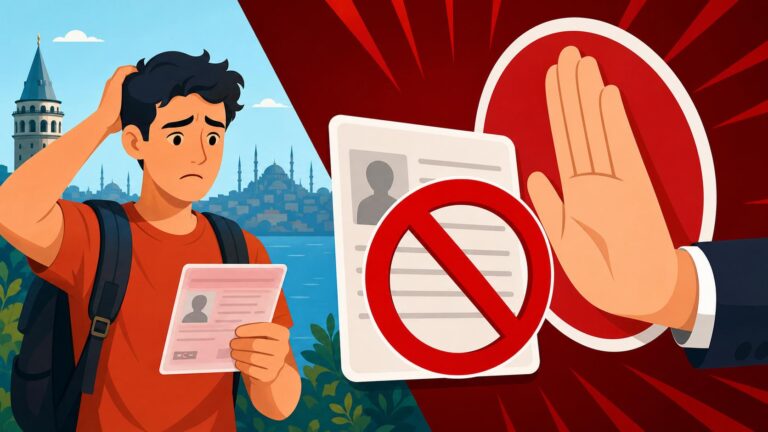
Turkey Digital Nomad Visa: Eligibility Criteria, Taxes, and the $36k Income Rule
Trying to navigate Turkish residency as a remote worker used to be a breeze, but the recent crackdown on touristic permits has left many of us scrambling for a legal path to stay. I’ve personally sat in those crowded migration offices, heart racing, wondering if my "digital nomad" lifestyle was about to hit a bureaucratic brick wall. This guide solves that uncertainty by breaking down the new Turkey Digital Nomad Visa, the strict income requirements, and the exact steps you need to follow to call this beautiful country your home office.
Understanding the Turkey Digital Nomad Visa Framework
For years, the "touristic ikamet" was the unofficial digital nomad visa for those of us wanting to live in Istanbul or Antalya. However, the Turkish government has shifted gears to attract high-value talent while tightening security on general residency. This new specialized visa is designed specifically for people who work for companies outside of Turkey or run their own remote businesses. It isn't just a stamp in your passport; it is a formalized legal status that recognizes your unique contribution to the local economy without taking jobs from the domestic market.
The GoTürkiye Identification Certificate
The most significant change in 2026 is the requirement for a Digital Nomad Identification Certificate, which you must obtain before you even set foot in a Turkish consulate. This document is issued through the GoTürkiye portal and acts as the gatekeeper for the entire process. I remember when we could just show up with a rental contract; those days are long gone. Now, the Ministry of Culture and Tourism must vet your professional credentials before the Ministry of Interior even looks at your residency application.
This certificate proves that you meet the baseline criteria: you are between 21 and 55 years old, you have a university degree, and you have a solid professional background. The portal requires you to upload your diploma, a valid contract of employment (or a business registration if you are a freelancer), and a biometric photo. It sounds straightforward, but the system can be finicky. Make sure your documents are clear and high-resolution, or you’ll find yourself stuck in a loop of "application pending" for weeks.
To ensure your foreign documents like diplomas and contracts are accepted without a hitch, I highly recommend using a service like RushTranslate. They specialize in the certified translations that Turkish authorities demand. In my experience, having a professionally translated contract from RushTranslate often prevents the back-and-forth emails where officials claim they can't verify your employment terms. It’s one of those small investments that saves a massive amount of stress down the line.
Why the Old Touristic Ikamet is No Longer the Way
If you’ve been following expat forums, you know that the "short-term touristic residency" is being denied at record rates. The authorities have realized that many people were using it as a permanent work-from-home solution without proper oversight. By launching the dedicated Digital Nomad Visa, Turkey is essentially saying, "If you want to live here long-term and work, you must do it under this specific umbrella." Trying to bypass this by applying for a standard tourist permit is now a high-risk gamble that often ends in a 10-day notice to leave the country.
Many nomads who tried the old way in 2025 and were shocked when their renewals were rejected despite having plenty of money in the bank. The difference is that the Digital Nomad Visa gives you a much more secure legal standing. You aren't just a "tourist"; you are a recognized remote professional. This distinction is crucial when it comes to things like address registration and long-term planning. You can read more about the general shift in Turkish Residence Permits (Ikamet): The Complete Application Guide (2027).
The transition from a tourist mindset to a nomad visa mindset requires a different approach to your paperwork. You aren't just showing a travel itinerary anymore; you are proving your professional worth. This is why the new system is actually a relief for many of us. While the bar is higher, the path is much clearer. Once you have that GoTürkiye certificate in hand, the rest of the bureaucracy starts to move much more predictably.
The Evolution of Remote Work in Turkey
Turkey has evolved from being just a budget-friendly destination into a sophisticated hub for tech and creative professionals. Cities like Istanbul, Izmir, and Fethiye have seen a surge in co-working spaces and high-speed fiber internet infrastructure. The government’s decision to formalize the Digital Nomad Visa is a direct response to this trend. They want to make sure the people living here are contributing to the tax base and local businesses in a sustainable way.
Back in 2019, finding a café with reliable Wi-Fi in Kadıköy was a bit of a treasure hunt. Today, the infrastructure has matured significantly. However, with that maturity comes more regulation. The "wild west" days of remote work are ending, replaced by a system that balances expat freedom with national security and economic interests. Understanding this evolution helps you realize that the $36k rule isn't just an arbitrary number—it’s part of a strategy to ensure that nomads can afford the rising Cost of Living in Turkey 2026: Detailed Budgets for Singles and Families.
As someone who has seen the transition, I can tell you that the current system is much more robust. Yes, the Required Documents Checklist for a Short-Term Turkish Residence Permit is longer than it used to be, but the outcome is more reliable. You no longer have to live in fear of a random policy change ruining your life mid-lease. By following the digital nomad path, you are playing by the new rules, which is the only way to ensure long-term peace of mind in Turkey.
Eligibility Criteria and the $36k Income Rule
The headline-grabbing requirement of this visa is the income threshold. To qualify, you must demonstrate a minimum monthly income of $3,000, which totals $36,000 per year. For many freelancers or those starting their remote careers, this can feel like a steep climb. However, for mid-career professionals in tech, marketing, or consulting, this is a standard benchmark that the Turkish government uses to ensure you won't become a burden on the state.
The $3,000 Monthly Income Threshold
Proving your income is the most critical part of the application. You can’t just say you have the money; you need to show a consistent trail of bank statements from the last six months. If you are an employee, this means pay stubs that match the deposits in your account. If you are a freelancer, it means showing contracts and invoices that clearly lead to that $3,000 monthly average. Some people are rejected because their income was "lumpy"—meaning they made $6,000 one month and nothing the next. Consistency is key here.
If your income is right on the edge, it is often helpful to provide additional proof of savings. While the law specifically mentions "income," showing a healthy balance in a global account often helps the officer feel more confident in your application. When preparing these financial documents, accuracy is paramount. Using RushTranslate to translate your tax returns or business ledgers ensures that the Turkish officials see a professional, standardized version of your finances. They handle the "sworn translation" aspect which is a non-negotiable requirement for the Göç İdaresi.
Keep in mind that this $3,000 must come from sources outside of Turkey. You cannot work for a Turkish company or have Turkish clients as your primary source of this income while on a Digital Nomad Visa. The logic is that you are bringing foreign currency into the country, which helps balance the national accounts. If you are earning in a volatile currency, I recommend presenting your statements in USD or EUR to avoid any confusion caused by exchange rate fluctuations during the review process.
Eligible Nationalities and Age Requirements
Currently, the Digital Nomad Visa is open to citizens of 36 specific countries. This list includes the United States, Canada, the United Kingdom, most EU member states, and several others like Australia and New Zealand. If you aren't a citizen of one of these countries, you unfortunately cannot apply for this specific visa type yet, though the list is expected to expand as the program matures. You also must be at least 21 years old and no older than 55.
The age limit often surprises people. The Turkish government is targeting the "prime" working years of the global workforce. If you are over 55, you might need to look into other residency options, such as the real estate-based permit, although that now requires a $200,000 property investment. For those within the 21-55 bracket, the Digital Nomad Visa is by far the most accessible and flexible route available.
It is also worth noting that your passport must be valid for at least six months beyond the date you plan to enter Turkey. I always tell people to have at least two years of validity left on their passport before starting this process. Changing your passport while your residency is being processed is a bureaucratic nightmare that involves updating your records across multiple government databases. Save yourself the headache and renew your passport first if it’s expiring soon.
Required Professional Qualifications
Unlike the old touristic permit, the Digital Nomad Visa requires proof that you are actually a professional. You must hold a university degree (at least a Bachelor’s). During the GoTürkiye application phase, you will need to upload a copy of your diploma. This is another area where a certified translation from a service like RushTranslate is essential. The Turkish authorities need to see the Turkish equivalent of your degree title to verify that you meet the educational standards of the program.
Beyond the degree, you need to prove that you are currently employed or have an active business. A simple letter from your employer stating your role, salary, and the fact that you are allowed to work remotely is usually sufficient. For freelancers, this means providing a "service contract" that shows an ongoing relationship with a client. If you are a business owner, your articles of incorporation or business license will be required.
The goal here is to filter out "backpackers" and focus on "professionals." The government wants to see that you have a stable career that can sustain you in Turkey without needing local employment. If your job title is vague, try to get your HR department to use more standard terminology in your employment letter. Terms like "Software Engineer," "Digital Marketing Specialist," or "Consultant" are well-understood by the reviewers, whereas more creative titles like "Happiness Ninja" might cause unnecessary confusion and delays.
The Step-by-Step Application Process for 2026
The process is a three-stage journey that starts online, moves to a consulate, and finishes at a local migration office in Turkey. It’s a marathon, not a sprint. I’ve lived through the anxiety of waiting for each "approved" status, and the best advice I can give is to be meticulously organized. Don't leave anything to chance—double-check every signature and every stamp.
Stage 1: Securing the Digital Nomad Certificate
Your journey begins at the official GoTürkiye Digital Nomad portal. This is a centralized website where you create a profile and upload your initial set of documents. You will need your passport, your university diploma, your proof of employment/contract, and your biometric photo. Once you submit, the Ministry of Culture and Tourism will review your application. This can take anywhere from a few days to a few weeks.
If you are approved, you will receive a "Digital Nomad Identification Certificate" with a unique QR code. This is the golden ticket. Without this certificate, the consulate will not even grant you an appointment for a visa. I recommend checking the portal daily once you’ve submitted. Sometimes they will ask for a clarification or an additional document, and the sooner you respond, the faster you get your approval.
One common mistake is using a regular selfie instead of a biometric photo. The system uses facial recognition software, so if your photo doesn't meet the official standards (white background, no glasses, neutral expression), it will be rejected automatically. Visit a professional photographer and ask for "biometric" photos—they will know exactly what is required for Turkish government systems.
Stage 2: Visa Application at the Turkish Consulate
Once you have your certificate, you must apply for a "Digital Nomad Visa" at the Turkish consulate or embassy in your home country or where you have legal residency. You cannot do this part from inside Turkey on a tourist visa. You will need to book an appointment through the Pre-Application System of Turkish Sticker Visa website. During the interview, you’ll present your GoTürkiye certificate along with your financial proof, health insurance, and a clean criminal record check.
For your health insurance, the consulate requires a policy that covers you in Turkey. I highly recommend Cigna Global for this stage. Most "travel insurance" policies aren't comprehensive enough for a residency-based visa. Cigna Global provides the high-limit, long-term coverage that Turkish consulates look for, and their documents are recognized worldwide. Having a reputable name like Cigna Global on your application often helps bypass the scrutiny that smaller, unknown insurers might face.
The consulate will take your fingerprints and your passport. The processing time varies by country, but usually, it takes about two to four weeks. Once approved, a visa sticker will be placed in your passport. This sticker allows you to enter Turkey specifically to finalize your residency. It is a "long-stay" visa, distinct from the e-visa you use for a quick vacation.
Stage 3: The Ikamet Appointment in Turkey
After you arrive in Turkey with your visa, you have a limited window to apply for your residence permit (ikamet). You will use The e-Ikamet System: How to Apply, Renew, and Track Your Residence Permit to start the application. You will be given a "randevu" (appointment) at the Provincial Directorate of Migration Management (Göç İdaresi) in the city where you plan to live. This is the final boss of the process.
At the appointment, you will hand over a physical folder containing all your documents: the GoTürkiye certificate, the visa from the consulate, your notarized rental contract, your tax ID number, and your Health Insurance in Turkey: SGK Public System vs Private Coverage Explained. If you are in a large city like Istanbul, the office will be crowded and the staff may be stressed. Be polite, have all your originals ready, and ensure your translations from RushTranslate are front and center.
If everything is in order, they will give you a "Proof of Application" document, which allows you to stay in Turkey legally until your card arrives by mail. The card usually takes 2-4 weeks to be printed and sent via PTT (the Turkish postal service). Once you have that card in your hand, you are officially a legal resident of Turkey under the Digital Nomad program. You can then move on to tasks like Opening a Bank Account in Turkey: Rules for Expats, Tourists, and Investors.
| Application Phase | Location | Key Document Required | Processing Time |
|---|---|---|---|
| Stage 1: Certificate | Online (GoTürkiye) | University Diploma | 1-2 Weeks |
| Stage 2: Visa | Consulate (Abroad) | GoTürkiye Certificate | 2-4 Weeks |
| Stage 3: Ikamet | Göç İdaresi (Turkey) | Notarized Rent Contract | 4-8 Weeks |
Document Checklist: Getting it Right the First Time
The number one reason for visa rejection is "missing or incorrect documentation." In Turkey, a missing signature or an un-notarized copy can derail months of planning. I have seen people break down in tears at the Göç İdaresi because they forgot one simple piece of paper. Don't let that be you. Treat your document folder like a sacred object.
Proof of Employment and Contracts
Your employment contract is the heart of your application. It must clearly state that you are a remote worker, your salary, and the duration of your contract. If you are a freelancer, you should provide a series of contracts that demonstrate a stable income stream. If your company is hesitant to write a custom letter, explain that it is a legal requirement for your visa. Most HR departments are helpful once they realize it's about your residency status.
Because these documents are generated outside of Turkey, they must be translated and often notarized or apostilled. This is where a reliable translation partner is indispensable. Using RushTranslate ensures that your complex employment terms are accurately reflected in Turkish. If the official at the desk can't understand your contract because of a poor translation, they will likely just reject it to be safe. RushTranslate provides the certified accuracy that gives you the best chance of success.
Also, ensure that your contract has a wet signature or a verifiable digital signature. In the digital age, many of us have "clicked" to sign our contracts, but the Turkish government still loves a good stamp or a handwritten signature. If possible, have your employer sign a physical letter and mail it to you. If not, make sure the digital signature is clearly visible on the printed document.
Passport Validity and Biometric Photos
As mentioned earlier, your passport is your most important ID. It needs to be in good physical condition. If the cover is peeling or a page is torn, a particularly strict official might reject it. Also, make sure you have enough blank pages. You will be getting a visa sticker and multiple entry/exit stamps over the next year. If you run out of pages, you’ll have to get a new passport, which complicates your residency records.
For the photos, do not try to print them at home. Go to a professional studio in Turkey (they are on almost every street corner in neighborhoods like Kadıköy or Beşiktaş) and tell them you need "biometric photos for ikamet." They will give you a set of four or eight photos that meet the exact size and background requirements. You will also need a digital version of this photo to upload to the e-ikamet system.
It is wise to keep a few extra photos in your bag. Sometimes they need an extra one for a specific form at the tax office or the bank. It’s a tiny expense that saves you from having to find a photo booth in the middle of a busy administrative day. Check the Required Documents Checklist for a Short-Term Turkish Residence Permit for any recent changes in photo standards.
Notarized and Translated Documents
Every foreign document you submit—whether it's your diploma, your marriage certificate (if applying with a spouse), or your remote work contract—must be translated into Turkish by a sworn translator and then notarized by a Turkish notary (Noter). This is a non-negotiable step. The notary system in Turkey is very formal; you will take your translated document to the notary office, they will verify the translator's signature, and apply a series of colorful stamps.
For the translation part, I recommend getting it done before you arrive if possible, or using an online service like RushTranslate that can handle the specific requirements of Turkish authorities. If you wait until you are in Turkey, you might find yourself wandering around looking for a sworn translator who is available on short notice. Having your translations from RushTranslate ready to go means you can head straight to the notary and save precious days of your 90-day tourist entry.
The cost of notarization can add up, as they charge per page. If your contract is 50 pages long, ask your employer to provide a "summary letter of employment" instead. This one-page letter can contain all the necessary details (salary, role, remote status) and will be much cheaper to translate and notarize than a full-length legal contract. This is a common "pro-tip" among veteran expats in Istanbul.
Financial Considerations and Taxation for Nomads
Living as a digital nomad in Turkey is financially rewarding because of the exchange rate, but the tax implications can be complex. You don't want to inadvertently become a tax evader or end up paying double taxes to both Turkey and your home country. Understanding the "183-day rule" is the first step in being a responsible resident.
Tax Residency and the 183-Day Rule
In Turkey, as in many countries, if you stay for more than 183 days in a calendar year, you are generally considered a "tax resident." This means Turkey technically has the right to tax your worldwide income. However, for digital nomads, this is a gray area that is often managed through Double Taxation Treaties. The Turkish government is currently more interested in the VAT you spend on your rent, groceries, and services rather than hunting down your foreign salary, but the law is the law.
If you are a US citizen, you are taxed on your worldwide income regardless of where you live, so you’ll be dealing with the IRS anyway. For others, becoming a tax resident in Turkey might actually be beneficial if the tax rate here is lower than in your home country. I strongly suggest consulting with a professional who understands international tax law before you hit that six-month mark. You can find more details in Taxes in Turkey for Foreigners: Residency, Income, and Filing Basics.
It’s also important to keep track of your days in and out of the country. If you travel frequently, you might stay under the 183-day limit, which keeps your tax life much simpler. I use a basic spreadsheet to log my entry and exit dates—it’s a life-saver when you’re filling out residency or tax forms later on. Don't rely on your memory; those passport stamps can get blurry and confusing after a year of travel.
Double Taxation Treaties and Your Home Country
Turkey has signed double taxation treaties with over 80 countries, including most of the nations on the Digital Nomad Visa list. These treaties are designed to ensure you aren't taxed twice on the same income. Essentially, if you pay tax in your home country, you can often use that as a credit against any tax owed in Turkey, or vice versa. This is a vital protection for high-earning nomads.
To take advantage of these treaties, you may need a "Tax Residency Certificate" from your home country. This proves to the Turkish authorities that you are already paying into another system. If your home country's tax year differs from Turkey’s (which follows the calendar year), this can get even more complicated. Again, this is where professional advice is worth its weight in gold.
When you are setting up your finances, keep in mind that Opening a Bank Account in Turkey: Rules for Expats, Tourists, and Investors will require your Turkish Tax ID number. You can get this number in about five minutes at any local tax office (Vergi Dairesi) or even online. It doesn't automatically mean you are paying taxes; it’s just a unique identifier used for everything from buying a SIM card to signing a rental lease.
Banking and Managing Money in Lira
The Turkish Lira (TRY) has been famously volatile over the last few years. While this makes your USD or GBP go further, it makes local budgeting a bit of a moving target. I recommend keeping the bulk of your savings in a foreign currency or a stable global account and only transferring what you need for the month. Services like Wise or Revolut are popular among nomads, though Wise has recently faced some service limitations in Turkey.
When you do open a local bank account (which you should, for paying rent and utilities), look for one that offers a "multi-currency" account. Banks like Ziraat, Garanti BBVA, and İş Bankası are generally expat-friendly and have decent mobile apps in English. Having a local debit card is essential for using local delivery apps like Getir or Yemeksepeti, which often struggle with foreign credit cards.
Be prepared for "bank fees" that might seem unusual. There can be charges for withdrawing cash from a different bank’s ATM or for certain types of transfers. Always check the fee schedule. Managing your money effectively is key to a stress-free life in Turkey, especially when you are navigating the Cost of Living in Turkey 2026: Detailed Budgets for Singles and Families.
Health Insurance and Lifestyle Essentials
You cannot get a residency permit in Turkey without valid health insurance. It is one of the first documents the Göç İdaresi officer will ask for. Beyond the legal requirement, having a good policy is just common sense. While Turkish healthcare is excellent, the costs in private hospitals can be significant if you are paying out-of-pocket.
Mandatory Health Insurance for Residency
For your first year on the Digital Nomad Visa, you will likely need a private insurance policy. Many nomads opt for the cheapest "foreigner insurance" (yabancı sağlık sigortası) just to tick the box for the visa. However, these basic policies often have very low coverage limits and high deductibles. If you actually get sick or have an accident, you might find yourself with a massive bill.
This is why Cigna Global is often recommended. Their policies are specifically designed for expats and are fully compliant with Turkish residency laws. The peace of mind that comes with knowing you can walk into a top-tier private hospital like Acıbadem or American Hospital and be covered is invaluable. Cigna Global’s customer service is also in English, which is a godsend when you are dealing with a medical emergency in a foreign country.
After your first year of residency, you have the option to enroll in the SGK Public System vs Private Coverage Explained. SGK is the national health system, and it’s surprisingly affordable for what it offers. However, for your initial application from abroad, a private international policy like Cigna Global is usually the fastest and most accepted route. It shows the consulate that you are fully covered from day one.
Finding Expat-Friendly Neighborhoods
Choosing where to live will define your experience in Turkey. Istanbul is the most popular choice, but it’s a city of 16 million people, and every neighborhood has a different vibe. Kadıköy on the Asian side is the "cool" district, full of cafes, bars, and young professionals. Beşiktaş and Nişantaşı on the European side are more upscale and central. However, you must be careful about "closed neighborhoods."
Due to the high concentration of foreigners, many neighborhoods are now Navigating Closed Neighborhoods: A Guide to Areas Where Foreigners Cannot Register. If you rent an apartment in a closed zone, you will be denied residency, even with a valid Digital Nomad Visa. Always, always check the current list of closed neighborhoods on the Göç İdaresi website before you sign a lease. Some people lose their deposits because they didn't do this one simple check.
If the chaos of Istanbul isn't for you, consider Izmir or Antalya. Izmir is more liberal and laid-back, while Antalya offers a Mediterranean lifestyle with a large established expat community. Both have great co-working spaces and international airports. Just remember that The Turkey IMEI Rule: How to Register Foreign Phones in 2026 applies nationwide, so regardless of where you live, you’ll need to handle your electronics.
Managing the IMEI Phone Registration
Turkey has a very strict rule about foreign mobile phones. If you bring a phone from abroad and put a Turkish SIM card in it, the phone will be blocked after 120 days unless you pay a registration tax. In 2026, this tax is quite high—over 50,000 TRY. For many nomads, it’s actually cheaper to just buy a mid-range local phone to use as a hotspot or for daily calls and keep their "home" phone on Wi-Fi.
If you do decide to register your phone, the process is done through the e-Devlet portal. You will need your residency permit (ikamet) number to complete the registration. It is a one-time fee, and once registered, that specific phone will work in Turkey forever. You can find a detailed breakdown in our guide on The Turkey IMEI Rule: How to Register Foreign Phones in 2026.
Another alternative is to use an E-Sim for data while keeping your physical SIM slot empty, but even E-Sims eventually trigger the 120-day block. The system tracks the IMEI number of the hardware, not the SIM card itself. It’s one of the most frustrating parts of moving to Turkey, but if you plan for it early, it’s manageable. Don't wait until day 119 to figure out your strategy!
Comparing the Digital Nomad Visa to Other Options
Before you commit to the Digital Nomad path, it’s worth looking at the other residency options to see which fits your long-term goals. The Turkish immigration landscape is shifting rapidly, and what worked last year might not be the best choice.
Digital Nomad Visa vs Touristic Ikamet
As we've discussed, the touristic ikamet is becoming harder to get. The Digital Nomad Visa is essentially the "premium" version of a tourist permit. It costs more in terms of the initial application and document preparation, but it provides a much more stable legal status. A touristic permit is usually granted for six months to a year, and renewals are very precarious.
The Digital Nomad Visa is specifically designed for the current environment. It acknowledges that you are working, which a touristic permit technically does not allow (though it was long ignored). By being on the correct visa, you avoid any potential issues with labor laws or future crackdowns. It’s the "honest" route, and in my experience, being honest with the Turkish bureaucracy always pays off in the long run.
| Feature | Digital Nomad Visa | Touristic Ikamet |
|---|---|---|
| Income Requirement | $3,000 / month | Flexible (but high rejection) |
| Primary Document | GoTürkiye Certificate | Rental Contract |
| Approval Odds | High (if criteria met) | Low / Unpredictable |
| Work Status | Legal Remote Work | Grey Area |
Transitioning to Other Permit Types
If you fall in love with Turkey and decide to stay forever, the Digital Nomad Visa is a great stepping stone. After a few years, you might decide to buy property. If you buy a home worth $200,000 or more, you can transition to a real estate-based residency. This is a more permanent status and eventually can lead to citizenship after five years of continuous residency.
Alternatively, if you decide to start a local business and hire Turkish employees, you could move to a Work Permit (Çalışma İzni). This is a different bureaucratic path managed by the Ministry of Labor. The Digital Nomad Visa keeps your options open because it proves you have been a law-abiding, high-income resident. It builds a positive "paper trail" in the Turkish system.
Keep in mind that Step-by-Step: Filling Out the Complex e-Ikamet Application Form Online is the same system you will use for most of these transitions. Learning how to navigate it now will save you time later. Every year you spend in Turkey legally counts toward your potential long-term goals, so starting on the right foot is essential.
Long-Term Outlook for Nomads
The Turkish government has hinted that they want to make the Digital Nomad program a permanent fixture of their tourism and economic strategy. This means we can expect the system to become more streamlined over time. However, it also means the rules will be strictly enforced. Turkey is moving toward a "quality over quantity" approach to immigration.
For those of us who appreciate the culture, the food, and the incredible landscapes, this is a small price to pay. Having a dedicated visa category means we are a recognized part of the community. It opens doors for better integration and shows that Turkey values the contribution of remote professionals. The $36k rule might seem high, but it ensures that the nomad community is sustainable and respected.
As you plan your move, remember that the Cost of Living in Turkey 2026: Detailed Budgets for Singles and Families will fluctuate, but the quality of life remains high. Whether you are working from a rooftop in Galata or a beachfront café in Kas, the Digital Nomad Visa is your key to a Mediterranean lifestyle that many only dream of.
Navigating the Cultural and Administrative Hurdles
The paperwork is one thing, but the daily reality of dealing with Turkish bureaucracy is another. It requires a specific mindset—a mix of extreme patience and assertive politeness. I’ve learned that a smile and a "Kolay Gelsin" (may it come easy to you) goes much further than a demand or a complaint.
Dealing with the Göç İdaresi Bureaucracy
The Migration Office can be an intimidating place. It’s often loud, crowded, and seemingly chaotic. But there is a method to the madness. When you go for your appointment, dress professionally. It shows respect for the process and the officials. Have your documents organized in a clear folder, and be ready to provide a copy of anything they ask for.
If an official tells you a document is missing, don't argue. Just ask exactly what they need and how you can get it. Sometimes, the rules change overnight, and the clerk at the desk is just following the latest memo. This is why having your translations from RushTranslate is so helpful—it removes one major point of potential friction. If they can clearly read your documents, they are less likely to find a reason to send you away.
Always arrive at least 30 minutes before your appointment. You will need to pass through security and find the correct floor or room. If you miss your number being called, you might have to wait for hours or even reschedule. And remember, the officers rarely speak fluent English. If you don't speak Turkish, bring a friend who does, or at least have a translation app ready on your phone.
Language Barriers and Community Support
Turkish is a beautiful but challenging language. While you can get by with English in the tourist areas, dealing with the government, banks, or landlords is much easier if you know the basics. I recommend enrolling in a local language course as soon as you arrive. Not only does it help you navigate daily life, but it also shows the authorities that you are making an effort to integrate.
There are many expat groups on Facebook and Telegram that offer invaluable support. Whether you need a recommendation for an English-Speaking Doctor in Istanbul: Top International Clinics or you're trying to figure out which internet provider is best for your neighborhood, these communities have "been there, done that." Just be wary of "advice" that sounds too good to be true—always verify legal information with official sources.
When you encounter a hurdle, remember that you aren't alone. Thousands of us are navigating the same system. The "insider knowledge" you gain from other nomads is often what makes the difference between a rejection and an approval. Don't be afraid to ask for help, but also be ready to share your own experiences once you’ve figured things out.
Why Resilience is Your Best Asset
Moving to Turkey as a digital nomad is an adventure, but it’s not always a smooth one. There will be days when the power goes out during an important call, or the "ikamet" system crashes right when you’re trying to submit your application. In these moments, your resilience is what will keep you going. Turkey is a country that rewards those who are persistent and adaptable.
If your first application is rejected, don't give up. Learn from the experience. Was a document missing an apostille? Was your income proof not clear enough? Take the feedback, fix the issue, and try again. Understand the Understanding the 15-Day Rule for Exiting Turkey Safely After Ikamet Expiry so you don't overstay while you are fixing your paperwork.
Ultimately, the challenges are part of the story. When you are finally sitting on your balcony, sipping a glass of tea and looking out over the Bosphorus, all the stress of the consulate appointments and the notary stamps will seem worth it. Turkey is a magical place to live and work, and the Digital Nomad Visa is your invitation to be a part of it.
Final Disclaimer
This guide is intended for informational purposes only and does not constitute legal, financial, or tax advice. Immigration laws in Turkey are subject to frequent changes, and while we strive to provide the most up-to-date information, you should always consult with a qualified immigration lawyer or the official GoTürkiye portal before making any significant life decisions. We are not responsible for any visa denials, fines, or legal issues that may arise from the use of this information. Always verify your specific situation with the relevant Turkish authorities.