Buying a Home in a Closed Neighborhood: Will I Still Get Property Residency?
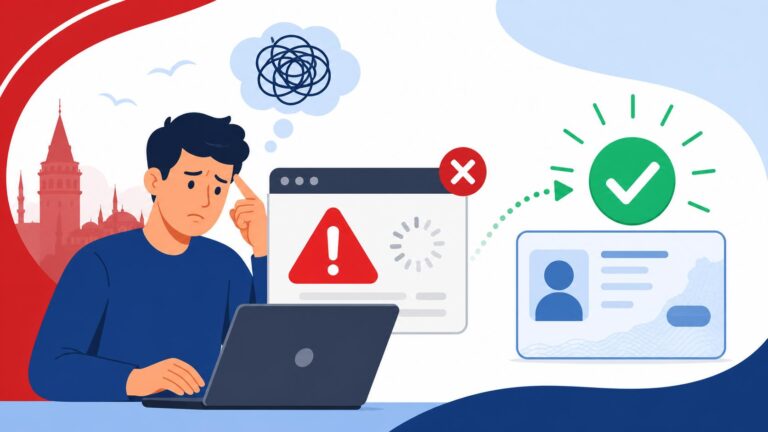
Imagine finding your dream apartment in Istanbul, paying the deposit, and then discovering you cannot legally live there. I remember a friend who bought a stunning view in Fatih only to have his residence permit rejected because the street was "closed" to foreigners. This guide explains the complex reality of buying property in Turkey’s closed neighborhoods and whether ownership guarantees residency.
The Reality of Closed Neighborhoods in Turkey
The concept of "closed neighborhoods" (Kapalı Mahalleler) has become one of the most significant hurdles for expats since its introduction in 2022. It wasn't always this way; for years, you could pick any corner of Turkey, buy a flat, and expect a relatively smooth path to residency. However, as certain districts saw a massive influx of international residents, the Turkish government implemented a quota system to maintain demographic balance. This shift has left many prospective buyers confused, often realizing too late that their investment doesn't grant them the right to stay in the country.
What Exactly is a Kapalı Mahalle
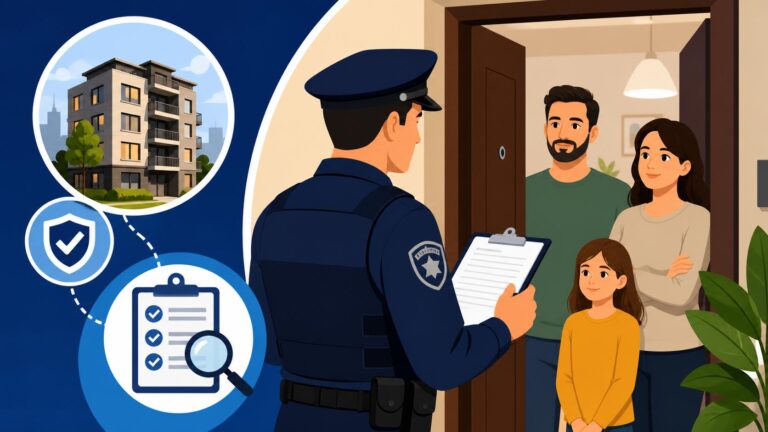
A closed neighborhood is a specific administrative district where the ratio of foreign residents has exceeded 20% of the total population. When a neighborhood hits this threshold, the Ministry of Interior "closes" it to new foreign residency registrations. This means the Provincial Directorate of Migration Management (Göç İdaresi) will not issue new residence permits for addresses within these zones. It is a dynamic list, meaning neighborhoods can be added as their demographics shift, making it essential to check The List of Closed Neighborhoods in Istanbul, Antalya, and Mersin (2026 Updates) before committing any funds.
You might assume that owning a property gives you a "hall pass" around these rules, but that is a dangerous misconception. The closure applies to the address itself, not just the individual. Even if you hold the Title Deed (Tapu) in your hand, if that building is located in a closed neighborhood, your application for a Short-Term Residence Permit for property purposes will likely be rejected. Many expats focus solely on the quality of the kitchen or the proximity to the metro while completely ignoring the administrative status of the district, leading to heartbreaking legal dead ends.
Why the 20% Quota Exists
The Turkish government’s rationale for these quotas is rooted in social integration and urban planning. In districts like Esenyurt in Istanbul or parts of Alanya, the sheer volume of foreigners began to outpace the local population's growth, leading to "ghettos" where Turkish was rarely spoken and local customs were being diluted. By capping the foreign population at 20%, the state aims to ensure that foreigners are distributed more evenly across the country, encouraging them to integrate into Turkish society rather than living in isolated expat bubbles.
From an expat's perspective, this feels like a sudden change of the goalposts. One day a street is open, and the next, it is on the prohibited list. This unpredictability is why Navigating Closed Neighborhoods: A Guide to Areas Where Foreigners Cannot Register is a vital skill for anyone moving to Turkey. Understanding that these rules are about demographics—not about discouraging investment—helps frame the situation, even if the bureaucratic reality remains incredibly frustrating for those caught in the middle of a transaction.
The Difference Between Ownership and Residency
This is the most critical distinction to grasp: owning property and having the right to live in it are two separate legal concepts in Turkey. You can legally buy an apartment in Fatih, Zeytinburnu, or any other closed district. The Land Registry Office (Tapu Dairesi) will happily process the sale, collect the taxes, and issue your deed. They are not required to warn you about residency restrictions because their job is simply to record the transfer of assets.
The trouble starts when you take that Tapu to the Migration Office. The Migration Office follows different laws than the Land Registry. Their mandate is to control who stays in the country and where. If your address is on the restricted list, they will deny your Ikamet application. This leaves you with a "vacation home" you can only visit on a 90-day tourist visa. For those intending to live here full-time, this turns a primary residence into a stranded asset. Understanding The Tapu Transfer Process: What Happens at the Land Registry Office is step one, but step two must always be a residency check.
Can You Get Property Residency in a Closed Area
The short answer is almost always a firm "no," but the "how" and "why" depend heavily on when you bought the property and how much you paid. The rules changed drastically in late 2023 and again in early 2024, creating a layered system of eligibility. If you are looking to buy now, the environment is much stricter than it was even two years ago.
The Short Answer for New Buyers
If you are a new buyer looking at a property in a closed neighborhood today, you will not be granted a residence permit based on that property. It does not matter if the apartment is worth $100,000 or $500,000; if the neighborhood is closed, the Migration Office will not register your address. This is why it is absolutely vital to verify the status of a district before you sign a sales contract. Many real estate agents—either through ignorance or a desire to close the deal—may tell you that "special exceptions" exist for property owners. In my experience, these exceptions are myths.
Furthermore, there is a minimum valuation rule that applies across the board, even in open neighborhoods. As of October 2023, you must spend at least USD 200,000 to qualify for a property-based residence permit. If you buy a cheaper flat in an open area, you might still get a "touristic" permit, but those are being denied at record rates in 2026. For a guaranteed path, you need to follow the Real Estate Residence Permits: Understanding the Strict USD 200,000 Tapu Rule precisely. Buying in a closed neighborhood essentially negates the benefits of this high investment for residency purposes.
Retroactive Rights and Grandfathering
There is one major exception: the "grandfather clause." If you already held a valid residence permit for a property in a neighborhood before it was officially closed, you are usually allowed to renew that permit. The government generally does not evict people who were already legally settled. However, this only applies if you maintain your residency without a break. If you let your permit expire and try to re-apply later, you may find yourself treated as a "new" applicant and thus blocked by the closure.
Several expats owned homes in Mahmutlar (Alanya) before it closed. They have been able to renew their Ikamet cards successfully year after year. However, they are effectively "stuck" in that property; if they sell and try to buy another flat in the same closed neighborhood, they will lose their residency rights because the new transaction is considered a fresh application. This creates a "lock-in" effect where owners in closed districts are hesitant to sell because they cannot easily secure residency elsewhere in the same area.
The USD 200,000 Threshold and Geographic Restrictions
Even if a neighborhood is open, you are now facing the $200,000 hurdle. This amount must be the "sales price" reflected on the Tapu and must be backed by a Foreign Exchange Document (DAB). In the past, people would under-declare the value of their property to pay lower taxes. Doing this today is a recipe for an immediate residency rejection. The Migration Office now cross-references the Tapu value with the Central Bank's exchange records.
When you combine the closed neighborhood list with the $200k rule, the "map" of where you can live in Turkey shrinks considerably. High-demand areas in Istanbul like Beşiktaş or Kadıköy are often open but extremely expensive, while more affordable areas like Esenyurt are largely closed. This is why many expats are now looking toward the outskirts of major cities or smaller provinces that have not yet hit the 20% quota. If you are struggling with a denial, you should read Ikamet Rejections: Exact Steps on What to Do If Your Residence Permit is Denied to understand your appeal options.
| Feature | Open Neighborhood | Closed Neighborhood |
|---|---|---|
| Buy Property? | Yes | Yes |
| Get Residency? | Yes (if >$200k) | No (usually) |
| Address Registration? | Yes | Restricted |
| Residency Renewal? | Yes | Only if grandfathered |
| Residency Strategy | Long-term stability | Vacation use only |
Navigating the Application Process and Risks
If you are determined to move forward with a purchase, you need a rigorous due diligence process. The Turkish bureaucracy is not designed to be user-friendly for non-Turkish speakers, and the consequences of a mistake are high—including fines, deportation orders, or the inability to use the home you just bought.
Checking the Status of Your Neighborhood
You cannot rely on the word of a seller or an agent. The only definitive way to check a neighborhood's status is through official government channels. The list is managed by the Ministry of Interior's Presidency of Migration Management. You can often find updated lists on their official website, but since updates happen frequently, checking the specific street and building status on e-Devlet is the safest bet. I always tell people to check How to Check on e-Devlet if Your Desired Neighborhood is Closed to Foreigners before they even view a property.
Another practical tip is to visit the local Nüfus (Population) office in the district you are interested in. You can ask them directly if the specific building ID (UAVT code) is open for foreign registration. Sometimes a neighborhood is open, but certain buildings have reached a limit. It sounds like overkill, but when $200,000 is on the line, you want every layer of certainty you can get. This is a crucial part of Address Registration (Nüfus): The Most Critical Post-Arrival Step for Foreigners, which is arguably the most important step after getting your deed.
Document Requirements: Tapu, Insurance, and Translation
Once you have confirmed the neighborhood is open and the price is right, you need to gather your dossier. The Migration Office requires "sworn translations" of your passport and potentially your birth certificate or marriage certificate if you are applying with family. Using a reputable service like RushTranslate is often better than relying on a random street-side translator, as technical errors in legal names can lead to delays. The Migration Office is famously picky about every letter matching your passport exactly.
You will also need health insurance that meets the Turkish residency criteria. While basic "ikamet insurance" is cheap and widely available locally, it offers very little actual coverage. Many long-term expats prefer a more robust policy from Cigna Global to ensure they are actually protected in private hospitals, though you must ensure the policy is "local-compliant" for the application itself. For more details on this, check out Health Insurance Requirements: Securing a Policy for First-Time Ikamet Applications. Lastly, you must obtain a "continuous" Tapu document (Tapu Kaydı) from the land registry office just days before your appointment to prove you still own the asset.
What Happens if Your Application is Rejected
If you ignore the warnings and apply for residency in a closed neighborhood, your file will be marked for rejection. Usually, the officer at the desk will tell you immediately that the address is blocked. If they accept the file but the system later flags the address, you will receive a notification (usually via SMS or the UETS system) giving you 10 to 30 days to leave the country.
A rejection isn't just a "try again later" scenario. It can result in a "V-code" being placed on your passport, which can complicate future visa applications. If you are rejected because of a closed neighborhood, your only real option is to move to an open neighborhood and start the application process over—but you can't use the property you just bought as the basis for that application. This is a nightmare scenario that costs thousands of dollars in lost fees and rent. If you find yourself in this spot, you need to look into Sworn Translators (Yeminli Tercüman): Expected Costs for Official Documents to ensure your appeal documents are perfect.
Strategic Alternatives for Prospective Buyers
Since the residency landscape in Turkey is so volatile, many expats are shifting their strategies. If the goal is long-term stability, buying a single apartment in a crowded district may no longer be the best move.
Looking at Open Neighborhoods and Rising Hubs
Instead of fighting the crowds in Fatih or Konyaaltı, look at "rising hubs." Districts like Pendik or Kartal on Istanbul’s Asian side, or the northern reaches of Izmir, often have plenty of capacity for foreign residents and offer a much more "authentic" Turkish experience. These areas are currently open and generally offer better value for money, allowing you to hit that $200,000 threshold with a much larger or newer property.
The "closed" list is a great map of where NOT to buy if you want a quiet life. If a neighborhood is closed, it’s already crowded and the infrastructure (schools, hospitals, traffic) is likely under strain. By choosing an open neighborhood, you aren't just securing your residency; you're often getting a better quality of life. Be sure to consult Navigating Closed Neighborhoods: A Guide to Areas Where Foreigners Cannot Register periodically, as these "open" hubs can close if everyone moves there at once.
Using Legal Support and Due Diligence
I cannot stress this enough: do not DIY a property purchase in Turkey if you intend to live here. Hire an independent lawyer—not one recommended by the real estate agent—to perform a "clean title" check and a residency verification. A lawyer can check if the building has an "Iskan" (habitation license). Buying a property without an Iskan is another common trap that can block your residency, even in an open neighborhood.
The cost of a lawyer is a fraction of the cost of a lost investment. They can handle the communication with the Migration Office and ensure that your $200k investment is structured correctly to meet the 2026 requirements. They will also assist with The Tapu Transfer Process: What Happens at the Land Registry Office to ensure the declared value matches the actual price paid, protecting your future residency rights.
Long-term Planning: Citizenship vs. Short-term Ikamet
If you have a larger budget, you might consider bypassing the "neighborhood" headache entirely by aiming for citizenship. The threshold for Turkish Citizenship by Investment 2026: The $400,000 Property Route Explained is currently USD 400,000. The beauty of the citizenship route is that once you have your Turkish passport, the "closed neighborhood" rules no longer apply to you. As a citizen, you can live anywhere you want, just like any other Turk.
For those who can afford it, this is the ultimate "insurance policy" against changing immigration laws. While a residence permit can be revoked or denied based on changing quotas, citizenship is permanent. If you are on the fence between buying two small apartments or one $400k home, the citizenship route offers a level of freedom that the residency route simply cannot match in today's climate.
Disclaimer
The information provided in this guide is for informational purposes only and does not constitute legal or professional advice. Turkish immigration laws and neighborhood statuses are subject to frequent and unannounced changes. Always consult with a qualified Turkish legal professional or the official Presidency of Migration Management (Göç İdaresi) before making any financial commitments or property purchases in Turkey.