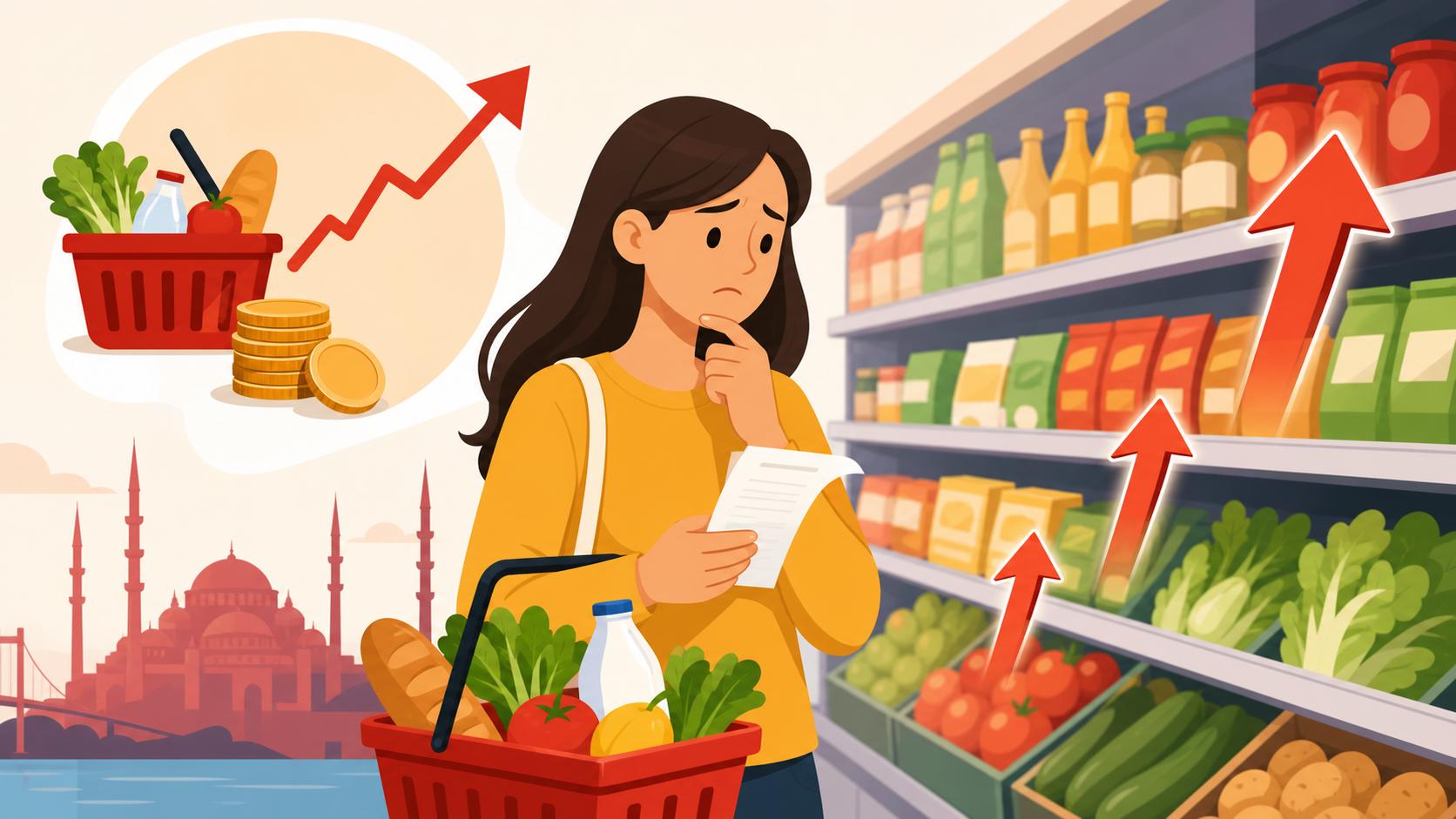
Budgeting for Groceries: Understanding Food Inflation in Turkish Supermarkets
Staring at a block of white cheese in the dairy aisle while trying to calculate why it costs thirty percent more than it did last month is a rite of passage for every expat in Turkey. I remember my first year in Istanbul, feeling completely defeated by the rapidly changing price tags that seemed to defy all logic. This guide solves the mystery of navigating Turkish food inflation and provides a realistic framework for managing your grocery budget.
The Reality of Food Inflation in Turkey 2026 Context
Living in Turkey requires a fundamental shift in how you perceive the value of money. Unlike back home, where prices might fluctuate by a few cents over a year, the Turkish market operates on a high-velocity cycle. You might walk into a store on Monday and find a liter of milk for a certain price, only to see a revised sticker by Thursday. This is the reality of the Turkish Lira's volatility and the subsequent impact on supply chains. As an expat, understanding this isn't just about math; it is about emotional resilience.
The official consumer price index often tells one story, but the "felt" inflation at the checkout counter is frequently much sharper. This discrepancy happens because food, especially imported items or those reliant on foreign fuel and fertilizer, bears the brunt of currency fluctuations. When the Lira dips, the cost of transporting tomatoes from Antalya to Istanbul rises almost instantly. Validating your frustration is the first step; you are not imagining it, and you are not "doing it wrong" if your budget feels tighter than it did six months ago.
To maintain your sanity, it is essential to stop converting every single purchase back to your home currency in your head. While it might make a 200 TL wedge of cheese seem "cheap" in Dollars or Euros, it doesn't help you manage a local budget if you are earning or living on a fixed amount of Lira. Instead, focus on the percentage of your monthly income dedicated to food. Many veterans here use Wise to manage their currency transfers strategically, moving larger chunks of money when the rates are favorable to create a buffer against these sudden grocery spikes.
Understanding the CPI vs Feel-Good Inflation
The government-reported inflation figures are a weighted average of hundreds of items, many of which you may never buy. However, food inflation in Turkey has historically outpaced the general index. In 2026, we see a continued trend where staple items—bread, eggs, sunflower oil, and meat—experience "leapfrog" pricing. This means prices stay stable for a few weeks and then jump 15% overnight.
This creates a culture of "stockpiling" among locals and savvy expats. If you see your favorite brand of olive oil on sale, you don't buy one bottle; you buy four. Understanding this cycle helps you realize that a high grocery bill one week might actually be a cost-saving measure for the next month. It is a proactive way to combat the Cost of Living in Turkey 2026: Detailed Budgets for Singles and Families that many newcomers find overwhelming.
Why Import Taxes Drive Up Specific Goods
Turkey is largely self-sufficient in many agricultural areas, but "luxury" or international goods are a different story. Items like avocados, specialty coffee, imported cheeses, and alcohol are hit with heavy consumption taxes and import duties. These taxes remain a significant hurdle for those of us craving a taste of home. A jar of peanut butter or a specific brand of soy sauce can often cost three times what it would in Europe.
If you find yourself frequently buying these imported goods, your budget will balloon rapidly. The trick is to identify local substitutes. Turkey has incredible local honey, tahini, and fruit preserves that can replace many Western breakfast staples at a fraction of the cost. For more on how these costs fit into a broader lifestyle, check out the Monthly Budget Breakdown: Living in Kadıköy (Istanbul) on $2,000 a Month.
Navigating the Major Supermarket Chains
Not all supermarkets in Turkey are created equal. In fact, shopping at the wrong one for your daily staples is the fastest way to drain your bank account. The landscape is divided into three main tiers: the "Hard Discounters," the "Middle Ground," and the "High-End/Gourmet" stores. Knowing which store to use for which item is the hallmark of a veteran expat.
I usually split my shopping into three trips. I go to the discounters for cleaning supplies and dry goods, the middle-tier stores for specific brands of yogurt or milk, and the local markets for fresh produce. This multi-stop strategy might seem tedious at first, but in the context of Turkish Supermarkets Explained: The Difference Between Migros, Carrefour, Şok, and Bim, it is the only way to keep your spending under control while still enjoying high-quality food.
The Discount Giants Bim A101 and Şok
Bim, A101, and Şok are the "big three" of the discount world. You will find one on almost every street corner, often right across from each other. These stores carry a limited range of products, mostly their own private labels. While the fluorescent lighting and cramped aisles aren't the most glamorous, the prices are unbeatable for basics like flour, sugar, pasta, and toilet paper.
In 2026, these stores have also become the go-to for "Actuality" items—weekly specials that range from air fryers to organic coconut oil. If you are trying to stick to a strict budget, these should be your primary stops. Just be aware that the meat quality here can be hit-or-miss compared to a dedicated butcher, but for shelf-stable items, they are essential. For a deeper dive into these stores, refer to Grocery Prices 2026: Cost Comparison Between Migros, Şok, and Bim.
The Middle Ground Migros and CarrefourSA
Migros is arguably the most popular chain for expats. It is organized, carries a wide variety of brands, and has a tiered system (Migros Jet, M, MM, MMM, and 5M) depending on the store's size. The larger the "M" count, the more variety you get, including international sections. CarrefourSA operates similarly, often providing a "European" shopping experience that can be a huge comfort when you are first navigating the Housing & Living challenges of a new country.
The key to shopping at Migros is the Money Card. Without it, you are essentially paying a "tourist tax" on every item. The discounts for cardholders are significant and often apply to bulk purchases. This is also where you will find a better selection of fresh fish and aged cheeses, though you will pay a premium for the convenience of one-stop shopping.
Gourmet and High End Options Macrocenter
If you are looking for specific international items—think San Marzano tomatoes, Pecorino Romano, or real maple syrup—Macrocenter is your destination. Owned by the Migros group, it is the most expensive supermarket in the country. Many expats refer to it as the "treat yourself" store. While it is not sustainable for a full weekly shop for most, it is invaluable for Finding Pork, Bacon, and International Ingredients in Major Turkish Cities.
Prices here are often double or triple what you would pay for local equivalents elsewhere. However, the quality of the produce and the availability of niche dietary products (gluten-free, vegan, etc.) make it a necessary evil for some. Just keep an eye on your spending; it is very easy to walk out of a Macrocenter with two bags of groceries and a bill that rivals your monthly utility costs.
The Local Pazar: The Secret to Sustainable Budgeting
If you really want to live like a local and save money, you must master the "Pazar" (the weekly open-air market). Every neighborhood in Turkey has a designated day when the streets are taken over by farmers and vendors. This is where the freshest, cheapest, and most seasonal produce is found. It is also where you will experience the most "real" Turkish culture, for better or worse.
The noise can be overwhelming—vendors shouting their prices, the clatter of carts, and the throng of grandmothers hunting for the best peppers. I used to find it intimidating until I realized that the Pazar is where the real price discovery happens. If the price of tomatoes is high at the Pazar, you know the supermarkets will be even worse. It is the heartbeat of Turkish food economics.
How the Weekly Neighborhood Market Works
Each neighborhood has its set day—for example, the Tuesday market in Kadıköy or the Wednesday market in Fatih. Most vendors set up early in the morning and stay until sunset. The products are usually grouped: fruits and vegetables in one area, cheeses and olives in another, and textiles or household goods on the periphery.
For the best prices, go in the late afternoon. As the sun starts to set, vendors would rather sell their remaining stock at a loss than pack it back onto their trucks. This is known as "akşam pazarı" (evening market), and you can often get produce for 50% less than the morning price. To help you navigate this, see Weekly Pazar Markets: How to Buy Fresh Produce and Negotiate Like a Local.
Negotiation Etiquette and Seasonal Buying
Unlike the supermarket, prices at the Pazar can sometimes be flexible, especially if you are buying in large quantities (like 5kg of peppers for winter pickling). However, for a standard kilo of tomatoes, the price on the sign is usually fixed. The real "negotiation" happens through selection. Always pick your own produce if the vendor allows it (look for signs that say "seç-al"), as they may try to bag the bruised items for you if you aren't paying attention.
Shopping seasonally is the most effective way to combat inflation. In the summer, cherries and peaches are incredibly cheap. In the winter, you switch to citrus and pomegranate. If you try to buy strawberries in January, you will pay a massive "out of season" premium. This cultural shift in eating is a big part of Daily Life & Culture: Religion, Social Etiquette, and Making Friends in Turkey.
Strategies for Managing Your Grocery Budget
Managing a budget in a high-inflation environment requires more than just price-checking; it requires a digital strategy. Turkish supermarkets have leaned heavily into app-based loyalty programs and digital payment systems. If you aren't using these, you are leaving money on the table.
I also recommend keeping a close eye on your financial security while using these apps. When you are sitting in a cafe in Beşiktaş, using public Wi-Fi to check your bank balance or reload your grocery apps, you should always use NordVPN to protect your data. Identity theft is a growing concern, and as an expat, your foreign-linked accounts are often high-value targets.
Using Loyalty Apps and Digital Wallets
Every major chain has an app—Migros Money, A101 Plus, and the Bim app are the big ones. These apps often offer "personalized" discounts based on your shopping habits. If you buy a lot of yogurt, the app will eventually trigger a coupon for your favorite brand. Additionally, digital wallets like Tosla or Papara often offer "cashback" (usually 5-10%) for supermarket purchases.
This layer of savings is crucial. When food prices rise by 5% in a month, a 10% cashback offer from a digital wallet effectively cancels out the inflation for that period. Many expats also use Binance or Trade Republic to keep their savings in more stable assets, only moving what they need for the week into their Turkish Lira accounts via Wise.
Comparing Costs for Expats Earning Foreign Currency
If you are a digital nomad or an expat with a foreign remote job, you are in a unique position. While the Lira prices go up, the value of your USD or EUR often rises alongside them. This "natural hedge" can make inflation feel less painful, but it is a double-edged sword. If the Lira stabilizes while local prices continue to climb, your purchasing power will drop.
It is wise to track your expenses in both Lira and your home currency. This helps you see if your lifestyle is actually becoming more expensive or if it is just "Lira noise." For those on the Digital Nomad Visa Turkey (2027): Full Requirements and Application Guide, this financial tracking is essential for proving your income and sustainability to the authorities.
Hidden Costs and Luxury Tax Realities
One of the biggest traps for newcomers is the convenience economy. Turkey has some of the best delivery apps in the world—Getir and Yemeksepeti are legendary. You can have a single loaf of bread and a bottle of water delivered to your door in ten minutes. However, these services come with a hidden "inflation" of their own.
Prices on these apps are often 10-20% higher than the in-store price, plus delivery fees and tips. If you rely on delivery for your daily needs, your grocery budget will be significantly higher than if you walked to the local Şok. For a detailed comparison of these services, check out Getir and Yemeksepeti: A Guide to Using Turkey’s Top Food Delivery Apps.
The Price of Convenience and Delivery Apps
In 2026, delivery apps have introduced "dynamic pricing." During peak times or bad weather, the service fee can jump significantly. While it is tempting to order in when it's raining in Istanbul, those small fees add up to thousands of Lira over a month. Expats can spend as much on delivery fees as they do on the food itself without realizing it.
If you must use them, look for the "Market" tabs within the apps that offer grocery-store prices rather than convenience-store prices. This is a common tip found in the Cost of Living in Istanbul vs Coastal Cities (Antalya, Bodrum, Fethiye) guides, as delivery costs vary wildly by region.
Why Specialty International Ingredients Cost a Fortune
If your diet requires specific items like quinoa, almond flour, or imported hot sauce, you need to prepare for sticker shock. Turkey's protectionist trade policies mean that anything not produced locally is hit with heavy tariffs. In 2026, a bottle of imported Sriracha can cost as much as a full steak dinner at a local "Lokanta."
To mitigate this, many expats bring a "spice suitcase" when they visit home or ask friends to bring specific non-perishables. For everything else, learning to cook with local ingredients like sumac, nar ekşisi (pomegranate molasses), and pul biber (Aleppo pepper) will not only save you money but also improve your culinary experience in Turkey.
Practical Comparison Table: Itemized Costs (2026)
To give you a baseline, here is a comparison of common items across different store types. These are estimated averages for mid-2026 in a major city like Istanbul or Ankara.
| Item (Standard Size) | Discount Store (Bim/A101) | Mid-Tier (Migros) | Gourmet (Macrocenter) | Local Pazar |
|---|---|---|---|---|
| Milk (1 Liter) | 32 TL | 40 TL | 65 TL | N/A |
| Eggs (30 Pack) | 120 TL | 155 TL | 210 TL | 140 TL |
| White Cheese (500g) | 95 TL | 130 TL | 240 TL | 110 TL |
| Tomatoes (1kg) | 35 TL | 45 TL | 85 TL | 25 TL |
| Chicken Breast (1kg) | 190 TL | 230 TL | 310 TL | N/A |
| Olive Oil (1 Liter) | 280 TL | 350 TL | 550 TL | 300 TL |
| Bread (Standard Loaf) | 12.5 TL | 12.5 TL | 45 TL | 12.5 TL |
Note: Prices in Turkey change frequently. Always check the latest stickers.
Integrating Grocery Costs into Your Wider Financial Life
Grocery shopping doesn't happen in a vacuum. It is deeply connected to your residency status, your banking choices, and how you manage your taxes. For example, if you are running a business here, your grocery receipts (if they include office supplies) might be relevant for your accounting. You should consult with someone like an Finding an English-Speaking Certified Public Accountant (SMMM) in Istanbul to understand what is deductible.
Furthermore, how you move money into the country to pay for these groceries matters. Using Wise for your monthly transfers usually beats the exchange rates offered by local banks. I always keep a portion of my funds in Binance or Trade Republic as well, allowing me to convert only what I need into Lira, thus protecting my overall wealth from the very inflation I'm fighting at the supermarket.
Tax and Exchange Rate Considerations
Every time you buy groceries, you are paying KDV (Value Added Tax). In 2026, this is usually 1% on basic staples and 10-20% on luxury or processed items. While you can't avoid this, being aware of it helps you understand why your bill for "snacks and sodas" is so much higher than your bill for "vegetables and bread."
If you are a high-net-worth expat or an investor, these small percentages add up. Managing your liquidity through platforms like Wise ensures that you aren't losing another 3-5% just on the conversion from your home currency to Lira. For a broader look at this, see Taxes in Turkey for Foreigners: Residency, Income, and Filing Basics.
Protecting Your Financial Access Online
Finally, never underestimate the importance of digital security when managing your Turkish finances. Between banking apps, supermarket loyalty programs, and delivery services, your phone is a gateway to your entire financial life in Turkey. I never log into my Garanti or İş Bank app without NordVPN active, especially on the "Free Wi-Fi" found in malls or supermarkets.
A small investment in digital security and smart transfer tools like Wise provides the peace of mind needed to focus on the more important things—like finding the perfect watermelon at the Saturday Pazar. Grocery shopping here is a challenge, but with the right strategy, it becomes just another manageable part of your beautiful Turkish life.
Disclaimer
The information provided in this guide is for educational and informational purposes only. Prices, inflation rates, and supermarket policies in Turkey are subject to rapid change. While we strive to provide accurate data for 2026, readers should verify current costs and local laws independently. Financial decisions regarding currency exchange and investments should be made with professional advice.