Finding Therapy in Turkey: The Difference Between Psychiatry and Psychology
Finding the right mental health professional in a foreign country can feel like searching for a needle in a haystack of bureaucracy and language barriers. I remember the overwhelming isolation of my first winter in Istanbul, desperately needing someone to talk to but not knowing where to start or how the system worked. This guide breaks down the essential differences between psychiatry and psychology in Turkey to ensure you get the exact support you need.
The Professional Divide: Psychiatrists vs. Psychologists in Turkey
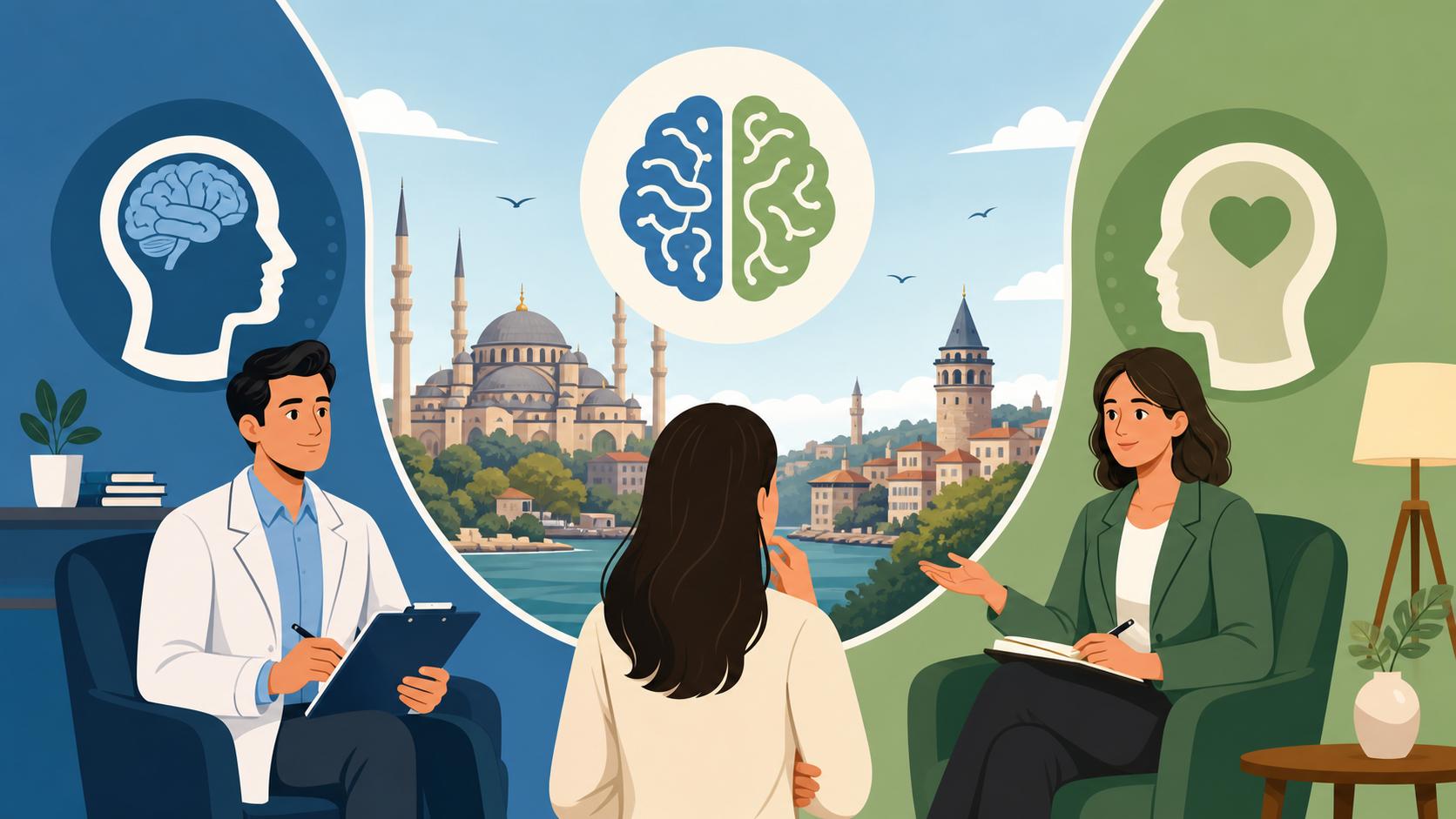
In Turkey, the distinction between a psychiatrist (Psikiyatrist) and a psychologist (Psikolog) is strictly regulated by education and medical authority, and understanding this is the first step toward effective care. A psychiatrist is first and foremost a medical doctor. They have completed six years of medical school followed by a four-year residency in psychiatry. Because they are MDs, they are the only mental health professionals in Turkey legally permitted to prescribe medication, order blood tests, or request neuroimaging like MRIs or CT scans.
Psychologists, on the other hand, typically graduate from a four-year psychology department within a Faculty of Arts and Sciences. However, a major point of confusion for expats is the "Clinical" distinction. To practice psychotherapy in a clinical setting in Turkey, a psychologist should ideally hold a Master’s degree in Clinical Psychology (Klinik Psikoloji). While many people call themselves "psychologists," you should specifically look for a "Klinik Psikolog" if you are seeking talk therapy for conditions like depression, anxiety, or trauma.
If you are just starting your journey, you might find the Healthcare in Turkey for Foreigners: Complete Expat Guide (2027) helpful for understanding how the broader medical system integrates these specialists. Generally, if you believe your symptoms require medical intervention—such as severe insomnia, bipolar disorder, or clinical depression—a psychiatrist is your primary point of contact. If you are looking to process life transitions, culture shock, or relationship issues through dialogue, a clinical psychologist is the appropriate choice.
The Role of the Psychiatrist: Diagnosis and Medication
When you visit a psychiatrist in Turkey, the experience is very similar to visiting any other medical specialist. In a private hospital or a "muayanehane" (private office), the session usually lasts between 20 to 45 minutes. The psychiatrist will focus heavily on symptomatic diagnosis. They will ask about your sleep patterns, appetite, energy levels, and any physical manifestations of stress.
One unique aspect of Turkish psychiatry is the integration of physical health. It is very common for a Turkish psychiatrist to ask for a full blood panel before starting any psychiatric medication. They want to rule out thyroid issues, Vitamin D deficiencies, or B12 imbalances, which are notoriously common in the expat community and can mimic symptoms of depression. You can often track these results via the Ministry of Health's digital portal, and if you need help navigating it, check out Navigating the e-Nabız Website: Translating Your Blood Test Results.
In terms of treatment, psychiatrists in Turkey are the gatekeepers of pharmaceutical intervention. If you are already on a specific medication from your home country, bringing your original prescription and a translated doctor's note is vital. However, be aware that some medications, particularly stimulants for ADHD, are strictly controlled. For a deeper dive into the legalities of prescriptions, refer to Accessing Antidepressants: Prescription Rules and Stigma in Turkey.
The Role of the Clinical Psychologist: The Work of Talk Therapy
Clinical psychologists in Turkey focus on the "why" and "how" of your mental state through various therapeutic modalities. Whether it’s Cognitive Behavioral Therapy (CBT), EMDR for trauma, or Psychodynamic therapy, the goal is long-term behavioral and emotional change. Unlike the medical-model approach of a psychiatrist, a session with a psychologist usually lasts a "therapeutic hour" (typically 45–50 minutes).
For expats, the most significant challenge is finding a psychologist who not only speaks English but also understands the specific nuances of "Expat Blues" or the stress of living in a hyper-inflationary environment like Turkey. Many high-end private clinics in neighborhoods like Nişantaşı, Bebek, or Kadıköy cater specifically to the international community. These professionals often have degrees from the US, UK, or Europe and are well-versed in the cultural complexities of the foreign resident.
When searching for a therapist, it is perfectly acceptable to ask about their supervision and their specific Master’s degree. Turkey has seen a surge in "life coaches" and "counselors" who may not have the rigorous clinical training required to handle complex mental health issues. Always verify that they are a Klinik Psikolog to ensure they have the necessary training to provide Mental Health in Turkey: Counseling, Psychiatry, and Expat Support Systems.
Comparison of Mental Health Professionals in Turkey
To help you decide which path to take, here is a breakdown of the primary differences you will encounter in the Turkish private and public healthcare sectors.
| Feature | Psychiatrist (Psikiyatrist) | Clinical Psychologist (Klinik Psikolog) |
|---|---|---|
| Education | Medical Degree (MD) + Residency | BA in Psychology + MA in Clinical Psychology |
| Prescription Rights | Yes, fully authorized | No |
| Primary Method | Diagnosis, Medication, Medical Management | Talk Therapy, Behavioral Intervention |
| Session Length | 15–40 Minutes | 45–60 Minutes |
| Common Setting | Hospitals or Private Medical Offices | Private Therapy Suites or Clinics |
| Health Insurance | Often covered by Private/SGK | Often requires specialized mental health riders |
Navigating Private vs. Public Care for Mental Health
The Turkish healthcare system offers two main routes: the public system (SGK) and the private sector. For most expats, the private sector is the preferred choice for mental health due to the availability of English-speaking doctors and shorter wait times. Public hospitals (Devlet Hastanesi) do have "Psikiyatri" departments, but the doctors are often under immense pressure, seeing dozens of patients a day. This usually results in very short appointments focused almost exclusively on renewing prescriptions.
If you choose the private route, you have two options: the psychiatry departments of large private hospitals or independent private practices. Large international hospitals like the American Hospital (Amerikan Hastanesi) or Acıbadem have dedicated departments where you can find some of the best Finding English-Speaking Doctors in Istanbul: Top International Clinics. These facilities often have translators on staff, though most psychiatrists in these settings speak excellent English themselves.
For those concerned about the financial aspect, it is worth checking if your international health insurance, such as Cigna Global, covers outpatient psychiatric visits or psychotherapy. Many local Turkish private insurance plans have a limit on the number of sessions or exclude "pre-existing" psychological conditions. If you are looking for comprehensive coverage, researching Private Health Insurance (Özel Sağlık Sigortası): Top Providers for Foreigners is a must to avoid high out-of-pocket costs.
Cultural Nuances and the "Expat Factor"
Mental health awareness is growing rapidly in Turkey, but some traditional stigmas remain, particularly regarding the use of medication. However, in major cities like Istanbul, Ankara, and Izmir, seeking therapy is increasingly seen as a standard part of self-care. As an expat, you may find that Turkish therapists are quite warm and may offer a more "empathetic" or "paternal" style of communication compared to the more detached approach sometimes found in Western Europe or North America.
Living in Turkey brings unique stressors—navigating the "Ikamet" (residence permit) process, dealing with the noise of a 16-million-person city, or the frustration of not being able to express your personality in a new language. A good psychologist will acknowledge these environmental factors. Sometimes, the best support doesn't come from a clinic but from shared experiences. Engaging with Expat Support Groups: Managing Isolation and Culture Shock in Turkey can provide a necessary social safety net that complements professional therapy.
In addition to professional help, many expats turn to holistic support. While you should always consult your doctor first, many find that maintaining their vitamin levels helps with the "winter slump" in Turkey. Using platforms like iHerb to source specific supplements that might be expensive or hard to find locally—like high-quality Magnesium or specialized probiotics—is a common strategy among the resident community.
Steps to Finding Your Therapist in Turkey
If you are ready to reach out for help, follow these steps to ensure a smooth experience:
- Identify your primary need: If you need a diagnosis or a prescription refill, book a psychiatrist. If you want to talk through your feelings, book a clinical psychologist.
- Check your insurance: Contact providers like Cigna Global to see if they have "direct billing" with any specific hospitals in your city.
- Search with English keywords: Use terms like "English speaking psychologist Istanbul" or "International mental health clinic Ankara."
- Verify credentials: Ensure the psychologist has a "Klinik Psikoloji" Master’s degree.
- Book an initial consultation: Most therapists will offer a shorter first session or a phone call to see if you are a "good fit."
- Consider online therapy: If you live in a smaller coastal town where English-speaking help is scarce, many Istanbul-based therapists offer sessions via Zoom or Skype. You can find more details on this in our guide on Mental Health Professionals: Finding English-Speaking Therapists Online and Offline.
Emergency Mental Health Care
If you find yourself in a crisis, Turkey’s emergency system is efficient but can be daunting. The universal emergency number is 112. If you are experiencing a severe mental health crisis, you can go to the "Acil" (Emergency) department of any hospital. Private hospitals are generally better equipped to handle English-speaking patients in psychiatric emergencies, though they will charge for the visit and any observation period.
For those who are not in an immediate life-threatening situation but need urgent support, there are several "24/7" private clinics in Istanbul that specialize in psychiatry. Always keep a digital copy of your passport and residence permit (if you have one) on your phone, as hospitals will require identification immediately upon arrival.
Disclaimer
The information provided in this guide is for educational and informational purposes only and does not constitute professional medical advice, diagnosis, or treatment. Always seek the advice of a qualified healthcare provider in Turkey regarding any mental health concerns or medical conditions. The expat landscape and local regulations can change; therefore, it is essential to verify current laws and medical practices with official Turkish authorities or legal professionals.