What Identification Documents Must You Bring to a Turkish Hospital?
Arriving at a Turkish hospital reception only to realize you are missing a critical piece of paperwork is a stress no one needs when they are already feeling unwell. I once spent two agonizing hours pacing an Istanbul clinic lobby because my physical residency card was stuck in the mail and I hadn't printed my temporary document. This guide solves that frustration by detailing the exact identification documents you must bring to any Turkish medical facility to ensure seamless care.
The Foundation of Medical Identity in Turkey
In Turkey, the healthcare system is deeply integrated with the national identity database. Whether you are visiting a high-end private clinic in Nişantaşı or a local state hospital, the first question you will hear is "Kimlik var mı?" (Do you have your ID?). For foreigners, the answer to this question depends entirely on your legal status within the country. The system relies on a central registration number to pull up your medical history, insurance status, and even your blood type.
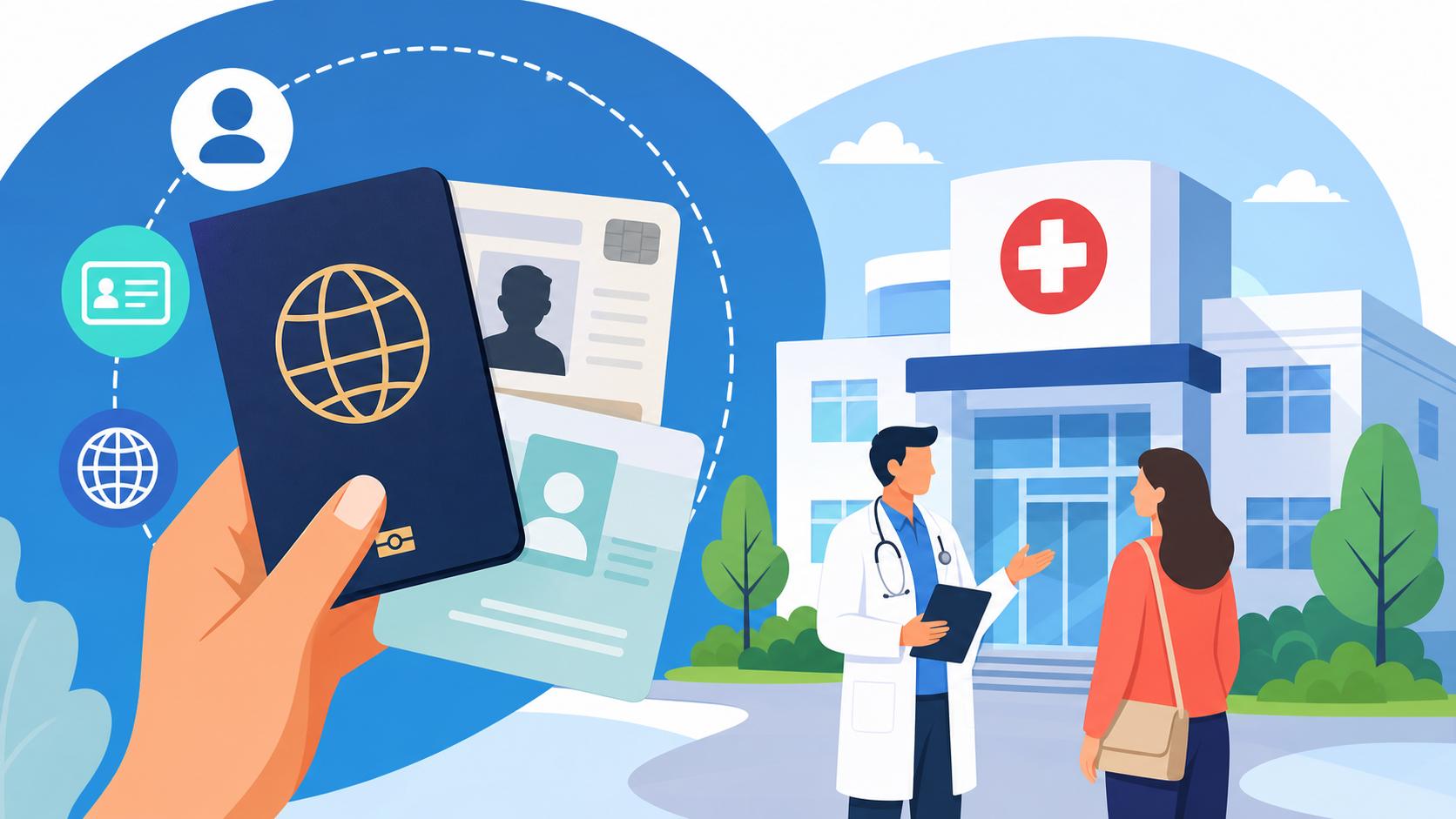
If you are a resident, the most important piece of plastic in your wallet is your Foreigner Identity Card, commonly known as the Ikamet. This card contains your 99-number, a unique eleven-digit identification code starting with the digits 99. This number is your "key to the city" for almost every administrative task. Without it, public hospitals generally cannot register you into their system unless it is a life-threatening emergency. Even in private facilities, having this number ensures that your records remain consistent across different visits.
For those still navigating the early stages of relocation, The 99-Number: What Your T.C. Kimlik Number Gives You Access To in Daily Life provides a deeper look into why this specific string of digits is so powerful. It is not just for hospitals; it links your utilities, your bank account, and your health records. If you have recently applied for residency but your card has not yet arrived, you must carry the signed and stamped "Residence Permit Application Document" (Müracaat Belgesi) provided by the Migration Office. This paper functions as a legal placeholder and contains your assigned 99-number, allowing hospitals to process your intake manually.
Documentation Requirements for Residents
If you are living in Turkey on a long-term basis, your identification needs are more complex than those of a casual tourist. The hospital needs to verify not just who you are, but who is paying for your treatment. This is where your insurance documentation becomes as vital as your ID card. Most residents carry Mandatory Ikamet Insurance: What Health Policies Actually Cover for Visas, but often find that the basic policy is insufficient for major procedures.
When you approach the registration desk, you should have the following items ready:
- Original Foreigner Identity Card (Ikamet): Digital photos or photocopies are frequently rejected at public hospitals and some private ones due to strict anti-fraud regulations.
- Proof of Insurance: If you are enrolled in the state system, your 99-number will automatically show your SGK status. However, if you have private coverage through a provider like Cigna Global, you should carry either your physical insurance card or a printed copy of your policy’s "Certificate of Insurance" which includes your policy number and the local Turkish partner’s contact details.
- Passport: While the Ikamet is your primary ID, some private hospitals still request your passport to verify your entry date into Turkey, especially if there is a discrepancy in your residency status.
Many expats choose to supplement their local coverage with international plans from Cigna Global to ensure they have access to the widest network of private hospitals. When using such premium insurance, the hospital's international patient department will usually handle the communication, but they will still require your physical Ikamet to start the file. If you are managing chronic conditions and need specific vitamins or supplements after your visit, remember that while pharmacies are everywhere, many expats use iHerb for specific international brands that are not always stocked locally in Turkey.
Essential Papers for Tourists and Short Term Visitors
Tourists often assume that a passport is the only thing they need, but Turkish hospitals require specific data points to process a foreign patient. If you are here on a 90-day visa-free entry or an e-Visa, you do not have a 99-number. This means the hospital must create a "temporary guest" file for you.
To make this process as fast as possible, you must bring your physical passport. A photocopy is rarely sufficient for hospital admission because the clerk needs to verify your latest entry stamp. This stamp proves you are in the country legally, which is a prerequisite for most travel insurance claims to be valid. You should also have a digital or printed copy of your travel insurance policy in English and, if possible, a Turkish translation of the summary of benefits.
Before you travel, it is wise to check Do Short-Term Tourists Need Mandatory Health Insurance to Enter Turkey? to understand the legal nuances of medical coverage for visitors. Even if you are just here for a week, being unable to produce your passport at an ER can lead to significant delays in non-emergency billing, often requiring you to pay the full "uninsured foreigner" rate upfront in cash or credit card.
Comparing Document Needs by Hospital Type
The experience of checking into a hospital can vary wildly depending on whether the facility is state-run or private. State hospitals (Devlet Hastanesi) are highly standardized and often less flexible regarding missing paperwork. Private hospitals, particularly those catering to medical tourists, may have dedicated "International Patient" desks that can help navigate missing documents, though they will still require the basics for legal reasons.
| Document Type | Public Hospital (SGK/State) | Private Hospital (A-Class) |
|---|---|---|
| Ikamet (Residency Card) | Mandatory for non-emergency care | Preferred; Passport often accepted |
| Passport | Required if no Ikamet is held | Mandatory for all foreign nationals |
| Entry Stamp Proof | Occasionally checked | Strictly checked for insurance billing |
| Insurance Policy Copy | Linked to 99-number (SGK) | Physical/Digital copy required for direct billing |
| Müracaat Belgesi | Accepted with official signature | Accepted with valid 99-number |
| Address Proof | Often required for registration | Not usually required |
In private facilities, such as those listed in Finding Medical Care in Turkey: Public Hospitals vs JCI-Accredited Clinics, the staff often speak English and can help you if your documentation is in a foreign language. However, in a state hospital, if your documents are not in Turkish or do not have a 99-number associated with them, you may be asked to provide a sworn translation for any previous medical reports or prescriptions you are bringing from home.
Documentation for Family Members and Children
If you are taking a child to the hospital, the rules become even stricter to prevent issues related to guardianship and child safety. For expat families, it is not enough to just have the child's ID; you often need to prove the relationship between the parent and the child if the surnames differ or if only one parent is present.
When registering a child, bring the child's Ikamet and a copy of their birth certificate. If the birth certificate is from another country, it should ideally be apostilled and translated into Turkish. This is particularly important when Adding Spouses and Children to Your Turkish Health Insurance Policy or when visiting a pediatrician for the first time. Turkish hospitals are very careful about pediatric registrations, and having a folder with these "just in case" documents can save you hours of headache.
In emergency situations, such as those described in Emergency Medical Care in Turkey: Dialing 112, Ambulances, and Triage, the priority is stabilization. The doctors will treat the patient first and ask for documents later. However, once the immediate crisis has passed, a family member will be expected to produce the patient's ID at the "Kayıt" (Registration) desk to formalize the admission.
Digital Records and the Role of e-Nabız
One of the most impressive aspects of the Turkish healthcare system is the e-Nabız portal. Once you have your 99-number and your first hospital visit is recorded, your medical identity becomes digital. This system tracks every blood test, X-ray, and prescription across both public and private sectors.
When you go to a follow-up appointment, you may find that you don't need to bring physical copies of your previous results if you have already registered on the app. Using e-Nabız: Accessing Your Medical Records on the Ministry of Health App is an essential tool for any expat. By showing your e-Nabız profile on your phone, you provide the doctor with an instant, verified medical history that is linked directly to your Turkish identity number. This reduces the need for carrying bulky folders of medical history, though you still need your physical ID card to "unlock" the session at the front desk.
If you are using the Booking Public Hospital Appointments via the MHRS Digital System, your ID is already linked to your appointment. When you arrive at the hospital, you simply swipe your Ikamet at a kiosk or hand it to the clerk, and your appointment details will pop up automatically. This digital integration is why the physical ID is so non-negotiable; it is the biometric key that connects you to the entire national health grid.
Financial Documents and Billing Procedures
Finally, you must consider the documents required for the "Vezne" (Cashier). If you are not covered by SGK and are paying out-of-pocket or via a private provider like Cigna Global, the hospital will generate an invoice. To ensure this invoice is valid for your insurance reimbursement or for tax purposes, they will need your correct address as registered in the national system.
If you have moved recently, you should ensure your address is updated, as the hospital system pulls this data from the Nüfus (Population) registry. For more on how these bills are calculated, see Understanding Turkish Hospital Invoices and the Direct Billing Process. In some cases, if the bill is large, the hospital may ask for a "Letter of Guarantee" from your insurance provider. Keeping a digital copy of your insurance company’s emergency contact number and your member ID is vital.
For those who regularly purchase health-related items, like specialized supplements from iHerb, keep your digital receipts as well. While these aren't required for hospital admission, having a record of what you are taking can help doctors avoid drug interactions, especially if the labels are in a language they don't recognize.
Summary Checklist for Your Hospital Visit
To ensure you are never turned away or delayed, keep a "Hospital Go-Bag" or a dedicated folder in your house containing the following:
- Original Ikamet Card (or Passport for tourists).
- Printed Insurance Policy (with the Turkish "Network" name clearly visible).
- Recent Test Results (if not already uploaded to e-Nabız).
- Prescription List (including dosages of medications you currently take).
- A Copy of Your Address Certificate (Yerleşim Yeri Belgesi, obtainable from e-Devlet).
By staying organized and understanding the heavy emphasis Turkey places on the 99-number and formal identity verification, you can navigate the medical system with the confidence of a local.
Disclaimer
This guide is for informational purposes only and does not constitute legal or medical advice. Documentation requirements in Turkey can change frequently based on new government regulations. Always verify the latest requirements with your local Migration Office (Göç İdaresi) or your specific healthcare provider before a planned hospital visit.