Why Imported Electronics, Phones, and Cars are Extremely Expensive in Turkey
Walking into a Turkish electronics store for the first time is often a traumatic experience for new arrivals. I vividly remember my first month in Istanbul when I tried to replace a broken smartphone, only to find the local price was nearly double what I would have paid back home. This guide explains the complex web of taxes, including ÖTV and KDV, that drive up the cost of imported goods and helps you navigate the financial reality of living in Turkey.
The Tax Trio Driving Prices Skyward
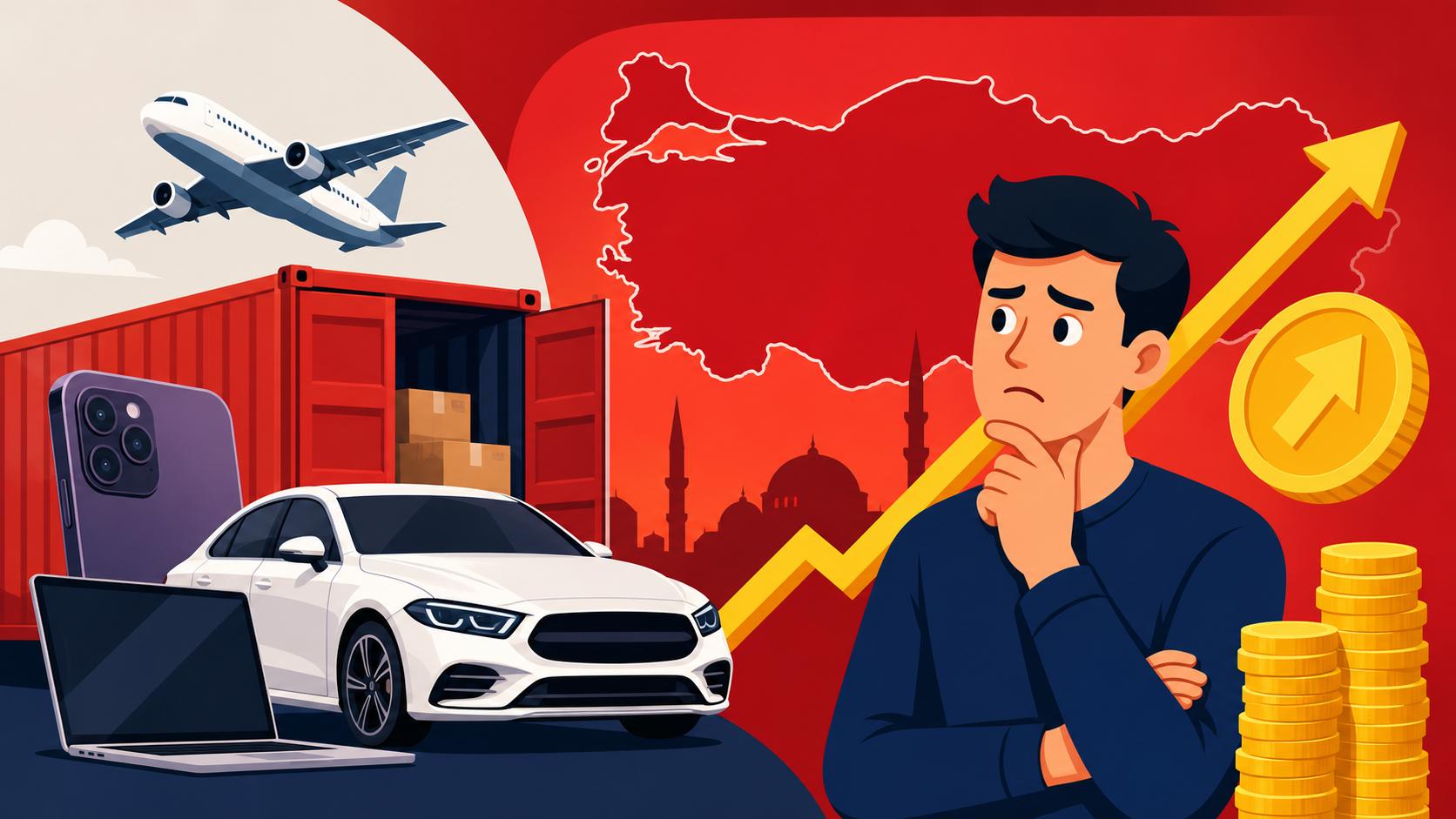
To understand why a laptop or a car costs so much more here, you have to look at the layered tax system. In most countries, you pay a simple sales tax or VAT. In Turkey, imported "luxury" items—which include everything from a basic hatchback to the latest gaming console—are hit with a triple whammy of levies before they ever reach the showroom floor.
The first layer is the Special Consumption Tax, known locally as ÖTV (Özel Tüketim Vergisi). This is not a flat rate; it scales based on the "luxury" status of the item. For electronics, this can be a significant percentage of the base price. For cars, it is notoriously aggressive, often exceeding 100% of the vehicle's factory value depending on the engine size. When you add this to the standard Value Added Tax (KDV), which currently sits at 20%, the price begins to spiral.
Finally, there is the TRT Bandrol fee. This is a smaller but persistent charge intended to fund the national public broadcaster. Any device capable of receiving a visual or audio signal—including phones, tablets, and even some smart appliances—must pay this fee. By the time an importer covers the customs duties, the TRT fee, the ÖTV, and the KDV, the retail price has often doubled from its original manufacturing cost. This is a major factor in the overall Cost of Living in Turkey 2026: Detailed Budgets for Singles and Families that many expats overlook during their initial move.
The Phone Predicament and the IMEI Tax
If you think the sticker price in the store is high, the "bring your own phone" route isn't much easier. Turkey employs a unique system to protect its domestic telecommunications market and ensure tax compliance. Every mobile device has a unique 15-digit IMEI number. If you bring a phone from abroad and insert a Turkish SIM card, the network will recognize it as an imported device. You are granted a 120-day grace period, after which the device’s cellular functions are blocked unless you pay a registration tax.
In 2026, this IMEI registration fee has reached staggering levels, often making it more expensive to register an old phone than to buy a mid-range model locally. I’ve seen many friends ignore the warnings, only to have their primary link to the outside world cut off during a weekend trip. You can find more specific details on this in our guide on The Turkey IMEI Rule: How to Register Foreign Phones in 2026.
To navigate this, many expats use Wise to transfer funds from their home currency into Lira to pay these fees via the e-Devlet portal. Paying the tax is only half the battle; you also need a valid residence permit linked to your passport. If you are struggling with the digital aspect of this, I highly recommend following a Step-by-Step Guide to Registering Your Phone's IMEI on e-Devlet to avoid making a non-refundable payment error.
| Item Category | Primary Taxes Applied | Typical Price Increase vs. Global Avg |
|---|---|---|
| Smartphones | ÖTV (up to 50%), KDV (20%), TRT Fee | 80% – 100% |
| Computers/Laptops | KDV (20%), TRT Fee (on some models) | 25% – 40% |
| Cars (<1600cc) | ÖTV (up to 80%), KDV (20%) | 100% – 120% |
| Cars (>2000cc) | ÖTV (up to 220%), KDV (20%) | 200% + |
| Game Consoles | Additional Customs Tax, ÖTV, KDV | 50% – 70% |
Why Cars are the Ultimate Luxury in Turkey
Nowhere is the price disparity more evident than in the automotive sector. Turkey’s tax system for vehicles is designed to discourage large-engine imports and manage the country’s current account deficit. The ÖTV on cars is calculated based on the engine displacement (cc) and the pre-tax price of the vehicle.
If you are eyeing a luxury SUV with a 3.0-liter engine, you are looking at an ÖTV rate of 220%. When you add the 20% KDV on top of that taxed amount, you are effectively paying for three cars but only driving one away. This is why you will see a massive abundance of 1.3-liter and 1.6-liter engines on Turkish roads; they fall into a lower tax bracket, though "lower" is a relative term. Even a budget-friendly sedan can cost twice what it does in Europe or the Gulf.
Beyond the purchase price, you must factor in the Annual Motor Vehicle Tax (MTV), which is paid twice a year. For anyone considering bringing their own vehicle from abroad, the "Blue Plate" (MA/MZ) system for foreigners offers some relief, but it comes with its own set of bank guarantee requirements and bureaucratic hurdles. Understanding Auto Purchases and Vehicle Taxes: Understanding ÖTV and MTV Levies in Turkey is essential before you commit to life behind the wheel here. Furthermore, if you do manage to get a car, make sure you know the local protocols, such as What to Do in a Minor Car Accident in Turkey: Filing a Kaza Tutanağı, because repair costs for imported parts are equally inflated due to the same customs duties.
Managing Your Finances in a High-Cost Environment
Living in a country where Buying a Phone in Turkey: Why Local iPhones are Among the Most Expensive Globally is a reality requires a different approach to personal finance. Many expats choose to keep a significant portion of their savings in more stable currencies or diversified assets while they are here.
Using platforms like Binance for crypto-assets or Trade Republic for European stocks can help you hedge against the local inflation that often accompanies these high import costs. When it comes time to pay your rent or a large tax bill, Wise remains the most cost-effective way to move money into your Turkish account without losing a fortune on bank spreads.
Additionally, because you’ll be doing a lot of your financial management and e-Devlet registrations online, digital security is paramount. Newcomers are often advised to use NordVPN when accessing their banking apps or government portals, especially if they are working from one of the many lovely third-wave coffee shops in Kadıköy or Cihangir. Public Wi-Fi in Turkey can be a bit of a "Wild West," and protecting your credentials is as important as protecting your wallet. For a broader look at managing your wealth in the country, check out our Money in Turkey for Expats: Banking, Payments, and Finance Guide (2027).
Strategic Shopping and Local Alternatives
Because imported goods are so pricey, the savvy expat learns to look for local alternatives or waits for specific sales windows. Turkey has a robust manufacturing sector for "white goods" (appliances like fridges and washing machines). Brands like Arçelik, Beko, and Vestel offer high-quality products that avoid many of the heavy import duties slapped on brands like Miele or Samsung.
If you must buy imported tech, keep an eye on "Legendary Friday" (Turkey’s version of Black Friday) or use price comparison engines like Cimri or Akakçe. Also, remember that if you are earning a foreign salary, the exchange rate can sometimes work in your favor, but the taxes are almost always adjusted upward to compensate for currency fluctuations. To get the best deal, many residents use Best International Money Transfer Apps for Turkey: Using Wise and Remitly to ensure they have the Lira on hand the moment a price drop happens.
Ultimately, the high cost of electronics and cars is a trade-off for the otherwise affordable lifestyle Turkey offers in terms of fresh food, healthcare, and services. It requires a mental shift—you might live in a beautiful seaside villa but find yourself using a three-year-old laptop because the upgrade cost is simply eye-watering. Being prepared for these costs is the first step toward a stress-free life in this beautiful, albeit expensive, Mediterranean hub.
Disclaimer
This guide is for informational purposes only and does not constitute financial, legal, or tax advice. Tax rates (ÖTV, KDV, MTV) and IMEI registration fees in Turkey are subject to frequent change by presidential decree. Always verify the current rates on official government websites or consult with a qualified accountant before making large purchases.