Blocked Accounts for Ikamet: Do Immigration Offices Still Require Them in 2027?
Navigating the financial requirements for a Turkish residence permit often feels like trying to solve a puzzle where the pieces change shape the moment you touch them. I remember standing in the crowded hallway of the Istanbul Migration Office in Fatih, clutching a folder of bank statements and praying the officer wouldn't ask for a "blocked account" I didn't have. This guide clarifies whether you actually need a blocked account for your 2026 Ikamet application and how to prove you’re solvent enough to stay.
Understanding Financial Sufficiency vs Blocked Accounts in 2026
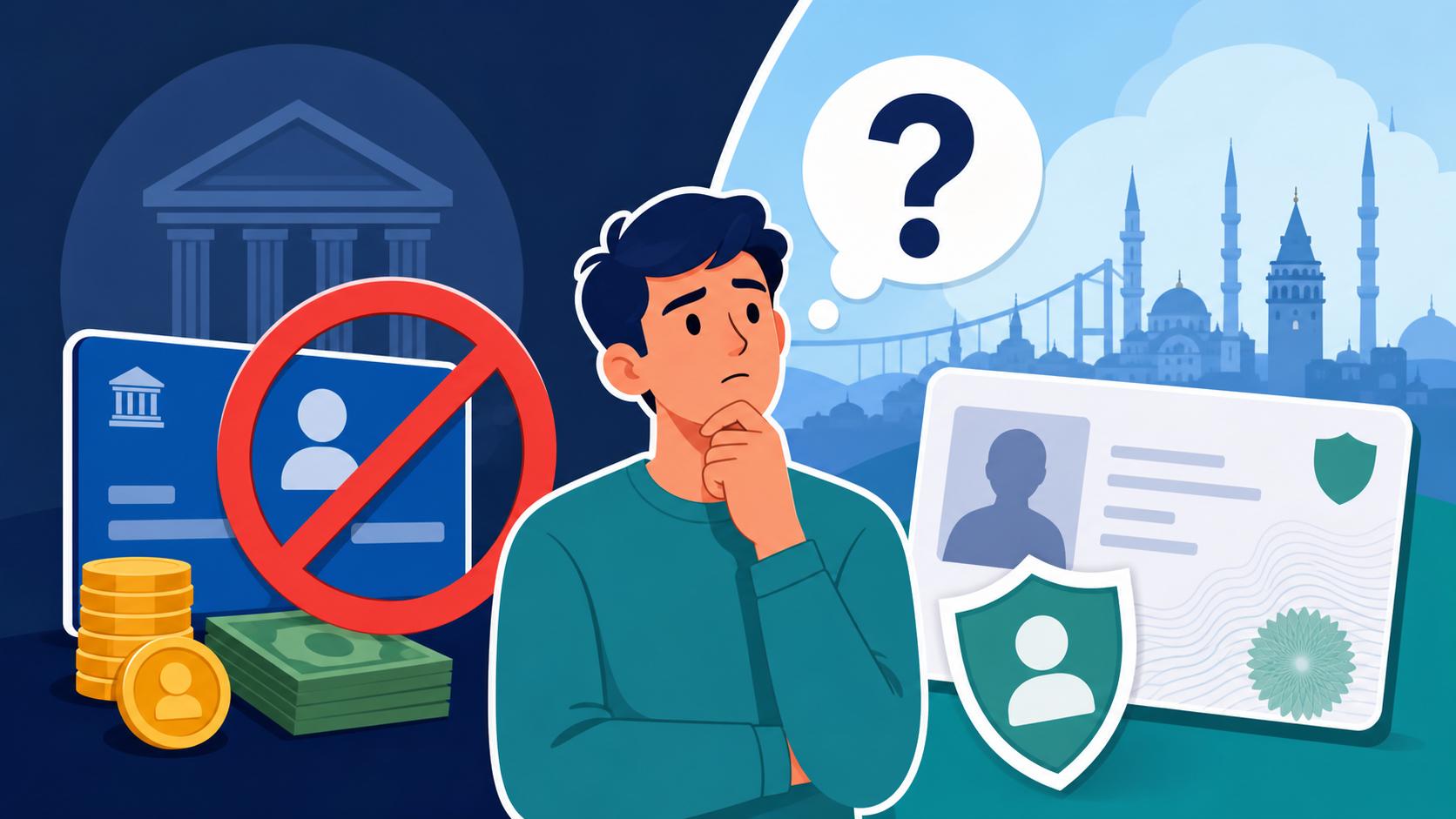
When you start browsing expat forums, you’ll see the term "blocked account" (often called a Sperrkonto in Europe) tossed around quite a bit. In many EU countries, this is a mandatory bank account where you deposit a year's worth of living expenses that the government then "unlocks" in monthly increments. However, in Turkey, the administrative reality is slightly different. Turkey does not have a universal, nationwide mandate for a German-style blocked account for most short-term residence permit categories.
What the Göç İdaresi (Migration Management) actually demands is "proof of sufficient and sustainable financial resources." While this sounds less intimidating than a blocked account, the scrutiny has intensified significantly over the last two years. The days of simply checking a box on a form claiming you have money are long gone. Officers now look for a clear, documented paper trail. If you are applying for a Short-Term Touristic Ikamet: Why Renewals are Being Strictly Denied in 2026, the financial bar is set much higher than it was for retirees or property owners.
The 2026 Financial Thresholds
The most critical number for your application is tied to the Turkish minimum wage. For 2026, the net minimum wage has settled at approximately 28,075 TRY. For most residence permit types, immigration officers expect you to show resources equivalent to 1.5 times this amount for every month you intend to stay.
If you are applying for a one-year permit, you should ideally show a balance or a reliable income stream of at least 42,113 TRY per month. For a single applicant, this means having roughly 505,000 TRY (approximately $13,000 to $15,000 depending on the exchange rate) accessible in a bank account. If you’re bringing family, the 2026 Minimum Wage Changes: Mandatory Salary Thresholds for Expat Workers guidelines suggest you’ll need an additional one-third of the minimum wage for each dependent.
Why the Blocked Account Rumor Persists
While it isn't a standard requirement for everyone, certain student visa applicants or individuals from specific high-risk nationalities may be asked to provide a "commitment letter" or even place a deposit in a Turkish bank that remains untouched. In these rare cases, the officer might request a "bloke" (blocked) status on a specific sum. For the vast majority of Western expats, however, a standard Opening a Bank Account in Turkey: Rules for Expats, Tourists, and Investors with a healthy, active balance is sufficient.
Documentation for Solvency: The 2026 Checklist
The "secret sauce" to a successful appointment isn't just having the money; it’s proving it in a way the Turkish bureaucracy understands. If you walk in with a printout from a random online bank without a stamp, you are inviting a rejection. You need to provide "sustainable" proof. This means the money shouldn't have just appeared in your account the day before your appointment.
Local vs International Bank Statements
For initial applications, immigration officers are increasingly demanding that you show funds in a local Turkish bank. While you can sometimes use international statements if they are apostilled and translated by a Sworn Translators (Yeminli Tercüman): Expected Costs for Official Documents, it is much safer to move your funds into an account with Ziraat Bankası, VakıfBank, or Garanti BBVA.
When you print your statement from a Turkish bank, it must be signed and stamped by a bank official. Often, you also need to provide the "İmza Sirküleri"—the bank’s authorized signature circular—which proves the person who signed your statement actually has the power to do so. This is a classic example of the "extra" paperwork that catches expats off guard.
Proving Wealth via Digital Assets and VPNs
Many of us keep our wealth in platforms like Trade Republic or Binance. While the Turkish government is becoming more tech-savvy, they still prioritize liquid cash in a traditional bank. If a large portion of your "financial sufficiency" is held in crypto or stocks, I highly recommend liquidating the portion you need for your stay and transferring it to a high-interest Turkish Lira or USD account at a local branch.
When accessing your Trade Republic or Binance accounts from within Turkey to manage these transfers, always use a reliable service like NordVPN. Many foreign financial institutions flag Turkish IP addresses as high-risk, and the last thing you want is your primary source of funds being frozen right before your Biometric Appointments (Randevu) at the Provincial Migration Office (Göç İdaresi). NordVPN ensures your connection remains secure and appears as though you are still browsing from your home country, preventing automated security locks.
| Proof of Funds Method | 2026 Reliability Level | Key Requirement |
|---|---|---|
| Local Turkish Bank Balance | Very High | Signed/Stamped with Signature Circular |
| Foreign Pension Statement | High | Apostilled and Translated |
| Wise Transfer History | Medium-High | Shows regular monthly inflows to Turkey |
| Crypto/Stock Screenshots | Low | Usually rejected without liquidation |
| Physical Cash Declaration | Very Low | Almost never accepted without bank deposit |
Navigating the Proof of Income Process
One of the best ways to satisfy an officer who is on the fence about your application is to show a regular "inflow" of money. This proves that your resources are "sustainable" and that you won't run out of cash and become a burden on the state. This is where a clear digital paper trail becomes your best friend.
Proving a Regular Paper Trail with Wise
If you are working remotely for a foreign company or living off savings, I suggest using Wise to transfer your monthly budget into your Turkish account. This creates a clear, easy-to-read history of "foreign currency inflow." At your appointment, you can show your Turkish bank book (the hesap cüzdanı) which will show regular transfers from Wise appearing every month.
This is particularly important for Family Residence Permits: How to Sponsor Your Foreign Spouse and Children. The sponsor must prove they can support the entire household. Having a history of sending $2,000 to $3,000 every month via Wise into a Turkish IBAN is much more convincing to a clerk than a single large lump sum that looks like it might have been borrowed just for the application.
Handling Transfers and Large Deposits
If you do decide to deposit a large lump sum to mimic a "blocked account," be prepared to explain where it came from. Under Turkey’s 2026 anti-money laundering regulations, banks may ask for a "Source of Wealth" declaration for deposits exceeding certain limits. If you've sold property back home, keep the sale contract handy. If you’re moving assets from Trade Republic, keep a record of the withdrawal.
| Tip for the Appointment | Why it Matters |
|---|---|
| Use NordVPN | To access your home bank safely to print the most recent statements. |
| Bring 6 months of history | Shows the money is yours, not a "loan" for the visa. |
| Get a Turkish Tax ID (Vergi Numarası) Online via Dijital Vergi Dairesi | You need this before you can even open the bank account to deposit your funds. |
| Check for Navigating Closed Neighborhoods: A Guide to Areas Where Foreigners Cannot Register | Even with millions in the bank, you’ll be rejected if your address is in a "closed" zone. |
Actionable Steps for a Stress-Free Application
To avoid the "blocked account" trap and ensure your financial proof is ironclad, follow this workflow three months before your expiry date:
- Open your local account early: Don't wait until the week of your appointment. See our guide on Choosing a Turkish Bank: Comparing Ziraat, Garanti, İş Bankası, and Akbank to find a branch that is expat-friendly.
- Start the "Wise Trail": Begin transferring your monthly living expenses from your home country into your Turkish account via Wise. This build-up of history is gold in the eyes of the Migration Office.
- Prepare for the "Currency Shock": If the Lira fluctuates, the required amount in USD might change. Always aim to have 20% more than the calculated minimum to buffer against exchange rate shifts.
- Secure your Digital Access: Ensure you have NordVPN active on your laptop. Many expat friends have been locked out of their UK or US bank accounts while trying to download statements in a Turkish internet café, leading to massive delays.
- Double-Check the Details: Ensure your name on the bank statement exactly matches the name on your Required Documents Checklist for a Short-Term Turkish Residence Permit. One missing middle name can lead to a "missing document" notice and an extra trip to the office.
If you follow these steps, you likely won't ever need a formal "blocked account." You simply need to be organized, transparent, and proactive. Turkey in 2026 isn't trying to keep everyone out, but they are absolutely making sure that those who stay have the means to do so comfortably.
Disclaimer
This guide is for informational purposes only and is based on personal experience and local administrative trends as of 2026. Turkish immigration laws and the internal policies of the Göç İdaresi can change without prior notice. Always verify current requirements on the official e-Ikamet website or consult with a licensed immigration attorney before making significant financial moves. This content does not constitute legal or financial advice.