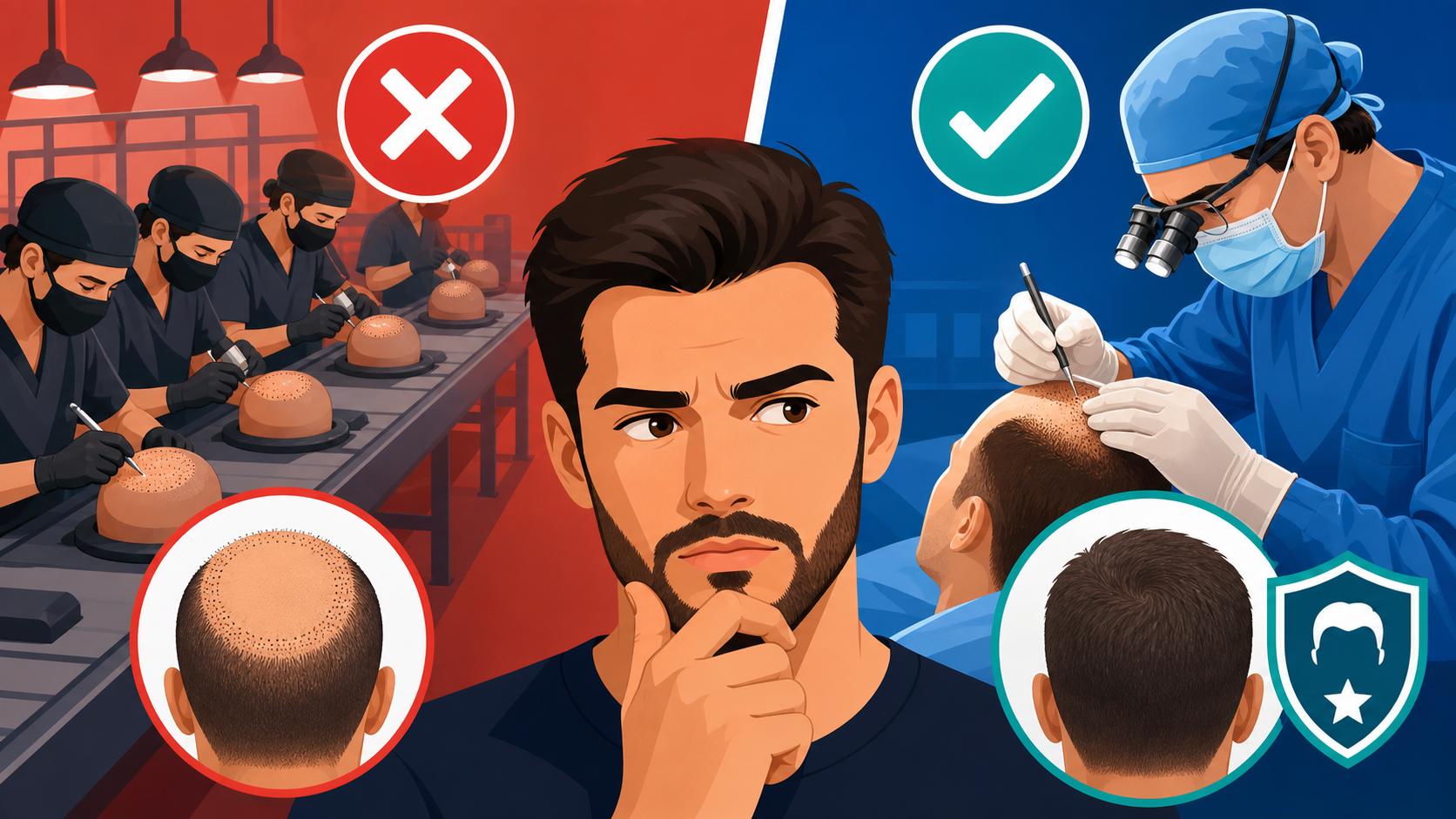
Avoiding Hair Transplant ‘Mills’: How to Choose a Surgeon over a Technician
Walking through the arrivals hall at Istanbul Airport, you are immediately met by a sea of men wearing black headbands and white bandages, a visual testament to Turkey's status as the global capital of hair restoration. I remember the first time I sat with a friend who had just undergone a procedure at a budget clinic; he was terrified because he realized mid-surgery that the "doctor" he spoke with on WhatsApp was nowhere to be found. This guide solves the problem of navigating the murky waters of the Turkish hair transplant industry, teaching you exactly how to distinguish between high-volume hair mills and reputable, surgeon-led clinics.
Identifying the Signs of a Turkish Hair Transplant Mill
The term "hair mill" refers to a clinic that prioritizes quantity over quality, often performing dozens of surgeries in a single day. These establishments operate like assembly lines, where the goal is to process as many patients as possible to maximize profit margins. For an expat or a medical tourist, the low price point is often the primary draw, but the hidden costs to your health and aesthetic results can be devastating.
The Assembly Line Approach and High Daily Volume
One of the most telling signs of a hair mill is the sheer number of procedures they perform daily. A reputable surgeon-led clinic will typically limit themselves to one or two patients per day, ensuring the lead doctor can be present for the most critical stages of the surgery. In contrast, mills may schedule 20 to 50 patients a day. When you arrive, you might notice a frantic environment where patients are shuffled from room to room. This high volume makes it physically impossible for a licensed doctor to perform the surgery. Instead, the work is delegated entirely to technicians, many of whom may have minimal medical training.
If you are researching a clinic, ask point-blank: "How many patients do you treat per day?" If the answer is in the double digits, you are looking at a mill. In these environments, the personalized care described in the is non-existent. You become a number, and the technician working on your scalp might be on their tenth hour of work, leading to fatigue and errors in graft placement or donor area management.
Aggressive Sales Tactics and Unrealistic Promises
Marketing in the Turkish hair transplant sector can be incredibly aggressive. You will likely encounter "all-inclusive" packages that include luxury hotel stays, VIP transfers, and even city tours. While these perks are nice, they are often used to distract from the lack of medical oversight. If a sales representative is pressuring you to book a "limited-time offer" or promising a "full head of hair" regardless of your donor density, proceed with extreme caution.
Real medical professionals will give you a conservative and honest assessment. They will discuss the limitations of your donor area and the possibility of future hair loss. A mill, however, will often promise 5,000+ grafts in a single session, a practice known as over-harvesting. This can leave your donor area looking patchy and depleted, making any future corrective surgeries impossible. Before committing, it is wise to consult a to discuss your general health and ensure you are a fit candidate for surgery.
Why Surgeon Involvement is the Non-Negotiable Gold Standard
The most critical distinction in the Turkish medical landscape is who actually performs the surgery. Under Turkish law, a hair transplant is a surgical procedure that must be overseen by a licensed physician. However, many clinics exploit loopholes or operate illegally by having technicians perform the entire operation, from the initial incisions to the extraction and implantation of follicles.
The Danger of Technician-Only Procedures
Technicians are often trained to perform the mechanical aspects of a transplant, but they lack the deep medical knowledge required to handle complications. Hair transplantation involves local anesthesia, which carries inherent risks. A surgeon understands the anatomy of the scalp, the depth of the follicles, and how to manage an adverse reaction to anesthesia or an unexpected drop in blood pressure. If you are in a technician-only clinic and an emergency occurs, the staff may not be equipped to provide .
Furthermore, the aesthetic outcome of a hair transplant depends on the "artistry" of the doctor. The angle, depth, and direction of each graft determine whether your hair looks natural or like a "doll’s head." Surgeons spend years perfecting these techniques, whereas technicians in mills are often taught to work as fast as possible to meet daily quotas. This often results in poor hairline design that looks unnatural as you age.
Legality and Medical Regulations in Turkey
The Turkish Ministry of Health has strict guidelines for where these procedures can take place. They should occur in a hospital or a licensed surgical center, not in a converted office building or a "boutique" villa. When vetting a clinic, ask for their licensing information and the name of the lead surgeon who will be performing the "channel opening" (the creation of the incisions where the hair will be placed). This is the most critical part of the surgery.
If the clinic cannot provide a specific doctor's name or if they say "our team of experts" will handle it, they are likely a mill. You want a doctor who is registered with the Turkish Medical Association. You can even check for to ensure the facility meets international standards for safety and hygiene. Knowing your rights is a key part of the for anyone living in or visiting Turkey for care.
Vetting Clinics Like a Professional Expat
Once you know what to avoid, you need to know what to look for. Researching a hair transplant in Turkey requires looking past the flashy Instagram ads and digging into medical credentials and long-term patient outcomes.
Verifying ISHRS and ABHRS Certifications
The gold standard for hair restoration surgeons is membership in the International Society of Hair Restoration Surgery (ISHRS). This organization promotes ethical standards and medical excellence. While membership doesn't guarantee a perfect result, it shows that the surgeon is committed to the latest research and follows a strict code of ethics, including the requirement that a doctor—not a technician—performs the surgery.
Another credential to look for is the American Board of Hair Restoration Surgery (ABHRS) certification. Surgeons who have gone through this process have passed rigorous examinations and are considered experts in the field. When you find a clinic, verify the doctor's name on these official websites. Do not take the clinic’s word for it; many websites in Istanbul use the logos of these organizations without having an actual member on staff. This level of due diligence is as important as when you are an expat living here.
Interpreting Reviews and Before and After Portfolios
Reviews can be misleading. Many mills pay for fake Google and Trustpilot reviews or offer discounts to patients in exchange for a five-star rating before the results have even grown in. To get an honest perspective, look at independent forums like HairRestorationNetwork or Reddit’s r/HairTransplants. Look for "patient-posted" journeys that span 12 to 18 months.
When looking at "before and after" photos, pay close attention to the donor area (the back of the head). If the "after" photo only shows the top of the head but hides the back, the patient might have been over-harvested. A reputable surgeon will be proud to show that the donor area remains healthy and dense. If you are struggling to communicate your concerns to a prospective clinic, it may be helpful to learn some to ensure your questions are understood.
| Feature | Surgeon-Led Clinic | Hair Transplant Mill |
|---|---|---|
| Daily Patients | 1 to 2 | 10 to 50+ |
| Lead Operator | Licensed Surgeon | Unlicensed Technicians |
| Incision Method | Custom-tailored to hair type | Standardized, "one-size-fits-all" |
| Consultation | Face-to-face with the doctor | Conducted by a salesperson/consultant |
| Graft Estimates | Realistic and conservative | Often inflated (5,000+ grafts) |
| Price | Mid to High Range (€3,000 – €7,000) | Low Budget (€1,500 – €2,500) |
| Emergency Prep | Fully equipped surgical facility | Minimal medical emergency equipment |
Practical Steps for a Safe Procedure in Istanbul or Ankara
If you decide to move forward, your interaction with the clinic should feel like a medical consultation, not a sales pitch. The process starts long before you sit in the surgical chair.
The Consultation Process and Red Flags
A legitimate surgeon will want to know your medical history. They will ask about any medications you are taking and may ask you to upload your results from to check for underlying conditions like anemia or thyroid issues that could affect hair growth. During the consultation, the doctor should be the one drawing your hairline, explaining the extraction process, and discussing the risks.
A major red flag is if you only speak with a "patient coordinator" and never meet the doctor until the morning of the surgery—or not at all. If the person drawing your hairline looks like they are in a rush, stop the process. This is a permanent change to your face. Also, ensure the clinic provides a detailed breakdown of the procedure in writing. If you have international insurance through a provider like Cigna Global, check if they offer any secondary coverage or assistance for complications, although most elective cosmetic surgeries are out-of-pocket.
Aftercare and Long-term Support
The surgery is only 50% of the journey. The first ten days of aftercare are vital for graft survival. A good clinic will provide a dedicated aftercare specialist who is available to answer your questions via WhatsApp or phone. They should provide you with a specialized shampoo, foam, and detailed instructions on how to sleep and wash your hair.
They might also recommend specific vitamins to support hair health. You can often find high-quality supplements on sites like iHerb that ship to Turkey, which can be more cost-effective than buying them directly from the clinic's "private label." If the clinic's aftercare consists of a one-page printout and no follow-up, you are likely in a mill. Remember, if you experience a severe reaction or infection post-op, you should know how to access immediately.
Conclusion: Investing in Your Future Self
Choosing a hair transplant clinic in Turkey is a decision that will stay with you for the rest of your life. While the low prices of hair mills are tempting, the risk of permanent scarring, poor growth, and medical complications is high. By prioritizing surgeon involvement, verifying international certifications, and insisting on a medical-first approach, you can join the thousands of expats who have successfully restored their hair and confidence in this beautiful country.
If you are already living here and have navigated , you know that the Turkish system rewards those who do their homework. Treat your hair transplant with the same level of scrutiny you would any other major medical event. For more information on the broader healthcare landscape, refer to our to stay informed on all aspects of your well-being in Turkey.
Disclaimer
This article is for informational purposes only and does not constitute professional medical advice, diagnosis, or treatment. Always seek the advice of a qualified healthcare provider with any questions you may have regarding a medical condition or surgical procedure. Hair transplantation is a surgical intervention that carries risks, and results may vary significantly between individuals. Be sure to verify all clinic licenses and surgeon credentials independently through official Turkish government or international medical boards before undergoing any procedure.