Family Residence Permits: How to Sponsor Your Foreign Spouse and Children
Trying to bring your family to join you in Turkey often feels like navigating a labyrinth where the walls keep moving. I remember the sheer anxiety of sitting in a crowded provincial migration office, clutching a folder of documents and praying my spouse’s application wouldn't be rejected on a technicality. This guide solves the complex puzzle of the Family Residence Permit, ensuring your loved ones stay legally by your side.
Understanding the Foundation of the Family Residence Permit
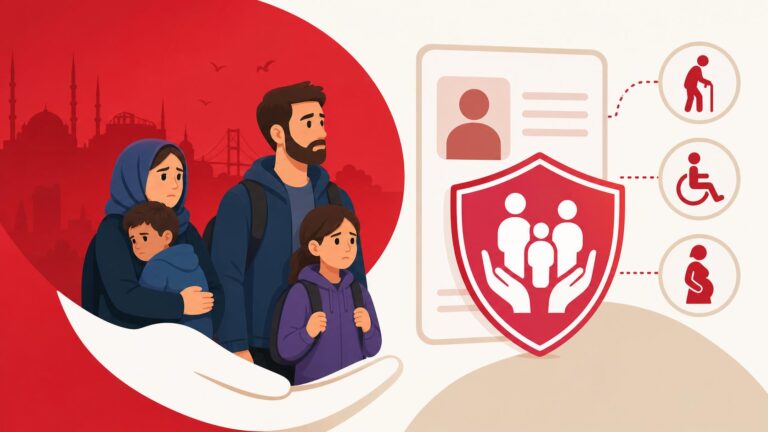
The Family Residence Permit, known locally as Aile İkamet İzni, is a specific category of residency designed to keep the nuclear family unit together. Unlike a standard tourist permit, this document tethers the legal status of the "dependents" (the spouse and children) to a "sponsor" who already holds a valid legal standing in Turkey. Many expats mistake this for a simple extension of their own visa, but in reality, it is a completely separate application process that requires the sponsor to prove they can financially and logistically support their household.
The sponsor is the linchpin of the entire operation. To qualify as a sponsor, you must generally be a Turkish citizen, a foreigner holding a valid work permit, a refugee, or someone who has held a Turkish residence permit for at least one year. This one-year rule is a frequent stumbling block; if you just arrived on a short-term touristic permit, you cannot immediately sponsor your spouse for a family permit until you’ve clocked twelve months of legal residency. It’s a frustrating waiting game, but understanding this timeline early on will save you from a rejected application at the three-month mark.
It is also vital to recognize who qualifies as a "family member" under Turkish law. This permit is strictly for the spouse (only one, as polygamy is not recognized for residency purposes) and the minor children of either the sponsor or the spouse. If you have dependent children over the age of 18, they typically do not qualify for a family permit unless they have a documented disability that requires parental care. For most families, this means your adult children will need to apply for their own independent Student Visas and Permits: Immigration Requirements for University Enrollment if they plan to stay long-term.
Who Can Act as a Sponsor
The criteria for being a sponsor are quite rigid. If you are working for a Turkish company, your work permit serves as your residence permit, making you an eligible sponsor immediately. However, if you are here on a Short-Term Touristic Ikamet: Why Renewals are Being Strictly Denied in 2026, you must have lived in Turkey for a full year before the system will even allow you to open a family permit application for your spouse. I learned this the hard way when a friend tried to bridge their family over only two months after arriving; the system simply wouldn't accept the sponsor’s ID number as valid for family mediation.
Turkish citizens have the easiest path as sponsors, but even they must meet income and insurance requirements. For foreign sponsors, the most common route is through a work permit. If you are an entrepreneur who has started a business, you must ensure your own status is rock-solid before bringing the family into the fold. The government wants to see that the person responsible for the dependents has a stable, verifiable reason for being in the country that isn't just "visiting."
Defining Eligible Dependents
When we talk about spouses, the Turkish authorities require a legal marriage certificate. Common-law marriages or long-term partnerships generally do not meet the criteria for a family permit. If you aren't legally married, your partner will likely have to navigate the Turkish Residence Permits (Ikamet): The Complete Application Guide (2027) as an individual applicant, which has become significantly more difficult in recent years. Many couples have had to expedite their legal marriage ceremonies just to ensure they could live together in Istanbul or Antalya.
For children, the process is slightly more flexible but requires meticulous paperwork. You can sponsor your own children, your spouse's children from a previous marriage (provided you have legal custody documents), and minor children you have adopted. If the child is under 18, they are eligible. Once they hit that 18th birthday, the "clock" runs out on their family residency, and they must transition to a student or work-based permit. Navigating this transition is a major part of Family Health in Turkey: Pregnancy, Maternity Care, and Pediatrics and long-term planning for expat families.
Financial Sufficiency and the Minimum Wage Rule
One of the most daunting aspects of the family permit is proving you have enough money to keep everyone fed, housed, and insured. The Turkish government uses the national minimum wage as a yardstick. As a sponsor, your total monthly income must be at least the amount of the current minimum wage, and additionally, you must show that you have at least one-third of the minimum wage available for every single family member you are sponsoring.
For 2026, these figures have shifted significantly due to inflation adjustments. If you are sponsoring a spouse and two children, you need your own "base" minimum wage plus three additional "one-third" increments. In my experience, the migration officers at the Biometric Appointments (Randevu) at the Provincial Migration Office (Göç İdaresi) are not particularly lenient with these numbers. If your bank statement or salary slip shows even a few hundred Lira less than the required threshold, they may pause the application.
Furthermore, the source of income must be "regular." This means a giant lump sum of cash in a bank account isn't always as convincing as a steady monthly salary deposit. If you are working remotely for a foreign company, you will need to provide highly detailed, translated, and notarized proof of that income. The authorities are looking for "sustainability." They want to be sure that six months from now, you won't be struggling to pay rent or medical bills, placing a burden on the Turkish state.
Calculating the Threshold for 2026
To give you a concrete idea of the math, you should check the latest official minimum wage announcements. If the net minimum wage is, for example, 30,000 TL, your income as a sponsor for a spouse and one child would need to be roughly 50,000 TL (30k for you, 10k for the spouse, 10k for the child). This is why Healthcare Budgeting: Understanding Copays, Tariffs, and Billing in Turkey is so important; your income needs to cover more than just the visa fees.
If you are a freelancer, the documentation becomes even more cumbersome. You might need to show a year's worth of bank statements, tax returns from your home country, and perhaps even a Turkish Tax ID (Vergi Numarası) Online via Dijital Vergi Dairesi to prove you are a legitimate financial entity. It is wise to aim for 20% more than the minimum requirement just to provide a "safety buffer" for the officer reviewing the file.
Proof of Housing and Living Conditions
It's not enough to have money; you must also show you have a place for your family to live that meets "general health and safety standards." This means your rental contract must be notarized and, crucially, your address must be registered in the national database. If you are living in one of the Navigating Closed Neighborhoods: A Guide to Areas Where Foreigners Cannot Register, you might find it impossible to get a family permit because the government will not allow new foreign registrations in those zones.
During the interview, the officer might ask how many rooms are in your apartment. They are checking to see if the living space is appropriate for the number of people. If you’re trying to cram a family of five into a 1+1 (one-bedroom) apartment, you might face questions or a rejection. Some families have been forced to move to larger apartments in different districts just to satisfy the housing requirements for the Family Residence Permits: How to Sponsor Your Foreign Spouse and Children.
Mandatory Health Insurance for the Whole Family
Health insurance is non-negotiable for anyone under the age of 65 and over the age of 18 in Turkey. For the family permit, the sponsor must provide proof of health insurance that covers all family members for the duration of the permit. If the sponsor is a Turkish citizen or a work permit holder paying into the SGK (social security) system, the family members can often be "activated" under the sponsor’s SGK umbrella. This is the gold standard of coverage.
However, if you are not on SGK, you must purchase private health insurance for each dependent. The policy must meet the minimum coverage requirements set by the Migration Management (Göç İdaresi). Many "basic" policies sold specifically for residency (Ikamet insurance) are quite thin on actual medical coverage. If you want real peace of mind for your spouse and kids, looking into comprehensive plans like Cigna Global is often a better move, especially if you want access to the high-end private hospitals in Istanbul or Ankara. Cigna Global provides the level of international support that local "tourist" policies often lack.
It is worth noting that children under 18 and seniors over 65 are technically exempt from the mandatory insurance requirement for the permit application itself. However, I strongly advise against skipping coverage for them. Medical emergencies happen, and without insurance, a single night in a private Turkish hospital can wipe out your savings. For those navigating the private system, Cigna Global offers tailored family packages that ensure you aren't stuck with massive out-of-pocket costs during a crisis.
SGK vs Private Insurance Options
The choice between public and private is a major debate in the expat community. If you are eligible for Enrolling in SGK (Public Health Insurance): The 1-Year Residency Rule, it is generally the most cost-effective way to cover a large family. One monthly premium covers the sponsor, the spouse, and all minor children. The downside is the bureaucracy involved in activating the dependents' accounts at the local SGK office, which requires a mountain of translated birth and marriage certificates.
If you opt for private insurance, ensure the policy explicitly states it is "compliant with the residence permit requirements." If the wording is wrong, the migration officer will hand the folder back to you. High-quality providers like Cigna Global are well-versed in these requirements and can provide documentation that the Turkish authorities recognize. This is especially helpful if you prefer English-speaking doctors and shorter wait times than the public system typically offers.
Insurance for Different Age Groups
While the law is lax on insurance for kids, the reality of Pediatricians in Turkey: National Vaccination Schedules and Child Health means you will be visiting doctors. Even if the permit doesn't require it, having a policy that covers routine check-ups is a lifesaver. Cigna Global often includes maternity and pediatric options that go far beyond the "emergency-only" coverage of basic local residency policies.
For the spouse, the insurance must cover the entire duration of the permit. If you are applying for a two-year family permit, the insurance policy must also be valid for two years. Many expats make the mistake of buying a one-year policy while asking for a two-year permit; in this scenario, the government will only grant a one-year residency card to match the insurance expiration date.
The Document Preparation Phase: Apostilles and Translations
The paperwork for a family permit is where most people lose their minds. You are dealing with foreign documents (marriage and birth certificates) that the Turkish government has no way of verifying unless they are properly "legalized." This means every single foreign document must be Apostilled in the country of origin. If your country is not part of the Apostille Convention, you have to go through the grueling process of embassy legalization.
Once you have the Apostilled documents, they must be translated into Turkish by a sworn translator and notarized by a Turkish notary. This is a significant expense. For a family of four, you might be translating two birth certificates and one marriage certificate, which can easily cost several thousand Lira. Using a reliable service like RushTranslate can be a huge help here, as RushTranslate understands the specific formatting and accuracy required for official government submissions, ensuring that your original documents are ready for the final sworn translation step in Turkey.
Don't forget the sponsor’s documents as well. You will need a criminal record check (Adli Sicil Kaydı) from the Turkish authorities (easily obtained via e-Devlet) and, in some cases, a criminal record check from your home country if you have been in Turkey for less than a year. The "Expertise" of services like RushTranslate ensures that these sensitive documents are handled correctly, which is vital because a single typo in a name can lead to an immediate rejection.
Essential Document Checklist
| Document Type | Source | Legalization Required |
|---|---|---|
| Marriage Certificate | Country of Marriage | Apostille + Notarized Turkish Translation |
| Birth Certificates | Country of Birth | Apostille + Notarized Turkish Translation |
| Sponsor's Income Proof | Employer or Bank | Notarized Translation if Foreign |
| Health Insurance | Provider | Turkish Policy or Compliant Foreign Policy |
| Address Registration | Nüfus/e-Devlet | Official "Yerleşim Yeri Belgesi" |
| Criminal Record | e-Devlet (Turkey) | Barcoded Digital Copy |
Navigating the Apostille Maze
I cannot stress this enough: do not arrive in Turkey without your Apostilled documents. You cannot get an Apostille for a US, UK, or Canadian document inside Turkey. You would have to mail the originals back home, which is a recipe for stress and lost mail. I spent three weeks and hundreds of dollars in courier fees because I forgot to Apostille my daughter’s birth certificate before we moved. Save yourself the headache and get everything stamped before you board that plane.
Once the Apostille is on the back of your document, the next step is the translation. The Turkish notary will only "approve" a translation if it was done by a translator registered with that specific notary office. This is why services like RushTranslate are great for preparing your files; they provide the accuracy you need so that when you hand the papers to the local Turkish sworn translator, there are no discrepancies that could raise red flags with the notary or the migration officer.
Dealing with Name Discrepancies
A very common issue for spouses is when the surname on the passport doesn't match the marriage certificate (for example, if the spouse took the partner’s name but hasn't updated all documents). If there is even a one-letter difference, the Göç İdaresi will ask for a "Name Equivalence Certificate" (İsim Denkliği). This is a bureaucratic nightmare to resolve. Using RushTranslate for your initial document preparation can help you spot these inconsistencies before they become legal roadblocks in a foreign language.
Navigating the e-Ikamet Application Portal
Everything starts online at the e-Ikamet website. The form is long, glitchy, and frequently times out. You will need to upload "biometric" photos of every family member. These aren't just any passport photos; they have very specific dimensions and must have a white background. If the photo you upload doesn't meet the system's AI standards, you won't be able to move to the next step.
When filling out the form for the spouse and children, you will select "Family Residence Permit." The system will then ask for the sponsor’s "Kimlik" or "Yabancı Kimlik" number. This links the applications together. It is advisable to do these applications on a desktop computer with a strong internet connection, as the mobile version of the site is notoriously unstable. If you make a mistake on the form and submit it, you cannot go back and edit it; you would have to wait for the appointment to point out the error to the officer.
The portal will eventually generate a "Subscription Form" and a date for your appointment (Randevu). You must print this form immediately. It also calculates the "Card Fee" and the "Residence Tax." These fees vary by nationality and the length of the permit. You can often pay these online via the tax office website, but if the system crashes, you’ll need to take your tax number to a Ziraat Bank or a local tax office (Vergi Dairesi) to pay in person. Keep those receipts! They are as valuable as gold.
Step-by-Step Online Submission
First, gather all your digital assets: the biometric photos, the insurance policy numbers, and the sponsor's ID details. When you start the "First Application" for a family member, the system will ask for the "Sponsor's Information" early on. If you are the sponsor, make sure your Address Registration (Nüfus): The Most Critical Post-Arrival Step for Foreigners is already completed, as the system often checks the national database in real-time to see if you actually live where you say you do.
Second, be very careful with the "Duration of Stay" section. If you ask for two years but your sponsor's work permit only has 14 months left, the system might give you an error or the officer will later cut the duration down. Always aim to match the sponsor’s expiration date. Some families have tried to get 2-year permits when the husband’s work permit was expiring in 6 months; it simply doesn't work that way.
Paying Fees and Taxes
The financial side of the portal is a frequent source of confusion. There are two main costs: the "Ikamet Harcı" (Residence Tax) and the "Değerli Kağıt Bedeli" (Card Fee). Some nationalities are exempt from the tax, while others (like US citizens) have a higher entry fee. Make sure you print the payment confirmation. If you pay at a bank, ensure they type your "99" foreigner ID number or your passport number correctly on the receipt. If there’s a typo on the bank receipt, the Göç İdaresi will not accept it, and getting a refund from the tax office is a journey through the seven circles of hell.
The Biometric Appointment (Randevu) Experience
The day of the appointment is the "final exam." You, the sponsor, must be present with your spouse and children. You cannot send them alone. You will go to the Göç İdaresi office specified on your paper. In large cities like Istanbul, these offices are massive and can be intimidating. You’ll take a number, wait for your turn, and then sit across from a migration officer who will scrutinize every page of your folder.
The officer will check the originals of your marriage and birth certificates. They will also look at the sponsor’s original work permit or ID card. This is where your preparation with RushTranslate and your local notary pays off. If the folder is organized and the translations are professional, the process usually takes about 15-20 minutes. If things are missing, they will give you a "10-day paper," which is a notice that you have ten days to bring the missing documents, or your application will be cancelled.
During the interview, the questions are usually straightforward: "Where do you live?", "What does the sponsor do for work?", "How long have you been married?". It’s not an interrogation, but they are looking for consistency. If you have a child from a previous marriage, they will definitely want to see the notarized consent of the other parent (Apostilled, of course) or a sole custody document. Without that consent, they will not issue a permit for the child.
What to Bring to the Office
It is wise to bring a "Master Folder" plus two sets of photocopies. You will need:
- The signed application form.
- Passports (originals + copies of the photo page and the last entry stamp).
- The sponsor’s ID or work permit.
- 4 biometric photos for each person.
- The notarized marriage/birth certificates.
- The notarized rental contract.
- The sponsor’s income proof.
- The health insurance policy.
- The tax payment receipts.
- The "Address Certificate" from e-Devlet.
Managing the Presence of Children
If you have young children, the appointment can be a long, boring wait. However, they must be there. The officers need to see the child in person to verify their identity against the passport photo. Bring snacks, tablets, and patience. Some of the newer offices have small play areas, but don't count on it.
Common Pitfalls and Rejection Reasons
The most common reason for a family permit rejection is a failure to register the address correctly. Turkey has become very strict about where foreigners can live. If your sponsor’s address is in a "closed" neighborhood, the family permit for the spouse will likely be denied. You should check the Navigating Closed Neighborhoods: A Guide to Areas Where Foreigners Cannot Register list every month, as neighborhoods are added frequently.
Another pitfall is the "6-month absence rule." If a family member stays out of Turkey for more than 180 days in a year, their residence permit can be cancelled. While this was relaxed during the pandemic, the authorities are now enforcing stay requirements more strictly. If your spouse plans to spend half the year back home, a family residence permit might not be the right fit, or you’ll risk a rejection upon renewal.
Lastly, never underestimate the "10-day rule." If the officer asks for a document you don't have, you have exactly ten days to provide it. If you miss that window by even an hour, the system automatically closes the file, and your family members will be considered "overstayed," which can lead to fines or a deportation order. This is why having your translations ready via RushTranslate before the appointment is so critical.
The Problem of Name Matches
Applications can stall because a middle name was included on the birth certificate but left off the online application form. The Turkish system is very "literal." If the passport says "Jane Mary Doe" and your application says "Jane Doe," the computer might flag it as a mismatch. Always type your names exactly as they appear in the machine-readable zone at the bottom of your passport.
Proving "Genuine" Relationships
While rare for expats from Western countries, the authorities sometimes investigate if they suspect a "marriage of convenience." This usually involves a home visit from the local police (Tahkikat). They will check if you actually live together and if the home looks like a shared family residence. If the police visit and find only one person's clothes in the closet or if the neighbors say they've never seen the spouse, it can trigger a revocation of the permit. For more on this, see Why the Police Do Random Address Checks (Tahkikat) for New Residence Permits.
Post-Approval Steps and Renewals
Once the officer says "Tamam" (Okay), your application is approved. You will receive a text message from the PTT (Turkish Post) within 2 to 4 weeks with a tracking number for your ID cards. These cards are delivered to your registered address. You must be there to sign for them, or you’ll have to go to the local PTT branch to pick them up with your passport.
But the work isn't done. Once the cards arrive, you must take your family members to the local Nüfus (Civil Registry) office to officially link their new "99" numbers to your address. This is a critical step that many people forget. Without this registration, you might have trouble with Choosing a Primary Care Physician (Aile Hekimi) at a Local Health Center or enrolling your kids in school.
Renewals are generally easier than the first application, but you must start the process 60 days before the current permit expires. Never wait until the last week. The requirements for income and insurance will be checked again, and you’ll need "fresh" versions of certain documents like the criminal record check and the address certificate. If you keep your records organized, the family permit can be a stable way to build a life in Turkey for many years.
Registering with the Nüfus Directorate
This is often the step that trips up the most "veteran" expats. Even though you gave your address to the Migration Office, you still have to go to the Nüfus office (or sometimes it can be done via e-Devlet if you have a mobile signature). This ensures you are in the "MERNIS" system. If you aren't in MERNIS, you basically don't exist in the eyes of the Turkish utility companies, banks, or schools. It's the final piece of the residency puzzle.
Planning for the Long-Term
If you stay on a family permit for eight years, you may eventually be eligible for Applying for Long-Term (Permanent) Residency After 8 Years of Legal Stay. This is the ultimate goal for many families, as it eliminates the need for bi-annual renewals. However, the clock only counts if your residency is "uninterrupted." This means keeping a close eye on your expiration dates and ensuring you never overstay by even a day. Keeping your family’s status clean is a marathon, not a sprint, but the reward of a stable life in this beautiful country is well worth the effort.
Disclaimer
The information provided in this guide is for informational purposes only and does not constitute legal advice. Immigration laws and regulations in Turkey are subject to frequent changes, often without prior notice. While we strive to keep this information accurate for 2026, you should always consult with the official Goç İdaresi website or a qualified immigration attorney before making any legal decisions. We are not responsible for any application rejections, fines, or legal issues arising from the use of this guide.