Humanitarian Residence Permits: Strict Eligibility for Vulnerable Expats in Turkey
Facing the sudden realization that you have no legal path to stay in Turkey, while simultaneously being unable to return to your home country due to safety or legal risks, is a paralyzing experience. I have sat with friends in small tea gardens in Kadıköy as they wept over rejection letters, knowing their passports were no longer valid or their homelands were in turmoil. This guide breaks down the high-stakes world of the Humanitarian Residence Permit, explaining exactly who qualifies and how to navigate this restrictive process.
Understanding the Legal Foundation of the Humanitarian Residence Permit
The Humanitarian Residence Permit, known in Turkish law as İnsani İkamet İzni, is not a standard visa category you apply for because you enjoy the lifestyle in Antalya or Istanbul. It is governed by Article 46 of the Law on Foreigners and International Protection (No. 6458). Think of it as the "safety net" of the Turkish immigration system. It exists for those who fall through the cracks of every other residency type—work, student, family, or touristic—but whose deportation would be inhumane or legally impossible.
The Role of the Ministry of Interior and Local Governorates
In my years of helping fellow expats navigate the bureaucracy, I’ve learned that the humanitarian permit is unique because it requires direct approval from the Ministry of Interior. While you submit your initial documents at the Provincial Directorate of Migration Management (Göç İdaresi) in your city, the local officers are essentially messengers. They gather your "extraordinary circumstances" and forward them to Ankara. This is why the processing times are notoriously unpredictable. Unlike a standard touristic permit where you might get an answer in a few weeks, the humanitarian route involves a deep dive into your personal history and the geopolitical state of your home country.
Why It Is Distinct from International Protection
Many foreigners confuse the humanitarian permit with seeking asylum or "International Protection" (Refugee status). While they share a similar empathetic root, the humanitarian permit is often a temporary bridge. For instance, if you are an expat who has lived here for a decade but suddenly cannot renew your passport because your embassy has closed or you are being targeted by your home government, the humanitarian permit allows you to remain legal without necessarily entering the long-term refugee resettlement pipeline. It is a specific status granted by the Governorates to ensure no one is left "stateless" or "undocumented" while on Turkish soil.
The Exceptional Circumstances Clause
The law is intentionally broad but the application is incredibly narrow. The "exceptional circumstances" clause refers to situations where the best interests of a child are at stake, or where a foreigner cannot be deported despite a removal decision. I once knew a family whose child required specialized surgery available only in Istanbul, and their home country was in the middle of a civil war. This "extraordinary" need is the threshold you must meet. If your reason for staying is simply that you haven't found a job yet, this permit is not for you. You should instead look at English-Speaking Job Opportunities in Turkey Outside of the Teaching Sector or other standard routes.
Specific Eligibility Categories for Vulnerable Expats
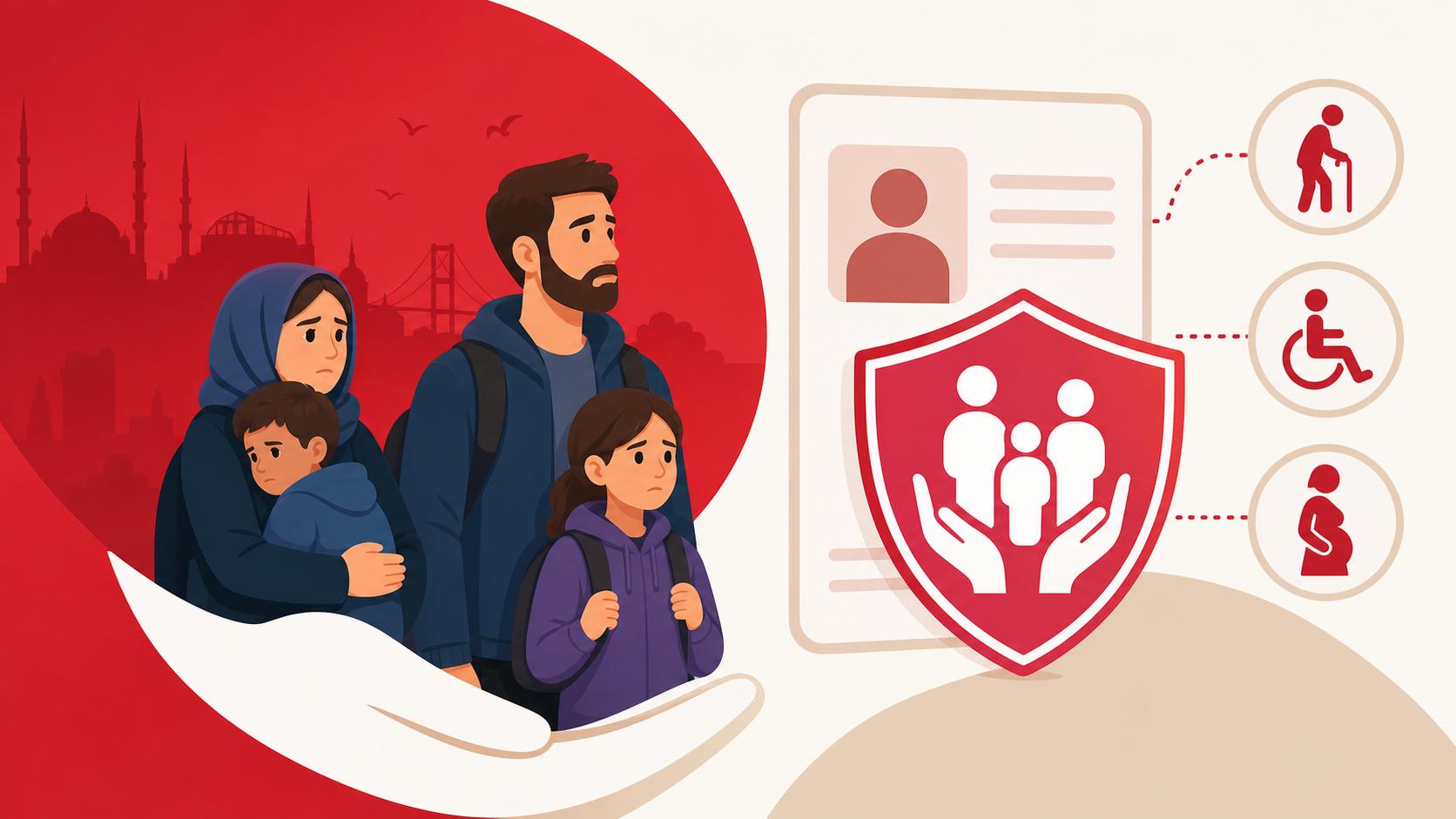
To qualify for this permit, you must prove that your situation is dire. The Turkish authorities have become much stricter, largely because many people tried to use this as a loophole when touristic permits were denied. To succeed, your case must fit into one of several high-priority categories.
The Best Interests of the Child
Turkey takes the UN Convention on the Rights of the Child seriously in its immigration policy. If a child’s health, education, or safety would be severely compromised by leaving Turkey, the parents and the child may be eligible for humanitarian residency. For example, if a child is enrolled in a specialized school for neurodiversity in Istanbul and such services do not exist in their home country, this can be a valid argument. You would need to provide extensive documentation, likely requiring a High School Equivalency: Getting Your Denklik from the Ministry of National Education if the child is older, alongside medical reports.
Victims of Serious Human Rights Violations
If you can prove that returning home would subject you to torture, inhumane treatment, or death, Turkey may grant this permit. This is common for individuals from conflict zones or those whose political or social beliefs put them at extreme risk. However, the burden of proof is on you. You cannot simply claim it is "dangerous" at home; you need evidence—news reports, legal documents from your home country, or letters from international human rights organizations. Because these documents will be in your native language, using a service like RushTranslate for certified, sworn Turkish translations is non-negotiable. The Migration Office will not even look at a document that hasn't been properly translated and notarized.
Health Issues and Barriers to Travel
If a foreigner is suffering from a life-threatening illness and the journey itself would be fatal, or if the necessary treatment is only available in Turkey, a humanitarian permit may be issued. This is often a temporary measure until the patient is stable enough to travel. In these cases, the authorities will look closely at your insurance. While the state provides some support, having comprehensive coverage through Cigna Global can be a significant factor in showing that you will not become an undue financial burden on the Turkish public health system. For more on how the local system works, see Finding Medical Care in Turkey: Public Hospitals vs JCI-Accredited Clinics.
| Feature | Humanitarian Permit | Short-Term Touristic Permit |
|---|---|---|
| Primary Goal | Protection of human rights/safety | Tourism or exploration |
| Approval Level | Ministry of Interior (Ankara) | Local Governorate (Göç İdaresi) |
| Duration | Usually 1 year (renewable) | 6 months to 2 years |
| Work Rights | Requires a separate work permit | Requires a separate work permit |
| Travel | Highly restricted; requires permission | Flexible (within 90/180 rules) |
The Step-by-Step Application Maze
If you believe you qualify, you cannot simply fill out a form on the e-Ikamet website like everyone else. The process for a humanitarian permit often begins with a physical visit or a specific legal petition.
Initial Consultation and Petitioning
Usually, you must present yourself at the Provincial Directorate of Migration Management. In Istanbul, this often means the main office in Kumkapı. I strongly recommend bringing a lawyer who specializes in immigration, as the staff at the front desk may initially tell you that humanitarian permits "don't exist" for your nationality. You will need a formal petition (Dilekçe) written in professional Turkish, explaining your circumstances. This is where you link your situation to the specific sub-clauses of Article 46.
Gathering Your Evidence
Documentation is the heart of your application. If you are claiming a legal barrier to deportation, you need the court orders. If you are claiming a lost passport and an inability to get a new one, you need letters from your embassy. Every single piece of foreign paper must be apostilled in your home country and then translated. Again, RushTranslate is a lifesaver here because their translations are recognized for their accuracy, which is vital when you are explaining complex legal or medical jargon to a Turkish official. You should also ensure you have your Required Documents Checklist for a Short-Term Turkish Residence Permit ready, as many of the basic requirements (like biometric photos) remain the same.
The Interview: What to Expect
Unlike the standard "appointment" (Randevu), a humanitarian interview is more of an interrogation of your circumstances. The officers will ask detailed questions about your family back home, your financial status in Turkey, and exactly what would happen if you were put on a plane tomorrow. It is an emotional and stressful process. They will also verify your living situation. If you have moved recently, make sure you have followed the Address Registration (Nüfus): The Most Critical Post-Arrival Step for Foreigners protocols, as the police will likely visit your home to verify that you actually live where you say you do.
Insurance, Welfare, and Living Restrictions
Even though this permit is granted on humanitarian grounds, you are still expected to function within the Turkish legal framework regarding health and finance.
Health Insurance Requirements
Turkey does not usually provide free healthcare to humanitarian permit holders unless they are formally recognized as refugees under international protection. Therefore, you are still required to have valid health insurance. Most expats on this path choose Cigna Global because it offers the high coverage limits that Turkish authorities like to see for "vulnerable" cases, ensuring that if your health fails, the costs are covered. You can learn more about these requirements in our guide on Health Insurance Requirements: Securing a Policy for First-Time Ikamet Applications.
Travel and Movement Restrictions
This is the biggest "catch" of the humanitarian permit. When you are granted this status, the government assumes you are in a state of emergency. Consequently, leaving Turkey can be very difficult. If you exit the country without explicit permission from the Migration Office, your permit may be cancelled immediately, as your departure suggests the "humanitarian emergency" has ended. If you must travel, you need to understand the Understanding the 15-Day Rule for Exiting Turkey Safely After Ikamet Expiry even though it usually applies to standard permits; for humanitarian cases, the rules are even stricter.
Financial Sufficiency and Work Rights
The humanitarian permit does not automatically give you the right to work. This is a common and painful misconception. To work legally, you still need an employer to sponsor you, which is difficult given The 5-to-1 Rule: Why Turkish Employers Struggle to Sponsor Foreigners. Most people on this permit rely on savings, remote work for foreign companies (if they can prove it), or support from NGOs. You will need to show some form of financial means during your application to prove you won't fall into complete destitution.
Common Pitfalls and Why Applications Are Denied
The rejection rate for humanitarian permits is incredibly high because the Migration Office is vigilant about fraud. If they suspect you are simply trying to bypass the 2026 crackdown on touristic renewals, they will deny you without hesitation.
Using It as a Loophole for Touristic Rejection
Many people try to apply for a humanitarian permit the day after their touristic permit was rejected. Unless a major event happened in that 24-hour window (like a war breaking out in your home country), this is almost always a guaranteed failure. The authorities look for a "change in circumstances." If your situation is the same as it was when you were a "tourist," they will tell you to go home. If you are in this position, you might want to look into Ikamet Rejections: Exact Steps on What to Do If Your Residence Permit is Denied to see if an administrative appeal is a better route.
Failure to Register an Address
Address registration is the "hot button" issue for Turkish immigration. If you are applying for a humanitarian permit but your address is in one of the "closed neighborhoods," your application will likely be rejected unless you can prove you lived there before the closure. You must be meticulous about this. Check the Navigating Closed Neighborhoods: A Guide to Areas Where Foreigners Cannot Register list before you even sign a lease or submit your petition.
The Problem of "V-Codes" and Entry Bans
If you have previously overstayed your visa, you may have a "V-code" or an entry ban attached to your name in the system. While a humanitarian permit can sometimes override these, it makes the process ten times harder. You will need to explain the overstay and likely pay all outstanding fines. You can check your status using the Overstays, Fines, and Deportation: Navigating Harsh Immigration Rules in Turkey guide to see what you are up against before you walk into the Migration Office.
Transitioning Out of Humanitarian Status
The goal of the humanitarian permit is usually to provide temporary stability until a more permanent solution is found.
Path to Long-Term Residency
One silver lining is that time spent on a humanitarian residence permit does count toward the eight-year requirement for long-term residency in Turkey. If you can maintain this status and live legally in the country for eight consecutive years without significant gaps, you may eventually be eligible for Applying for Long-Term (Permanent) Residency After 8 Years of Legal Stay. This is a long road, but for those who truly cannot return home, it is a path to eventual peace of mind.
Switching to Other Permit Types
If your situation improves—for instance, if you get married to a Turkish citizen or find a company willing to sponsor your work permit—you can apply to switch your permit type. Switching from humanitarian to a Family Residence Permits: How to Sponsor Your Foreign Spouse and Children is a common route for those who have built lives here during their period of vulnerability. However, you must ensure that your humanitarian permit is still valid when you make the switch to avoid falling into "overstay" status.
Important Disclaimer
The information provided in this guide is for educational and informational purposes only and does not constitute legal advice. Immigration laws in Turkey, particularly regarding humanitarian permits, are subject to frequent and sudden changes by the Ministry of Interior and the Presidency of Migration Management. Always consult with a qualified Turkish immigration lawyer or the official YİMER 112 helpline before making decisions regarding your legal status.
Emergency Contacts and Resources
If you find yourself in an immediate crisis where you are facing deportation and believe your life is at risk, do not wait. Reach out to organizations like ASAM (Association for Aid and Solidarity with Asylum Seekers and Migrants) or the UNHCR office in Ankara. They can often provide the legal counseling necessary to navigate the Turkish Residence Permits (Ikamet): The Complete Application Guide (2027) from a humanitarian perspective. Remember, the Turkish system is bureaucratic and often cold, but there are legal pathways designed to protect the most vulnerable—you just have to know how to unlock them.