Student Visas and Permits: Immigration Requirements for University Enrollment
Moving to Turkey for university is an exhilarating leap into a world of history and vibrant culture, but the administrative hurdle of securing your legal stay can feel like hitting a brick wall. I vividly remember sitting in a crowded migration office in Istanbul, clutching a folder of papers and praying I hadn’t missed a single stamp. This guide breaks down the Student Visas and Permits: Immigration Requirements for University Enrollment process to ensure your transition is seamless and stress-free.
Understanding the Student Visa vs Student Residence Permit Ikamet
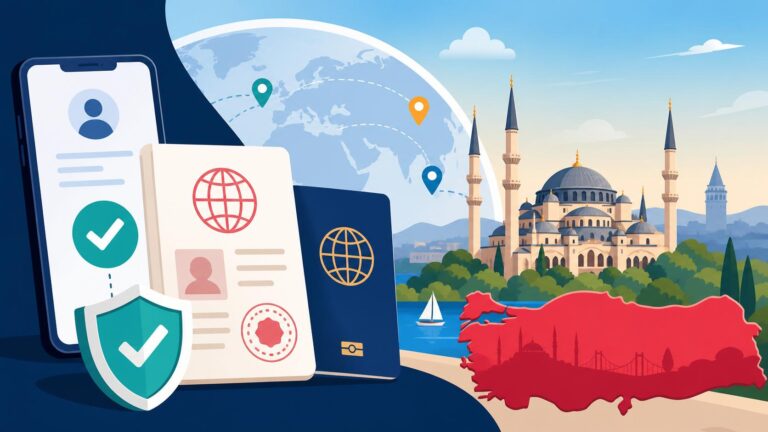
The first thing you need to wrap your head around is that "visa" and "residency" are two different beasts in the Turkish system. Many students arrive thinking that the sticker in their passport from the Turkish consulate back home is all they need for their entire four-year degree. Unfortunately, that sticker is essentially just your "golden ticket" to enter the country for the specific purpose of study. Once you cross the border, the clock starts ticking, and you must transition that entry visa into a plastic ID card known as the Ikamet.
The Student Residence Permit is your actual legal ID while you are here. It allows you to open bank accounts, sign a rental lease, and get a student discount card for the Metro. Without it, you are effectively a tourist who has overstayed their welcome after 90 days. Students often wait until the last minute to start this process, only to realize that the online system is booked out for weeks. You want to avoid that panic at all costs.
To make sure your documents are accepted by both the consulate and the local migration office, you should prioritize high-quality translations. Services like RushTranslate are invaluable here because they understand the specific "sworn translator" requirements that Turkish authorities demand. If your birth certificate or high school diploma isn't translated perfectly, the system will flag it, and you’ll be sent back to square one.
The Critical Role of the Consulate Visa
Before you even pack your bags, you generally need to apply for a Student Visa at the Turkish embassy or consulate in your home country. Even if you are from a visa-exempt country for tourism, entering on a tourist visa and trying to flip it to a student permit inside Turkey has become increasingly difficult. The consulate visa signals to the Turkish government that you have already been vetted by your university and have the financial means to support yourself.
Why the Ikamet is Your Most Important Document
Once you have your Ikamet, you no longer need to worry about the 90/180 day rule that applies to tourists. This card is your lifeblood. It contains your "99 number," which is your foreign identification number used for everything from hospital visits to tracking your exam results on the university portal. When you are preparing your Required Documents Checklist for a Short-Term Turkish Residence Permit, remember that the student version of this permit has its own unique set of requirements compared to a standard tourist one.
Avoiding the Document Discrepancy Trap
One common headache is a name discrepancy between the university's acceptance letter and the passport. If your middle name is on your passport but missing from your university enrollment, the migration officer might reject your file. This is why using professional services like RushTranslate to ensure every piece of paper matches your official identity is so crucial. They can help ensure that the translated version of your documents mirrors your passport exactly, preventing these "minor" errors that cause major delays.
Pre-Arrival Securing Your University Acceptance and Student Visa
The journey starts long before you land at Istanbul Airport. First, you need that official acceptance letter (Kabul Belgesi) from a Turkish Council of Higher Education (YÖK) recognized institution. Whether you are heading to a state giant like Istanbul University or a foundation university like Koç or Bilgi, that letter is your primary evidence for the visa. Once you have it, you’ll book an appointment at the consulate.
At the consulate, they will ask for proof of financial sufficiency. They want to know you won't run out of money halfway through your second semester. While some consulates accept bank statements, others might require a formal letter of sponsorship. During this phase, you’ll also need to prove you have initial health coverage. While you’ll eventually get local insurance, having a global policy from a provider like Cigna Global can often satisfy the consulate's requirements for the "travel insurance" portion of your visa application while providing much higher coverage limits than basic local plans.
Navigating the Apostille and Legalization Process
Turkey is a member of the Hague Apostille Convention. This means if your documents (like your diploma or birth certificate) are from another member country, they must have an Apostille stamp to be recognized in Turkey. If your country isn't a member, you have to go through a multi-step legalization process involving your Ministry of Foreign Affairs and the Turkish Consulate. It’s tedious, I know. I spent three weeks chasing a single stamp back in the day.
Sworn Translations and Notarization
Every foreign document must be translated into Turkish by a sworn translator and then notarized by a Turkish notary (Noter). If you are doing this from abroad, the consulate handles it. If you are doing it inside Turkey, you’ll find "Noter" signs on almost every corner. To save time and ensure accuracy before you even arrive, getting your translations handled by RushTranslate allows you to have everything ready for the notary the moment you land. This prevents you from wandering around a foreign city looking for a translator who actually understands academic terminology.
The Financial Sufficiency Factor
For 2026, the Turkish government has become stricter about how students prove their funds. Usually, they look for a balance that covers at least one year of tuition plus a monthly living allowance (often pegged to the minimum wage). If you are on a scholarship, your scholarship award letter is your best friend. Make sure it explicitly states the duration and the amount of the award. If it's in a language other than Turkish or English, you'll need that sworn translation again.
Post-Arrival Navigating the e-Ikamet System for Students
Welcome to Turkey! Now the real clock starts. You have a limited window—usually 30 days, but legally until your visa expires—to apply for your residence permit via the e-Ikamet website. This website is the stuff of expat legends; it’s prone to crashing and sometimes doesn't like certain browsers. My advice? Use a desktop computer, not your phone, and keep your passport and university enrollment certificate (Öğrenci Belgesi) right next to you.
The Step-by-Step: Filling Out the Complex e-Ikamet Application Form Online guide is a lifesaver for this part. You will fill out your personal details, your university information, and your address in Turkey. Once you hit submit, the system will generate a "Registration Form" and, in most cases, give you an appointment date and time at the Provincial Migration Management (Göç İdaresi).
The First 30 Days Strategy
The biggest mistake students make is "settling in" for a month before looking at the visa situation. You need your Turkish phone number and your local address almost immediately. You cannot finish the e-Ikamet form without a valid Turkish address. If you are staying in a dormitory, you need a signed and stamped letter from the dorm manager. If you are renting, you’ll need to follow the rules on How to Notarize Your Rental Contract for a Residence Permit Application to ensure the migration office accepts your lease.
Attending the Randevu Appointment
On the day of your appointment, dress decently and arrive early. You’ll bring a folder with your application form, biometric photos, passport copies, the Öğrenci Belgesi, and proof of insurance. The officer will review your documents, take your fingerprints, and tell you if anything is missing. If you’ve used a reliable translator like RushTranslate for your out-of-country documents, this part is usually a breeze. They will give you a "Certificate of Application" which acts as your temporary legal ID until your card arrives by mail.
Handling Missing Documents (Eksik Evrak)
If the officer tells you that a document is missing or incorrect, don't panic. They usually give you 30 days to bring the corrected paper back to the office. This often happens with insurance policies that don't meet the specific "minimum criteria" or rental contracts that aren't properly notarized. This is why I always suggest having comprehensive coverage from a provider like Cigna Global from the start; their documentation is world-class and rarely questioned by authorities because it clearly outlines the high level of benefits provided.
| Document Type | Source | Requirement |
|---|---|---|
| Acceptance Letter | University | Signed and stamped (Original) |
| Biometric Photos | Local Studio | 4 copies, white background, last 6 months |
| Student Certificate | University (E-Devlet) | Known as Öğrenci Belgesi |
| Health Insurance | Private/SGK | Must cover the duration of the permit |
| Address Proof | Dorm/Landlord | Notarized lease or Dormitory letter |
| Passport | Government | Valid for at least 60 days beyond permit |
Mandatory Health Insurance for Student Permits
You cannot get a residence permit without health insurance. For your first year, most students opt for a private policy because it’s a prerequisite for the application itself. These policies must contain specific clauses mandated by the Turkish government (covering outpatient, inpatient, and ICU care). While there are very cheap "for-visa" policies available, they often provide minimal actual care.
If you are a student who wants actual medical security—meaning you can go to the best private hospitals in Istanbul or Ankara without a massive bill—an international plan from Cigna Global is a fantastic investment. It satisfies the residency requirement while ensuring that if you get sick, you aren't stuck navigating a crowded public hospital triage system. After your first year, you also have the option of Enrolling in SGK (Public Health Insurance): The 1-Year Residency Rule, which is the state-run system.
Private Insurance vs SGK
Private insurance is generally faster to obtain and is the standard for your initial application. SGK (Social Security Institution) coverage is comprehensive but requires you to pay a monthly premium. Some students prefer SGK because it covers pre-existing conditions after a waiting period, whereas private plans might exclude them. However, for a student on a budget who needs to get their permit approved today, a private policy is the way to go.
The 2026 Policy Requirements
The migration office has become very strict about the wording on insurance policies. They must explicitly state that they comply with the "Circular on Private Health Insurance for Residence Permit Applications." When you buy a policy, make sure the agent gives you the original signed and stamped copy. If you’re using a global provider like Cigna Global, you can often request a specific Turkish-compliant certificate that they are well-versed in providing for expats in the region.
Why You Should Avoid the Cheapest Option
Many students buy the cheapest 1,000 TL insurance policy just to get the visa, only to realize later it doesn't cover things like accidental injuries or specialized prescriptions. Turkey has incredible healthcare, but the private hospitals are expensive. Having a robust plan means you can focus on your exams rather than worrying about how to pay for a surprise appendectomy.
The Address Registration Nüfus and UETS Requirement
In the last couple of years, Turkey has tightened its rules on where foreigners can live. You are now required to register your address in a national database (MERNIS) at the local Nüfus (Population) Directorate. This is no longer an optional step; if you don't register your address within 20 days of getting your permit, your residency could be cancelled. This is detailed extensively in the guide on Address Registration (Nüfus): The Most Critical Post-Arrival Step for Foreigners.
Additionally, there is a new requirement for 2026: the UETS (National Electronic Notification System). This is essentially a digital mailbox where the government sends you official notices. Without a UETS address, you might find your residence permit renewal rejected. Getting this set up is a bit of a process, involving a trip to the PTT (post office) with your passport and residence permit.
The Trap of Closed Neighborhoods
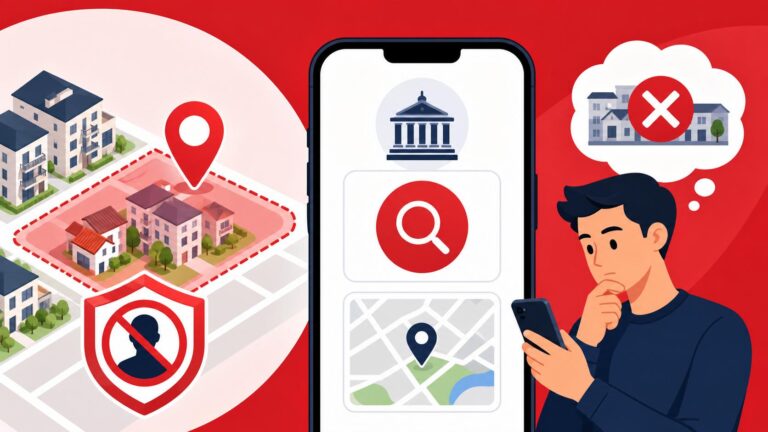
Before you sign a lease, you must check if the neighborhood is "closed" to foreigners. Due to high foreign populations in certain areas (like parts of Fatih or Esenyurt in Istanbul), the government has stopped issuing new residence permits there. If you move into a closed neighborhood, the migration office will reject your application, even if you have a valid university enrollment. Always check the latest list of closed neighborhoods on the official Göç İdaresi website.
Setting Up Your UETS Digital Mailbox
Once you have your residence permit card, head to the nearest PTT. Tell them you need a "UETS adresi." They will take your information and give you a password. You then log in online to activate it. You can find a UETS Setup: Getting Your PTT Electronic Mailbox as a Foreign Resident tutorial to help you through the portal. This digital address must be included in your renewal applications moving forward.
Police Address Checks (Tahkikat)
Don't be surprised if the police knock on your door. They perform random "address checks" to ensure that the people registered at an address actually live there. If they come by and your neighbors say they’ve never seen you, it can lead to a "V-Code" on your record, which is a major headache to clear. Always keep your name on the doorbell or mailbox to show you are a resident.
Living as a Student Work Rights Renewals and Graduating
One of the most frequent questions I get is: "Can I work while I study?" In Turkey, the answer is a bit nuanced. Officially, undergraduate students are not allowed to work during their first year. After that, they may be eligible for part-time work, but it requires a separate work permit that your employer must apply for. Master’s and PhD students have it slightly easier, but there are still caps on hours. You can read the full breakdown in Can International Students Work Part-Time in Turkey? Legal Restrictions.
When your permit is nearing its expiration date (usually 60 days before), you should start the renewal process. Never let it expire. The renewal process is similar to the first application but generally requires fewer "original" documents if your circumstances haven't changed. If you are graduating soon, you need to think about your next step immediately, as your student permit becomes invalid the moment you receive your diploma.
Transitioning After Graduation
If you want to stay in Turkey after you finish your degree, you have a few options. Many students look for a "Short-Term Residence Permit for Job Seeking" or transition into a work permit if they find an employer willing to sponsor them. The Transitioning from a Student Visa to a Work Permit After Graduation guide covers the 5-to-1 rule and the salary requirements you’ll need to meet.
Converting to a Short-Term Ikamet
If you haven't found a job yet but want to stay and travel or look for opportunities, you can apply for a transition. This is a specific procedure you must start before your student card expires. For a step-by-step on this, check out How to Convert Your Student Ikamet to a Short-Term Ikamet After Graduating. This is a critical safety net for many graduates who aren't ready to leave the Turquoise Coast just yet.
The Importance of the "Öğrenci Belgesi"
Throughout your studies, you will need a fresh, e-signed Öğrenci Belgesi for almost every administrative task. You can usually get these for free from your university's "Student Affairs" (Öğrenci İşleri) office or via the E-Devlet portal. Make sure yours is always up to date, as the migration office will not accept one that is more than a few weeks old.
Financial Planning and Costs for Student Residency
Living in Turkey as a student is generally affordable compared to Western Europe or North America, but the administrative costs add up. You need to budget for the residence permit card fee, the "visa fee" (if you didn't pay it at the consulate), notarization costs, and translation fees. In 2026, the card fee is roughly 565 TL, but the "entry fee" for those who enter without a visa can be several thousand Lira.
Beyond the permit, your biggest expenses will be rent and health insurance. While student dorms are cheaper, a private apartment in a central area like Beşiktaş or Kadıköy will cost significantly more. For health insurance, while a basic policy might be cheap, it is often advisable to consider the peace of mind that comes with Cigna Global, especially if you plan on traveling outside of Turkey during your breaks, as it offers international portability that local Turkish plans lack.
Notary and Translation Costs
Every page you get notarized will cost between 500 TL and 1,500 TL depending on the complexity and length. If you have a five-page sponsorship letter, that’s a significant chunk of change. Using RushTranslate for your initial translations can help you get an accurate quote and avoid the "tourist price" sometimes found at local translation bureaus near the migration offices.
Tuition and State vs Private Universities
State universities are incredibly cheap for foreigners (sometimes just a few hundred dollars a year), but they are hard to get into and usually require high Turkish proficiency. Private (foundation) universities are more expensive (ranging from $3,000 to $20,000+ per year) but often teach in English and provide more support for international student visas. Ensure your tuition is paid on time, as the university will not issue the required Student Certificate if you have an outstanding balance.
Banking for Foreign Students
To pay your permit fees, you’ll often need to visit a tax office (Vergi Dairesi) or pay via a state bank like Ziraat Bankası. Opening a bank account as a student can be tricky until you have your residence permit card. Some banks will let you open one with just your passport and a tax ID number, but they may require a large deposit. Having your student permit makes this process 100% easier.
Troubleshooting Common Student Permit Issues
Even with the best preparation, things can go wrong. The most common issue is a "document rejection" because of a missing apostille or an incorrectly translated document. If this happens, you usually have 30 days to fix it. If you miss your appointment (Randevu), the system usually blocks you from reapplying for several months, which can put you in "overstay" status.
If you find yourself in a bind, don't listen to rumors in Facebook groups. Go directly to your university's International Student Office. They deal with these issues every day and often have a direct line to the local migration office. If the issue is legal, you may need to hire an immigration lawyer, but for most document errors, simply getting a better translation from a service like RushTranslate or a better insurance policy from Cigna Global will solve the problem.
What to Do If Your Permit is Denied
If your application is officially denied, you will receive a "Notification of Rejection." This usually gives you 10 days to leave the country. You can appeal this in court, but it's an expensive and slow process. Most students choose to leave and re-enter on a new visa if possible. To avoid this, ensure your address registration is perfect and your financial proof is undeniable.
Changing Universities or Departments
If you transfer from one university to another, or even change departments within the same university, you must notify the migration office within 20 days. If you move to a university in a different city (e.g., from Istanbul to Ankara), you must apply for a "transfer of residence permit" in your new city. Failure to do this is a leading cause of permit cancellations.
Lost or Stolen Ikamet Cards
If you lose your card, you need to go to the police station and get a "Lost Report" (Kayıp Tutanağı). You then take this report to the migration office to apply for a replacement. You’ll have to pay the card fee again, but you won't have to redo the entire application process from scratch. It's a hassle, so keep that plastic card safe!
Disclaimer
The information provided in this guide is for informational purposes only and does not constitute legal advice. Immigration laws and regulations in Turkey are subject to frequent changes, especially regarding fees, required documents, and neighborhood eligibility. Always verify the latest requirements with the official website of the Presidency of Migration Management (Göç İdaresi) or consult with a qualified legal professional before making any significant decisions regarding your residency or visa status.