Driving in Turkey: Foreign Licenses, Car Ownership Costs, and Road Safety
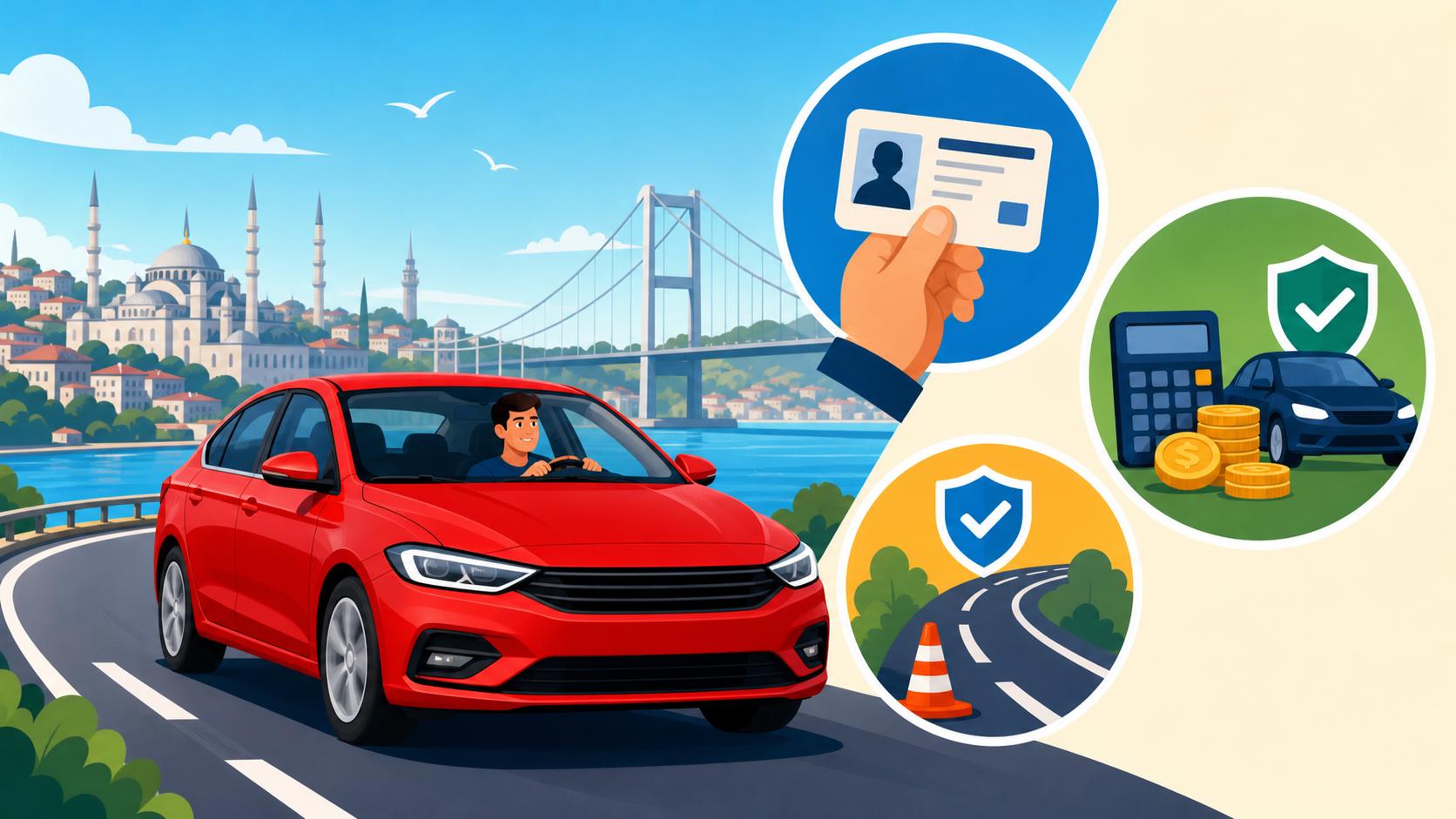
Navigating the chaotic dance of Istanbul traffic or the winding mountain passes of the Kaçkar range can feel like a high-stakes video game where the rules are written in invisible ink. I remember my first month here, white-knuckling the steering wheel of a rental while a Dolmuş driver merged inches from my bumper without a blinker. This guide settles the confusion around legalizing your foreign license, the eye-watering costs of car ownership, and the unwritten social codes of the Turkish road.
Validating Your Foreign License in Turkey (The 6-Month Rule)
The most common question I get from new arrivals is how long they can legally drive on their home country’s license. In Turkey, the law currently allows foreigners to drive using their valid foreign license for up to six months from the date of their last entry into the country. It sounds simple, but there is a nuance that catches many people off guard: the moment you cross the border back into Turkey, that six-month clock restarts. However, once you become a legal resident with an Ikamet, the authorities expect you to eventually integrate into the local system.
During this initial six-month grace period, you must carry a notarized Turkish translation of your license along with your original passport and license at all times. Expats can get into heated arguments with traffic police because they had the original but not the translation. The police aren't being difficult; they simply need a document they can legally verify in their own language. If you are planning a long road trip, make sure your phone has a steady data connection via a service like Airalo so you can pull up digital copies of your documents or use translation apps if your Turkish fails you during a routine stop.
After those first six months, the rules change significantly. If you remain in Turkey beyond 180 days without exiting, you are legally required to either convert your foreign license to a Turkish one or stop driving. Relying on the "exit and re-enter" loophole is common, but as immigration policies tighten in 2026, it is much safer to begin the conversion process if you intend to stay long-term. Driving on an expired foreign grace period can lead to your insurance being invalidated, which is a financial nightmare you want to avoid at all costs.
The Initial Six-Month Grace Period
The grace period is a lifesaver for tourists and those on short-term assignments. It allows you to rent a car at the airport and hit the road immediately. However, you must ensure your license is in a language that uses the Latin alphabet. If your license is in Cyrillic, Arabic, or Chinese characters, you will absolutely need an International Driving Permit (IDP) alongside your original. Even with an IDP, it is wise to get a local notarized translation anyway; it costs very little and saves an hour of explaining things to a skeptical officer on the side of a highway.
Many expats find that the stress of driving in major cities like Istanbul or Izmir isn't worth it during their first few months. If you are living in a managed property through a provider like Blueground, you might find that you don't even need a car for your daily commute, as their locations are usually selected for their proximity to high-end public transport. This gives you the breathing room to observe how locals drive before you commit to getting behind the wheel yourself.
Lastly, keep in mind that the six-month rule applies to the person, not the vehicle. If you leave the country for a weekend in Greece and come back, your 180-day window for driving resets, but your vehicle (if you brought one from abroad) is subject to entirely different Customs and Blue Card regulations. Never conflate the two, or you might find your car impounded while you remain perfectly legal to drive.
Notarized Translations: Why You Need Them Early
Finding a sworn translator (Yeminli Tercüman) is your first step. These professionals are registered with specific notary offices. You cannot just translate the document yourself and expect a notary to sign it. You take your license to the translator, they produce a document on their letterhead, and then you both head to the notary office where the official seal is applied. This process usually costs between 1,000 and 2,000 TL depending on the current notary tariffs.
I suggest making three copies of this notarized translation. Keep one in the glove box, one in your wallet, and one at home. Turkish traffic police frequently set up checkpoints (called 'Uygulama') where they check every driver’s ID and registration. Having a crisp, notarized translation ready to hand over makes the process go from a ten-minute ordeal to a thirty-second formality. It shows that you respect the local laws and have done your homework.
While you are getting your paperwork in order, don't forget to stock up on other essentials. I usually use Amazon Turkey to order a high-quality phone mount and a dashcam. Given the "creative" driving styles you will encounter, a dashcam is the best investment you can make for your own protection. In Turkey, video evidence is increasingly used in insurance disputes, and having a record of that wayward scooter can save you thousands in liability.
Converting to a Turkish Driver’s License (The Ehliyet Process)
If you decide to settle down, you’ll need to navigate the Converting Your Foreign Driver's License to a Turkish License process. Turkey has bilateral agreements with many countries (like most EU states, the UK, and several US states), allowing for a direct swap. If your country is on the list, you won't have to take a driving test, but you will have to navigate a mountain of bureaucracy. You will need to provide your original license, a color copy, a notarized translation, your residency permit, and a Getting a Health Report (Sağlık Raporu) for Work or Driving License Conversions from a local clinic or private hospital.
The trickiest part for many is the education requirement. Turkey requires you to prove your highest level of completed education. This often involves getting your foreign diploma apostilled in your home country and then getting a "Denklik" (equivalency) from the Turkish Ministry of Education. This can take months. I spent nearly eight weeks waiting for my documents to be verified just so I could prove I had finished high school. It’s an archaic requirement for a driving license, but there is no way around it. Check the Apostille Rules: Preparing and Staging Your Foreign Diplomas for Turkey guide to make sure you have the right stamps before you leave your home country.
Once your folder is ready, you book an appointment via the Nüfus (Population) Directorate website. You’ll pay a fee at a state bank (like Ziraat or VakıfBank), give your fingerprints, and surrender your foreign license if your home country doesn't allow for dual-holding. Some people choose to "lose" their foreign license back home to keep a spare, but I didn't tell you that. Your new Turkish Ehliyet will arrive via PTT mail within a week, and it serves as a powerful form of local ID.
Owning a Car in Turkey: The Financial Reality
Buying a car in Turkey is not like buying a car in the US or Europe. Because of the Special Consumption Tax (ÖTV) and Value Added Tax (KDV), vehicles here can cost two to three times what they do elsewhere. For many expats, the sticker shock is enough to make them stick to taxis. However, if you live in a coastal town or a remote suburb, a car is a necessity. Understanding the market is crucial to avoid overpaying for a "lemon."
The used car market in Turkey is incredibly active because cars are seen as an investment hedge against inflation. A car bought three years ago might sell for more Lira today than its original purchase price. This means you must be very careful when Buying a Used Car in Turkey: Notaries, Expertise Reports, and High Taxes. Never buy a car without a comprehensive "Ekspertiz" report from an independent shop. These technicians use specialized equipment to check if the car has been repainted, if the airbags have been deployed, or if the odometer has been rolled back.
If you aren't ready for the long-term financial commitment of buying, consider living in a central area where you can use car-sharing apps or rentals. Services like Blueground offer apartments in neighborhoods where having a car is actually a liability due to parking, allowing you to save your capital for other investments. If you do buy, remember that the "foreigner to foreigner" car market (Blue Plate) allows you to buy a car tax-free, but you can only sell it to another foreigner, which can make the exit process difficult.
Understanding the High Cost of Vehicles (ÖTV and KDV)
The ÖTV (Special Consumption Tax) is calculated based on the engine displacement and the pre-tax price of the vehicle. For cars with engines larger than 1.6 liters, the tax rate jumps exponentially. This is why you will see a sea of 1.3 and 1.5-liter diesel or hybrid engines on Turkish roads. A 2.0-liter BMW that costs $45,000 in Germany could easily cost $120,000 in Turkey after all taxes are applied.
In addition to the ÖTV, there is a 20% KDV (VAT). When you see a price on a site like Sahibinden, it includes these taxes, but it’s important to understand why the price feels so inflated. Because of these costs, the "luxury" segment in Turkey is quite small, and even basic hatchbacks are treated with a level of care usually reserved for sports cars. Owners will often keep the plastic seat covers on for years to preserve the resale value.
If you are importing a car from abroad, be prepared for even more headaches. You can keep a foreign-plated car in Turkey for up to two years, but you must stay outside of Turkey for 185 days in the year prior to the car's arrival to qualify. If you miss this window by even one day, the Customs office will deny entry. Most expats find that after two years, the cost of officially "nationalizing" the car (paying the ÖTV) is more than the car is worth, leading them to drive it back to the border and sell it.
Annual Maintenance and Motor Vehicle Tax (MTV)
Once you own the car, the costs don't stop. The MTV (Motorlu Taşıtlar Vergisi) is an annual road tax paid in two installments (January and July). The amount depends on the age of the car and its engine size. You can check Auto Purchases and Vehicle Taxes: Understanding ÖTV and MTV Levies in Turkey to see the current 2026 brackets. Failing to pay this tax will prevent you from selling the car or taking it through its mandatory inspection.
Maintenance is relatively affordable compared to Western Europe, as labor costs are lower. However, parts for imported brands (which is almost all of them) are pegged to the Euro or Dollar. It is generally advisable to use authorized service centers for newer cars to keep the warranty intact, but for older models, every neighborhood has a "Sanayi"—an industrial zone filled with specialized mechanics for every brand imaginable.
Finding a trustworthy "Usta" (master mechanic) is a rite of passage for every male expat in Turkey. It usually involves several cups of tea and a lot of gesturing. If you need specific parts or specialized oils that your local Sanayi doesn't stock, Amazon Turkey is a reliable source for getting genuine filters and accessories delivered to your door within 24 hours. Just make sure you know exactly what part number you need, as returns in the Sanayi are non-existent.
The Notary Process for Buying and Selling Cars
In Turkey, you don't just sign the back of a title and hand over the keys. All vehicle transfers must happen at a Notary (Noter). The process is impressively efficient but very rigid. The buyer and seller meet at the notary office, the notary clerk checks the system to ensure there are no outstanding traffic fines, unpaid MTV, or HGS (toll) debts. If the car has even a 50 TL unpaid parking ticket, the system will block the sale.
The buyer must have a Turkish Tax ID and, in many cases, a valid residency permit. If you are a foreigner buying a car, you will also need a sworn translator present at the notary to explain the contract to you, even if you speak decent Turkish. The notary will not risk the liability of you claiming later that you didn't understand what you signed. The total notary fee for a transfer is usually around 1,000 to 1,500 TL.
Once the documents are signed, the notary prints a temporary registration paper. Your official "Ruhsat" (registration booklet) will be mailed to your registered address. This is why it is vital that your address is up to date in the Nüfus system. If you move, you have 20 days to update your records, or your documents might end up in a postal void.
| Item | Estimated Cost (2026) | Frequency |
|---|---|---|
| Notarized Translation | 1,500 TL | Once per license |
| Health Report (Private) | 800 – 1,200 TL | Once per license swap |
| MTV (Mid-range car) | 6,000 – 15,000 TL | Annual (Two installments) |
| Mandatory Traffic Insurance | 7,000 – 12,000 TL | Annual |
| Kasko (Comprehensive) | 20,000 – 45,000 TL | Annual |
| TÜVTÜRK Inspection | 2,500 TL | Every 2 years (for cars) |
Navigating Turkish Road Safety and Traffic Culture
Turkish road culture is a blend of extreme hospitality and aggressive opportunism. On one hand, a driver might stop his car in the middle of a busy street to let an elderly person cross; on the other, that same driver might use the shoulder to bypass a two-hour jam on the O-3 highway. Understanding these contradictions is the key to driving safely. You have to be "predictably unpredictable."
The most important rule is: don't trust the green light. In many cities, there is a "soft" transition where drivers will try to squeeze through a yellow or even a freshly turned red light. Always pause for a second when your light turns green and look both ways. Also, pedestrians do not have the right of way in practice, regardless of what the law says. If you stop for a pedestrian at a crosswalk, you might actually cause an accident because the driver behind you is not expecting you to stop.
If you find yourself overwhelmed, remember that you don't have to drive every day. When I first moved to Istanbul, I relied on eSIM data from Airalo to navigate the ferry and metro systems while I spent weekends practicing driving in quieter neighborhoods like Beykoz or Kemerburgaz. Taking the time to build your confidence will prevent the burnout that many expats feel after a month of fighting for space in the city center.
Defensive Driving as a Survival Skill
In Turkey, defensive driving isn't just a suggestion; it's a survival mechanism. You must constantly scan 360 degrees around your vehicle. Motorbikes and delivery scooters (kurye) are the biggest hazards. They will lane-split at high speeds and appear in your blind spot in a fraction of a second. Always check your mirrors twice before changing lanes, and even then, move slowly to give a scooter time to honk.
The concept of "safe following distance" is largely ignored. If you leave a car-length gap in front of you, someone will fill it. Instead of getting angry, accept this as the local flow. If you try to block people out, you increase the risk of a side-swipe. Be firm but fluid. Use your turn signals, but don't expect them to grant you permission to merge; think of them more as a "notification of intent" that you are already moving.
Road conditions can also vary wildly. While the main intercity highways are world-class, side streets can have deep potholes or sudden construction without warning. If you see a pile of rocks in the middle of the road, it’s often a makeshift warning sign that there’s a massive hole ahead. This is another reason why keeping your car maintained and having a good relationship with your local "Usta" is vital.
Understanding the 'Right of Way' Mystery
In Western driving schools, we are taught specific rules for roundabouts and intersections. In Turkey, the rule is often "the biggest or fastest car goes first." At a roundabout, technically the car inside the circle has the right of way, but you will often see cars entering the circle without looking. You must be prepared to stop even when you are legally in the right.
Intersections without lights are a game of eye contact. If you make eye contact with another driver and edge forward, they will usually let you in. If you hesitate, you will stay there all day. It’s a subtle communication that takes time to master. If you aren't comfortable with this yet, choosing a residence in a well-planned area through Blueground can help, as these neighborhoods tend to have better traffic management and more signals, reducing the "free-for-all" intersections.
Winter driving brings its own set of rules. In many provinces, winter tires (Kar Lastiği) are mandatory from December 1st to April 1st for commercial vehicles, and highly recommended for private ones. If you are caught in a snowstorm without the proper tires, not only is it dangerous, but you could face a How to Check Your Traffic Fines (Trafik Cezası) and Pay Safely on e-Devlet situation that is easily avoidable with a quick trip to the tire shop in November.
Speed Cameras and Traffic Fines (EDS and TEDES)
Turkey uses a very sophisticated electronic monitoring system called EDS (Electronic Detection System). These cameras are everywhere in major cities and on highways. They don't just catch speeding; they catch lane violations, illegal turns, and even drivers using mobile phones. The fines are automatically linked to your license plate and will show up on your e-Devlet account within a few days.
A unique feature of Turkish highways is the "Average Speed Detection" zones. Instead of one camera, the system logs your plate at point A and point B. If you cover that 50km stretch too quickly, you get a ticket. This has drastically reduced high-speed racing on the toll roads. If you are using a foreign phone, make sure you've dealt with The Turkey IMEI Rule: How to Register Foreign Phones in 2026 so you can reliably access your e-Devlet and check for these fines.
If you get a ticket, pay it within 15 days to get a 25% discount. You can pay via most mobile banking apps or at a PTT office. If you ignore the fines, they accrue interest, and you will be unable to sell your car or leave the country with it until the debt is cleared. I always check my e-Devlet once a month just to make sure I haven't been caught by a sneaky camera in an 82 km/h zone.
Essential Paperwork: Insurance and Inspections
Paperwork is the backbone of Turkish life. You cannot drive a car without "Trafik Sigortası" (Compulsory Traffic Insurance). This covers damage to the other party in an accident. However, it provides zero protection for your own vehicle. For that, you need "Kasko." Most expats find that Kasko is worth the high premium, especially given the frequency of minor fender-benders and the high cost of parts.
In addition to insurance, your car must pass a biennial inspection at TÜVTÜRK. This is not a casual check. They will look at your brakes, lights, emissions, and even ensure you have a first aid kit and a fire extinguisher in the car. You can order a compliant first aid kit on Amazon Turkey to ensure you have all the specific Turkish-regulated items, like the reflective triangles and sterile bandages, which are non-negotiable during the inspection.
If you do get into an accident, don't panic, but also don't move your car until the What to Do in a Minor Car Accident in Turkey: Filing a Kaza Tutanağı is completed. In most countries, you move to the shoulder to clear traffic. In Turkey, moving the car can sometimes be interpreted as tampering with the scene, making it harder for insurance to determine fault. Only move the car if it’s a danger to others or if both parties have taken extensive photos of the positions of the vehicles.
Compulsory Traffic Insurance vs. Kasko
When you buy a car, the notary will check that it has active Traffic Insurance. If it doesn't, the sale is blocked. This insurance is tied to the car and the owner's risk profile. As a foreigner with no Turkish driving history, your initial premiums will be higher. Over time, as you build a "no-claims" record, the price will drop. You can read more about the nuances in Auto Insurance (Kasko) vs Compulsory Traffic Insurance (Trafik Sigortası).
Kasko is the "optional" comprehensive insurance that covers theft, fire, and damage to your own car. In 2026, Kasko prices have risen significantly due to the cost of imported spare parts. Some policies also offer "Roadside Assistance" (Asistans), which is a godsend if you break down on a remote road in the Taurus Mountains. Make sure your Kasko policy includes a "Replacement Car" (İkame Araç) clause, so you aren't left stranded while your car is in the shop for two weeks.
A common pitfall for expats is assuming their foreign insurance covers them in Turkey. Unless you have a "Green Card" (Uluslararası Sigorta Kartı) specifically mentioning Turkey, your foreign policy is useless here. Even then, most Green Cards only provide the bare minimum third-party coverage. If you are serious about driving here, get a local Kasko policy from a reputable provider like Allianz, Anadolu Sigorta, or Axa.
The TÜVTÜRK Inspection Maze
TÜVTÜRK is the only authorized body for vehicle inspections in Turkey. Booking an appointment is done online, and in cities like Istanbul, you might need to book three weeks in advance. If your inspection expires, you face a fine every month you are late, and the police can impound your car during a routine stop. I always set a calendar reminder for a month before my expiration date.
On the day of the inspection, arrive early. You’ll need your Ruhsat, your insurance policy, and your ID. The technician will take the car through a series of automated tests. If you fail (for something like a burnt-out bulb or uneven brake pressure), you have one free "re-check" within 30 days. This is why I always take my car to my "Usta" for a "pre-TÜVTÜRK check" the week before. They know exactly what the inspectors look for.
A "Heavy Defect" (Ağır Kusur) will result in an immediate fail. This includes things like illegal window tints (though rules on this change often), bald tires, or structural rust. A "Light Defect" (Hafif Kusur), like a small crack in a non-structural plastic part, will be noted on your report but you will still pass. Once you pass, they stick a new hologram on your license plate, and you are good for another two years.
Handling Minor Accidents (The Kaza Tutanağı)
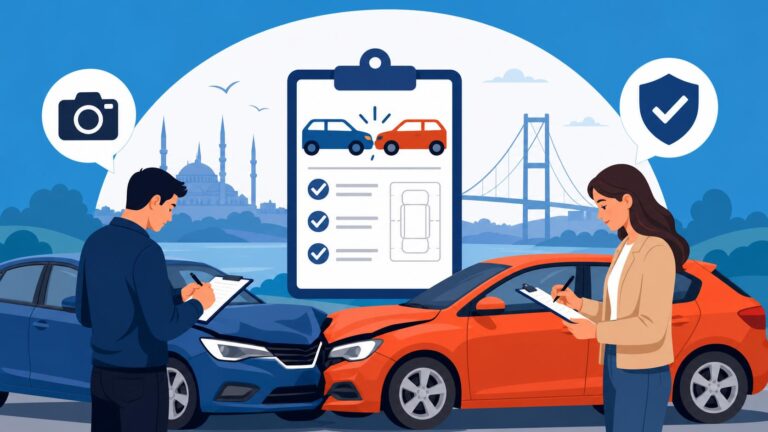
For minor accidents where no one is injured, you do not need the police. In fact, if you call the police for a minor scratch, they might just tell you to fill out the "Kaza Tespit Tutanağı" (Accident Report) yourself. Every car should have a blank copy of this form in the glove box. You and the other driver fill out your details, draw a simple diagram of the accident, and sign it.
You must take clear photos of the damage, the license plates, and the overall position of the cars relative to the road markings. You will also need a copy of the other driver's Ruhsat and their insurance policy (or a clear photo of it). Once the form is signed, each driver sends it to their respective insurance company. The insurance companies then use a centralized system to determine who was at fault (0%, 50%, or 100%).
If the other driver refuses to sign or doesn't have insurance, or if anyone is injured, you must call 112 and wait for the police. Do not let the other driver pressure you into "settling with cash" on the spot. While it might seem easier, you have no recourse if the damage turns out to be more expensive or if they later claim you hit them and fled. Stick to the official process; it’s there to protect you.
Road Trips and Infrastructure: The Better Side of Driving
Despite the stress of city driving, Turkey is one of the best countries in the world for a road trip. The Ministry of Transport has invested billions in high-speed highways, massive tunnels through the Taurus Mountains, and some of the longest suspension bridges on the planet. Driving from Istanbul to Izmir used to take nine hours; now, thanks to the O-5 highway, it takes less than four.
The service stations (Mola Yerleri) are also exceptional. You won't just find a vending machine; you’ll find full-service restaurants, clean prayer rooms, and high-end supermarkets. If you are traveling with kids, these stops are a life-saver. For long journeys, I always use Airalo to make sure my GPS doesn't drop out in the middle of a mountain pass, as Google Maps often needs to recalculate when you take a new tunnel that didn't exist six months ago.
Infrastructure is also catching up with the electric vehicle trend. EV charging stations (like Trugo or ZES) are becoming common at most major gas stations. If you are considering an EV, the tax benefits (lower ÖTV) are significant, though the initial purchase price is still high. For those living in Blueground apartments, many of their newer buildings include EV charging points in the parking garage, making the transition to electric much more feasible for urban expats.
Mastering the HGS Toll System
Most major highways and bridges in Turkey use the HGS (Hızlı Geçiş Sistemi). There are no cash booths; the system uses a small sticker on your windshield that is scanned by overhead sensors as you drive through at highway speeds. You can buy these stickers and top them up at any PTT office or via your Turkish bank's mobile app.
Linking your HGS to your bank account for "Automatic Top-up" is the only way to go. If your balance drops to zero and you pass through a toll, you have 15 days to top up before a "violation" fine is applied. These fines can be five times the original toll amount. You can read the full details in Toll Roads and Bridges: Navigating Turkish Highways with HGS Stickers.
Be aware that some private bridges and tunnels (like the Eurasia Tunnel or the Yavuz Sultan Selim Bridge) have higher tolls than state-run roads. These can cost several hundred Lira per crossing. If you are commuting across the Bosphorus daily, these costs add up quickly. I always check my HGS balance once a week on the PTT HGS website or app to avoid any unpleasant surprises on my e-Devlet account.
Fueling Up: Pompaci Culture and Gas Prices
In Turkey, you don't pump your own gas. Every station has attendants (Pompacı) who do it for you. You just pull up, tell them how much you want (usually "Fullle" for a full tank or a specific Lira amount), and they handle the rest. You then go inside to the "Market" to pay. It’s a bit of old-school luxury that I’ve grown to love.
Gasoline (Benzin) and Diesel (Motorin) prices are set by the government and fluctuate daily based on global oil prices and the Lira's value. Fuel is a major expense for most households. Most stations offer loyalty cards that give you a tiny percentage back in "points" that you can use for future fuel purchases. It’s not much, but every bit helps when a full tank costs upwards of 3,000 TL.
Many stations also offer "Otogaz" (LPG). Many Turkish drivers convert their gasoline cars to LPG because it is significantly cheaper, although it takes up trunk space and is banned in some underground parking garages. If you see a "No LPG" sign at a mall entrance, they will check your trunk or look for the LPG fill point. If you have an LPG car, be prepared to park on the street or in open-air lots.
High-Speed Highways and Scenic Routes
The O-5 (Istanbul-Izmir) and the Northern Marmara Highway are marvels of engineering. They are wide, well-lit, and remarkably smooth. However, the real magic of Turkey is on the "D" roads. The D-400, which runs along the Mediterranean coast from Fethiye to Antalya, is one of the most beautiful drives in the world. You’ll have the turquoise sea on one side and pine-covered mountains on the other.
When driving these scenic routes, watch out for slow-moving tractors and livestock. In rural areas, it’s not uncommon to find a flock of sheep crossing a main road. This is where the aggressive city-driving needs to be dialed back. Slow down, enjoy the view, and always have your camera ready for a roadside "Gözleme" stand. These small family-run stalls offer the best food you’ll find in Turkey.
If you are planning an ambitious cross-country trip, make sure you have your The Turkey IMEI Rule: How to Register Foreign Phones in 2026 sorted. Relying on a foreign SIM that might get blocked halfway through your trip is a recipe for getting lost. Having a reliable local connection ensures you can find the nearest boutique hotel or a "Çekici" (tow truck) if you happen to get a flat tire in the middle of nowhere.
Practical Expat Solutions for Living and Getting Around
Driving isn't always the answer. In fact, many veteran expats eventually realize that a combination of high-quality housing and strategic transport use is more efficient than car ownership. If you live in a city like Istanbul, the "Metrobus" and "Marmaray" systems are often faster than driving across the bridges. Choosing your home location is the single most important factor in your quality of life.
This is where flexible living solutions come in. Companies like Blueground provide fully furnished, high-end apartments in the most connected parts of the city. By living in a central hub, you can walk to work or take the ferry, saving you from the stress of the 8 AM bridge traffic. This allows you to rent a car only when you actually want to go on a weekend trip, rather than dealing with the daily grind of city congestion and the hunt for a parking spot.
For those who do choose to drive, technology is your best friend. From navigation apps to online marketplaces for car parts, the Turkish digital ecosystem is very advanced. I use Amazon Turkey for everything from high-quality wiper blades to car cleaning kits. The convenience of having these items delivered to my door means I spend less time in the Sanayi and more time enjoying the road.
Alternatives to Ownership: Renting and Flexible Housing
Car rentals in Turkey are plentiful, but prices can spike during "Bayram" (holidays). If you plan to rent, book well in advance. Major international brands like Avis and Hertz are available at all airports, but local companies like Garenta often have better deals for long-term rentals. Always ensure the rental agreement includes full insurance (CDW) with a low deductible.
For many, the "Blueground lifestyle" of moving between neighborhoods every few months is a great way to see the country without the anchor of a car. You can spend three months in the heart of Nişantaşı where you don't need a car, and then move to a seaside villa in Kas for the summer where a rental makes more sense. This flexibility is perfect for digital nomads who want the best of both worlds.
Car-sharing apps like "TikTak" or "GetirDrive" are also popular in Istanbul. You find a car on the map, unlock it with your phone, and pay by the minute. It’s perfect for a quick trip to the grocery store or a late-night ride home when the metro has stopped. You just need a valid Turkish driving license or a validated foreign one to sign up.
Mobile Connectivity on the Road
You cannot navigate Turkey effectively without a rock-solid data connection. Google Maps and Yandex Navigation (which is often more accurate for Turkish traffic) are data-hungry. This is why Airalo is often suggested Airalo for newcomers. You can download an eSIM before you even land, ensuring you have GPS as soon as you pick up your rental car.
Turkish roads change fast. New bridges, tunnels, and one-way systems appear overnight. Yandex is particularly good at showing "live" traffic and even has a feature that shows you exactly where the traffic cameras are located. It also alerts you to "accidents ahead," giving you time to take an alternative route.
If you are using a foreign phone, remember the 120-day block rule. After four months, your phone’s IMEI will be blocked from the Turkish network unless you pay the registration tax. For many expats, it’s cheaper to just buy a mid-range local phone from Amazon Turkey or a local electronics store like Teknosa to use as a dedicated "navigation and hotspot" device for the car.
Sourcing Auto Accessories and Essentials
When you buy a car in Turkey, it might not come with the accessories you are used to. For example, tinted windows are very popular here due to the intense summer heat, but you need to ensure they meet the current legal transparency levels. I also recommend buying a high-quality sunshade for your windshield; without it, your dashboard can literally start to melt after a few hours in the Bodrum sun.
Amazon Turkey is my go-to for these smaller items. I’ve ordered everything from Bluetooth FM transmitters for older cars to high-capacity portable jump starters. The local delivery network is incredibly fast, and you often get your items the next day. Having a jump starter in the trunk is a life-saver, as the heat in Turkey can kill a car battery much faster than you’d expect.
Don't forget the safety essentials. Turkish law requires two reflective triangles, a first aid kit, and a fire extinguisher. If you are stopped by the police and don't have these, you will be fined. I also keep a few liters of water and some non-perishable snacks in the car, especially for long drives across the Anatolian plateau where the distance between stations can be significant.
Driving Etiquette and Local Nuances
Finally, there is the "language" of the road. In Turkey, the horn is used for everything from "Hello" to "The light has been green for 0.01 seconds, why aren't you moving?" It isn't necessarily aggressive; it’s just a way of communicating. Similarly, flashing your high beams usually means "I am coming through, don't pull out" rather than "Please go ahead."
Parking is the final boss of Turkish driving. In crowded neighborhoods, people will park in places you didn't think a car could fit. You will encounter "Değnekçis"—unofficial parking attendants who will guide you into a spot and expect a small tip (usually 50-100 TL). While technically illegal, they are a fixture of city life. Just pay the tip; it’s basically "protection money" for your mirrors.
If you find a spot that seems too good to be true, check for a "No Parking" sign or look at the sidewalk. If there are yellow lines, you will likely be towed. If your car disappears, don't panic; it has probably been taken to the local "Yediemin" lot. You’ll have to pay a towing fee and a fine to get it back. I always prefer to pay for a "Kapalı Otopark" (indoor parking garage) to avoid the headache of street parking altogether.
The Language of the Horn and Headlights
Learning the "tone" of the horn takes time. A short "pip-pip" is a thank you or a greeting. A long blast is a warning. A series of rhythmic honks usually means a wedding convoy is passing by—in which case, you should just pull over and let them through, as they will be blocking all lanes and celebrating loudly.
Headlight flashing is another crucial signal. If a car behind you on the highway is flashing its lights, it wants you to move to the right immediately. Don't be offended; even if you are doing the speed limit, they want to go faster. In the spirit of "predictable" driving, just signal and move over. Fighting for the left lane is a battle you won't win here.
Conversely, if you are at an intersection and someone flashes their lights at you, it might mean they are giving you the right of way, but it more likely means "Don't you dare move, I'm coming through." Always wait for a second gesture or a clear stop before you commit to the turn. When in doubt, let them go first.
Parking Challenges: Valets, Değnekçis, and Tight Spots
In high-end areas like Bebek or Etiler, valet parking is the norm. You pull up to a restaurant, hand over your keys, and they whisk the car away. It’s convenient, but make sure you get a ticket. These valets are usually professional, but always do a quick walk-around of your car when they bring it back to check for new scratches.
In more "organic" neighborhoods, the Değnekçis rule. They often wear reflective vests and act like official employees, but they are just locals who have claimed a stretch of street. While the government has tried to replace them with the "ISPARK" system (official municipal parking), they still exist in many side streets. Being polite and paying the small fee is generally a good way to make sure a car is still there on return.
If you are living in a Blueground apartment, you often have the luxury of a dedicated parking spot or a nearby ISPARK lot that has been vetted for safety. This takes 90% of the stress out of car ownership in Istanbul. There is nothing worse than driving home after a long day and spending 45 minutes circling your block for a spot that is three blocks away from your front door.
Disclaimer
This guide is intended for informational purposes only and reflects the personal experiences of the author and the general legal landscape in Turkey as of 2026. Traffic laws, tax rates (ÖTV/KDV), and residency requirements in Turkey are subject to frequent changes by the Ministry of Interior and the Ministry of Finance. Always verify the current regulations via official government portals like e-Devlet or the General Directorate of Security (EGM) before making financial commitments or driving.