Moving Apartments: How to Change Your Address at the Nüfus Office Within 20 Days
Moving to a new apartment in Turkey is often a frantic mix of bargaining with transporters and drinking endless glasses of tea amidst half-packed boxes. I remember my first move in Istanbul, thinking that once the boxes were unpacked, the hard work was over—only to realize I had exactly 20 days to navigate the bureaucracy of the Nüfus office or risk my residency. This guide explains how to successfully change your address to keep your legal status secure.
Understanding the Strict 20-Day Notification Deadline
The Turkish government takes address registration very seriously through a centralized system known as the Address-Based Population Registration System (AKS). For foreigners, this isn't just a matter of convenience for receiving mail; it is a core requirement of your residence permit. The law states that any change of residence must be reported to the Provincial Directorate of Population and Citizenship Affairs (Nüfus Müdürlüğü) within 20 working days. If you miss this window, you are essentially "lost" in the eyes of the state, which can lead to significant legal friction.
The stakes are higher than a simple slap on the wrist. When you fail to update your address, you might inadvertently trigger Address Registration Penalties: The 4,000+ TL Fine for Missing the 20-Day Window. Beyond the financial hit, an outdated address is one of the most common reasons for residency permit cancellations. During my second year in Izmir, a neighbor missed this deadline by just a week and ended up in a month-long cycle of appeals just to prove they hadn't actually left the country. The system is designed to be rigid to prevent "ghost" residences, and once you fall outside the 20-day grace period, the burden of proof shifts entirely to you.
The intersection between the Nüfus office and the Göç İdaresi (Migration Office) is where most expats get tripped up. While the Nüfus office records where you live, the Göç İdaresi uses that data to validate your Ikamet. If the police perform a routine check and find you aren't living where you said you were, your permit can be revoked on the spot. This is why having a comprehensive global health plan like Cigna Global is so useful; even as your local registration shifts, your health coverage remains a stable constant that isn't tied to a specific Turkish municipal district.
Gathering the Right Paperwork Before You Go
Before you even think about heading to the Nüfus office, you need to have your "paperwork shield" ready. The most critical document is your new rental contract (Kira Sözleşmesi). In Turkey, a simple signature between you and the landlord isn't enough for official purposes. You must take that contract to a notary to have it legalized. If your contract is in a foreign language or you have supporting documents from abroad, you will likely need a service like RushTranslate to provide certified Turkish translations that the notary will accept. You should also check Where to Find Public Notaries to Authenticate Your Passport and Rental Lease to ensure you are visiting an office that is familiar with expat documentation.
Next, you need proof that the utilities are in your name. The Nüfus office almost always asks for a recent electricity, water, or natural gas bill (fatura). This creates a "chicken and egg" problem: you often need the address registration to get utilities, but you need utilities for the address registration. The workaround is typically showing the utility connection contract rather than a month-old bill. I found that Setting Up Electricity and Water in Your Name via e-Devlet is the fastest way to get these documents in order before your appointment. If you are living in a branded residence or a managed apartment complex, you might also need an official letter from the building management confirming your residency.
Finally, do not forget your physical Ikamet card and your passport. If you have dependents, you must bring their original documents as well. For those with international families, ensure that any birth or marriage certificates have been properly translated by RushTranslate and apostilled, as the clerk might ask for proof of relationship if you are registering multiple people at once. Having these documents organized in a clear folder will save you from the "missing document" heartbreak that sends so many expats home empty-handed after a three-hour wait.
The Appointment Gauntlet: Nüfus vs. Göç İdaresi
Navigating the appointment system requires a bit of patience and a working knowledge of the NVİ (Nüfus ve Vatandaşlık İşleri) website. You cannot simply walk in and expect to be served in major cities like Istanbul or Ankara. You must book a "Randevu" online or by calling Alo 199. When you arrive at the Kaymakamlık (District Governor’s office), look for the Nüfus department. It is usually a hive of activity, so keep a close eye on the digital numbers displayed on the screens. When your number is called, be prepared for a very brief interaction—if your papers are in order, the clerk will scan them, ask you to sign a digital pad, and update the system instantly.
However, your journey doesn't always end at the Nüfus office. Depending on your current residency status, you may also need to inform the Göç İdaresi separately through The e-Ikamet System: How to Apply, Renew, and Track Your Residence Permit. In some provinces, the two systems sync automatically, but in others, you must manually upload your new "Yerleşim Yeri Belgesi" (Address Certificate) to the e-Ikamet portal. It is sensible to do both to be safe. It is also a good time to notify your private insurance provider, such as Cigna Global, of your new address to ensure any physical cards or policy updates are mailed to the correct location.
If you are moving between provinces—say, from the rainy hills of Rize to the sunny coast of Antalya—the process is slightly more complex. You are technically "moving out" of one migration jurisdiction and into another. This often requires a physical visit to the Göç İdaresi in your new city to "transfer" your file. This is where most people risk Ikamet Rejections: Exact Steps on What to Do If Your Residence Permit is Denied because they assume the Nüfus update is sufficient for the migration authorities. Always double-check the local requirements for inter-city moves.
| Document Category | Required Item | Requirement Detail |
|---|---|---|
| Identification | Passport & Ikamet Card | Must be original and valid |
| Contractual | Notarized Rental Lease | Signed by landlord and notarized |
| Utilities | Electricity/Water Bill | Must be in the applicant's name |
| Digital | Yerleşim Yeri Belgesi | Downloadable from e-Devlet after registration |
| Insurance | Policy Update | Update address with providers like Cigna Global |
| Translation | Certified Translations | Use RushTranslate for foreign documents |
Dealing with the Already Occupied Address Problem
One of the most frustrating hurdles expats face in Turkey is the "ghost tenant." This happens when you try to register your new address, only to be told that the previous tenant never bothered to de-register. The system will not allow two separate households to be registered at the same apartment unless it is a shared housing situation. When I moved into a charming flat in Beşiktaş, the system showed a family of four still living in my living room. This is a common scenario, but it requires an extra step to resolve.
To fix this, you must prove that you are the sole legal resident. This usually involves bringing your notarized lease and your utility contracts to the Nüfus office and asking for an "address cleaning." The clerk may initiate a process where the previous tenants are moved to a "homeless" or "passive" status in the database. In some cases, you might be asked to visit the local Muhtar (neighborhood headman). The Muhtar is a vital figure in Turkish social life; they keep a manual log of everyone in the neighborhood and can provide a signed document confirming you are the one actually living there.
Be aware that if you clear an address, the authorities might trigger Why the Police Do Random Address Checks (Tahkikat) for New Residence Permits. This isn't anything to be scared of, but it does mean a couple of officers might knock on your door a week later to verify that you are indeed the person living there. They usually just ask for your ID and a quick look at the apartment. If you have any concerns about the legalities of your lease, specifically if you found your apartment through a less-than-official channel, you should read What to Do If Someone Else is Already Registered at Your Turkish Address for a deeper dive into the legal remedies available.
Navigating Closed Neighborhoods (Mahalle Kısıtlaması)
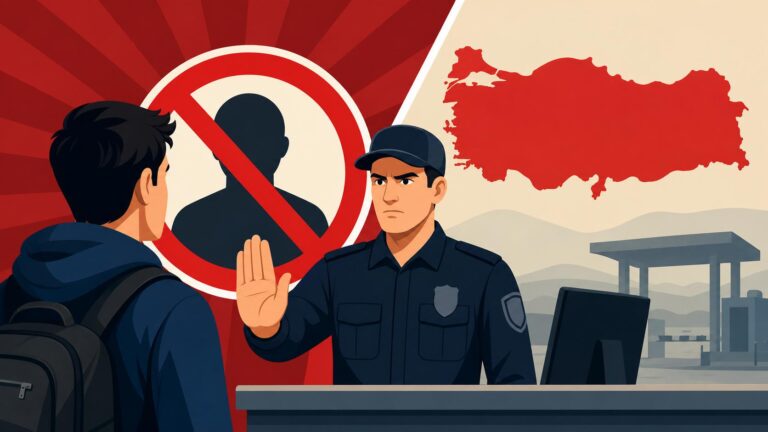
In recent years, Turkey has introduced "closed neighborhoods" to manage the density of foreign populations in specific areas. This has added a massive layer of complexity to moving apartments. If you sign a lease in a closed neighborhood, you will be unable to register your address at the Nüfus office, which essentially renders your residence permit invalid. Before you even view an apartment, you must check The List of Closed Neighborhoods in Istanbul, Antalya, and Mersin (2026 Updates). If the neighborhood is on that list, you cannot move there as a new resident unless you are performing a family reunification.
Many expats have fallen into the trap of paying a deposit and first month's rent, only to find out at the Nüfus office that they are forbidden from living in that district. This is why it is crucial to understand Why Esenyurt, Fatih, and Zeytinburnu are Completely Closed to New Foreign Residents. These areas are strictly monitored, and the system will automatically block any attempt to register a foreign national there. If your work or school is in one of these areas, you will need to find housing in a nearby open neighborhood and commute.
If you are already living in a closed neighborhood and want to move to a different apartment within that same neighborhood, the rules are slightly different. Generally, the law allows for "horizontal moves" within the same district, but the Nüfus office can still be incredibly picky about this. You will need to show a very clear link between your old and new contracts. To avoid any surprises, always perform a check using the official tools mentioned in How to Check on e-Devlet if Your Desired Neighborhood is Closed to Foreigners before committing any money to a landlord.
Finalizing the Digital Link: e-Devlet and Banking
Once the clerk at the Nüfus office hits 'enter,' your life in Turkey becomes much easier. Within 24 to 48 hours, your new address should reflect on your e-Devlet profile. This is the holy grail of Turkish administration. You can then log in and learn How to Obtain an Official Address Certificate (Yerleşim Yeri Belgesi) on e-Devlet, which is a PDF document with a QR code that serves as your official proof of address for banks, schools, and even the local gym. I always keep a digital copy of this on my phone; it has saved me dozens of times when I needed to prove my residency on the fly.
With your new Yerleşim Yeri Belgesi in hand, your next stops should be your bank and your insurance provider. Turkish banks are notoriously strict about address updates; if they realize your address in their system doesn't match the government's Nüfus database, they may freeze your account for "security verification." Similarly, make sure to update your profile with Cigna Global. While they offer international portability, they still need your current Turkish address for local billing and emergency dispatching. It’s also the perfect time to ensure you have completed your UETS Setup: Getting Your PTT Electronic Mailbox as a Foreign Resident, as the government will now send all official legal notices to this digital box based on your registered address.
Finally, remember that the address registration is the foundation for all other local services. If you have children, their school placement is determined by this registration. If you need a local health doctor, your "Sağlık Ocağı" (Family Health Center) is assigned based on the neighborhood where you are registered at the Nüfus office. It might feel like a lot of steps, but once you are "in the system," the benefits of being a properly registered resident make your life in Turkey significantly smoother and more predictable.
Mandatory Disclaimer
The information provided in this guide is for general informational purposes only and does not constitute legal or professional advice. Immigration laws and neighborhood restrictions in Turkey are subject to frequent changes. While we strive to provide accurate and up-to-date information, readers are strongly encouraged to consult with a qualified immigration attorney or the official YİMER 157 helpline before making any legal or financial commitments related to residency and housing.