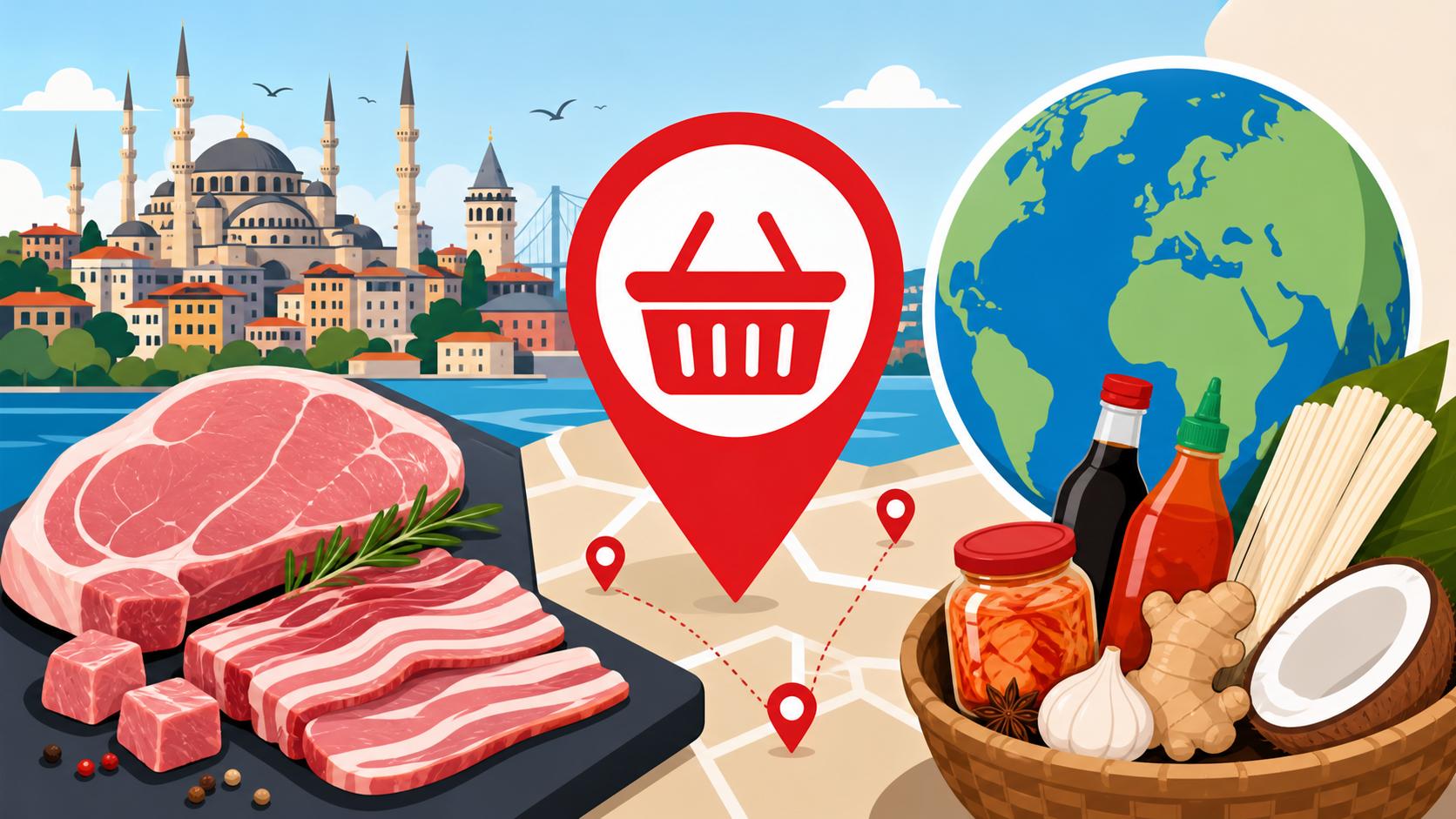
Finding Pork, Bacon, and International Ingredients in Major Turkish Cities
Finding yourself staring at a wall of sucuk and pastırma while desperately craving a crispy slice of smoked pork bacon is a rite of passage for every expat in Turkey. I still remember my first month in Istanbul, wandering through local markets and realizing that my favorite carbonara recipe was suddenly a logistical nightmare. This guide solves the scavenger hunt by identifying exactly where to find pork, authentic bacon, and those elusive international ingredients across Turkey's major cities.
The Reality of Sourcing Pork in Turkey
While Turkey is a secular country, its culinary landscape is deeply rooted in Islamic traditions, meaning pork is not a staple in the average kitchen. However, contrary to what many newcomers believe, pork is not illegal. It is simply a niche "gourmet" product. You won't find it in your neighborhood BİM or A101, but in major metropolitan areas, a dedicated supply chain exists for the international community and locals with global palates.
Specialized Pork Shops and The Domuz Et Counters
In Istanbul, the most reliable source for pork products—often labeled as domuz eti—is the high-end supermarket chain Macrocenter. Not every branch carries it, but the larger locations in expat-heavy neighborhoods like Nişantaşı, Bebek, and Kanyon Mall usually have a dedicated, glass-shielded section in the deli area. These sections are meticulously separated from the beef and poultry products to respect local sensitivities.
Outside of the big chains, specialized butchers have existed for decades. Names like Şütte in Teşvikiye or various local "charcuterie" (şarküteri) shops in the Kadıköy Fish Market area often stock imported or locally farmed pork. When you are looking for these spots, having a reliable data connection is essential; I personally use Airalo to ensure I can navigate the narrow backstreets of Istanbul or Ankara without losing my GPS signal.
Identifying High-Quality Bacon and Sausage Brands
The word "bacon" in Turkey can be deceptive. In many cafes and standard grocery stores, "bacon" actually refers to dana füme (smoked beef). It looks similar, but the fat content and flavor profile are entirely different. To find the "real deal," you need to look for specific branding. Brands like Gurme Pork or local producers from the Polonezköy area (a village with Polish roots near Istanbul) are the gold standard.
When shopping, look for vacuum-sealed packs labeled specifically as Domuz Pastırması or Domuz Salamı. If you are staying in a professionally managed apartment, such as those provided by Blueground, you will likely have a high-end kitchen where you can properly render the fat of authentic pancetta or guanciale—something that is almost impossible to find in a standard hotel setting.
Legality and Cultural Sensitivity
While buying and consuming pork is perfectly legal, it is important to handle your purchases with cultural awareness. Most shops will double-bag pork products in opaque plastic or black bags. It is considered polite to keep these items out of sight when walking through more conservative neighborhoods or when sharing a communal fridge in an office. Understanding the Istanbul Neighborhood Guide: European vs Asian Side Lifestyles for Expats can help you identify which areas are more accustomed to international grocery habits.
Navigating International Ingredients in Istanbul
Istanbul is the heart of Turkey's international food scene. If you can't find an ingredient here, it likely hasn't crossed the border yet. The city caters to a massive diplomatic and expat population, which has birthed a demand for everything from Mexican chipotle peppers to authentic Japanese miso.
The Gourmet Supermarket Giants
Macrocenter and Carrefour Gurme are the two names you must memorize. These aren't your typical grocery stores; they are curated experiences. This is where you go for maple syrup, French brie, Italian pasta brands like De Cecco, and a wide array of international sauces. If you are confused about the different tiers of shops, refer to my guide on Turkish Supermarkets Explained: The Difference Between Migros, Carrefour, Şok, and Bim to save yourself a trip to a discount store that won't have what you need.
In these gourmet hubs, you will find "World Food" aisles. While the selection is impressive, be prepared for "import shock." Prices for items like Dr. Pepper, real peanut butter (not the sugary local spreads), or specialized baking supplies can be triple what you would pay in Europe or North America.
Hidden Ethnic Grocers and Spice Bazaars
For Asian ingredients, the Mısır Çarşısı (Spice Bazaar) in Eminönü is a double-edged sword. While it is touristy, the backstreets behind the bazaar house wholesalers who sell bulk soy sauce, sesame oil, and dried chilies. However, for specific East Asian needs like gochujang, tofu, or sushi-grade rice, shops like "Ant" in Pangaltı or various "China Markets" near Taksim are much better bets.
If you are looking for fresh, international-style vegetables—like kale, avocados that aren't rock-hard, or fresh cilantro (which locals often confuse with parsley)—the Weekly Pazar Markets: How to Buy Fresh Produce and Negotiate Like a Local are your best friend. Some vendors in the high-end pazars (like the Saturday market in Beşiktaş) specifically grow "expat veggies" to meet the demand.
Specialized Asian and Middle Eastern Hubs
The neighborhood of Aksaray is a goldmine for Middle Eastern and African ingredients that you won't find in a typical Turkish store. Here, you can find authentic tahini from Palestine, specific spice blends from Syria, and even specialty grains from West Africa. On the flip side, the area around the Korean Consulate often has small markers with imported ramen and kimchi that hasn't been "Turkified" for the local palate.
| Category | Recommended Brand/Shop | Availability in Turkey |
|---|---|---|
| Pork Bacon | Gurme Pork / Şütte | Large Cities Only |
| Soy Sauce | Kikkoman (Available at Macrocenter) | High |
| Real Peanut Butter | Calve or Weeny | Moderate |
| Mexican Chilies | Amazon Turkey / Specialty Online | Low |
| Maple Syrup | L.B. Maple Treat | Moderate (Macrocenter) |
| Asian Noodles | Samyang / Nongshim | High (Gourmet stores) |
Finding International Goods in Ankara, Izmir, and the Coast
Once you leave the "Istanbul bubble," finding international ingredients becomes a bit more of a challenge, but it is far from impossible.
Ankara: The Diplomatic Supply Chain
As the capital city, Ankara has a massive diplomatic community. This means that neighborhoods like Çankaya and Gaziosmanpaşa are exceptionally well-equipped. The Macrocenter in Atakule or the ones along Arjantin Caddesi are famous for stocking items that even Istanbul stores sometimes miss. Because diplomats frequently move in and out, there is also a secondary market of "expat garage sales" where you can often find unopened international pantry staples.
If you are a family living in the capital, you might want to check the Best Areas in Istanbul for Families with Young Children and Strollers for a comparison of how neighborhood vibes affect your access to specific amenities, including international schools that often have their own "import networks" for cafeteria supplies.
Izmir and Coastal Towns: Seasonal Availability
In Izmir, the Alsancak and Bostanlı districts are your go-to spots. There are several high-end delicatessens (şarküteri) that specialize in pork and European cheeses. However, in coastal towns like Fethiye, Bodrum, and Antalya, the availability of international goods is highly seasonal.
During the summer, the "Migros Jet" stores near the marinas stock up on gin, tonic water, and English breakfast items to cater to the yachting crowd. In the winter, these shelves might go bare. If you are planning a move to the South, reading about Living in Fethiye and Bodrum: Year-Round Life vs Peak Tourist Season Chaos will help you understand when to stock up on your favorite imported goods.
Digital Solutions: Online Shopping and Delivery Apps
When the local shops fail, the internet provides. Turkey's e-commerce sector is incredibly advanced, and for an expat, it is a lifeline for sourcing specific brands of hot sauce or baking ingredients like cream of tartar.
Ordering via Amazon Turkey and Major Marketplaces
Amazon Turkey has expanded its "Grocery" section significantly. It is often the cheapest place to buy bulk international items like coconut milk, almond flour, or imported chocolates. The delivery is lightning fast, often arriving the next day in Istanbul. For those items that are perpetually out of stock locally, I always set up alerts on Trendyol or Hepsiburada.
When navigating these sites, keep in mind that many sellers use the English names of products in the descriptions to catch the expat market. Searching for "Sriracha" or "Jalapeño" will yield better results than trying to find a Turkish equivalent. If you are still setting up your home and need more than just food, Shopping in Turkey: Local Bazaars, Malls, and Delivery Apps covers the broader retail landscape.
Niche Online Pork and Deli Deliveries
There are now several "dark stores" and online butchers that specialize exclusively in pork and imported meats. Websites like "Meatshop Turkey" or "Gourmet Garage" offer refrigerated delivery to your door. This is particularly useful if you live in a neighborhood that is "closed" to new foreign residency registrations (which you can learn about in the Navigating Sahibinden.com Safely for Apartment Rentals and Second-Hand Goods guide) and don't want to haul heavy grocery bags across the city.
Furthermore, apps like Getir and Yemeksepeti: A Guide to Using Turkey’s Top Food Delivery Apps have "Large" or "Market" sections. While they mostly carry local brands, the "GetirMore" service in high-end districts often includes imported cheeses and specialized charcuterie that can save you a trip to the store.
Practical Tips for the Global Gourmet in Turkey
Sourcing ingredients is only half the battle; knowing how to navigate the system is the other.
Understanding Labeling and Substitutes
Sometimes, the "international" version of a product exists under a different name. For example, if you need sour cream, the local süzme yoğurt (strained yogurt) mixed with a little lemon juice is a near-perfect substitute. If you're looking for self-rising flour, you'll need to buy un (flour) and kabartma tozu (baking powder) separately, as pre-mixed versions are rare.
When reading labels, look for the "İçindekiler" (Ingredients) section. Even if a product looks like what you want, Turkish food standards sometimes allow for different sugar or salt levels than what you're used to back home.
Bringing Ingredients Through Customs
I've known many expats who fill their suitcases with vacuum-sealed bacon or jars of Marmite. While small amounts for personal consumption are usually ignored by customs, there are strict rules regarding the import of meat and dairy products. If you are moving to Turkey for the first time, it is worth checking the rules on Bringing Prescription Medication Through Turkish Customs: Legal Limits—not because you're bringing medicine, but because the customs environment for personal imports is generally quite strict.
Lastly, always check the "Best Before" dates (Son Tüketim Tarihi). Because international items move slower than local staples, they can sometimes sit on the shelf longer. A quick check will save you the disappointment of opening a 200 TL jar of salsa only to find it's past its prime.
Disclaimer
The information provided in this guide is for informational purposes only and is based on personal experiences and current market trends in Turkey as of 2026. Availability of specific products and the legality of imports can change without notice. Always check with local authorities or official supermarket websites for the most up-to-date information regarding food regulations and availability.