Navigating YİMER 157: How to Use the Foreigner Helpline for Immigration Queries
Getting your first residency in Turkey often feels like trying to solve a high-stakes puzzle where the rules are written in a language you haven't mastered yet. I remember sitting in a tiny apartment in Kadıköy, clutching a stack of notarized papers and feeling completely overwhelmed by a system that seemed designed to be impenetrable. This guide solves that specific anxiety by teaching you how to effectively use the YİMER 157 helpline to navigate the Turkish immigration maze.
What is YİMER 157 and Why Do You Need It
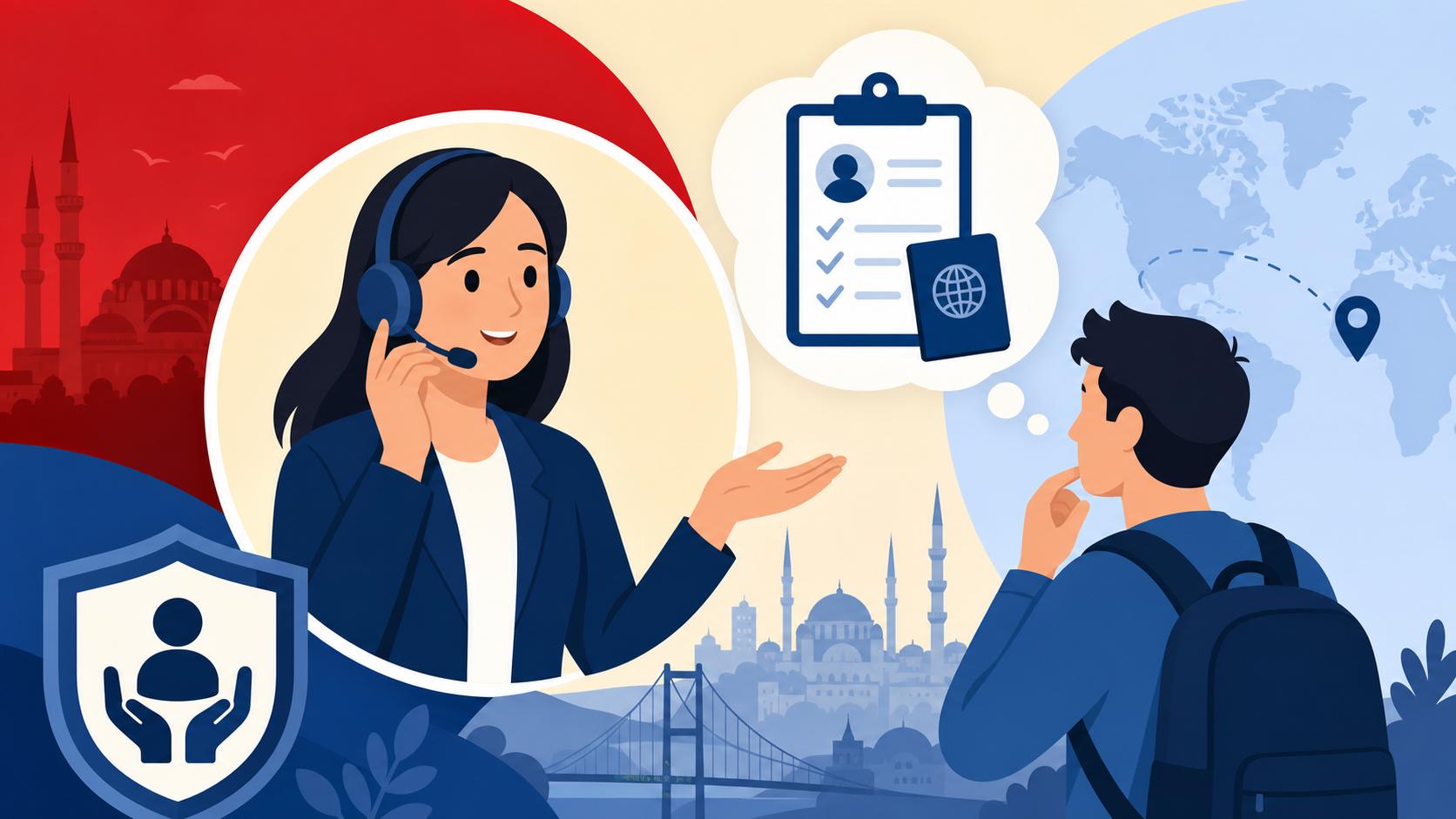
The Foreigners’ Communication Center, universally known as YİMER 157, is the official bridge between the Turkish government and the millions of expats residing in the country. It was established by the Presidency of Migration Management (Göç İdaresi) to provide a centralized hub for all immigration-related queries. Whether you are dealing with the Turkish Residence Permits (Ikamet): The Complete Application Guide (2027) or simply trying to understand how long you can stay on a tourist visa, this is your primary point of contact. It is not just a call center; it is an emergency lifeline and an information repository that operates under the direct supervision of the Ministry of Interior.
One of the most significant advantages of YİMER is its accessibility. Unlike many local government offices where English might be hit-or-miss, the 157 helpline is designed specifically for foreigners. I have found that when the stress of a pending application starts to mount, speaking to a human being who can explain the nuance of a specific regulation is worth its weight in gold. It saves you from the "gray area" of expat forums where misinformation often spreads like wildfire. Instead of guessing why your file hasn't moved, you can get a status update that is tied directly to your unique application number.
The role of YİMER extends beyond simple Q&A. They are tasked with protecting the rights of foreigners within Turkey. This includes providing guidance on legal residency, but also serving as a critical reporting line for serious issues like human trafficking, migrant smuggling, or even domestic abuse cases involving foreign residents. It is a comprehensive support system that ensures you are never truly "lost" in the bureaucracy, provided you know how to interact with the system correctly.
Available Languages and Operating Hours
The beauty of YİMER 157 is that it speaks your language—literally. The center provides services in Turkish, English, Arabic, Russian, German, French, and Persian. When you first dial the number, you are greeted by an automated menu in Turkish, but you will quickly be prompted to select your preferred language. This inclusivity is a godsend when you are trying to explain a complex legal issue, such as the Required Documents Checklist for a Short-Term Turkish Residence Permit, and your Turkish vocabulary is currently limited to ordering "iki ekmek."
Operationally, the service is available 24 hours a day, 7 days a week. However, there is a realistic caveat that every veteran expat knows: the level of expertise can vary depending on when you call. While the emergency lines are always staffed, the specialist operators who can dive deep into The e-Ikamet System: How to Apply, Renew, and Track Your Residence Permit are typically more available during standard Turkish business hours. Calling on a Tuesday or Wednesday morning, around 10:00 AM local time, is often associated with shorter wait times and more focused assistance.
It is also worth noting that the service is free if you are calling from within Turkey using a local SIM card. If you are abroad and need to reach them, you can dial +90 312 157 11 22. This is particularly useful if you are stuck outside the country due to a visa misunderstanding and need to verify your re-entry rights before booking a flight back to Istanbul or Antalya.
When to Call vs. When to Go to the Göç İdaresi
There is a common misconception that YİMER can solve every problem. It is important to distinguish between "information" and "action." YİMER is an information center; they cannot physically approve your residency, they cannot override a local officer’s decision at the desk, and they cannot issue you a physical card. If you are facing Ikamet Rejections: Exact Steps on What to Do If Your Residence Permit is Denied, the helpline can explain the reason for the rejection and the legal timeline for an appeal, but they cannot reverse the "Red" status in the system.
You should call YİMER when you need clarification on rules, such as Navigating Closed Neighborhoods: A Guide to Areas Where Foreigners Cannot Register, or when you are experiencing technical glitches with the online application portal. I often use them as a "pre-check" before I head to my Biometric Appointments (Randevu) at the Provincial Migration Office (Göç İdaresi). For example, if I am unsure if a specific bank statement is acceptable, I’ll call 157 to hear the current policy. This saves me the frustration of being turned away by a grumpy clerk after waiting three hours in a lobby.
On the flip side, matters that require physical document verification or face-to-face negotiation must happen at the provincial Göç İdaresi. If you need to update your address because you moved house, you will likely need to follow the protocol for Address Registration (Nüfus): The Most Critical Post-Arrival Step for Foreigners at the local Nüfus directorate or the migration office, rather than just telling a phone operator. Use the phone for the "why" and the "how," but use the office for the "done."
Preparing for Your Call: Making the Most of the 157 Service
Before you pick up the phone, you need to be organized. Turkish bureaucracy moves on data, not just stories. If you call and say, "My card hasn't arrived," the first thing they will ask for is your application number or your 99-series Foreigner ID number. I have a dedicated folder on my laptop where I keep scans of everything. When I call 157, I have my passport, my latest residence permit (if I have one), and my printed application form right in front of me.
One tip I always give newcomers is to have a pen and paper ready. The operators will often give you a "Reference Number" for your call. If you have to call back because the line dropped or if you need to follow up on a specific case, having that reference number is the only way to ensure you don't have to start your explanation from scratch with a new person. It’s these small administrative habits that separate the relaxed expats from the ones pulling their hair out in the Göç İdaresi hallways.
If your query involves complex legal documents, remember that the operator can only help if they understand what you are holding. If you are bringing documents from abroad, you might need them translated into Turkish first. It is often wise to use services like RushTranslate to get quick, certified translations of birth or marriage certificates so that when you describe the document to the 157 operator, you are using the correct Turkish terminology. Having a "sworn" translation ready means you can read the headers exactly as they appear in the system.
Gathering Essential Information Before Dialing
To get a clear answer, you must provide clear data. If you are calling about an existing application, ensure you have your 12-digit application number found on the first page of your e-Ikamet registration. If you are calling about a missing card, you will need to verify your address exactly as it was entered into the system. Often, cards are "lost" because of a tiny typo in the mahalle (neighborhood) or sokak (street) name.
If you are a first-time applicant, you should be ready to discuss your insurance details. For example, if you are using a comprehensive policy like Cigna Global to meet the residency requirements, have your policy number and the Turkish-compliant coverage dates handy. The operator might need to verify if your insurance duration matches your requested stay. Many people get caught in a loop because their insurance expired one day before their requested permit end-date.
Furthermore, if your query is about a family member, ensure you have their passport details as well. The Turkish system is very strict about privacy; an operator might refuse to give you details about your spouse’s application unless you can verify their specific ID numbers. It is also helpful to know your "entry date" into Turkey, as many residency rules are calculated based on the 90-day tourist window.
Understanding the Menu Navigation and Prompts
When you dial 157, the first voice you hear will be a recorded Turkish greeting. Don't panic. Usually, the menu options for languages are standardized. As of current protocols, pressing "1" usually keeps you in the Turkish menu, while "2" or "3" often routes you to English or Arabic. Listen for the keywords like "English" or "İngilizce."
Once you are in the English sub-menu, you will be presented with options based on the nature of your call:
- Press 1 for Residence Permit (Ikamet) information.
- Press 2 for International Protection or Temporary Protection (often for refugees).
- Press 3 for Visa and Visa Exemption queries.
- Press 4 for Human Trafficking or Emergency reporting.
I recommend always listening to the full list of options even if you think you know which one to press. The system is updated periodically as new visa types, like the Digital Nomad Visa, are introduced. If you find yourself in the wrong queue, the operator can sometimes transfer you, but more often than not, they will ask you to hang up and redial to reach the correct department.
Navigating YİMER 157 as a Non-Turkish Speaker
Even though the English-speaking operators are generally very good, remember that they are speaking a second language in a technical field. Patience is your best friend here. I’ve found that using simple, declarative sentences works much better than long, emotional stories. Instead of saying, "I went to the office and the man was mean and he said my paper was wrong and I don't know what to do," try: "My residence permit application was rejected due to insufficient financial proof. What are the accepted documents for a renewal?"
If you encounter a term you don't understand, ask them to spell it or provide the Turkish equivalent. This is crucial because you might need to find that specific term in your e-Devlet portal later. For instance, if they mention "Adres Kaydı," you’ll want to know they are talking about your Address Registration (Nüfus): The Most Critical Post-Arrival Step for Foreigners.
If you are struggling to communicate complex health needs, such as coverage for a chronic condition under your Cigna Global policy, ask if there is a supervisor or a more senior specialist available. While the first-line operators are great for general info, the specialists have deeper access to the specific "circulars" (official internal rules) that govern the migration management process.
Common Issues Solved via the 157 Helpline
The most common reason people call 157 is the "black hole" phase of the application—that period after your appointment but before your card arrives. The system can be notoriously slow, and sometimes the online tracking doesn't update for weeks. An operator at 157 can look into the "back end" of the system and tell you if your card has been printed or if there is a "missing document" flag on your file that you haven't been notified about yet.
Another area where YİMER shines is clarifying the 90/180-day rule. Many tourists and digital nomads get confused about how many days they have left in the country. If you provide your passport number and entry dates, the operator can calculate your remaining legal stay. This is vital for avoiding heavy fines or entry bans at the airport. People can save thousands of liras just by making a five-minute phone call to confirm their exit date.
Finally, YİMER is the place to report lost or stolen residence permits. If you lose your wallet in Taksim, your first call should be to the police to file a report, but your second call should be to 157. They will guide you through the process of getting a replacement card and ensure that your 99 number is protected against identity fraud.
| Feature | YİMER 157 Helpline | Local Migration Office (İl Göç) |
|---|---|---|
| Primary Purpose | General info, status checks, emergencies | Physical processing, interviews, approvals |
| Language Support | 7 Languages (English, Arabic, etc.) | Primarily Turkish (Translators rare) |
| Availability | 24/7 via Phone | 08:30 – 17:30 (Weekdays only) |
| Cost | Free (within Turkey) | Varies (Taxes, Card fees, Notary costs) |
| Technical Support | Can help with e-Ikamet website errors | Usually cannot help with website bugs |
| Decision Power | Cannot approve/deny applications | Direct authority to approve/deny |
Tracking Your Residence Permit Status
Once your application is in "Evaluation" (Değerlendirmede), the wait can be agonizing. By calling 157, you can ask for a more detailed status update than the e-Ikamet website provides. Sometimes the website just says "Process continues," but the 157 operator can see if your card is actually at the PTT (Turkish Post) branch. If they give you a barcode number, you can then use my guide on Tracking Your Newly Printed Ikamet Card Delivery via PTT Tracking Codes to see exactly which delivery truck it’s on.
If the operator tells you that your card was returned to the migration office because you weren't home, they can tell you which specific office is holding it. In a massive city like Istanbul, this is a lifesaver. You don't want to spend your day traveling to the main office in Fatih only to find out your card is sitting in a small sub-office in Esenyurt.
Reporting Human Trafficking and Smuggling
This is the most serious side of YİMER 157. If you become aware of anyone—whether an expat, a student, or a domestic worker—who is being held against their will, forced to work, or has had their passport confiscated by an employer, 157 is the immediate reporting line. They have protocols to coordinate with the Turkish National Police and the Gendarmerie.
As an expat, you might notice things in your community that feel "off." Turkey takes these reports very seriously, and the 157 operators are trained to handle these calls with extreme confidentiality. Even if you are unsure, it is better to call and let the professionals investigate. This service has saved thousands of lives and is a point of pride for the Turkish immigration authorities.
Clarifying General Visa and Stay Requirements
If you are thinking about switching from a tourist visa to a more permanent solution, like Step-by-Step: Filling Out the Complex e-Ikamet Application Form Online, 157 can explain the eligibility criteria. For example, in 2026, the rules for touristic renewals became much stricter. A 157 operator can tell you if your specific nationality or situation still allows for a "touristic" purpose or if you need to pivot to a work permit or property-based residency.
They can also clarify the "exit-entry" rules. People often ask, "Can I leave for a weekend while my application is pending?" The operator will explain the "Müracaat Belgesi" (Application Document) which, when stamped by the Göç İdaresi, allows you to leave the country for up to 15 days without cancelling your application. Getting this right is the difference between a smooth trip home and being denied re-entry at the border.
Technical Hurdles and Local Realities of the Helpline
While YİMER is a fantastic tool, it is still a government-run call center in a country of 85 million people. You will encounter hurdles. Sometimes the lines are busy for 20 minutes. Sometimes the "English" operator is actually a "French" operator who is trying their best to help in English. My advice? If you get an operator who seems confused or unhelpful, politely hang up and call back 10 minutes later. You will likely get a different person who might have more experience with your specific issue.
There is also the "system is down" reality. Turkish government databases are massive and occasionally undergo maintenance. If an operator tells you they can't see your file, don't assume the worst. It usually just means the server is rebooting. Try calling again the next morning. Being a veteran expat in Turkey means developing a Zen-like patience with these minor technical hiccups.
Managing Wait Times and Peak Hours
The worst time to call 157 is Monday morning or Friday afternoon. Mondays are flooded with people who had "emergencies" over the weekend, and Fridays are full of people panicking about their Monday appointments. I’ve sat on hold for 30 minutes during these times.
The "sweet spot" is usually Tuesday through Thursday, between 2:00 PM and 4:00 PM. Most of the morning rush has subsided, and the staff are in the groove of the day. If you are calling from a foreign number, be aware of the time difference. Turkey does not observe Daylight Savings Time, so the gap between Istanbul and London or New York changes twice a year.
What to Do When the Line Disconnects
It happens. You are halfway through explaining that your Health Insurance Requirements: Securing a Policy for First-Time Ikamet Applications are already uploaded, and—click—the line goes dead. If you have that "Reference Number" I mentioned earlier, your next call will be much easier.
If the line keeps dropping, it might be an issue with your local mobile provider's VoLTE settings or a signal dead zone. I’ve had better luck calling 157 from a landline or using a stable Wi-Fi calling setup if my mobile signal is weak. Don't take a disconnection personally; the volume of calls they handle is staggering, and technical glitches are just part of the landscape.
Accuracy of Information: Trust but Verify
This is the most important advice I can give: the 157 operator is a human, not a judge. While they are very helpful, they can occasionally give outdated information, especially during months when the Ministry of Interior is rapidly changing policies. If an operator tells you something that sounds completely different from what you read on the official Göç İdaresi website, ask them to double-check the "current circular."
I always cross-reference what I hear on 157 with official government PDF announcements. If I'm really unsure, I’ll call 157 twice on two different days to see if I get the same answer. If two different operators tell me the same thing, I feel 90% confident. If they give me conflicting advice, I know I need to visit the local office and ask for a supervisor.
Navigating Post-Call Steps and Administrative Follow-ups
After you hang up, your work isn't over. Take your notes and immediately act on them. If the operator told you that you need to update your address, don't wait. Use your e-Devlet account to check your current registration status. If they mentioned that your insurance isn't showing up in the system, contact your provider. If you are using Cigna Global, their customer service team is very used to providing the specific "Policy Certificate for Ikamet" that the Turkish system requires.
If you were told that you need to submit additional documents, you may need to get them translated and notarized quickly. This is where a reliable service like RushTranslate becomes a part of your "Expat Toolkit." Having a fast turnaround on a translated birth certificate can be the difference between meeting your 30-day "missing document" deadline and having your entire application cancelled.
Using the Reference Number for Future Queries
Keep a "YİMER Log" in your notes app. Write down the date, the time, the name of the operator (if they gave it), and the Reference Number. If you ever have to file a formal complaint or an appeal against an immigration decision, this log is powerful evidence that you made a good-faith effort to follow the rules and were guided by the official helpline.
I have seen cases where an expat was given the wrong deadline by an operator, but because they had the Reference Number and the call recording was stored in the YİMER system, the migration office was able to grant an extension. It gives you a "paper trail" in a system that otherwise feels very ephemeral.
Translating Your Documents for Official Appeals
If your conversation with 157 leads you to realize you need to file an appeal, you will need every piece of evidence translated into Turkish. The Turkish courts and the Göç İdaresi will not look at an English bank statement or a foreign marriage license. Using RushTranslate ensures that your documents are translated by professionals who understand the specific terminology required by Turkish authorities.
Remember, an appeal is a legal process. If the 157 operator tells you that you have 60 days to file a lawsuit in the Administrative Court, you need to spend those 60 days getting your documents perfectly translated and notarized. Don't wait until day 55 to start looking for a translator.
Securing Health Insurance for Pending Applications
If the operator informs you that your residency was flagged because of "insufficient insurance," you need to act immediately. Many budget-friendly local policies have very low limits that don't satisfy the 2026 requirements for major surgeries. This is why many long-term expats prefer Cigna Global; it provides the comprehensive coverage that satisfies the "comprehensive health insurance" (Özel Sağlık Sigortası) requirement for longer-term stays.
When you call back 157 to update them on your new insurance, make sure you have the "UAVT" (Address) code and the insurance start date. They can sometimes note this in your file, which helps the officer who is reviewing your case. Being proactive with your Cigna Global coverage shows the authorities that you are a responsible resident who won't become a burden on the public healthcare system.
Navigating the 157 Helpline for Success
The YİMER 157 helpline is a powerful tool, but like any tool, it requires some skill to handle. By being prepared, staying patient, and keeping meticulous records, you can turn a stressful bureaucratic hurdle into a manageable administrative task. I’ve been through the "Turkish Paperwork Gauntlet" more times than I care to count, and the 157 line has been my guide through many dark nights of "Why is my Ikamet taking so long?"
Trust the process, but keep your records sharp. Use the resources available to you—from translators like RushTranslate to international insurers like Cigna Global—to ensure your application is bulletproof. Turkey is a beautiful, welcoming country, and once you get past the initial paperwork, the life you build here is well worth the effort of that first phone call.
Disclaimer
This guide is for informational purposes only and is based on personal experience and current public regulations as of 2026. Immigration laws in Turkey are subject to frequent changes without notice. Always verify information with the official YİMER 157 helpline or a qualified Turkish immigration lawyer before making legal or financial decisions regarding your residency status.